Source: Wikimedia Commons
South American Puffer
IntermediateSphoeroides asellus
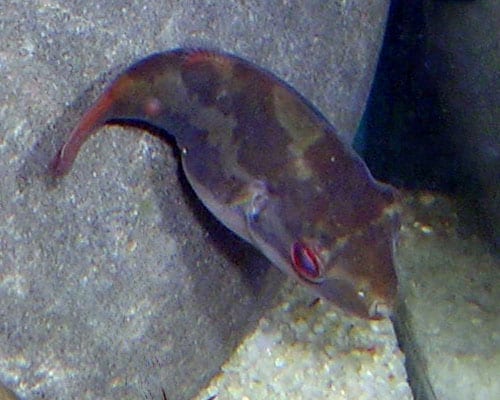
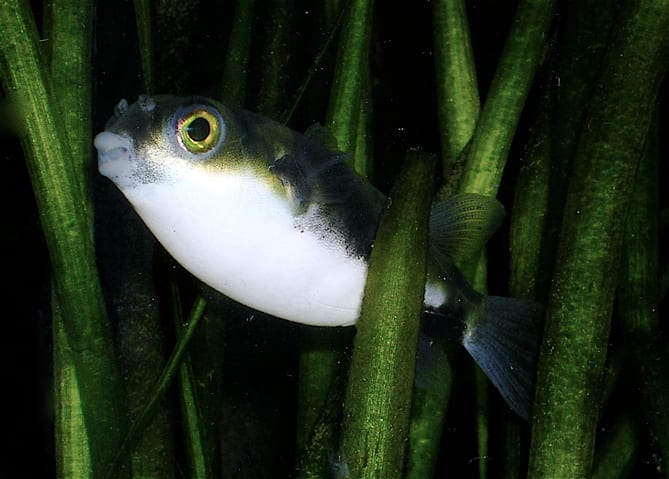
A small South American puffer with black bars across a yellow back. Widespread in the Amazon basin, it is unusual among puffers in forming loose shoals, and is kept in pure fresh water with no added salt.
Difficulty
Intermediate
Temperature
20〜26℃
Lifespan
3-5 years
Size
Up to 12.8cm SL
Diet
Snails, crab legs and cockles, plus earthworms and frozen bloodworm
About
Sphoeroides asellus is a small puffer found widely in the Amazon basin from Peru to Marajo Island, in the Araguaia and Guapore, and near the mouth of the Orinoco. FishBase records a maximum of 12.8cm SL, pH 5.5-7.2, 5-15 dH and 22-28C, and notes the distinct large black spot on the underside of the caudal peduncle. It was long known as Colomesus asellus, a name still used by most of the trade and literature. Seriously Fish gives 20-26C, pH 5.5-8.0, 2-15 dGH and a 120 x 30cm base, and recommends groups of six or more because the species forms loose aggregations in the wild. It is less aggressive than most puffers but becomes nervous when kept alone. Its teeth grow throughout life, so shelled food is required. Breeding has not been recorded in aquaria. The IUCN rates it Least Concern.
Source: Wikipedia (CC BY-SA 4.0)
Lifespan of the South American Puffer
The South American Puffer lives 3-5 years.
Size of the South American Puffer
The South American Puffer grows to Up to 12.8cm SL.
Temperature & humidity for the South American Puffer
The ideal temperature for the South American Puffer is 20〜26℃.
Basic Info
Origin
South America (Amazon basin, the mouth of the Orinoco and the Essequibo)
Lifespan
3-5 years
Care Specifications
- pH
- 5.5–8
- Hardness (GH)
- 2–15 dGH
- Water Temp.
- 20–26℃
PeacefulGroupBreeding: Very hard
Sources: FishBase / Seriously Fish
References & Sources
Edited & verified by: BreederDirect editorial team
The taxonomic, regulatory, and husbandry data on this page are compiled and verified against the authoritative primary sources below.
Taxonomy & Authority
Accepted name: Sphoeroides asellus (Müller & Troschel, 1849)
Synonyms: Colomesus asellus, Cheilichthys asellus
Authority databases: FishBase
Nomenclature follows global taxonomic authority databases.
Regulations & Conservation Status
Not CITES-listedIUCN LC · Least Concern
Sources: CITES Appendices (species not listed) / IUCN Red List
Regulations may change. Always verify the latest information with the relevant authorities.
South American Puffer Listings
Loading latest listingsFind listings for this species