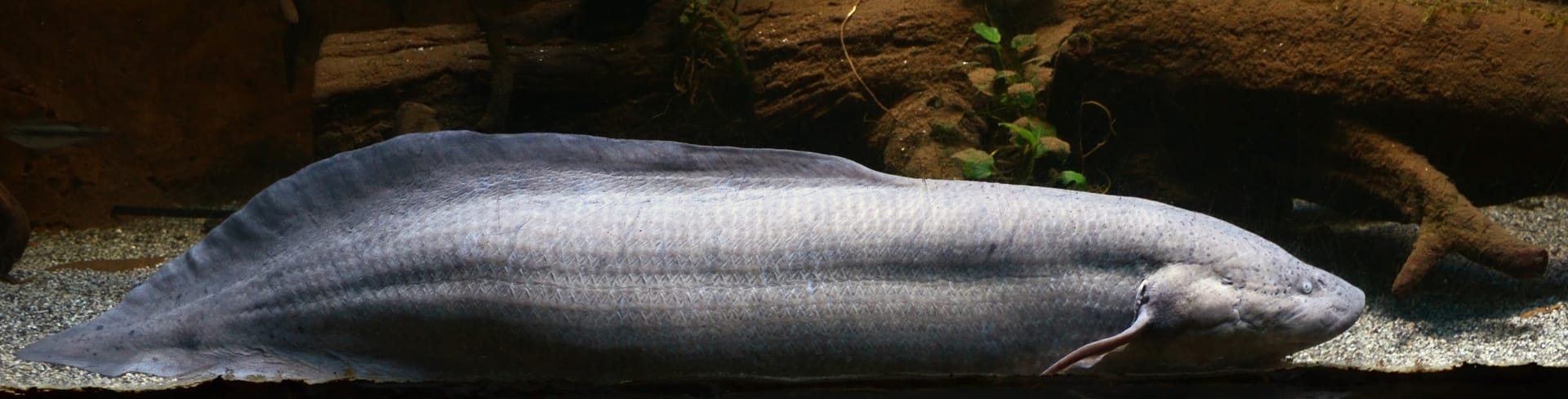
 © Vassil / CC0 1.0
West African Lungfish
The West African Lungfish (Protopterus annectens) is an ancient African fish equipped with lungs that let it breathe air directly. In the dry season it burrows into mud and forms a cocoon of dried mucus, resting inside for an extended period until conditions improve. Fully grown, it can reach roughly 100cm in length and 4kg in weight, and its powerful jaws easily crush food, giving it an imposing presence. Because of its size and temperament, solitary housing is standard rather than mixing it with tankmates. Keeping one calls for intermediate-level experience, but in return you get a genuinely prehistoric-looking fish unlike anything else in the hobby.
View West African Lungfish encyclopedia →0% commission on your first sales!Register by September 30, 2026 and your first 2 sales are commission-free!
Breeder Wanted!
List on BreederDirect and sell directly to customers nationwide!
Our 6 Transparency Commitments
All Tropical Fish listings include water quality, temperament, and tank size information from verified Breeder.
- Origin Disclosed
- Real Photos
- Water Quality Disclosed
- Recommended Tank Size
- Temperament Disclosed
- Breed Line Disclosed
Browse all 301 breeds
Water Type
Care Level
Verified breeders wanted for Tropical Fish
Breeders are signing up now ahead of launch. Subscribe to be notified when new listings go live.
Getting alerts is free with a member account. When new listings match your saved search, we'll notify you by email and in-app.
Browse other categories
Verified breeders (preview)
Are you raising tropical fish?
Register as a breeder and connect with buyers directly.
Apply as a breederWest African Lungfish key facts
- Care level
- Intermediate
- Lifespan
- 15+ years
- Size
- Up to about 100cm and 4kg
- Temperature
- 25〜30℃
- Diet
- Fish, earthworms and crustaceans; omnivorous and also takes plant matter
- Tank
- This fish reaches 1m and needs a tank to match. Always leave clear access to the surface for air breathing, and fit a lid to prevent jumping.
- Water Temperature & Quality
- 25-30C. It is large and eats heavily, so maintain water quality with powerful filtration and regular water changes.
- Tank Mates
- An omnivore that crushes prey with powerful jaws, it will eat any fish small enough to swallow. It does not suit community tanks and is normally kept alone.
- Diet & Feeding
- Feed mainly animal foods such as strips of fish, shrimp and earthworms; being omnivorous it also takes plant matter. Keep hands clear at feeding time because the bite is powerful.
- Breeding & Spawning
- Males build nests in the wet season and guard eggs and fry. Eggs are about 4mm across and hatch in around a week. Captive clutches of about 200 eggs are reported, but breeding in aquaria is hard.
- Health & Notes
- As an obligate air breather it surfaces roughly every half hour, so never block access to the surface. The jaws are strong, so keep hands out during maintenance too.
About West African Lungfish
West African Lungfish (Protopterus annectens), an ancient African fish that breathes air and survives the dry season by aestivating in mud. Growing to roughly 100cm and 4kg, this large, powerful species is best kept alone and suits intermediate keepers.
7 things to know before welcoming a West African Lungfish
1Best Kept Alone
The West African Lungfish can be aggressive toward both its own kind and other fish, so solitary housing is the standard approach. If you're considering tankmates, you'll need a very large tank and careful planning.
2An Air-Breathing Fish
It has lungs and can breathe air at the water's surface, letting it survive even in water with low dissolved oxygen. Make sure the tank always has open space at the surface so it can reach air.
3Needs a Large Tank
Fully grown, it reaches roughly 100cm in length and 4kg in weight. Plan for a large tank sized for its adult form from the start, along with a strategy for upgrading as it grows.
4Powerful Bite Force
Its strong jaws can easily crush food, so choose sturdy plumbing, heater covers, and decorations for the tank. Fragile parts can be damaged if bitten.
5Burrows in the Dry Season
In the wild, it burrows into mud during the dry season and rests for an extended period inside a cocoon of dried mucus. Seeing this behavior in captivity is natural, not a sign of a problem.
6Water Quality & Feeding
As a carnivore, it produces a fair amount of waste, so frequent water changes and strong filtration are essential. Remove uneaten food promptly to prevent water quality from declining.
7A Secure Lid Is a Must
This is a powerful fish prone to jumping out of the tank. Use a sturdy, gap-free lid to prevent escapes.
Frequently asked questions about West African Lungfish
- Q.Can it live with other fish?
- A.Because it can be aggressive and grows quite large, solitary housing is generally recommended. If you do attempt tankmates, you'll need a very large tank and careful, ongoing monitoring for compatibility.
- Q.How big a tank does it need?
- A.Since it can reach roughly 100cm in length and 4kg in weight as an adult, a large tank sized for its full-grown form is necessary. It's wise to plan for that eventual size even while it's still young.
- Q.It burrowed into the substrate and stopped moving — is that normal?
- A.Burrowing into mud and resting inside a cocoon of dried mucus during the dry season is a natural behavior for this species. That said, if you're concerned about a sudden change, it's worth checking your water quality and temperature.
- Q.Is this fish suitable for beginners?
- A.The West African Lungfish is considered suitable for intermediate keepers. Prior experience with large fish and knowledge of water quality management and tank equipment will make keeping one much easier.
- Q.Is this species listed under CITES?
- A.The West African Lungfish is not subject to CITES.
Useful tools for West African Lungfish care
Learn more about West African Lungfish in the encyclopedia
View West African Lungfish encyclopedia entry →
Care difficulty, lifespan, size and diet — all basics covered.
More in this category
Can't find the one you're looking for?
Post your wishes for free and breeders with matching animals will contact you with introductions.