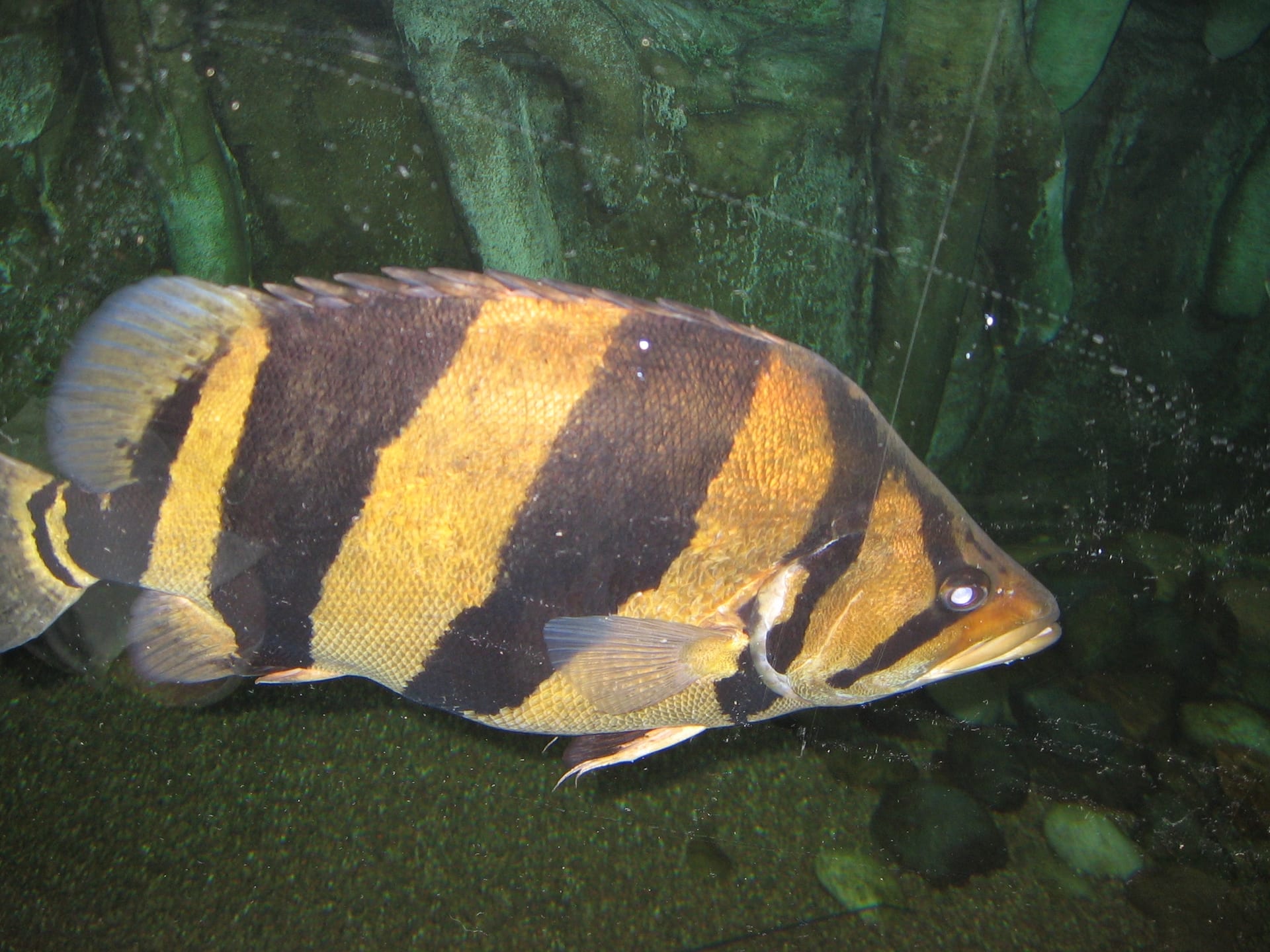
 © Ginkgo100 / CC BY-SA 3.0
Siamese Tiger Perch
The Siamese Tiger Perch (Datnioides) is a large freshwater fish native to the Indochina peninsula, known for its golden body marked with bold black vertical bands — typically four, occasionally five. Its striking pattern and confident, deliberate swimming style make it a captivating centerpiece fish that grows more impressive with age. At the same time, it tends to be somewhat skittish and sensitive to changes in its environment. Because it grows quite large, this is a species best suited to experienced keepers with the setup to match.
View Siamese Tiger Perch encyclopedia →0% commission on your first sales!Register by September 30, 2026 and your first 2 sales are commission-free!
Breeder Wanted!
List on BreederDirect and sell directly to customers nationwide!
Our 6 Transparency Commitments
All Tropical Fish listings include water quality, temperament, and tank size information from verified Breeder.
- Origin Disclosed
- Real Photos
- Water Quality Disclosed
- Recommended Tank Size
- Temperament Disclosed
- Breed Line Disclosed
Browse all 301 breeds
Water Type
Care Level
Verified breeders wanted for Tropical Fish
Breeders are signing up now ahead of launch. Subscribe to be notified when new listings go live.
Getting alerts is free with a member account. When new listings match your saved search, we'll notify you by email and in-app.
Browse other categories
Verified breeders (preview)
Are you raising tropical fish?
Register as a breeder and connect with buyers directly.
Apply as a breederSiamese Tiger Perch key facts
- Care level
- Advanced
- Lifespan
- 10-15 years
- Size
- 35-40cm
- Temperature
- 20〜28℃
- Diet
- Prawn, mussel, strips of fish, earthworms
- Tank
- Seriously Fish records no minimum tank dimensions, but at 35-40cm standard length a large tank is needed long term. Juveniles do well in a decorated, planted setup. It is a messy fish, so large external filtration is essential, and the heater should be guarded or housed in a sump.
- Water Temperature & Quality
- Seriously Fish gives 20-28C, pH 5.5-7.5 and 2-15dGH. It is a freshwater fish of large lowland rivers and does not enter brackish habitats, so marine salt is not required at any life stage.
- Tank Mates
- It can share a tank with similarly sized fishes given enough space, but is intimidated by territorial or competitive species. Juveniles may group, while adults respond aggressively to conspecifics and similarly shaped fishes, so keep one alone or five or more together.
- Diet & Feeding
- A piscivore with highly protrusible jaws. Feed juveniles bloodworm and earthworms, adults strips of fish, prawn and mussel. Adults need feeding only two or three times a week. Avoid mammalian and avian meat and feeder fish.
- Breeding & Spawning
- Sexual dimorphism is unknown and captive reproduction is unrecorded. Breeding efforts are apparently underway in Thailand and Cambodia but with little success to date.
- Health & Notes
- Assessed Critically Endangered by the IUCN Red List. It travels badly and newly imported fish often refuse food and stay dark, so keep them quiet and undisturbed while settling in.
About Siamese Tiger Perch
Meet the Siamese Tiger Perch, a striking gold-and-black banded freshwater fish from Indochina. Learn its traits, temperament, and care essentials.
7 things to know before welcoming a Siamese Tiger Perch
1Plan for a Large Adult Size
Adults reach 35–40 cm, so it's important to plan tank capacity around its full-grown size from the start. Either budget for upgrading tanks as it grows, or begin with a tank large enough for an adult from day one.
2Suited to Experienced Keepers
This species is considered suitable for experienced keepers, requiring careful water quality management and feeding know-how. It's best suited to those with prior fishkeeping experience or a willingness to research thoroughly beforehand.
3A Somewhat Skittish Temperament
It can be easily startled by noise or sudden layout changes, and some individuals hide until they grow accustomed to their keeper. Providing sheltered hiding spots and avoiding abrupt changes around the tank helps it settle in.
4Feeding Often Starts With Live Food
Newly acquired fish often refuse dry pellets at first, so keepers typically start with live or frozen food. Transitioning to prepared foods can take patience.
5Compatibility With Tankmates and Layout
As a strongly carnivorous species, it may prey on smaller fish that fit in its mouth. If keeping tankmates, choose similarly sized fish and add driftwood or shelters to reduce stress.
6Maintaining Stable Water Conditions
Because it's sensitive to sudden shifts in water quality, regular water changes and reliable filtration are essential. A heater to keep temperature stable is also a must-have.
7A Long-Term Commitment
As a fish that grows large and has demanding care requirements, it's worth picturing in advance the space, equipment, and daily time you can realistically commit before bringing one home.
Frequently asked questions about Siamese Tiger Perch
- Q.Can beginners keep this fish?
- A.The Siamese Tiger Perch is considered suitable for experienced keepers. Since it requires skill in water quality management and feeding, it's best to gain experience with other species first.
- Q.How large does it grow?
- A.Adults typically reach around 35–40 cm. Tank size should be planned around this adult size, not the fish's size as a juvenile.
- Q.Does the number of black bands vary between individuals?
- A.It's typically four, though occasionally five bands appear. The number and thickness of the bands vary between individuals, which is part of the fish's appeal.
- Q.Is it subject to CITES regulation?
- A.This species is not subject to CITES regulation.
- Q.Can it be kept with other fish?
- A.As a strongly carnivorous fish, it may prey on smaller tankmates that fit in its mouth. If housing it with others, choose similarly sized fish, provide hiding spots, and monitor behavior closely.
Useful tools for Siamese Tiger Perch care
Learn more about Siamese Tiger Perch in the encyclopedia
View Siamese Tiger Perch encyclopedia entry →
Care difficulty, lifespan, size and diet — all basics covered.
More in this category
Can't find the one you're looking for?
Post your wishes for free and breeders with matching animals will contact you with introductions.