Source: Wikimedia Commons
Siamese Tiger Perch
AdvancedDatnioides pulcher
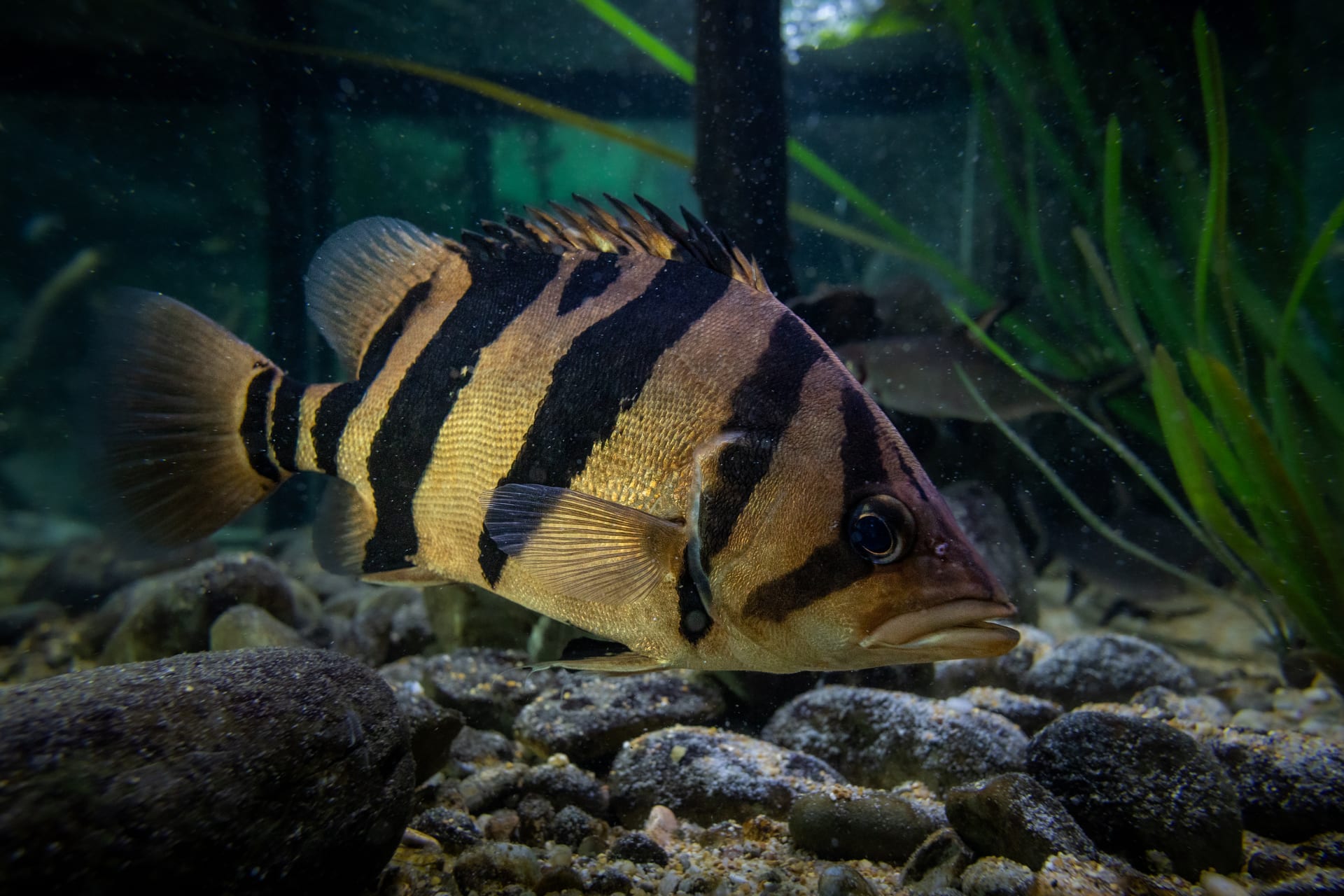
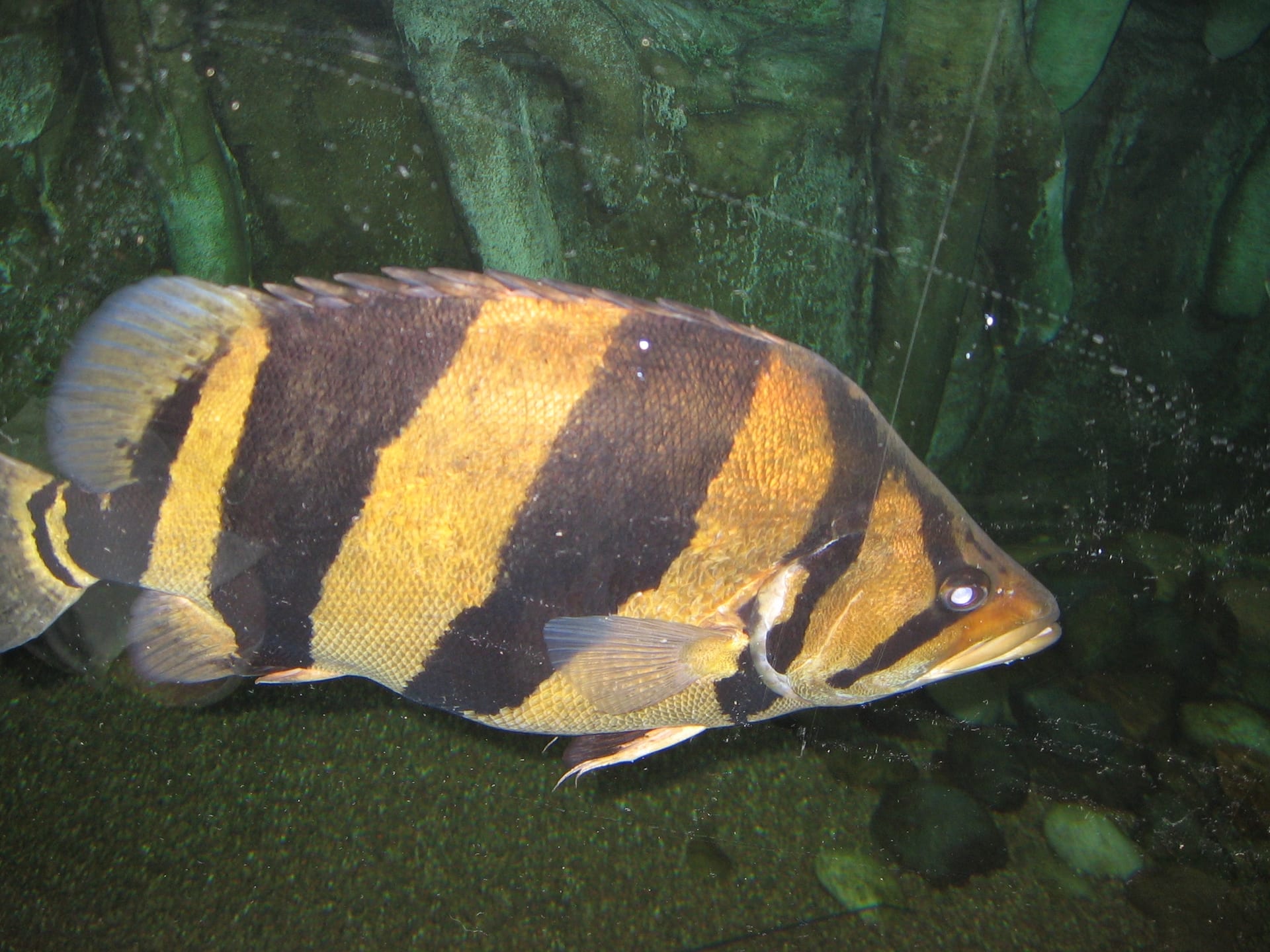
A large fish endemic to Indochina, golden with broad black bars, usually four and exceptionally five. Wild stocks are thought to have fallen by over 90 percent since the mid-1980s and the IUCN assesses it as Critically Endangered.
Difficulty
Advanced
Temperature
20〜28℃
Lifespan
10-15 years
Size
35-40cm
Diet
Prawn, mussel, strips of fish, earthworms
About
Datnioides pulcher is a large lobotid found mainly in the Mekong and Chao Phraya basins of Indochina. FishBase records 40cm standard length and Seriously Fish 35-40cm. The usually four, exceptionally five broad dark bars distinguish it from congeners, and it was treated as conspecific with D. microlepis until Kottelat described it in 1998. It inhabits deep lowland rivers and does not enter brackish water, so marine salt is unnecessary at any life stage. Seriously Fish recommends 20-28C, pH 5.5-7.5 and 2-15dGH. Dam construction, loss of riparian vegetation, pollution and fishing pressure are thought to have cut wild stocks by more than 90 percent since the mid-1980s, and the IUCN Red List assesses it as Critically Endangered. Captive reproduction is unrecorded, with efforts continuing in Thailand and Cambodia.
Source: Wikipedia (CC BY-SA 4.0)
Lifespan of the Siamese Tiger Perch
The Siamese Tiger Perch lives 10-15 years.
Size of the Siamese Tiger Perch
The Siamese Tiger Perch grows to 35-40cm.
Temperature & humidity for the Siamese Tiger Perch
The ideal temperature for the Siamese Tiger Perch is 20〜28℃.
Basic Info
Origin
Indochina (Mekong and Chao Phraya basins and neighbouring systems)
Lifespan
10-15 years
Care Specifications
- pH
- 5.5–7.5
- Hardness (GH)
- 2–15 dGH
- Water Temp.
- 20–28℃
Semi-aggressiveSolitaryBreeding: Very hard
Sources: FishBase / Seriously Fish
References & Sources
Edited & verified by: BreederDirect editorial team
The taxonomic, regulatory, and husbandry data on this page are compiled and verified against the authoritative primary sources below.
Taxonomy & Authority
Regulations & Conservation Status
Not CITES-listedIUCN CR · Critically Endangered
Sources: CITES Appendices (species not listed) / IUCN Red List
Regulations may change. Always verify the latest information with the relevant authorities.
Siamese Tiger Perch Listings
Loading latest listingsFind listings for this species