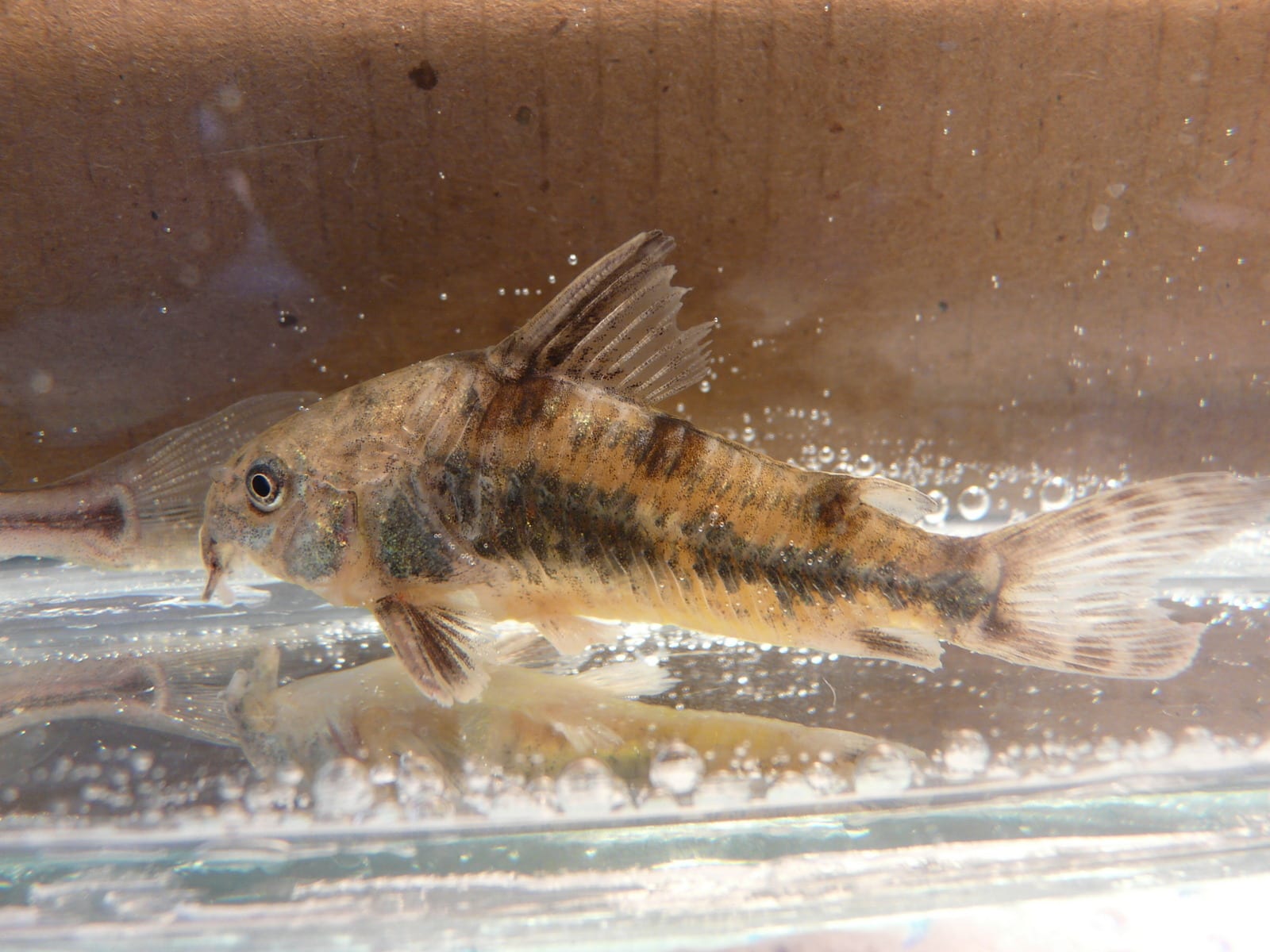
 © Guillermo Debandi / CC BY 4.0
Peppered Corydoras
Corydoras paleatus, often called the Peppered Corydoras, is one of the most beloved corydoras species, easily recognized by the dark pepper-like speckles scattered across its pale body. Its bluish sheen has also earned it the nickname "Blue Cory" among hobbyists. Native to subtropical waters, it tolerates cooler temperatures better than most tropical fish, making it easy to keep even in near-unheated setups. Peaceful and unafraid, it moves in lively groups along the substrate and gets along well with most tankmates. Alongside Corydoras aeneus, it's one of the most widely available corydoras species, and most fish in the trade today are captive-bred — making it a great choice for anyone bringing home their first corydoras.
View Peppered Corydoras encyclopedia →0% commission on your first sales!Register by September 30, 2026 and your first 2 sales are commission-free!
Breeder Wanted!
List on BreederDirect and sell directly to customers nationwide!
Our 6 Transparency Commitments
All Tropical Fish listings include water quality, temperament, and tank size information from verified Breeder.
- Origin Disclosed
- Real Photos
- Water Quality Disclosed
- Recommended Tank Size
- Temperament Disclosed
- Breed Line Disclosed
Browse all 301 breeds
Water Type
Care Level
Verified breeders wanted for Tropical Fish
Breeders are signing up now ahead of launch. Subscribe to be notified when new listings go live.
Getting alerts is free with a member account. When new listings match your saved search, we'll notify you by email and in-app.
Browse other categories
Verified breeders (preview)
Are you raising tropical fish?
Register as a breeder and connect with buyers directly.
Apply as a breederPeppered Corydoras key facts
- Care level
- Beginner-friendly
- Lifespan
- 3-5 years
- Size
- 6.6-7.1cm
- Temperature
- 22〜26℃
- Diet
- Sinking dried foods, frozen bloodworm, Tubifex
- Tank
- A 61 x 38cm base, about 70 litres, is the guide. Use fine rounded sand and keep it scrupulously clean. The fish gulps air at the surface, so never block access to it.
- Water Temperature & Quality
- 22-26C, pH 6.0-7.0, 0-12dGH. FishBase records 18-23C, pH 6.0-8.0 and 5-19dH in the wild. Being subtropical, it copes well with cooler water.
- Tank Mates
- Peaceful and gregarious; keep at least four to six. It prefers cooler water, so avoid long-term mixing with tropical fishes that need high temperatures.
- Diet & Feeding
- A foraging omnivore. Offer sinking dried food plus frozen bloodworm and Tubifex. It must never be expected to live on leftovers or to clean the tank.
- Breeding & Spawning
- Use two males per female. Once females are gravid, make a 50-70 percent water change with cooler water and raise oxygenation and flow. Eggs are laid on glass, fine-leaved plants or spawning mops.
- Health & Notes
- Assessed Least Concern by the IUCN Red List. Most fish offered for sale are reported to be captive bred. Artificially dyed specimens should be avoided.
About Peppered Corydoras
Peppered Corydoras (Corydoras paleatus) is a hardy, beginner-friendly catfish known for its pepper-like markings and tolerance of cool water. Here's what to know before bringing one home.
7 things to know before welcoming a Peppered Corydoras
1Tolerates Cooler Water
As a subtropical corydoras, the Peppered Cory tolerates cooler temperatures better than most tropical fish and is sometimes kept in near-unheated setups. Still, avoid sudden temperature swings — a heater helps keep things stable during seasonal changes.
2Choose Smooth Substrate
Peppered Corys use their barbels to forage for food in the substrate. Coarse or sharp gravel can damage these sensitive barbels, so opt for fine, rounded sand or a substrate made for bottom-dwellers.
3Happiest in Groups
This species settles in better when kept with others of its kind rather than alone. A group of five or six moving together along the bottom is one of its biggest charms and adds lively movement to the tank.
4Grows to Nearly 7cm
Adults typically reach about 6.6 to 7.1cm, making this one of the larger corydoras species. If keeping a group, give them a tank with enough room to move comfortably.
5Sensitive to Water Quality
While it helps clean up leftover food from the substrate, this species is sensitive to poor water conditions. Regular water changes and filter maintenance are key to keeping it healthy.
6Peaceful Tankmate
Peppered Corys are calm and rarely bother other fish. Pairing them with species that also prefer cooler water makes overall tank management easier.
7Let the Tank Settle First
Because corydoras are sensitive to shifting water conditions, it's best to let a new tank cycle fully before bringing one home. Adding driftwood or plants for hiding spots also helps it adjust to its new environment.
Frequently asked questions about Peppered Corydoras
- Q.Is the Peppered Corydoras easy for beginners?
- A.Yes, Corydoras paleatus is a hardy fish that handles changing conditions reasonably well, making it a beginner-friendly choice. With basic water quality care, it can thrive for a long time.
- Q.Can it live with other fish?
- A.Its peaceful temperament makes it easy to keep alongside many other tropical fish. Choosing tankmates that also prefer cooler water simplifies overall tank management.
- Q.Can it be kept without a heater?
- A.As a subtropical corydoras, it tolerates cooler temperatures and is sometimes kept in near-unheated tanks. That said, sudden temperature changes are still stressful, so keep an eye on water temperature during seasonal shifts.
- Q.How large does it grow?
- A.Adults reach roughly 6.6 to 7.1cm, making it one of the larger corydoras species. Leave extra swimming space if you're keeping a group.
- Q.Is it subject to CITES?
- A.No, Corydoras paleatus is not subject to CITES.
Useful tools for Peppered Corydoras care
Learn more about Peppered Corydoras in the encyclopedia
View Peppered Corydoras encyclopedia entry →
Care difficulty, lifespan, size and diet — all basics covered.
More in this category
Can't find the one you're looking for?
Post your wishes for free and breeders with matching animals will contact you with introductions.