Source: Wikimedia Commons
Blunthead Cichlid
IntermediateTropheus moorii
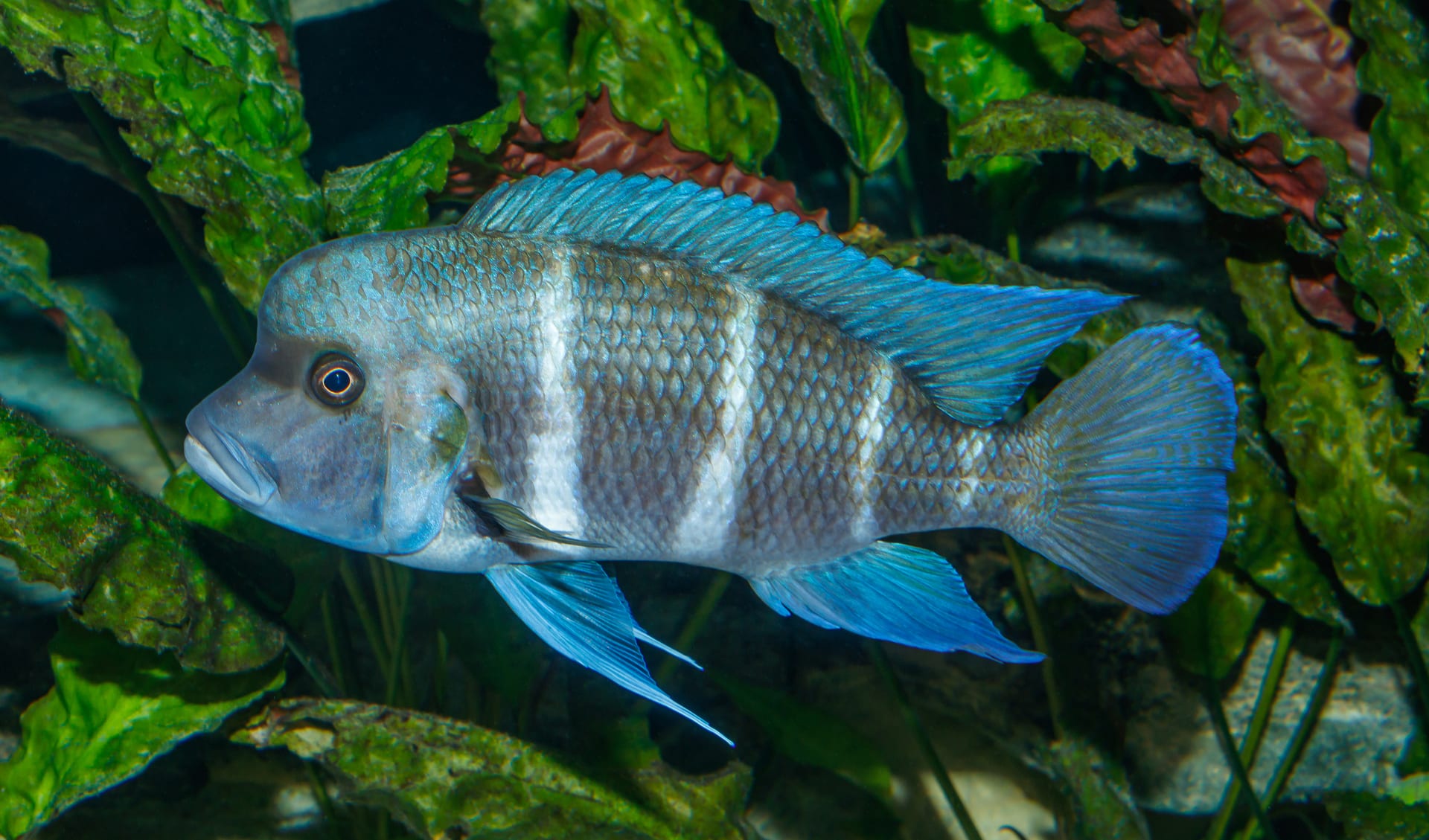
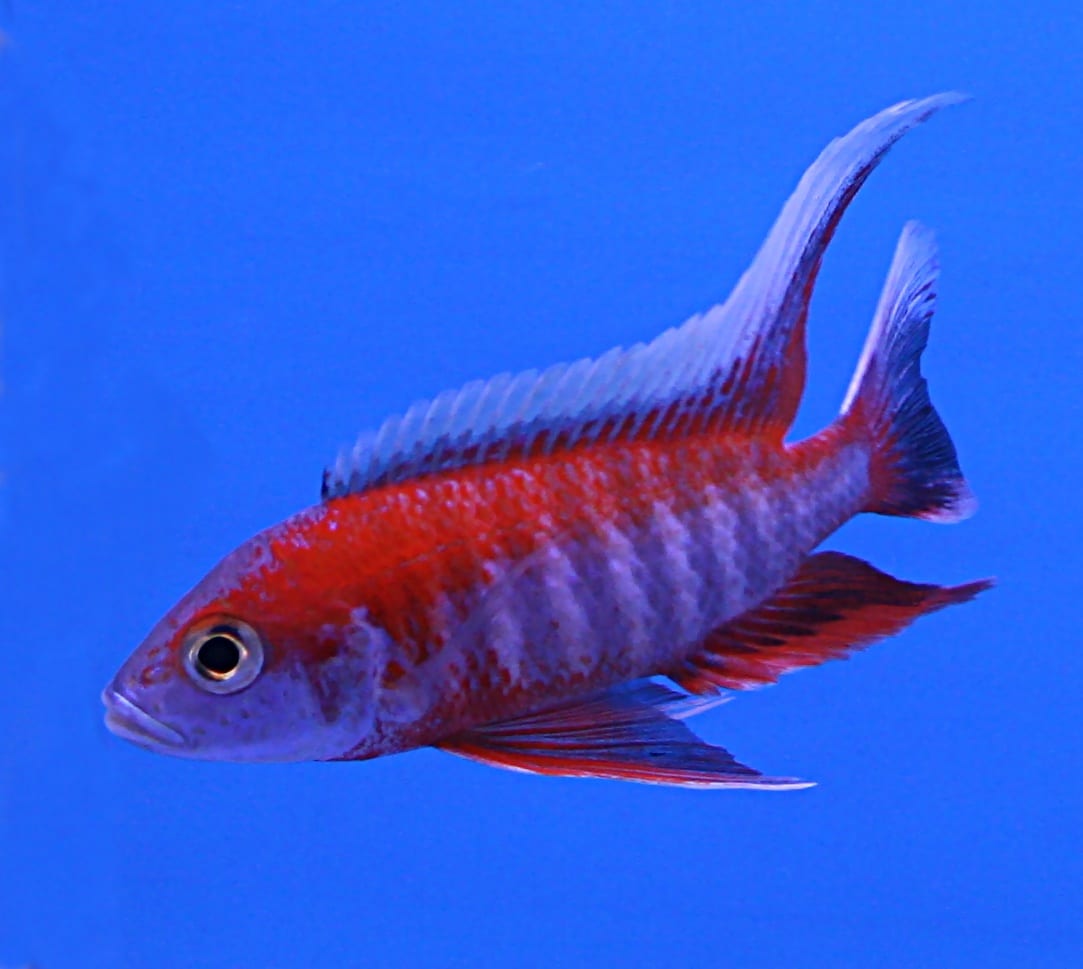
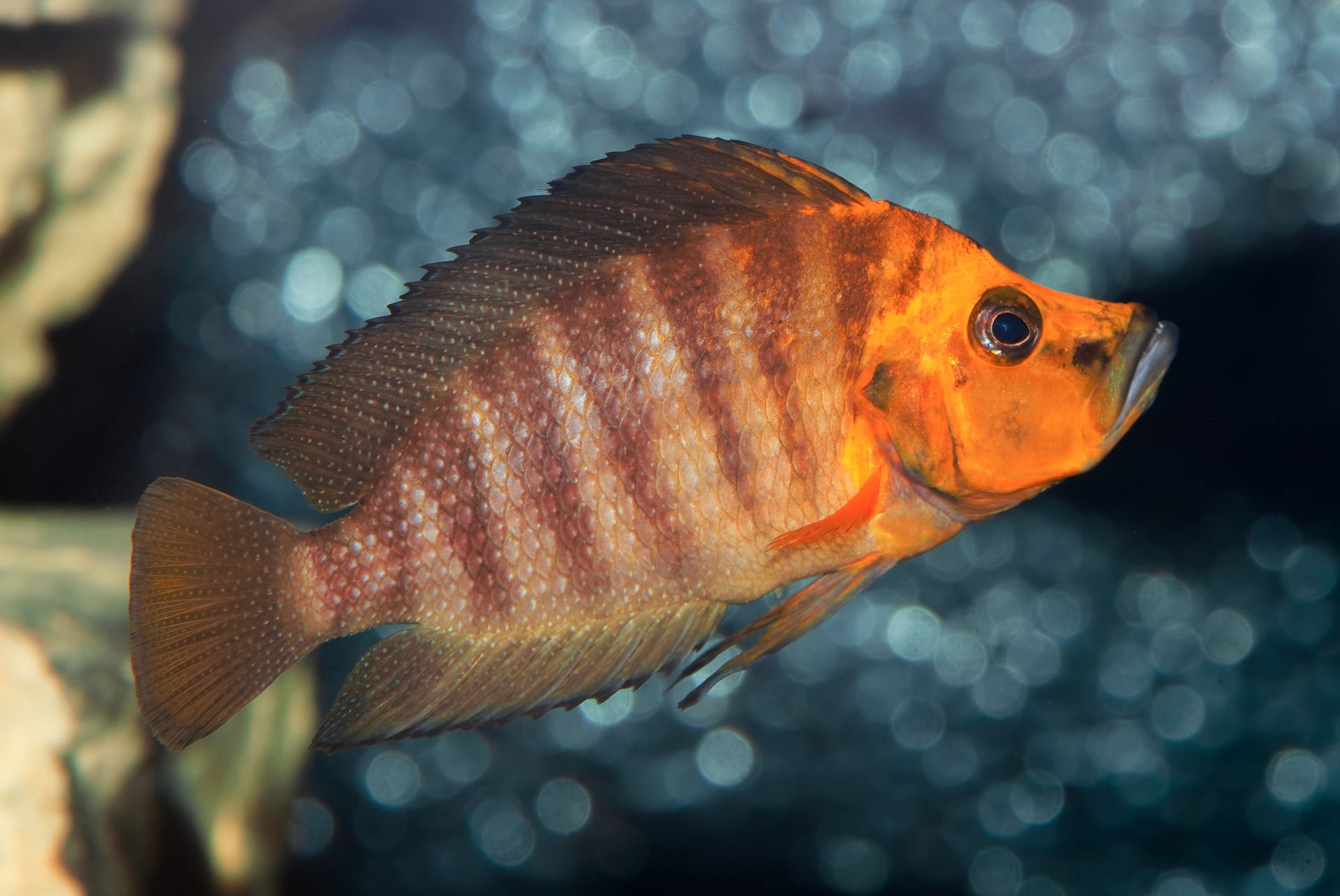
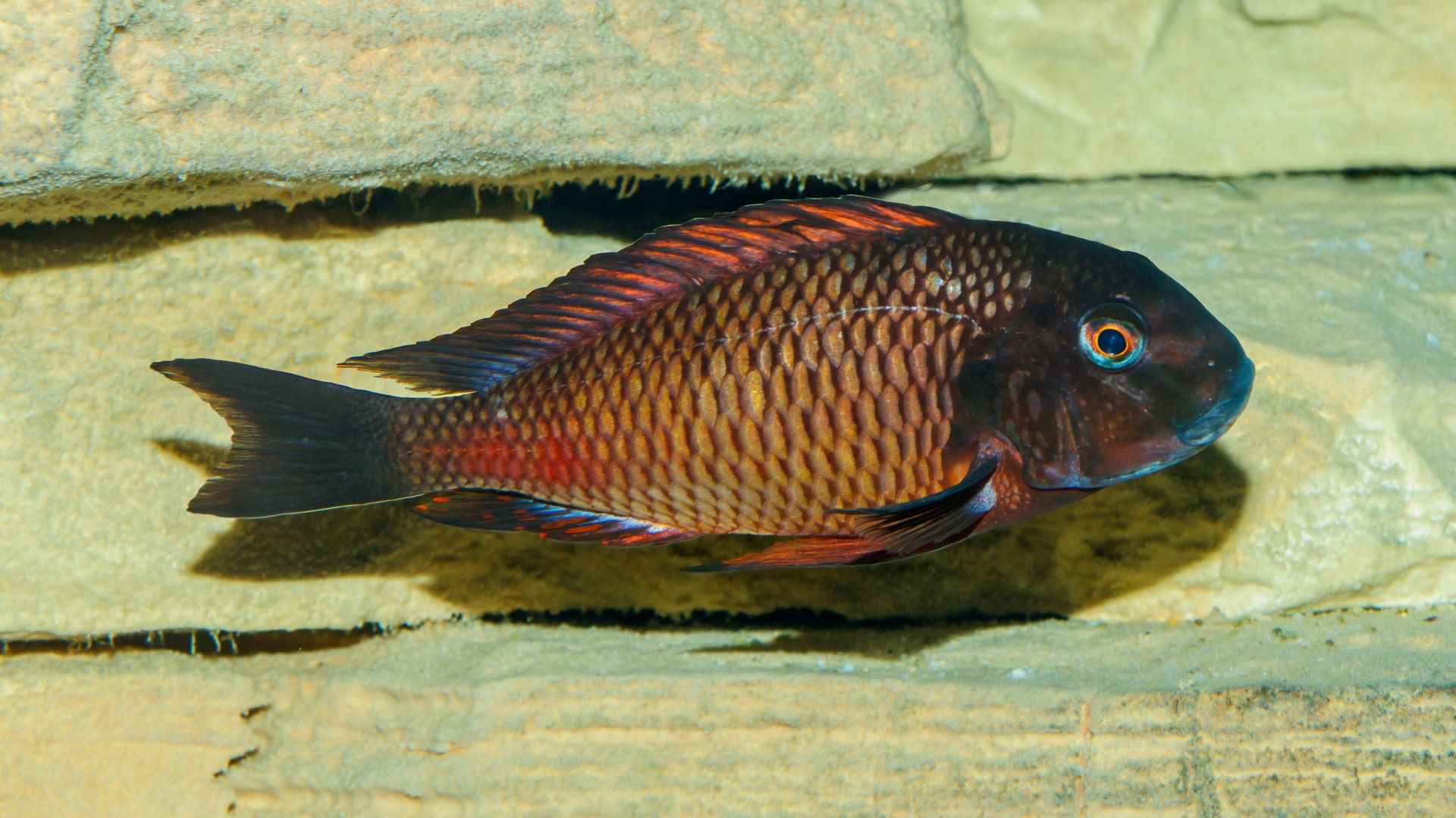
An algae-grazing cichlid endemic to Lake Tanganyika. More than 40 geographic colour morphs are known, ranging from dark green to flame red and yellow. Long-term success depends on keeping a group and feeding a vegetable-based diet.
Difficulty
Intermediate
Temperature
23〜27℃
Size
Up to about 14.5cm
Diet
Spirulina flakes, blanched spinach, nori and other vegetable matter
About
Tropheus moorii is a cichlid endemic to the rocky shores of Lake Tanganyika, reaching about 14.5cm. Isolation between rocky habitats has produced more than 40 colour morphs, from dark green through flame red to yellow. In the wild it grazes filamentous algae on shallow rocks, and in the aquarium the diet should be based on spirulina flakes, blanched spinach and nori, avoiding beefheart and other animal meats. It suits hard alkaline water of pH 8.0-9.5, 8-25 dGH and 23-27C. Conspecific squabbling is constant, so the standard approach is to introduce 20-30 fish at once to spread out the aggression, with 6-10 females per male. Breeding is maternal mouthbrooding: females hold roughly 5-20 eggs for about a month. The IUCN lists the species as Near Threatened.
Source: Wikipedia (CC BY-SA 4.0)
Size of the Blunthead Cichlid
The Blunthead Cichlid grows to Up to about 14.5cm.
Temperature & humidity for the Blunthead Cichlid
The ideal temperature for the Blunthead Cichlid is 23〜27℃.
Basic Info
Origin
Africa: endemic to Lake Tanganyika
Size
Up to about 14.5cm
Temperature
23〜27℃
Diet
Spirulina flakes, blanched spinach, nori and other vegetable matter
Care Specifications
- pH
- 8–9.5
- Hardness (GH)
- 8–25 dGH
- Water Temp.
- 23–27℃
- Min. Tank
- 108 L
Semi-aggressiveGroupBreeding: Moderate
Sources: Seriously Fish: Tropheus moorii / FishBase: Tropheus moorii
References & Sources
Edited & verified by: BreederDirect editorial team
The taxonomic, regulatory, and husbandry data on this page are compiled and verified against the authoritative primary sources below.
Taxonomy & Authority
Accepted name: Tropheus moorii Boulenger, 1898
Authority databases: FishBase
Nomenclature follows global taxonomic authority databases.
Regulations & Conservation Status
Not CITES-listedIUCN NT · Near Threatened
Sources: CITES Appendices (species not listed) / IUCN Red List
Regulations may change. Always verify the latest information with the relevant authorities.
Blunthead Cichlid Listings
Loading latest listingsFind listings for this species