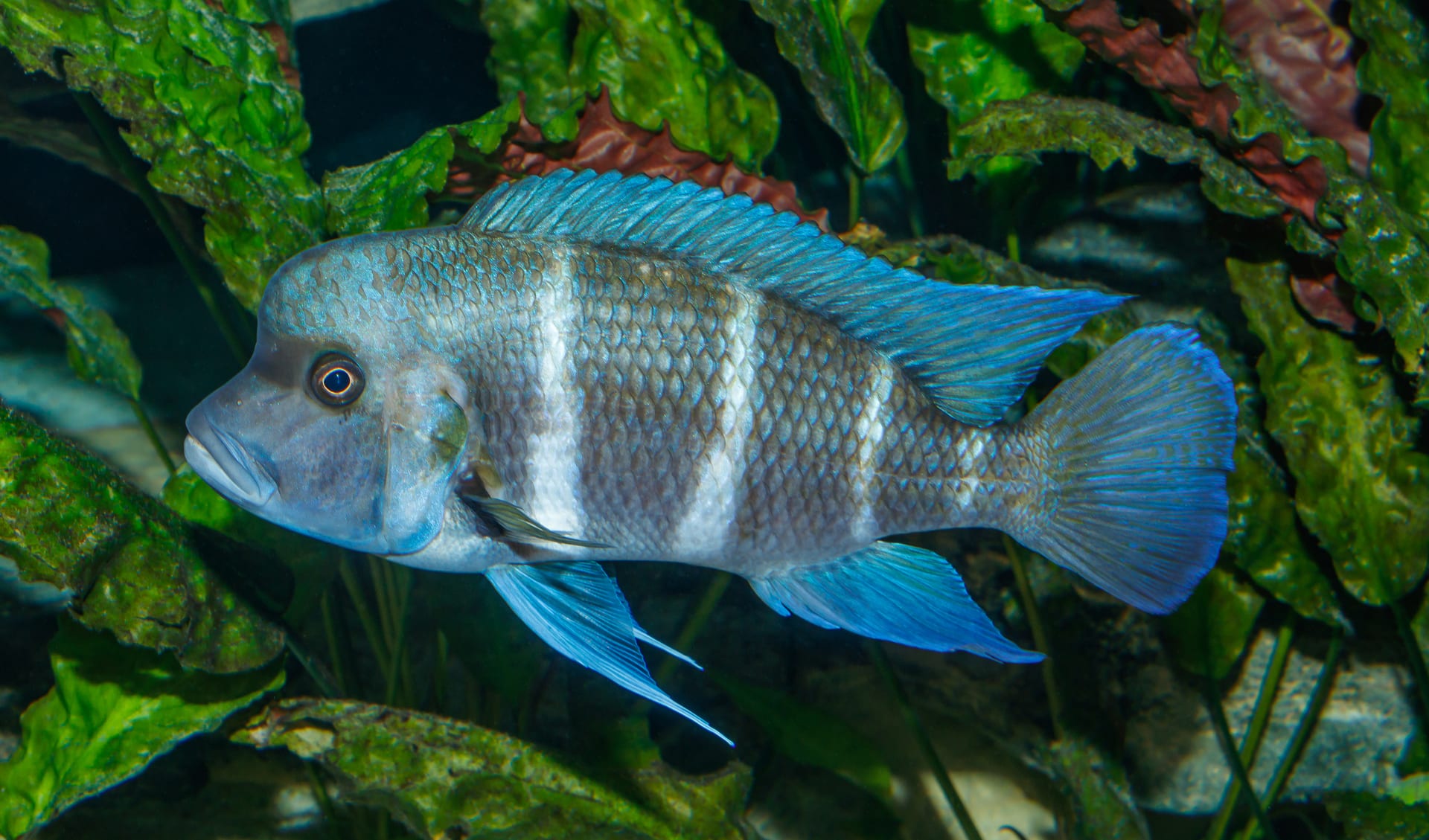
Source: Wikimedia Commons
Frontosa
IntermediateCyphotilapia frontosa
A large cichlid endemic to the northern half of Lake Tanganyika. Adults develop a prominent nuchal hump and reach 33cm. It shoals at depths of 30-50m and preys on small fishes; peaceful, but it needs a large aquarium.
Difficulty
Intermediate
Temperature
23〜27℃
Lifespan
Over 25 years in captivity
Size
Up to about 33cm total length (about 25.5cm standard length)
Diet
High quality prepared foods, live or frozen Artemia, mosquito larvae and shrimp
About
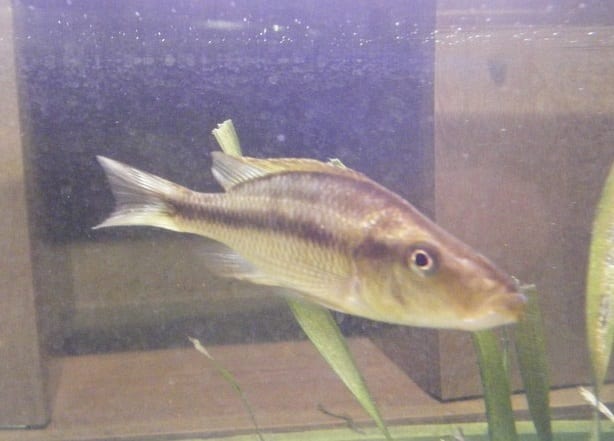
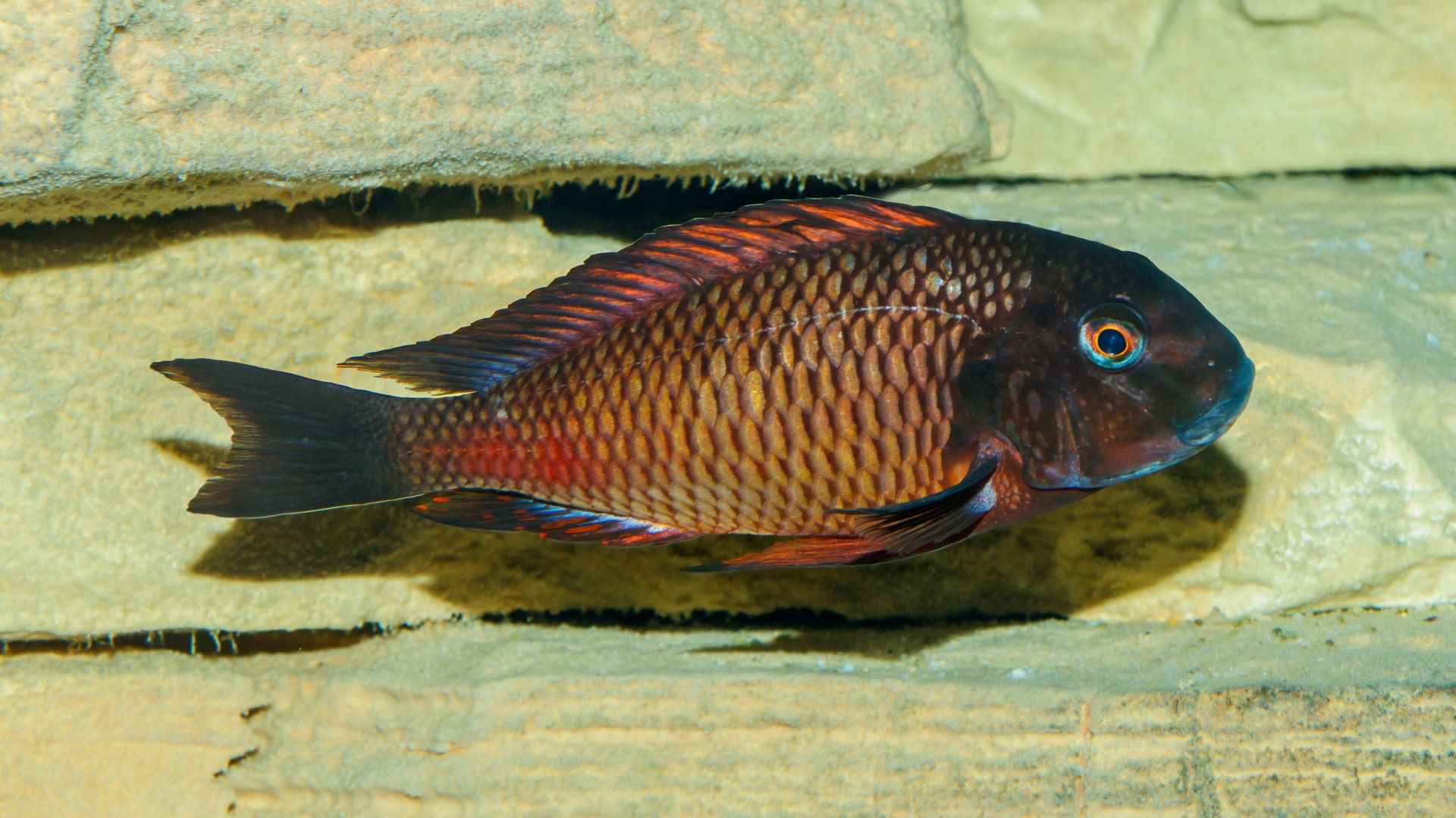
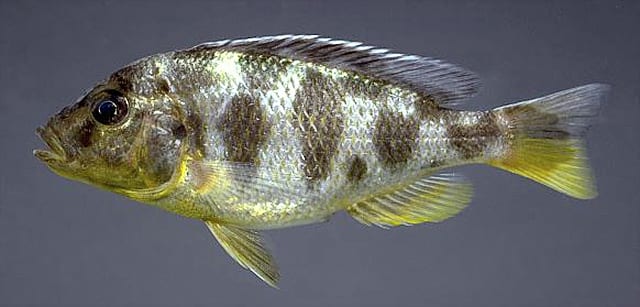
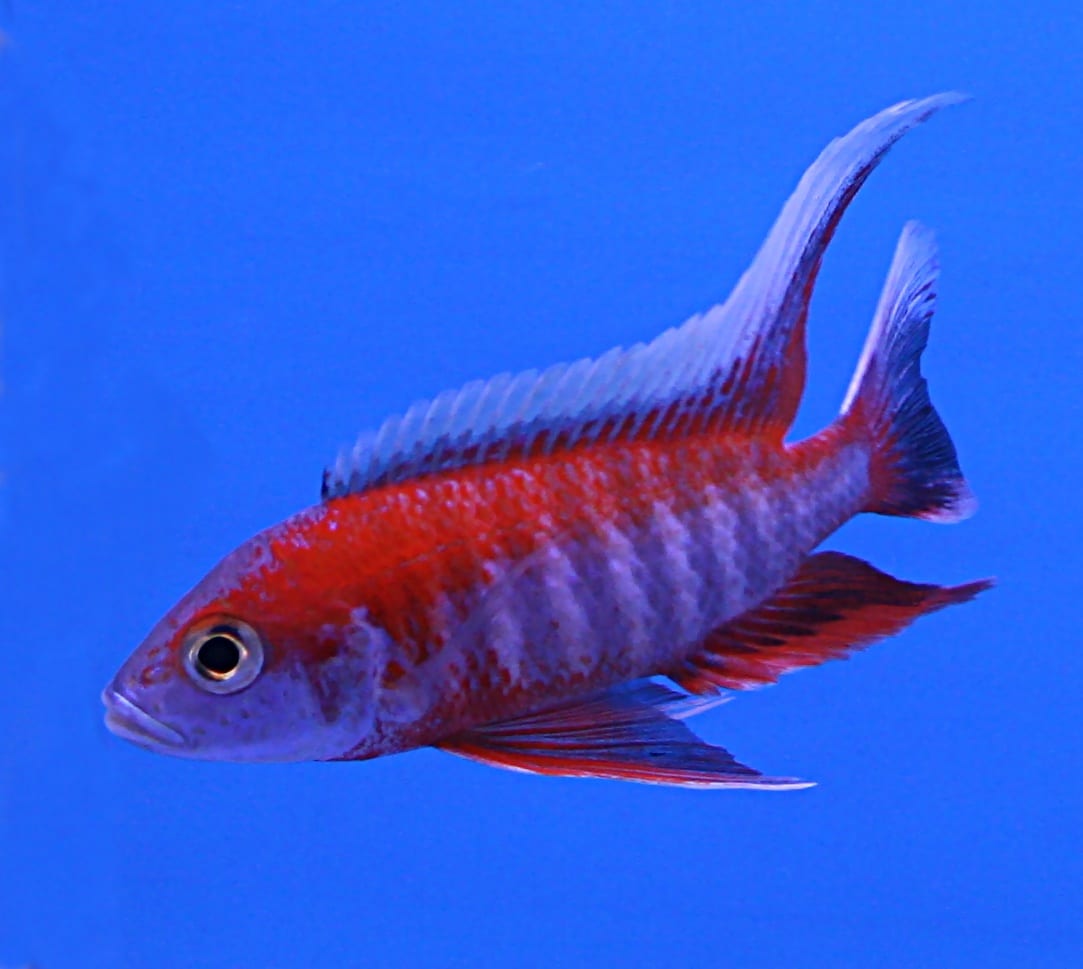
Cyphotilapia frontosa is a large cichlid endemic to the northern half of Lake Tanganyika, reaching 33cm in total length (about 25.5cm standard length). A large nuchal hump develops with age and is most pronounced in old fish. By day it stays at 30-50m and rises into the shallows at dawn to prey on shoaling fishes such as Cyprichromis. It is peaceful for its size, but adult bulk means a tank of about 240x60cm and 864 litres, with a group of at least five fish. Water should be pH 8.0-9.0, 10-25 dGH and 23-27C. Anything small enough to swallow will be eaten, so tank mates are limited to medium-sized Tanganyikan species. Breeding is maternal mouthbrooding, with 10-50 eggs carried for 35-50 days or more. The species can live over 25 years and is listed as Near Threatened by the IUCN.
Source: Wikipedia (CC BY-SA 4.0)
Lifespan of the Frontosa
The Frontosa lives Over 25 years in captivity.
Size of the Frontosa
The Frontosa grows to Up to about 33cm total length (about 25.5cm standard length).
Temperature & humidity for the Frontosa
The ideal temperature for the Frontosa is 23〜27℃.
Basic Info
Origin
Africa: endemic to the northern half of Lake Tanganyika
Lifespan
Over 25 years in captivity
Care Specifications
- pH
- 8–9
- Hardness (GH)
- 10–25 dGH
- Water Temp.
- 23–27℃
- Min. Tank
- 864 L
Semi-aggressiveGroupBreeding: Moderate
Sources: Seriously Fish: Cyphotilapia frontosa / FishBase: Cyphotilapia frontosa
References & Sources
Edited & verified by: BreederDirect editorial team
The taxonomic, regulatory, and husbandry data on this page are compiled and verified against the authoritative primary sources below.
Taxonomy & Authority
Accepted name: Cyphotilapia frontosa Boulenger, 1906
Authority databases: FishBase
Nomenclature follows global taxonomic authority databases.
Regulations & Conservation Status
Not CITES-listedIUCN NT · Near Threatened
Sources: CITES Appendices (species not listed) / IUCN Red List
Regulations may change. Always verify the latest information with the relevant authorities.
Frontosa Listings
Loading latest listingsFind listings for this species