Source: Wikimedia Commons
Venustus
IntermediateNimbochromis venustus
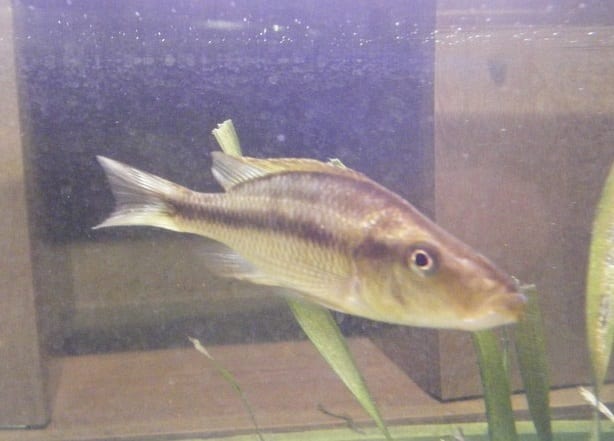
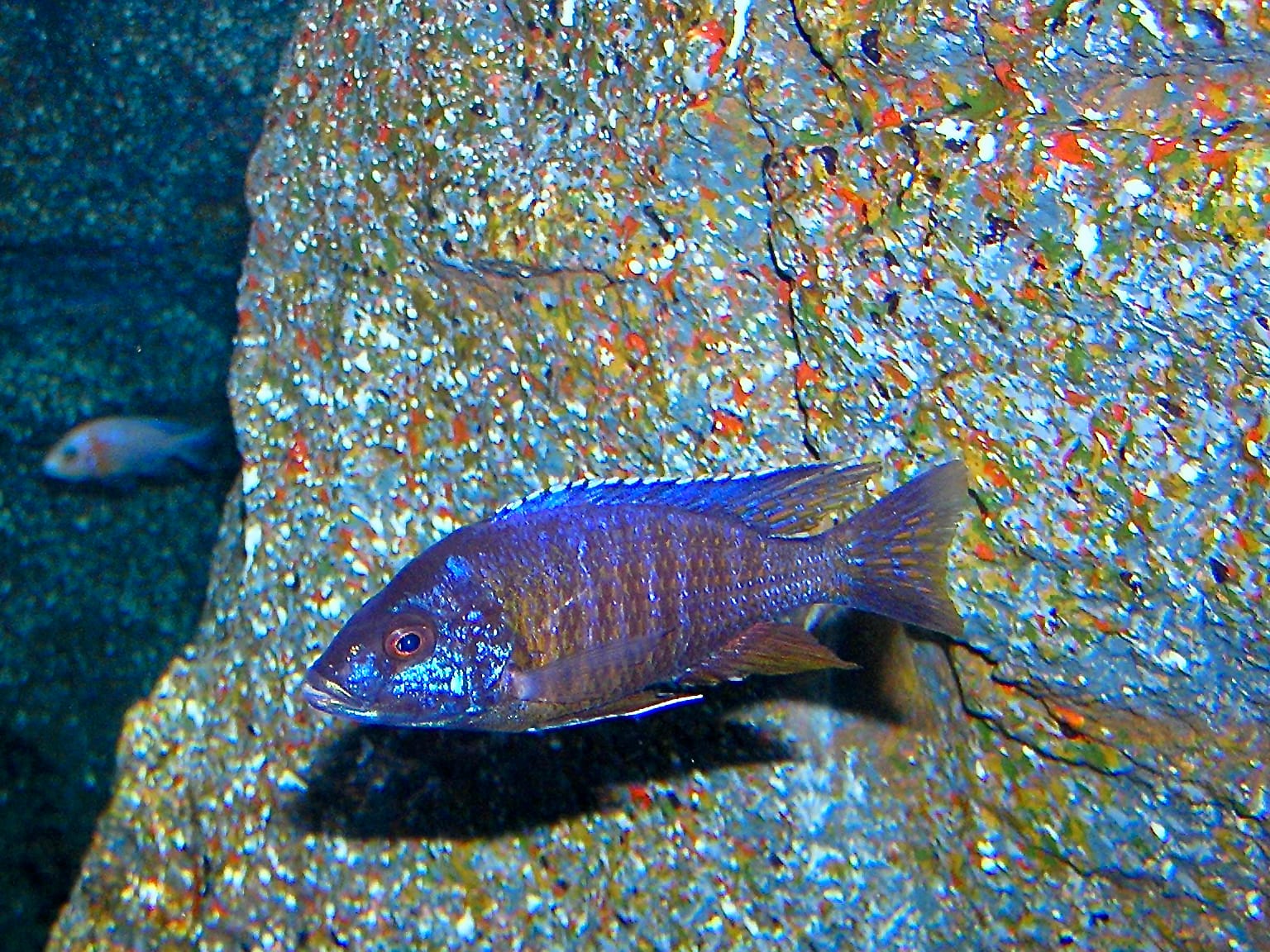
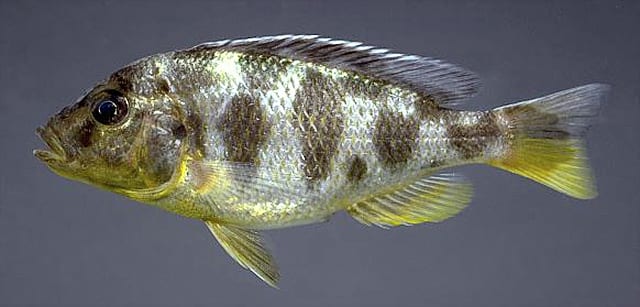
A large haplochromine patterned in leopard-like blotches over yellow-brown. It ambushes small fish while half-buried in sand and reaches 25cm, so a large tank is essential.
Difficulty
Intermediate
Temperature
24〜28℃
Lifespan
10-15 years
Size
20-25cm
Diet
Prepared foods and frozen foods such as prawn and whitebait
About
Nimbochromis venustus is a large haplochromine widely distributed throughout Lake Malawi. FishBase records a maximum of 25cm TL. It lives over sand at 6-23m, with juveniles in shallow water near rock and adults foraging over deeper sand. Half-grown fish have been observed lying motionless, partly buried in the sand, waiting for small fish to come within reach. The flanks carry irregular leopard-like blotches, and mature males develop a blue head. Being piscivorous it cannot be kept with small fish; choose large Lake Malawi cichlids instead. Males fight, so keep it singly or as a harem of one male with three to six females. Use 120 x 45cm (about 205 litres) or more at pH 7.6-8.8, 10-25 dGH and 24-28C. Females mouthbrood for about three weeks, but breeding is not easy.
Source: Wikipedia (CC BY-SA 4.0)
Lifespan of the Venustus
The Venustus lives 10-15 years.
Size of the Venustus
The Venustus grows to 20-25cm.
Temperature & humidity for the Venustus
The ideal temperature for the Venustus is 24〜28℃.
Basic Info
Origin
Lake Malawi, Africa (endemic, widely distributed)
Lifespan
10-15 years
Size
20-25cm
Care Specifications
- pH
- 7.6–8.8
- Hardness (GH)
- 10–25 dGH
- Water Temp.
- 24–28℃
- Min. Tank
- 205 L
AggressiveGroupBreeding: Moderate
Sources: Seriously Fish / FishBase
References & Sources
Edited & verified by: BreederDirect editorial team
The taxonomic, regulatory, and husbandry data on this page are compiled and verified against the authoritative primary sources below.
Taxonomy & Authority
Accepted name: Nimbochromis venustus (Boulenger, 1908)
Authority databases: FishBase
Nomenclature follows global taxonomic authority databases.
Regulations & Conservation Status
Not CITES-listedIUCN LC · Least Concern
Sources: CITES Appendices (species not listed) / FishBase (IUCN assessment: LC)
Regulations may change. Always verify the latest information with the relevant authorities.
Venustus Listings
Loading latest listingsFind listings for this species