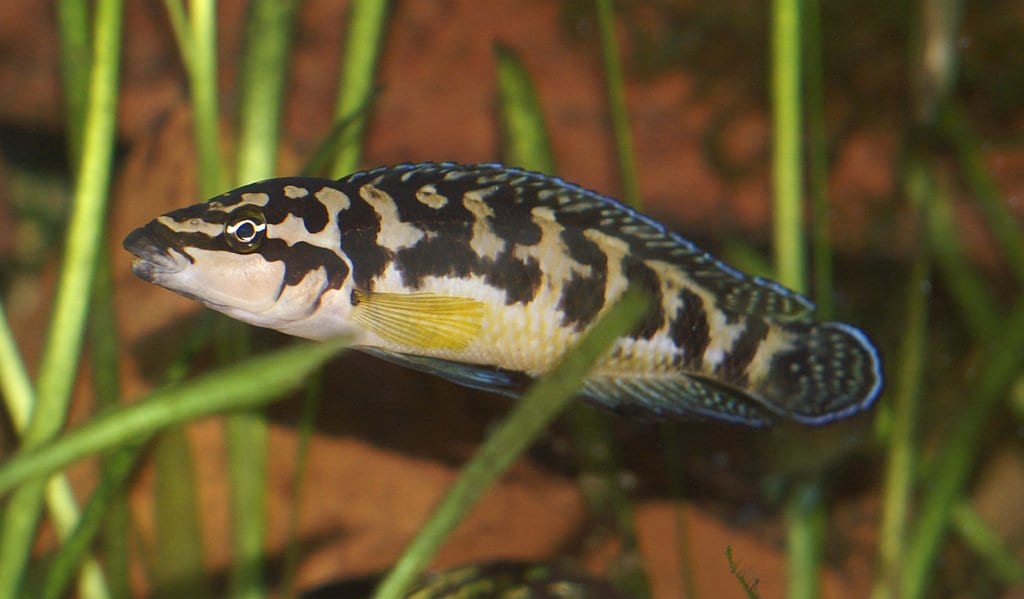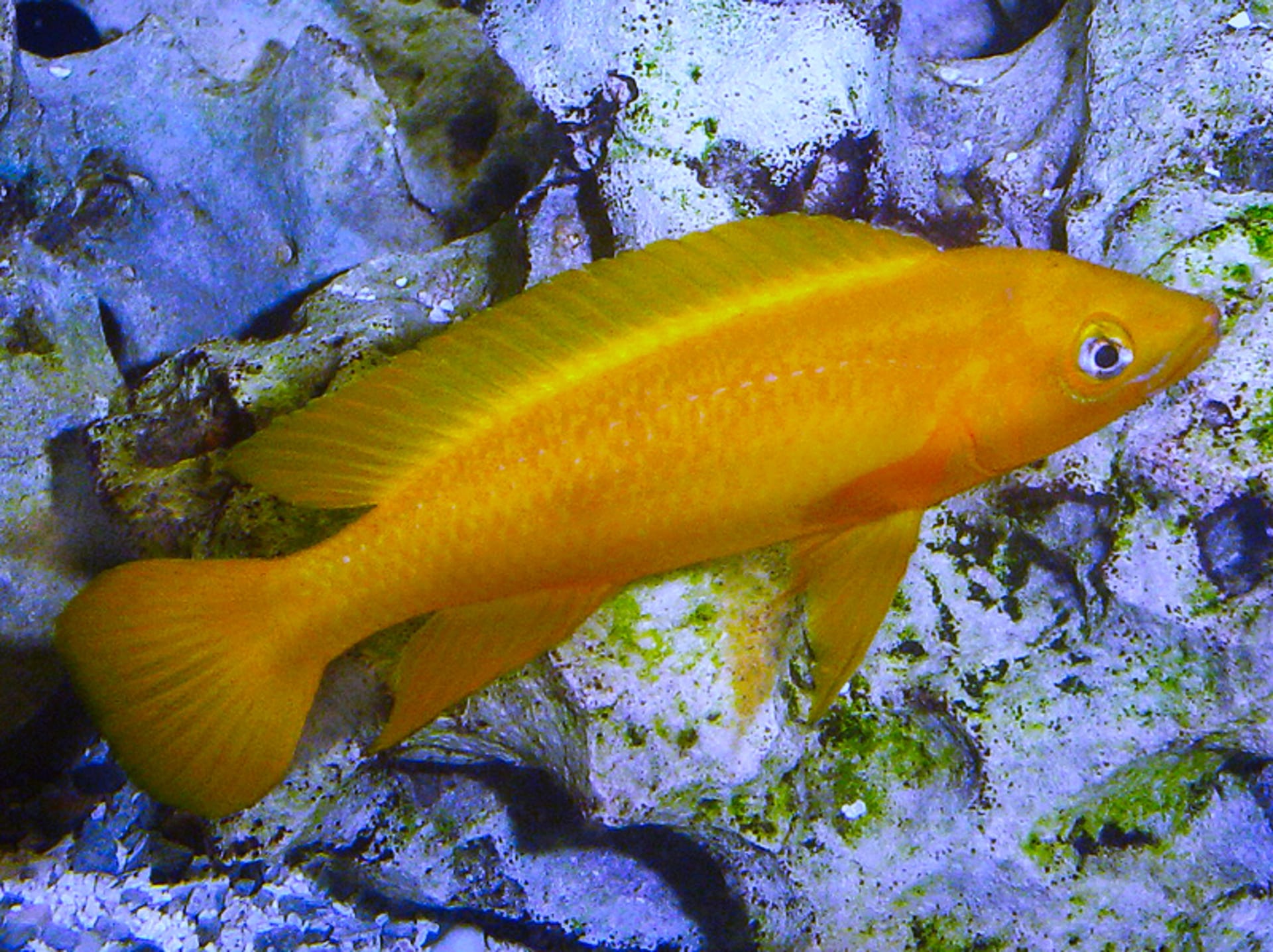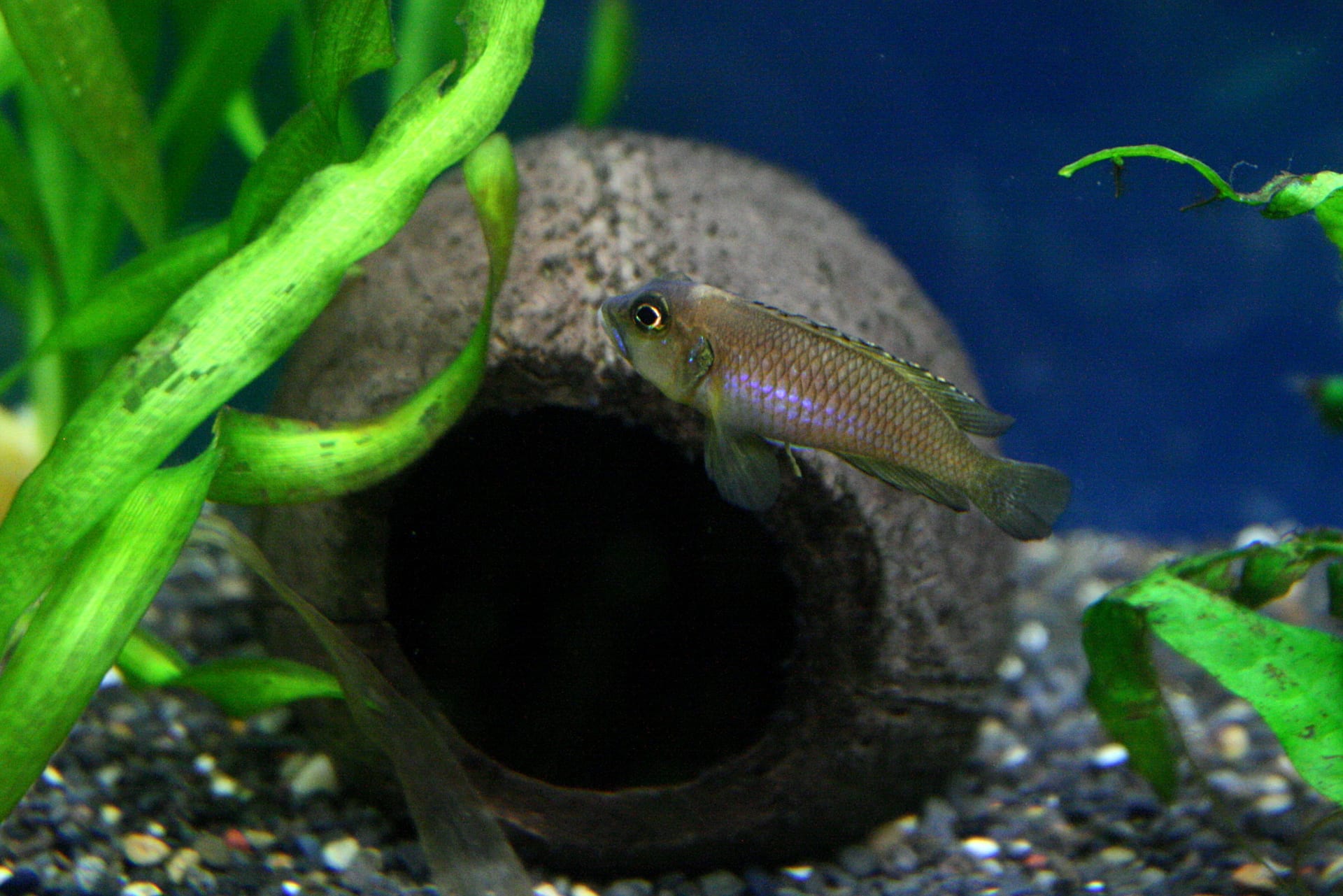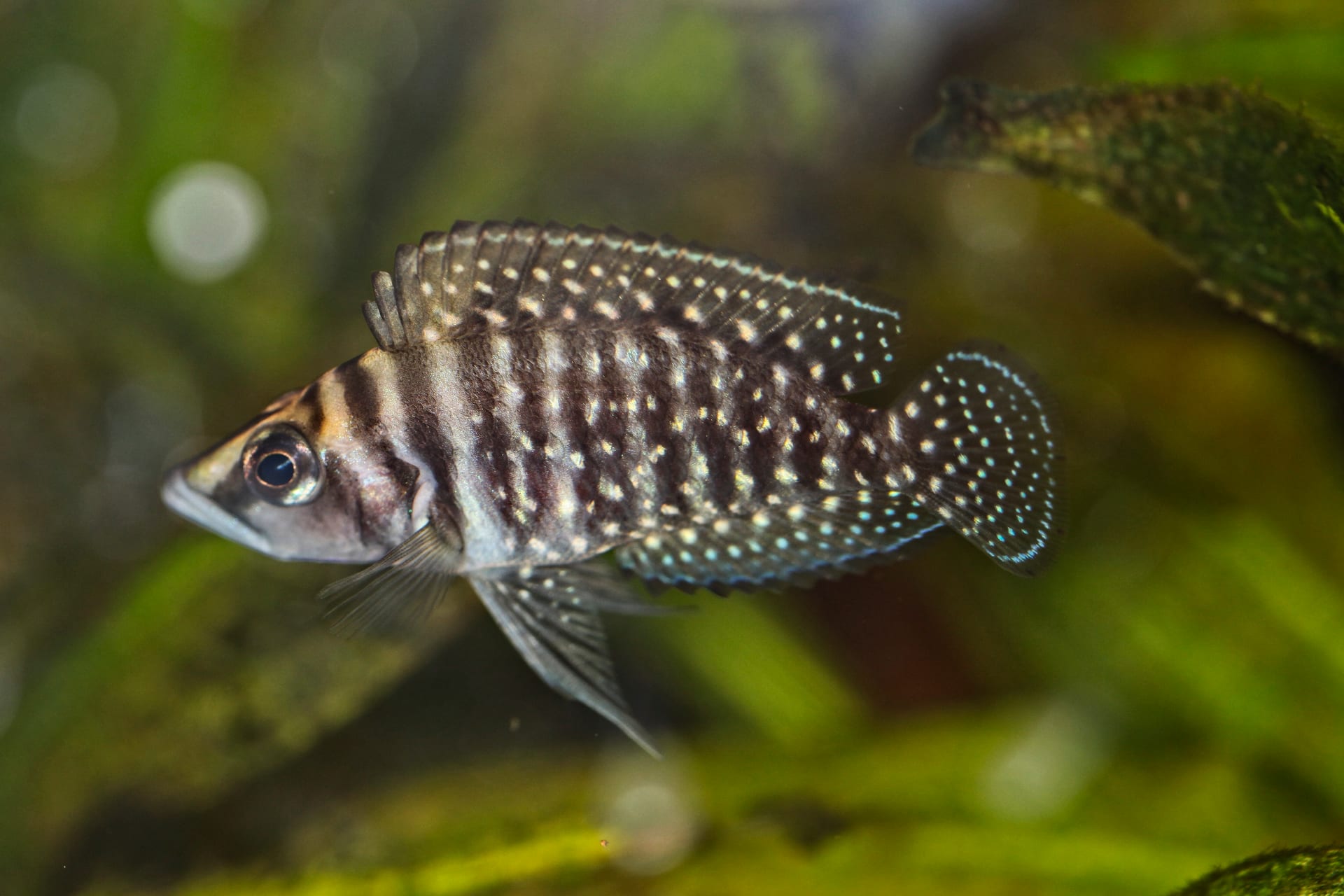
Source: Wikimedia Commons
Brichardi
BeginnerNeolamprologus brichardi
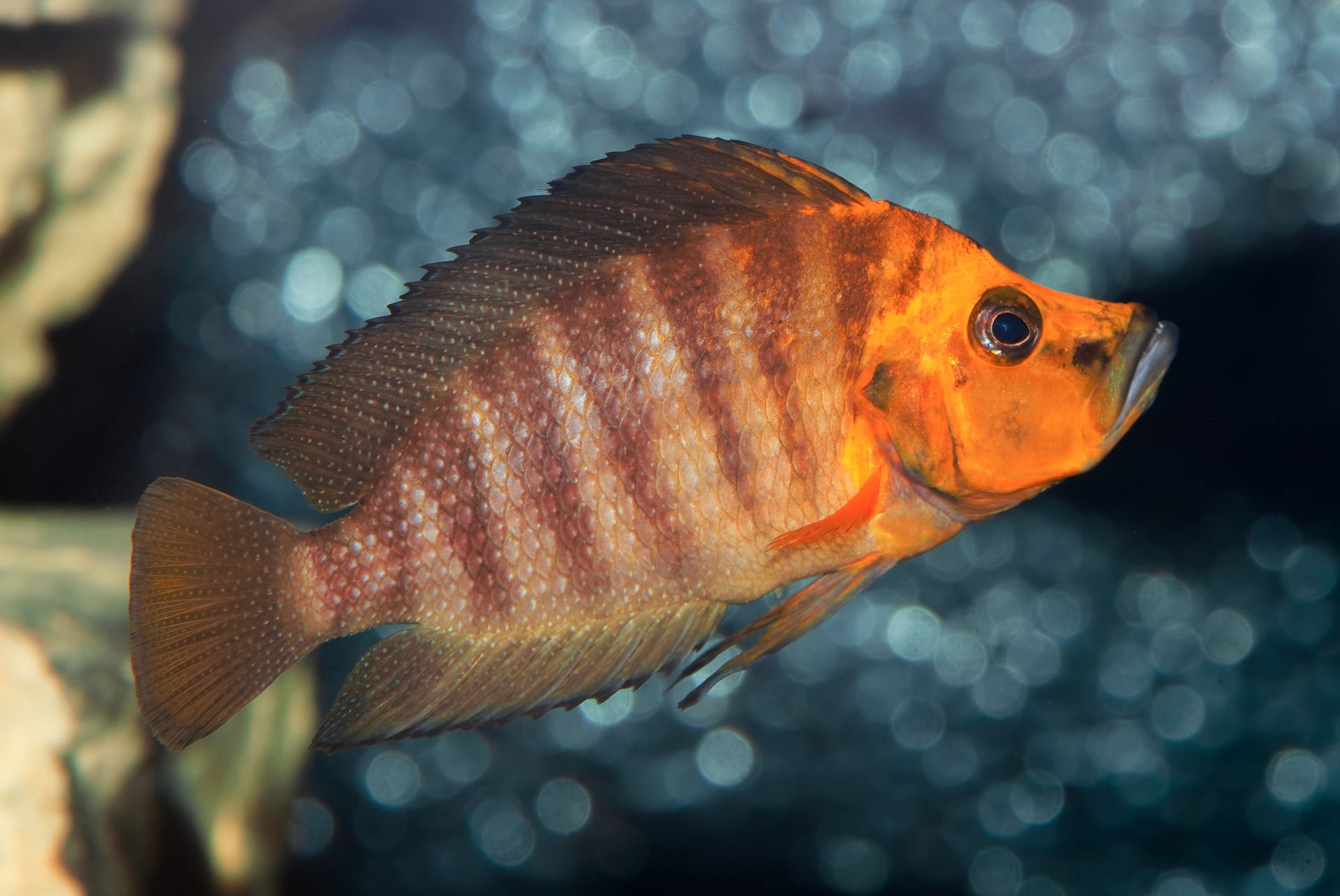
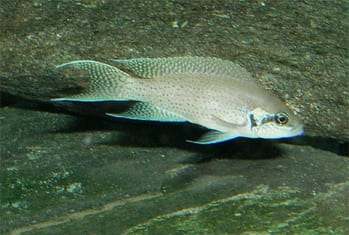
A small Lake Tanganyika cichlid, pale grey-brown with the upper and lower lobes of the tail drawn into long filaments. Pairs defend a territory and build up a colony over generations in the aquarium.
Difficulty
Beginner
Temperature
22〜25℃
Lifespan
8-10 years
Size
About 9cm
Diet
Frozen and live zooplankton, prepared foods
About
Neolamprologus brichardi is a small cichlid endemic to the northern part of Lake Tanganyika. FishBase records a maximum of 9cm TL. It is pale grey-brown with a yellow mark on the gill cover, and the upper and lower lobes of the tail extend into long filaments, earning it the name Princess of Burundi. It feeds on zooplankton and spawns on rock in crevices. Breeding pairs are recorded as defending their territory jointly, and Seriously Fish notes for the closely related N. pulcher that the whole group helps the parents guard the fry. FishBase suggests keeping it in pairs with a minimum aquarium length of 80cm. Maintain hard alkaline water at pH 8.0-9.0, 9-19 dGH and 22-25C. Territoriality peaks while fry are being guarded, so choose tank mates that occupy a different level of the tank.
Source: Wikipedia (CC BY-SA 4.0)
Lifespan of the Brichardi
The Brichardi lives 8-10 years.
Size of the Brichardi
The Brichardi grows to About 9cm.
Temperature & humidity for the Brichardi
The ideal temperature for the Brichardi is 22〜25℃.
Basic Info
Origin
Northern Lake Tanganyika, Africa (endemic)
Lifespan
8-10 years
Size
Care Specifications
- pH
- 8–9
- Hardness (GH)
- 9–19 dGH
- Water Temp.
- 22–25℃
Semi-aggressivePairBreeding: Easy
Sources: FishBase / Seriously Fish (covers Brichardi under Neolamprologus pulcher)
References & Sources
Edited & verified by: BreederDirect editorial team
The taxonomic, regulatory, and husbandry data on this page are compiled and verified against the authoritative primary sources below.
Taxonomy & Authority
Accepted name: Neolamprologus brichardi (Poll, 1974)
Authority databases: FishBase
Nomenclature follows global taxonomic authority databases.
Regulations & Conservation Status
Not CITES-listedIUCN LC · Least Concern
Sources: CITES Appendices (species not listed) / FishBase (IUCN assessment: LC)
Regulations may change. Always verify the latest information with the relevant authorities.
Brichardi Listings
Loading latest listingsFind listings for this species