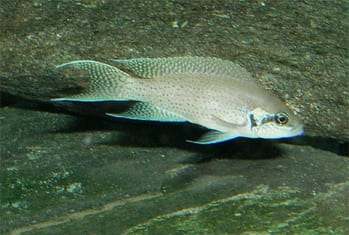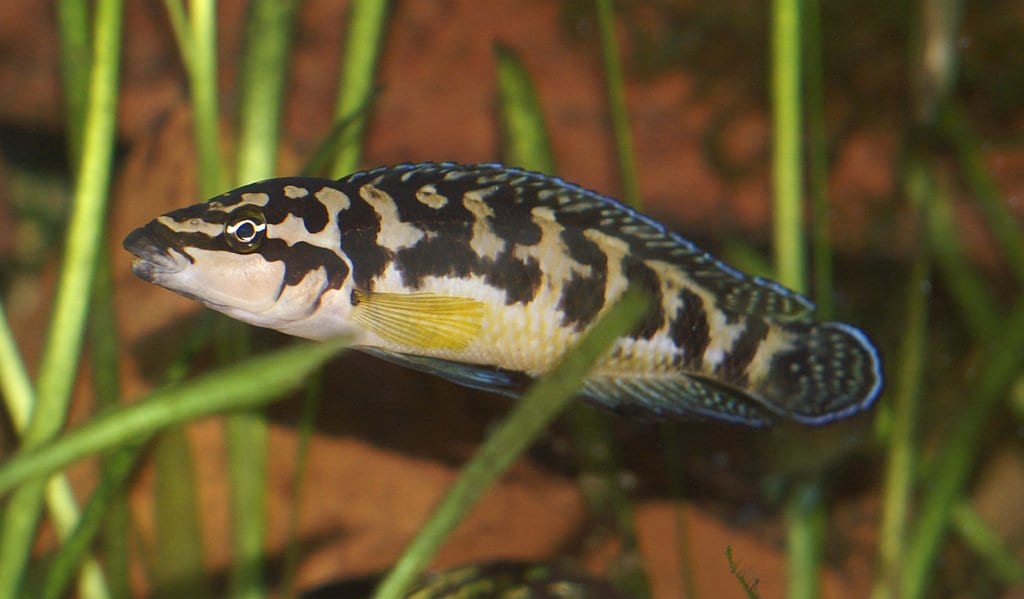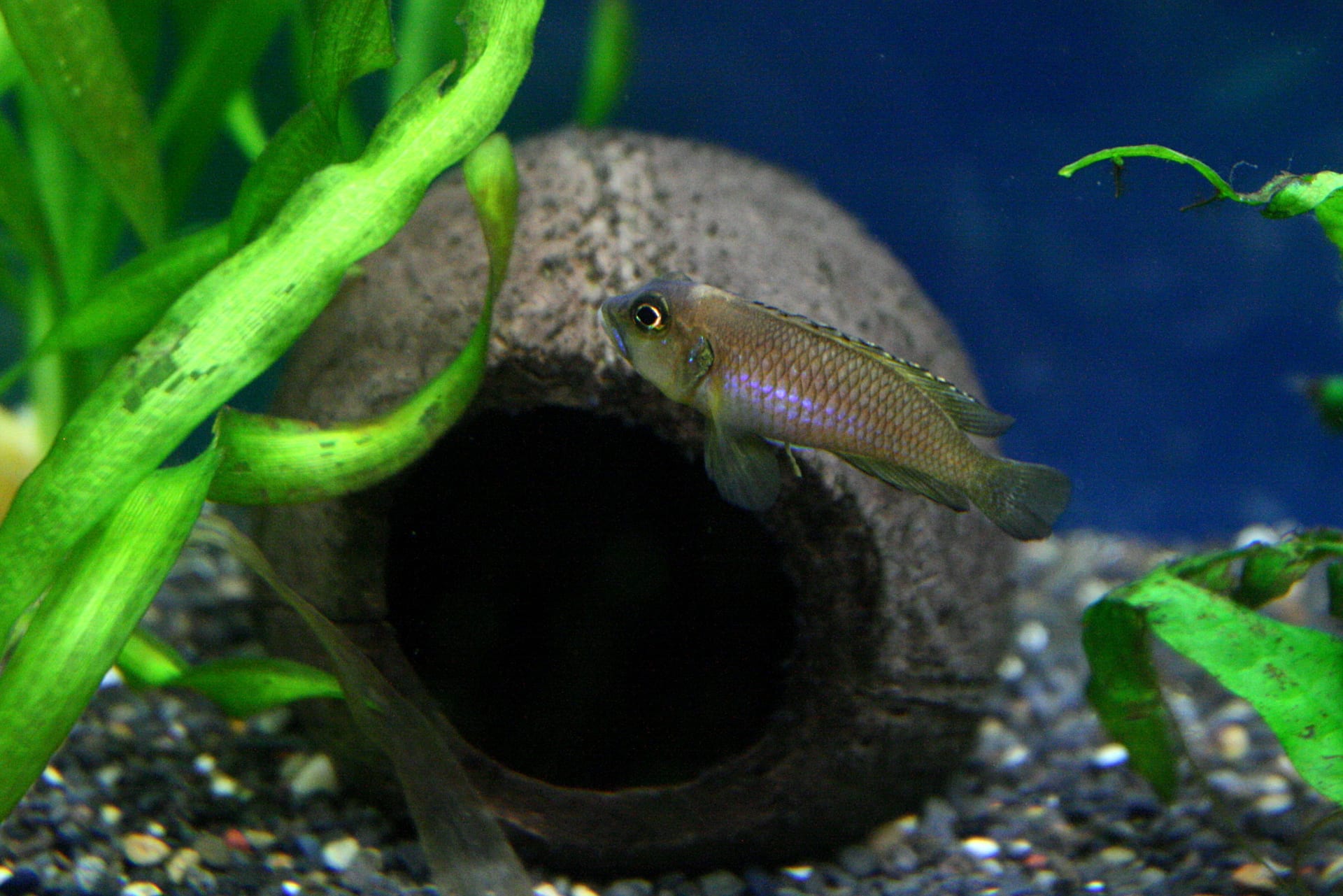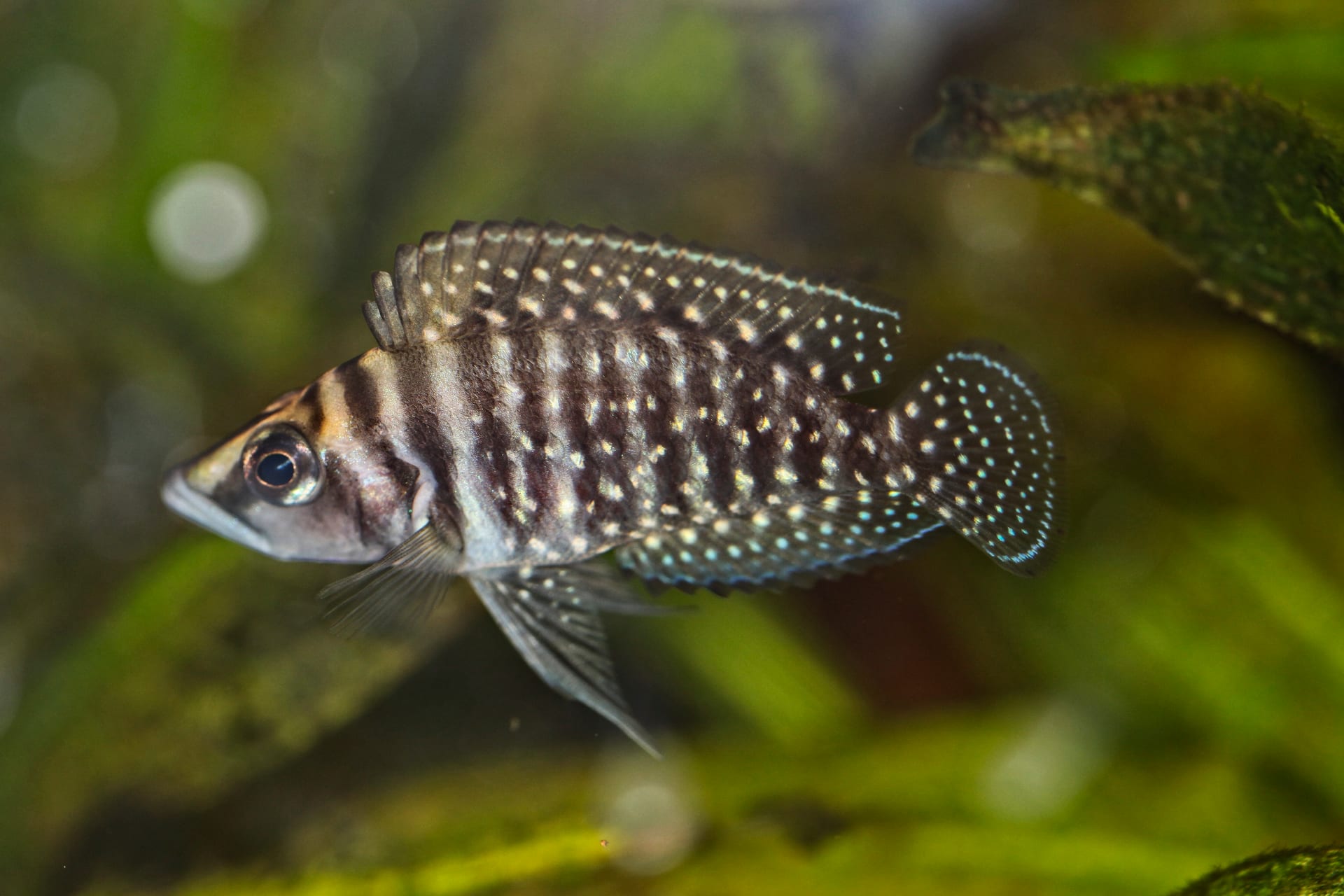
Source: Wikimedia Commons
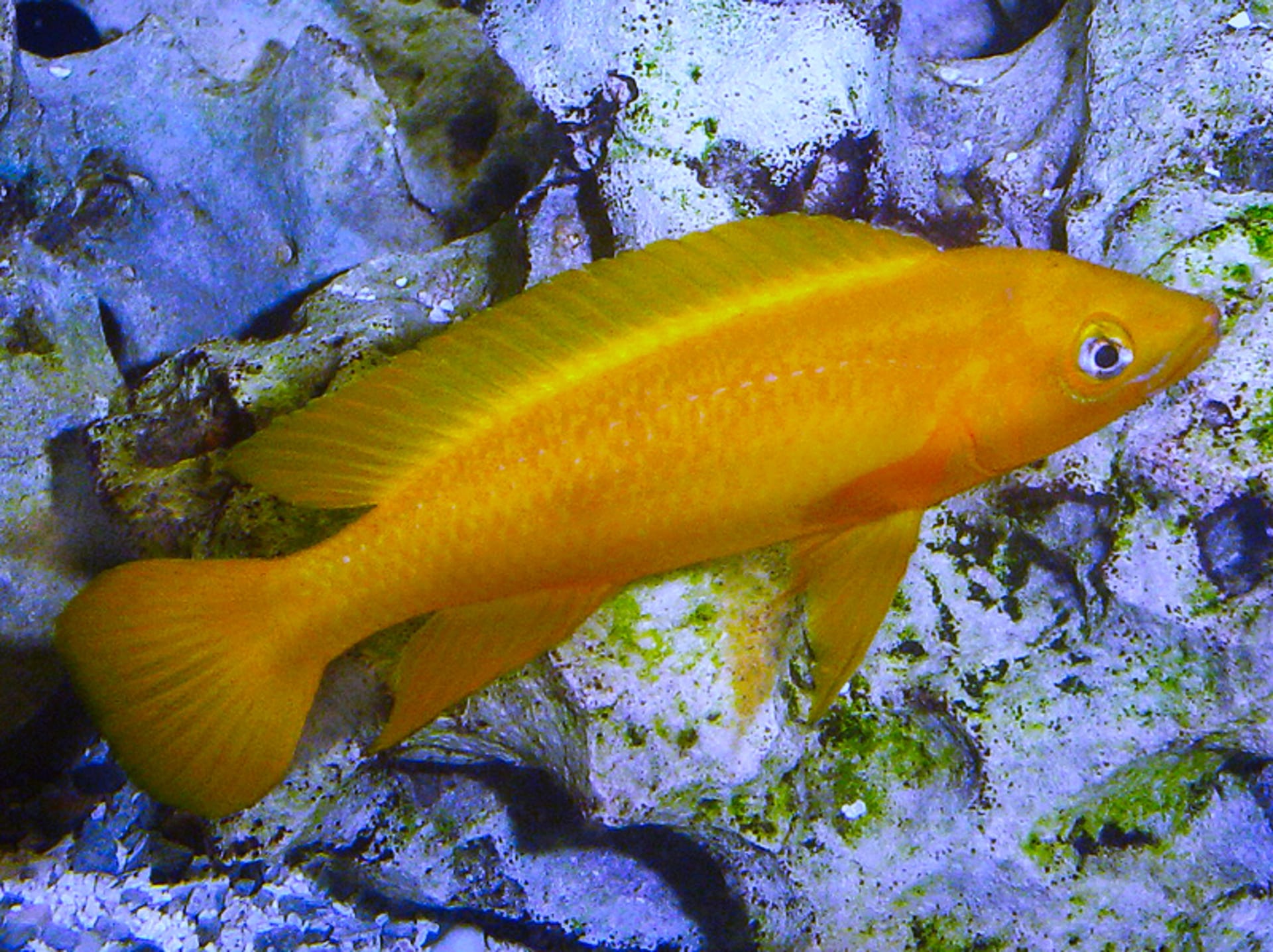
Lemon Cichlid
IntermediateNeolamprologus leleupi
A small Lake Tanganyika cichlid coloured deep yellow to orange. It lives in rocky caves and spawns on the substrate, the pair guarding eggs and fry; a single pair can be kept in a modest tank.
Difficulty
Intermediate
Temperature
23〜27℃
Lifespan
5-8 years
Size
About 10cm
Diet
Mainly frozen and live foods, plus prepared foods and a little vegetable matter
About
Neolamprologus leleupi is a small cichlid endemic to the southern half of Lake Tanganyika. FishBase records a maximum of 10cm TL and Seriously Fish gives 10cm SL. Colour ranges from deep yellow to orange depending on locality, and diet also affects it. It lives in caves in the rock and spawns there, both parents guarding eggs and fry. Outside breeding it is fairly placid, but it is very aggressive toward its own kind, so keep only one pair unless the tank is large. A tank of 75 x 30 x 30cm (about 70 litres) is workable, at pH 7.5-9.0, 8-25 dGH and 23-27C. Pair formation is slow and can take over a year. Clutches reach about 150 eggs, hatching in three to four days with the fry free-swimming after eight to ten days.
Source: Wikipedia (CC BY-SA 4.0)
Lifespan of the Lemon Cichlid
The Lemon Cichlid lives 5-8 years.
Size of the Lemon Cichlid
The Lemon Cichlid grows to About 10cm.
Temperature & humidity for the Lemon Cichlid
The ideal temperature for the Lemon Cichlid is 23〜27℃.
Basic Info
Origin
Southern half of Lake Tanganyika, Africa (endemic)
Lifespan
5-8 years
Size
About 10cm
Care Specifications
- pH
- 7.5–9
- Hardness (GH)
- 8–25 dGH
- Water Temp.
- 23–27℃
- Min. Tank
- 70 L
Semi-aggressivePairBreeding: Moderate
Sources: Seriously Fish / FishBase
References & Sources
Edited & verified by: BreederDirect editorial team
The taxonomic, regulatory, and husbandry data on this page are compiled and verified against the authoritative primary sources below.
Taxonomy & Authority
Accepted name: Neolamprologus leleupi (Poll, 1956)
Authority databases: FishBase
Nomenclature follows global taxonomic authority databases.
Regulations & Conservation Status
Not CITES-listedIUCN LC · Least Concern
Sources: CITES Appendices (species not listed) / FishBase (IUCN assessment: LC)
Regulations may change. Always verify the latest information with the relevant authorities.
Lemon Cichlid Listings
Loading latest listingsFind listings for this species