Source: Wikimedia Commons
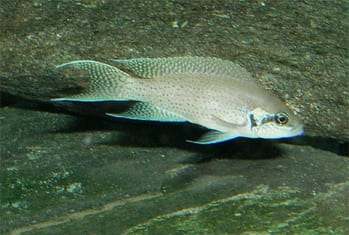
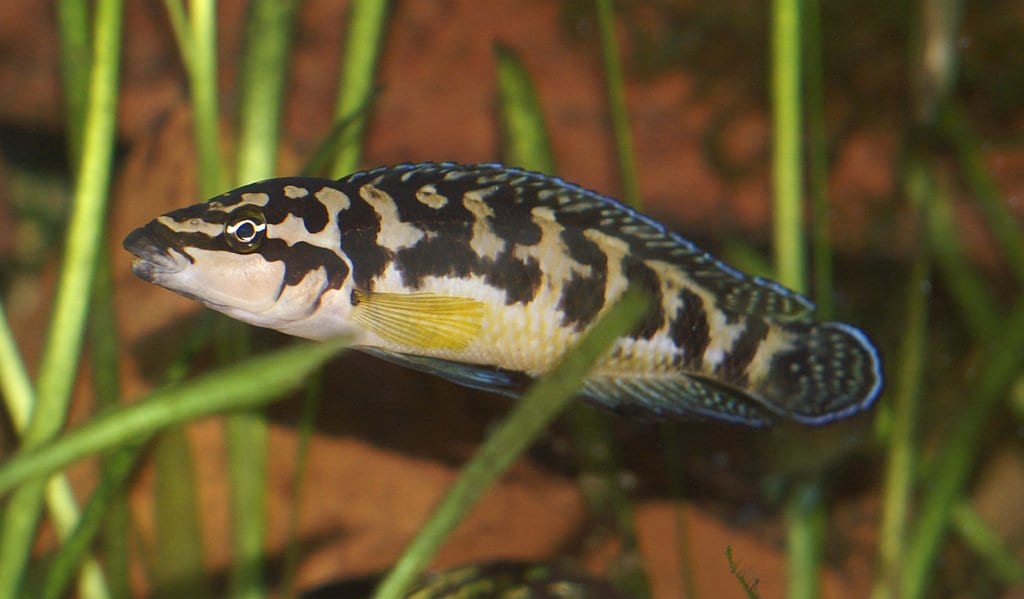
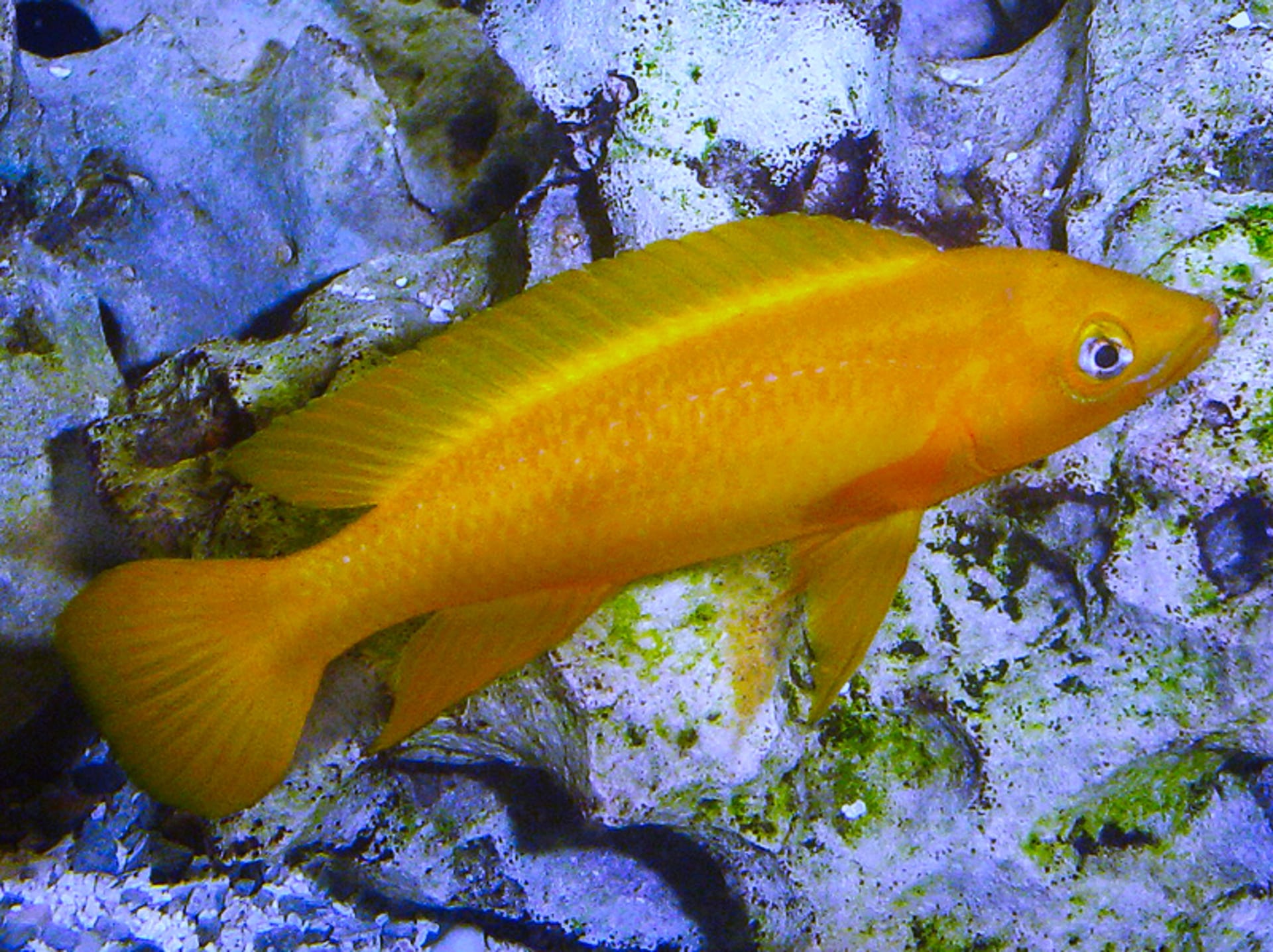
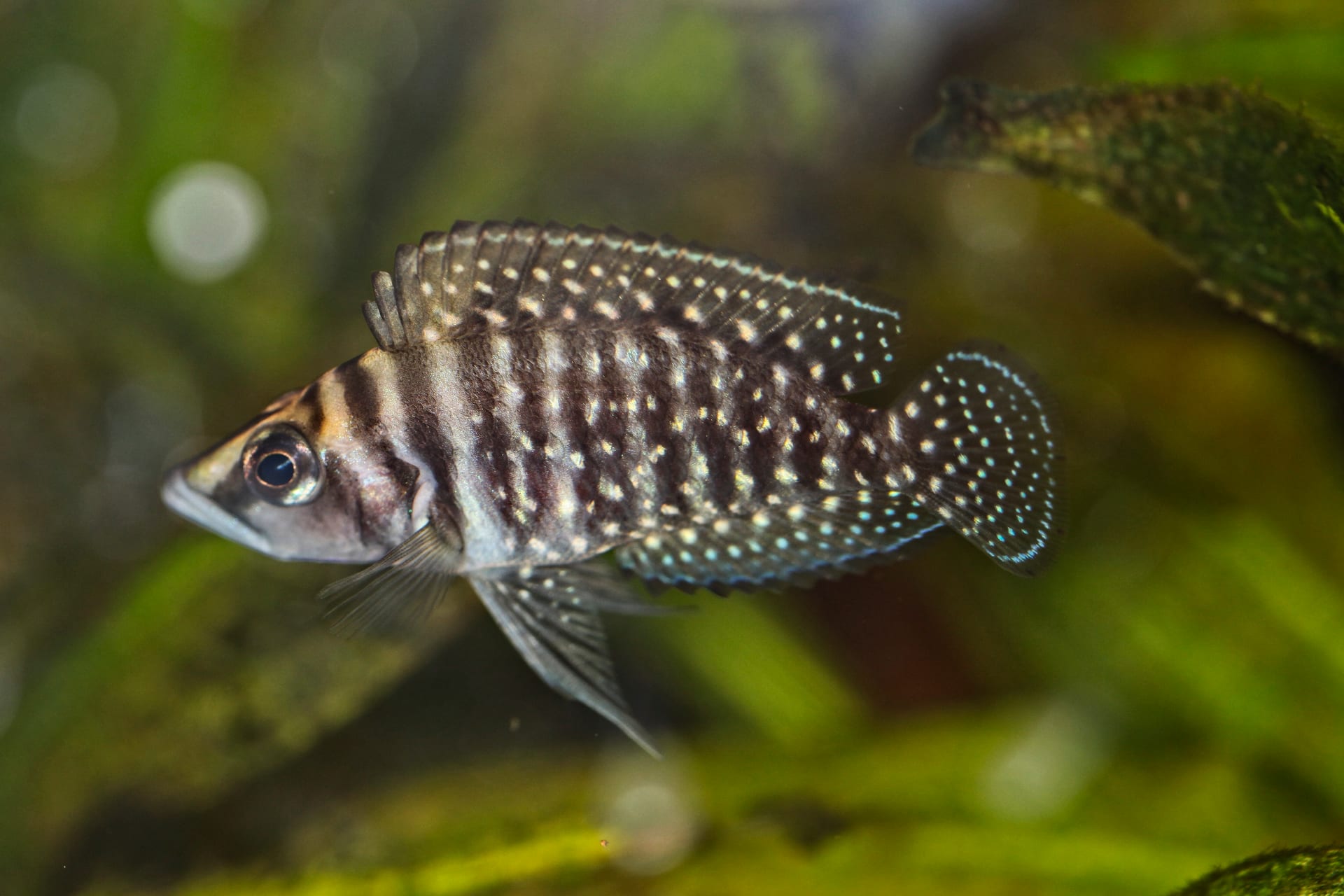
Ocellated Shell-dweller
BeginnerLamprologus ocellatus
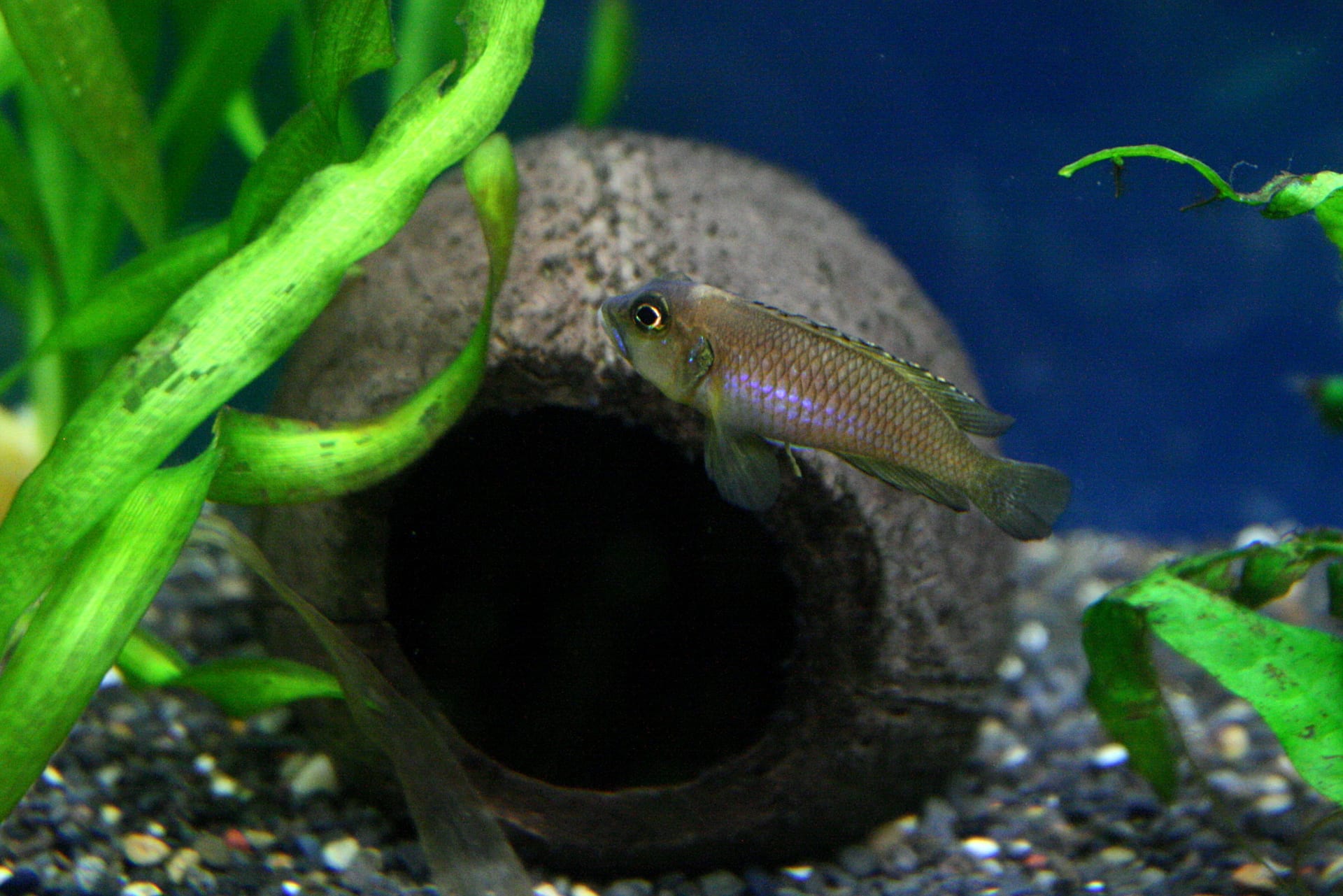
A Lake Tanganyika shell-dweller under 6cm long. It uses empty snail shells on the lake bed as home and spawning site, burying and excavating them while defending a tiny territory.
Difficulty
Beginner
Temperature
23〜27℃
Lifespan
3-5 years
Size
5-6cm
Diet
Mainly frozen and live foods, plus prepared foods
About
Lamprologus ocellatus is a small cichlid endemic to Lake Tanganyika that lives in empty snail shells scattered over sand at 6-12m. FishBase records a maximum of 5.8cm TL and Seriously Fish gives 6cm SL. It carries sand in its mouth to excavate around its shell or bury it, shaping its own nest, and defends that shell fiercely despite its size. A tank of about 45 x 30 x 30cm (40 litres) with more shells than fish suits it, at pH 7.5-9.0, 10-25 dGH and 23-27C. It spawns inside the shell; eggs hatch in about three days and fry swim after roughly ten, with the female guarding them alone. In colonies, keep more females than males and add surplus shells to spread out disputes.
Source: Wikipedia (CC BY-SA 4.0)
Lifespan of the Ocellated Shell-dweller
The Ocellated Shell-dweller lives 3-5 years.
Size of the Ocellated Shell-dweller
The Ocellated Shell-dweller grows to 5-6cm.
Temperature & humidity for the Ocellated Shell-dweller
The ideal temperature for the Ocellated Shell-dweller is 23〜27℃.
Basic Info
Origin
Lake Tanganyika, Africa (endemic, 6-12m depth)
Lifespan
3-5 years
Size
5-6cm
Care Specifications
- pH
- 7.5–9
- Hardness (GH)
- 10–25 dGH
- Water Temp.
- 23–27℃
- Min. Tank
- 40 L
Semi-aggressivePairBreeding: Easy
Sources: Seriously Fish / FishBase
References & Sources
Edited & verified by: BreederDirect editorial team
The taxonomic, regulatory, and husbandry data on this page are compiled and verified against the authoritative primary sources below.
Taxonomy & Authority
Accepted name: Lamprologus ocellatus (Steindachner, 1909)
Synonyms: Neolamprologus ocellatus
Authority databases: FishBase
Nomenclature follows global taxonomic authority databases.
Regulations & Conservation Status
Not CITES-listedIUCN LC · Least Concern
Sources: CITES Appendices (species not listed) / FishBase (IUCN assessment: LC)
Regulations may change. Always verify the latest information with the relevant authorities.
Ocellated Shell-dweller Listings
Loading latest listingsFind listings for this species