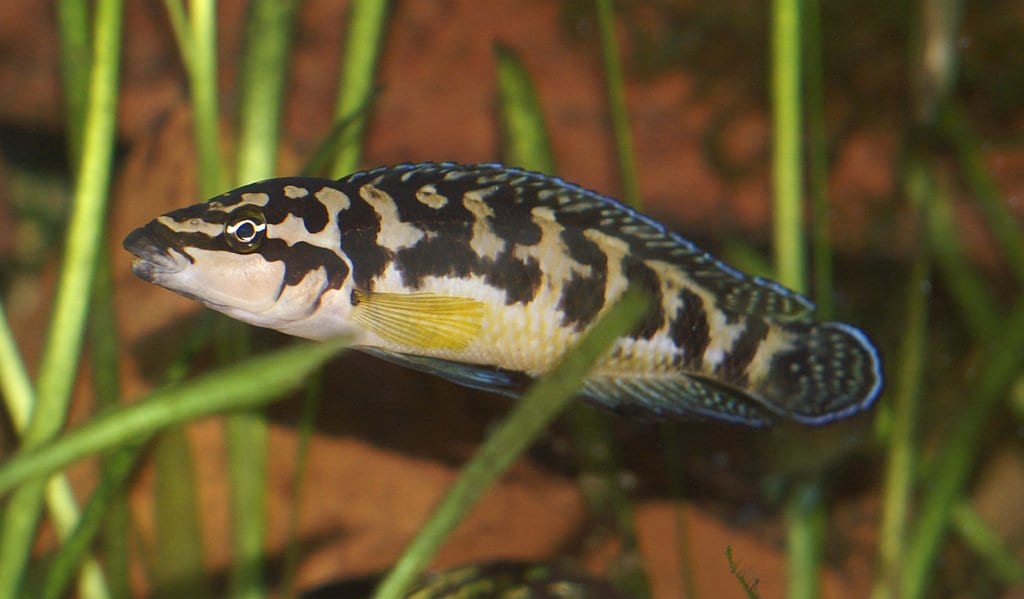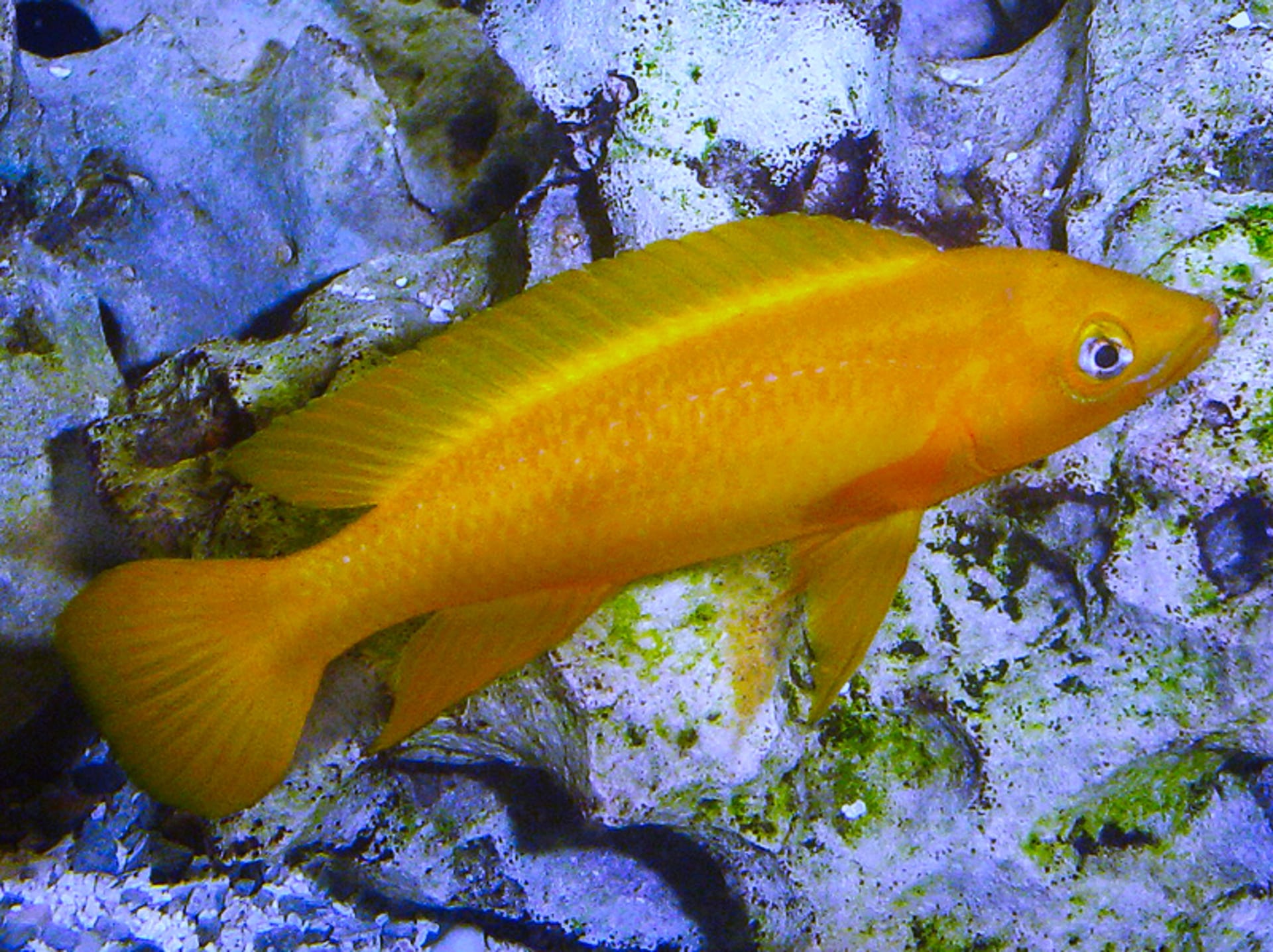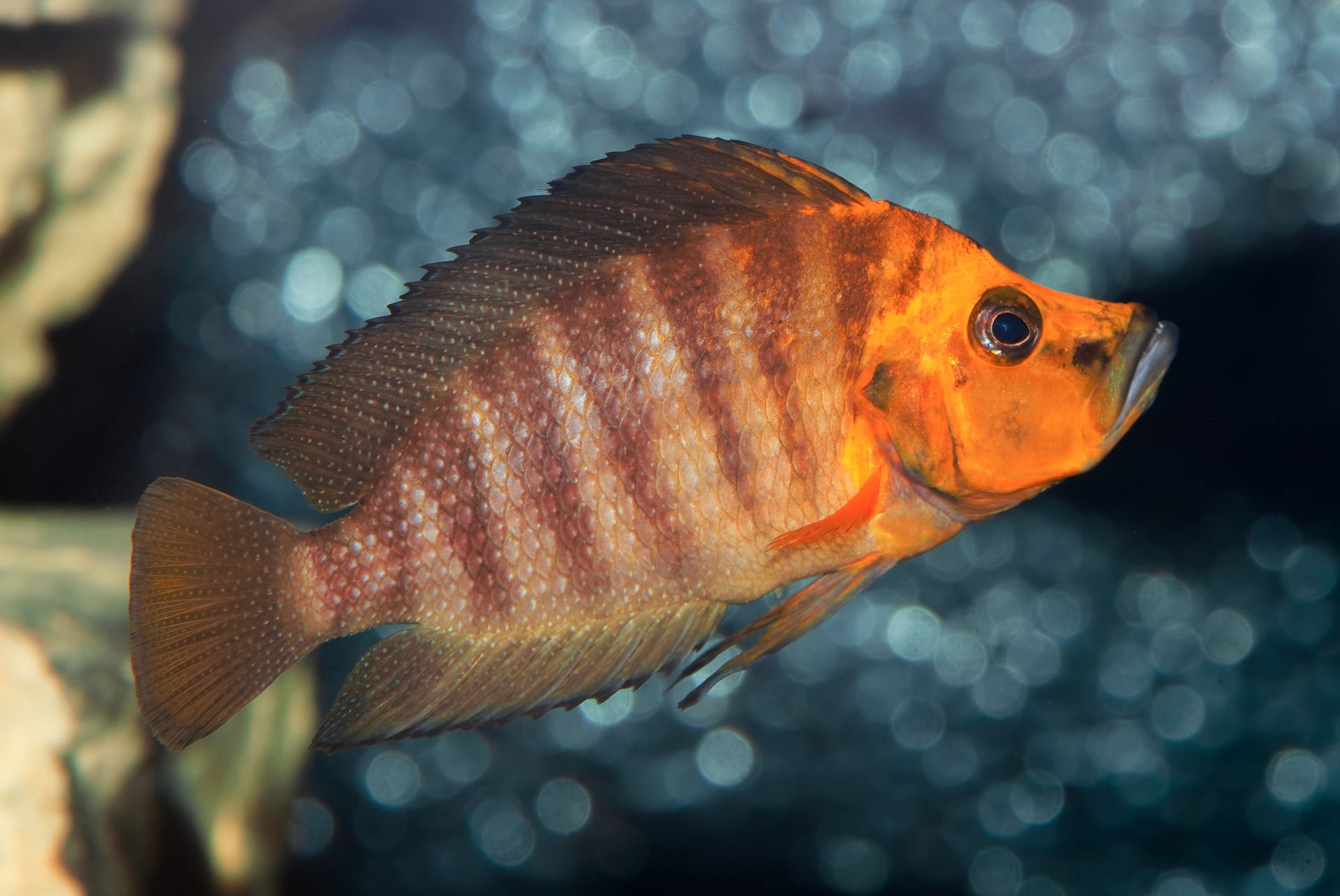
Source: Wikimedia Commons
Compressiceps
IntermediateAltolamprologus compressiceps
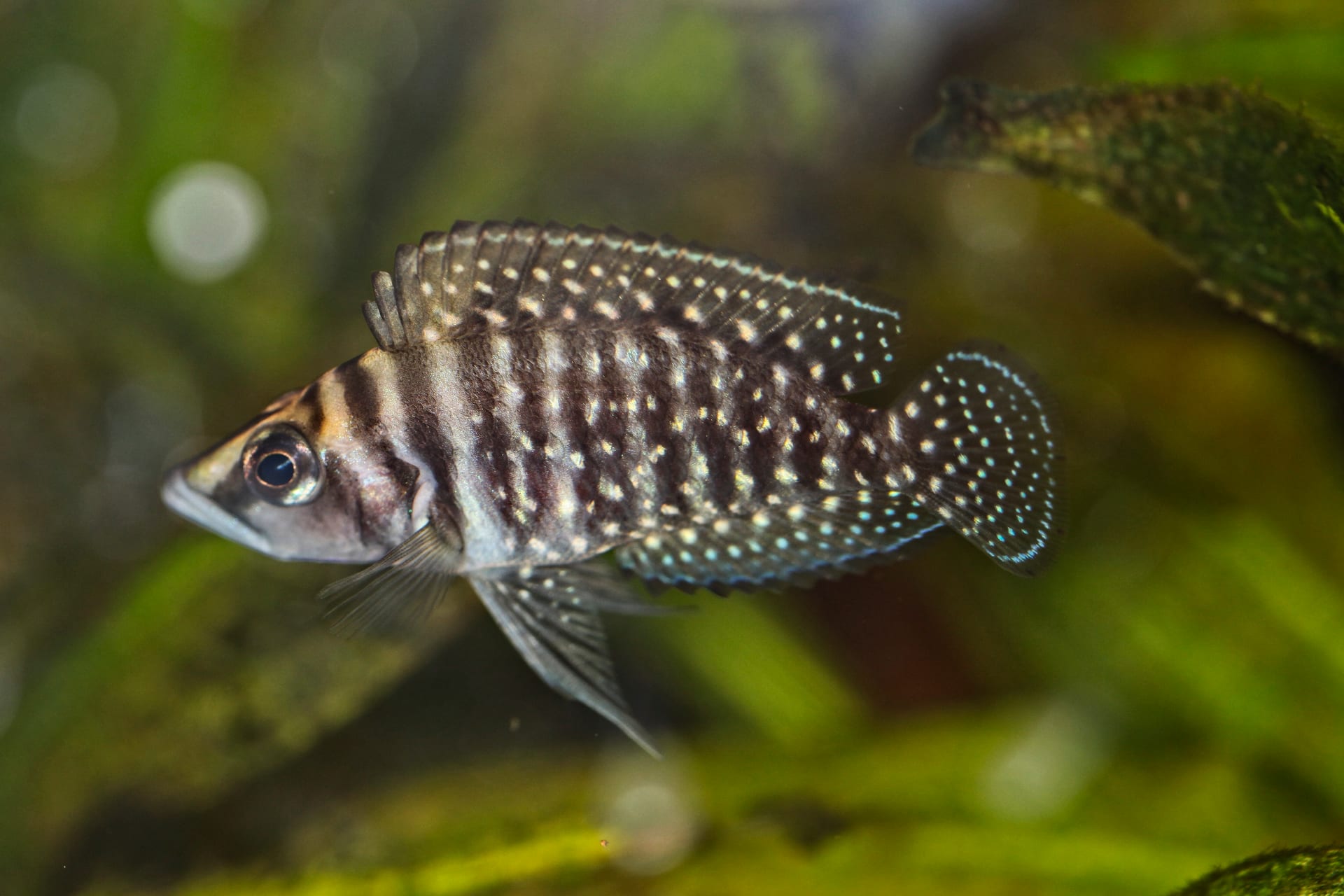
A compressed cichlid congeneric with calvus and widely distributed in Lake Tanganyika. Over 80 percent of its stomach contents is shrimp, and it pushes into rock crevices to take prey.
Difficulty
Intermediate
Temperature
24〜28℃
Lifespan
10-15 years
Size
12-13cm
Diet
Frozen and live animal foods such as prawn, bloodworm and tubifex
About
Altolamprologus compressiceps is a cichlid endemic to Lake Tanganyika and widely distributed across the lake. FishBase records a maximum of 12.3cm TL and Seriously Fish gives 12.5cm SL. Like calvus it is deep-bodied and strongly compressed, pushing into rock crevices to take prey. Stomach analysis of wild fish found more than 80 percent shrimp, and it also eats small fish, so it is a crustacean-eating carnivore. It is not especially territorial and fits a well-chosen Tanganyikan community, but it will eat anything small enough to swallow. Use 120 x 45cm (about 243 litres) or more at pH 8.0-9.0, 7-25 dGH and 24-28C. It spawns in rock crevices, the female guarding the eggs for three to five days. Growth is slow and sexual maturity takes a year or more.
Source: Wikipedia (CC BY-SA 4.0)
Lifespan of the Compressiceps
The Compressiceps lives 10-15 years.
Size of the Compressiceps
The Compressiceps grows to 12-13cm.
Temperature & humidity for the Compressiceps
The ideal temperature for the Compressiceps is 24〜28℃.
Basic Info
Origin
Lake Tanganyika, Africa (endemic, widely distributed)
Lifespan
10-15 years
Size
Care Specifications
- pH
- 8–9
- Hardness (GH)
- 7–25 dGH
- Water Temp.
- 24–28℃
- Min. Tank
- 243 L
Semi-aggressivePairBreeding: Moderate
Sources: Seriously Fish / FishBase
References & Sources
Edited & verified by: BreederDirect editorial team
The taxonomic, regulatory, and husbandry data on this page are compiled and verified against the authoritative primary sources below.
Taxonomy & Authority
Accepted name: Altolamprologus compressiceps (Boulenger, 1898)
Authority databases: FishBase
Nomenclature follows global taxonomic authority databases.
Regulations & Conservation Status
Not CITES-listedIUCN LC · Least Concern
Sources: CITES Appendices (species not listed) / FishBase (IUCN assessment: LC)
Regulations may change. Always verify the latest information with the relevant authorities.
Compressiceps Listings
Loading latest listingsFind listings for this species