Source: Wikimedia Commons
Dwarf Corydoras
IntermediateGastrodermus hastatus
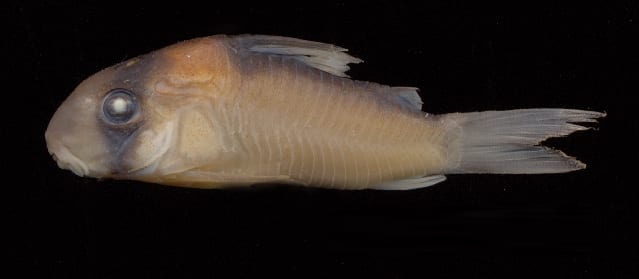
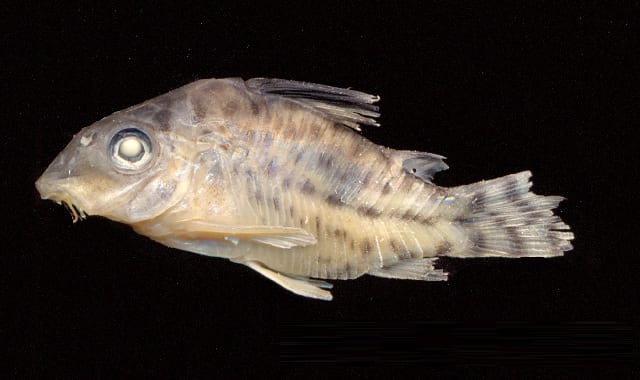
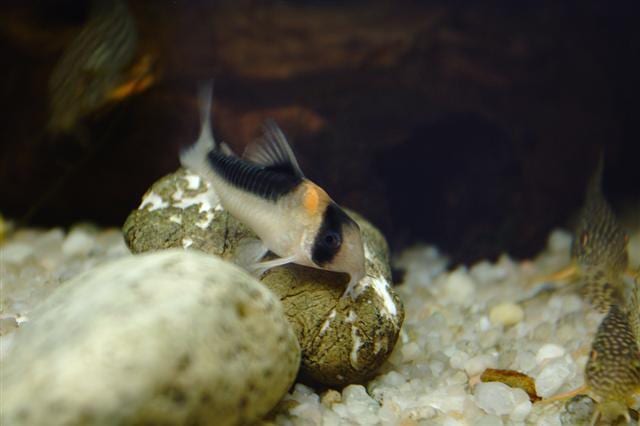
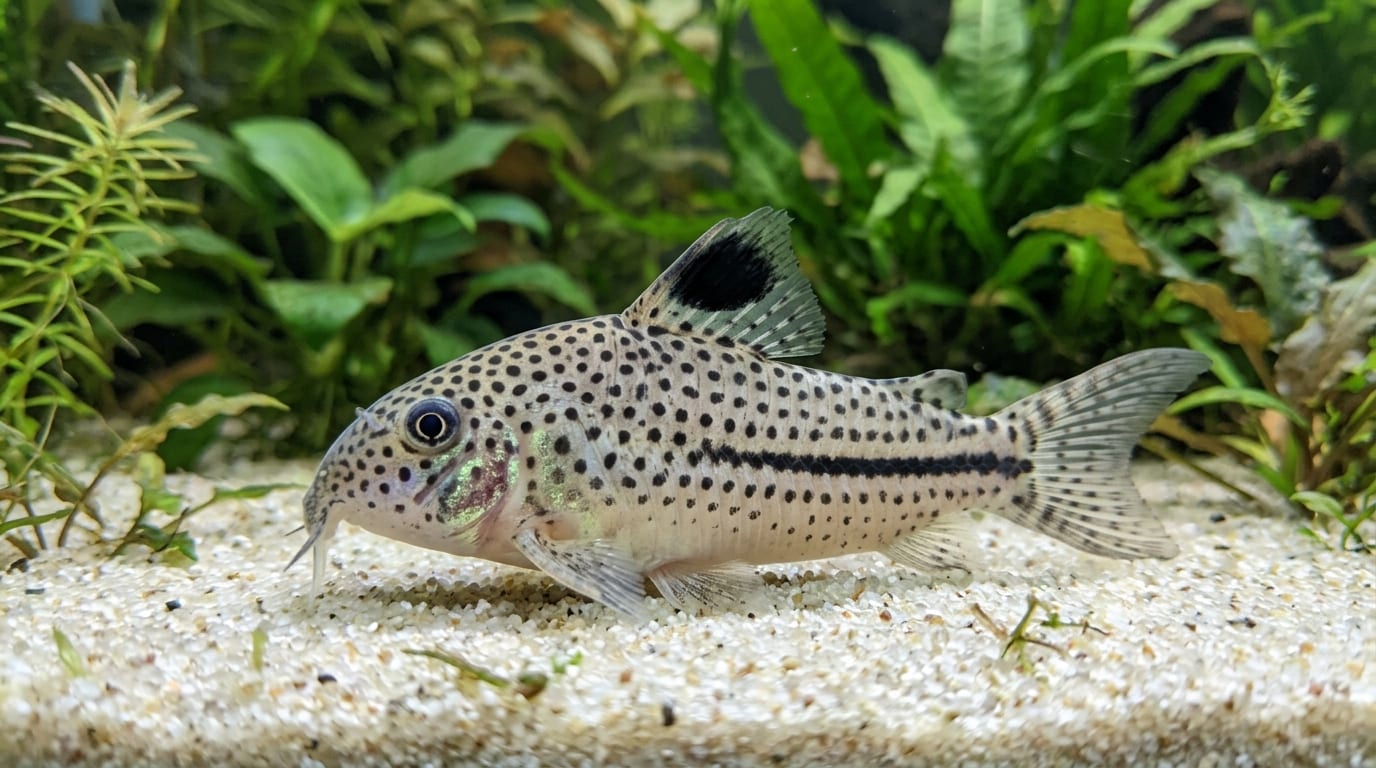
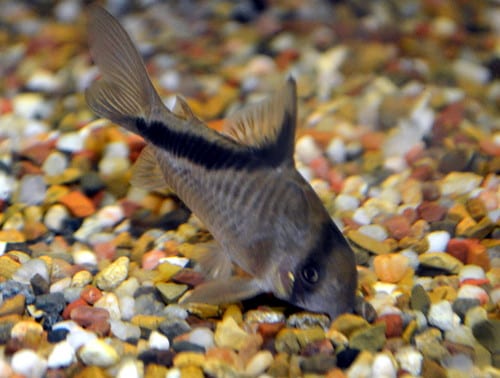
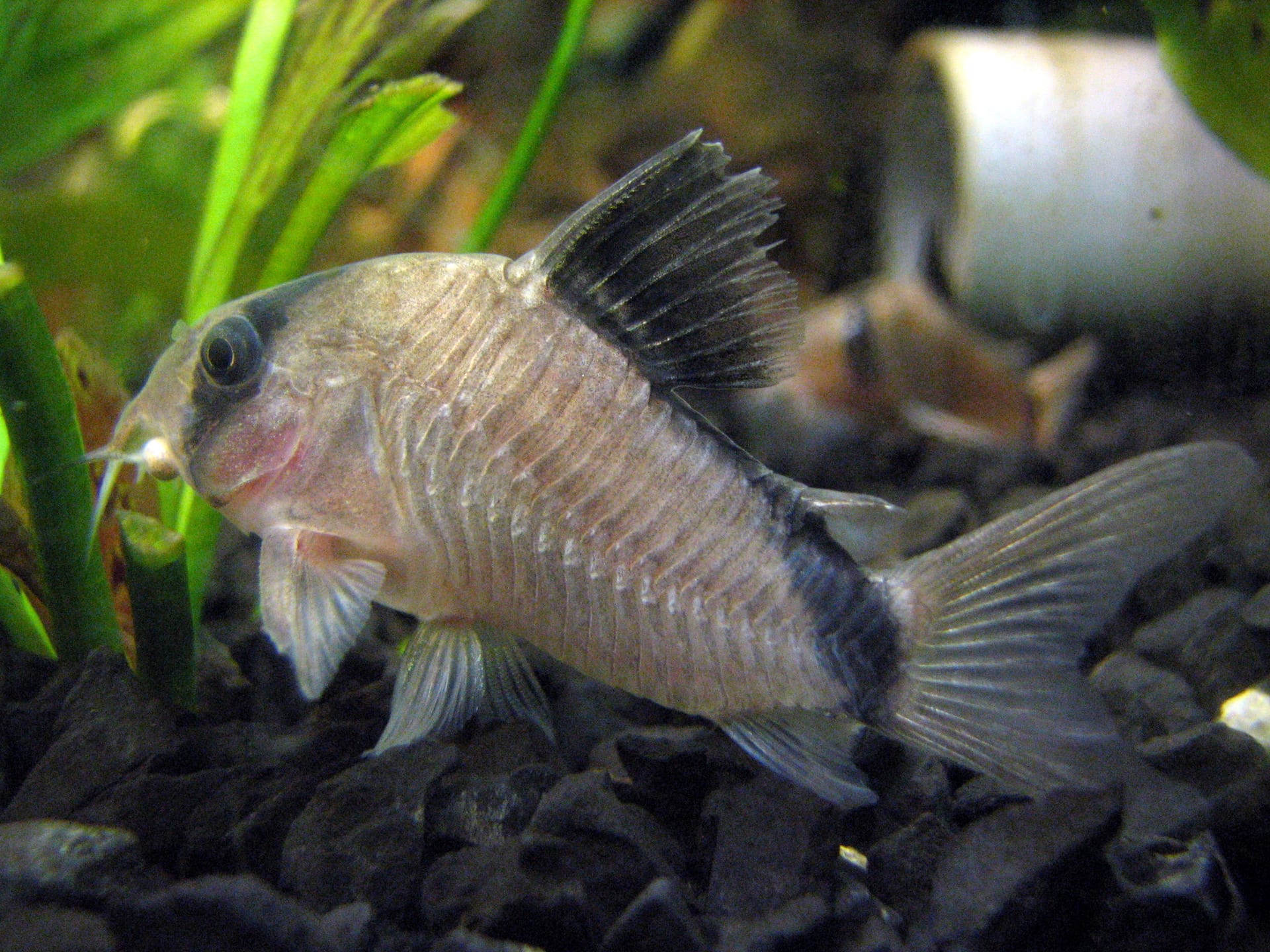
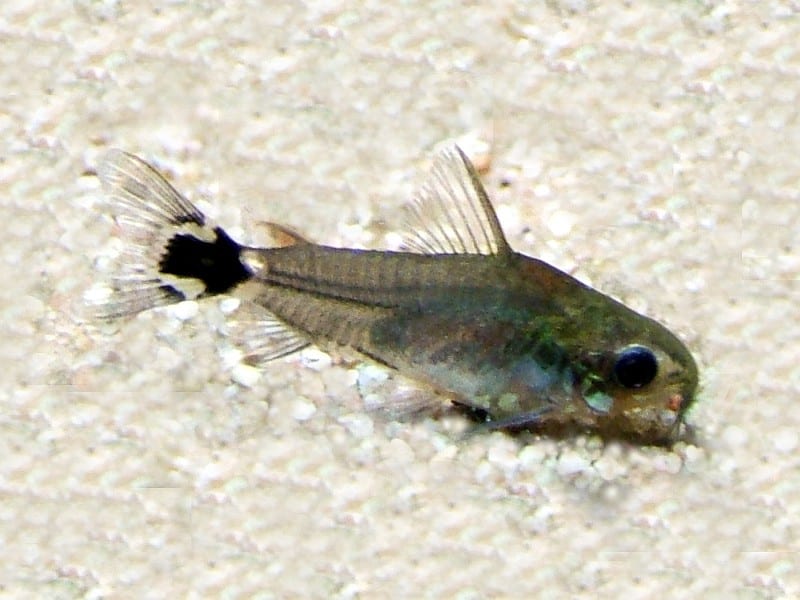
One of the smallest corydoras, marked with a black diamond on the caudal peduncle. Unlike most congeners it shoals in midwater rather than staying on the bottom.
Difficulty
Intermediate
Temperature
20〜26℃
Size
2.4-3.2cm
Diet
Sinking dried foods, Artemia, Daphnia
About
Gastrodermus hastatus occurs in the Amazon and Paraguay River basins and was moved from Corydoras hastatus in the 2024 generic revision. FishBase gives a standard length of 2.4cm and Seriously Fish 3.2cm, making it one of the smallest corydoras. A black diamond sits on the caudal peduncle, edged front and back with white. Its most distinctive trait is behavioural: it is partly adapted to feed on pelagic zooplankton and shoals in midwater instead of hugging the substrate. Aquarium conditions are 20-26C, pH 6.0-7.5 and 2-12dGH, with a 60 x 30cm base and about 54 litres as the minimum. It is extremely peaceful but too small to house with large or boisterous fish. Sinking dried food supplemented with live Daphnia and Artemia keeps it in good condition. Breeding uses two or more males per female, triggered by large cool water changes. The IUCN Red List assesses it as Least Concern.
Source: Wikipedia (CC BY-SA 4.0)
Size of the Dwarf Corydoras
The Dwarf Corydoras grows to 2.4-3.2cm.
Temperature & humidity for the Dwarf Corydoras
The ideal temperature for the Dwarf Corydoras is 20〜26℃.
Basic Info
Origin
South America (Amazon and Paraguay River basins)
Size
2.4-3.2cm
Temperature
20〜26℃
Diet
Care Specifications
- pH
- 6–7.5
- Hardness (GH)
- 2–12 dGH
- Water Temp.
- 20–26℃
- Min. Tank
- 54 L
PeacefulGroupBreeding: Moderate
Sources: FishBase / Seriously Fish
References & Sources
Edited & verified by: BreederDirect editorial team
The taxonomic, regulatory, and husbandry data on this page are compiled and verified against the authoritative primary sources below.
Taxonomy & Authority
Accepted name: Gastrodermus hastatus (Eigenmann & Eigenmann, 1888)
Synonyms: Corydoras hastatus
Authority databases: FishBase
Nomenclature follows global taxonomic authority databases.
Regulations & Conservation Status
Not CITES-listedIUCN LC · Least Concern
Sources: CITES Appendices (species not listed) / IUCN Red List
Regulations may change. Always verify the latest information with the relevant authorities.
Dwarf Corydoras Listings
Loading latest listingsFind listings for this species