Corydoras Breeding Techniques | Spawning Induction and Fry Rearing Methods
Explains Corydoras breeding methods. Introduces spawning induction through cold water stimulation, T-position mating, egg management, and fry feeding.
Key Takeaways
Explains Corydoras breeding methods. Introduces spawning induction through cold water stimulation, T-position mating, egg management, and fry feeding.
Related Species
Corydoras are known as one of the easier groups of tropical fish to attempt breeding with. Though popular for their adorable habit of rooting through the substrate with their snouts, the real appeal is that you can enjoy the complete cycle—from spawning through hatching to rearing—right in your home aquarium. The keys to successful breeding are "rainy season simulation" and the distinctive mating behavior known as "T-position." This article explains everything from preparation to fry rearing in detail, so even first-time Corydoras breeders can put it into practice.
Choosing Species Suited to Breeding
While over 170 Corydoras species are known, their breeding difficulty varies considerably. For beginners attempting their first breeding project, the following species are recommended:
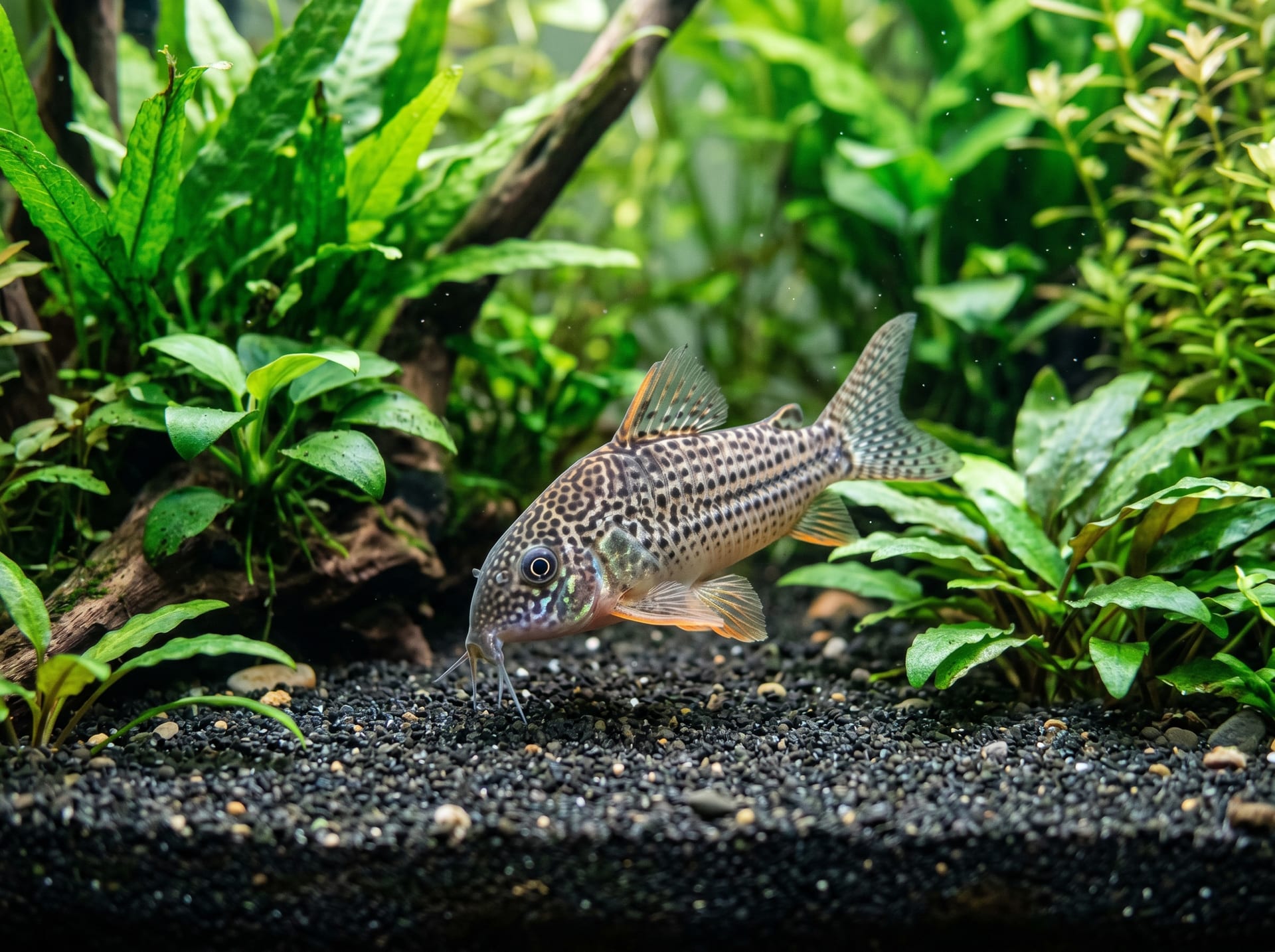
Corydoras paleatus (Blue Corydoras): Hardy and tolerant of cool water, with the most extensive breeding history. This is the gateway species for beginners.
Corydoras aeneus (Red Corydoras): An excellent introductory species alongside paleatus. When kept in groups, they often spawn naturally.
Corydoras panda: Popular for their black-and-white panda pattern. Though more sensitive to water conditions than paleatus, breeding is manageable with proper parameters.
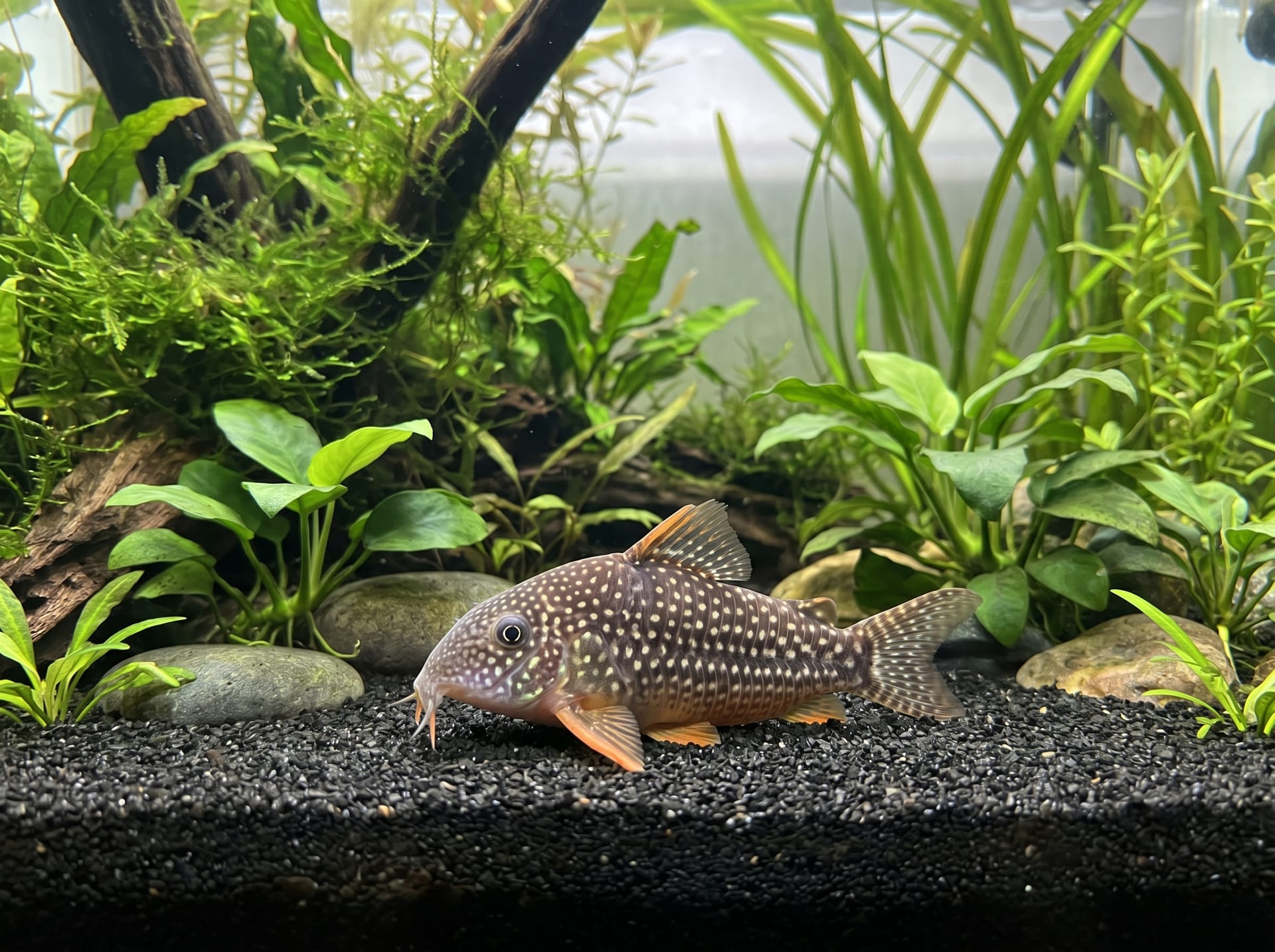
Corydoras sterbai: A mid-sized species with striking orange fins. Breeding is for intermediate keepers, but once you learn the technique, spawning becomes reliable.
For any of these species, breeding behavior is more readily stimulated by keeping multiple males and females together. The ideal sex ratio is approximately 2–3 males per 1 female. Keeping multiple females can lead to male-to-male competition that actually inhibits spawning.
Spawning Induction Techniques | Simulating the Rainy Season
In their South American native habitat, Corydoras enter active breeding behavior with the arrival of the rainy season. The influx of rainwater lowers temperature, changes water chemistry, and increases food availability—these environmental shifts trigger the breeding response. Recreating this in your home aquarium is called "rainy season simulation."
✍️
BreederDirect Editorial
The BreederDirect editorial team specializes in care information for animals, covering veterinary care and breeding to deliver beginner-friendly guides.
Find Tropical Fish on BreederDirect
Buy directly from verified breeders
Browse Related Listings
Find Tropical Fish listings related to this article on BreederDirect. Buy directly from verified breeders.
Step 1: Intensive Feeding for 2 Weeks to Build Condition
Spawning places significant physiological stress. During the 2 weeks before breeding, feed high-nutrition foods daily to build up egg reserves in the female's belly. Frozen bloodworms and frozen brine shrimp are particularly effective. Combining them with commercial sinking tablets ensures thorough coverage for bottom-dwelling Corydoras. When the female's abdomen becomes round and full, spawning induction is ready to begin.
Step 2: Large Water Change to Trigger Spawning
Perform a 50–70% water change all at once. Crucially, set the temperature of the fresh water 2–3°C lower than the current tank temperature. This mimics the temperature drop from rainfall. Additionally, pour the water through a shower head or watering can to create rain-tapping effects on the surface, further strengthening the stimulus.
Step 3: Leverage Barometric Pressure Changes
Experienced breeders widely share the knowledge that "spawning is more likely on low-pressure days." By checking the weather forecast and performing a large water change when rain is approaching, spawning probability increases significantly. This likely occurs because low pressure in nature signals the arrival of the rainy season.
The Unique T-Position Mating Behavior of Corydoras
Once breeding conditions are met, conditioned males pursue females actively. Eventually, the two fish assume a distinctive "T-shaped" posture facing each other. This is known as T-position.
The female places her mouth against the male's genital area to take in sperm
The female retains the sperm internally while holding 1–6 eggs between her pectoral fins
The female carefully deposits each egg individually on glass surfaces, plant leaves, driftwood, or other substrates
This sequence of behavior repeats over several hours, with a single spawning producing 20–100+ eggs. Discovering eggs scattered throughout the tank is a sign of successful breeding.
Egg Management and Hatching
Corydoras eggs are transparent to pale yellowish, roughly 2mm in diameter. If left in the main tank, they are usually consumed by parent fish or tankmates, so recover them as quickly as possible.
Egg Collection Method
Corydoras eggs adhere firmly to surfaces. The standard methods for collection are to gently rub the surface with your finger pad to detach them or carefully suck them up with a turkey baster. Handle gently to avoid damage.
Managing Hatching in a Separate Container
Transfer the collected eggs to a small container (a 500ml–1L plastic container works well) and apply gentle aeration. Adding a small amount of methylene blue prevents fungal growth on the eggs.
Maintain water temperature around 25°C as standard
Higher temperatures speed hatching (approximately 5 days at 24°C, 3 days at 27°C)
Remove whitish eggs promptly—these are infertile or dead
Just before hatching, the embryo's eyes and body outline become visible through the egg. Establish a daily observation habit to catch this critical timing.
Fry Rearing | From Hatching to Independence
Newly hatched fry are extremely small, measuring just 4–5mm. For the first 2–3 days, they survive on the yolk sac and require no feeding.
Feeding Your Initial Fry
Once the yolk sac is absorbed, begin feeding.
Newly hatched brine shrimp (nauplii): The optimal first food. Easy to digest, and their movement stimulates the fry's feeding response. Feed 3–4 times daily in small, appropriate amounts.
Infusoria: During the first few days when fry have small mouths, infusoria may work better than brine shrimp.
Powdered dry foods: After about 2 weeks, gradually introduce powdered formulas mixed in with brine shrimp.
Water Quality and Water Change Precautions
Fry are sensitive to water chemistry changes. Perform small 10–20% water changes daily to prevent deterioration. Large water changes can shock fry, so take the opposite approach from spawning induction. Always attach a sponge cover to the filter intake to prevent fry from being drawn in.
Growth Milestones
1 week after hatching: Body length 6–7mm. Characteristic Corydoras body shape becomes visible
3–4 weeks after hatching: Body length around 1cm. They can now be reared on dry foods alone
2–3 months after hatching: Body length 2–3cm. They approach a size suitable for joining the parent tank
Safety and Reliability with BreederDirect
If you're committed to breeding Corydoras, obtaining quality breeding pairs and healthy specimens is essential. BreederDirect lets you purchase Corydoras directly from breeders who specialize in their reproduction.
Pet shops often provide no information about origin or breeding history, but BreederDirect lets you check breeder profiles, their facilities, and breeding records beforehand. You can also contact breeders directly before purchasing to ask questions. The accumulated knowledge of breeders who have worked with Corydoras for years becomes invaluable guidance for beginners.
With healthy specimens in hand and careful rainy season simulation, Corydoras breeding is far from impossible. Take advantage of BreederDirect and experience the joy of successful breeding.