Complete Breeding Guide to Scalar Angelfish | Spawning Induction, Parental Egg Care, and Fry Rearing Process
Complete explanation of Scalar Angelfish breeding methods. Practical introduction to pairing, spawning induction, parental egg protection behavior, hatching, fry feeding, and the mechanisms of hormonal sex reversal.
Key Takeaways
Complete explanation of Scalar Angelfish breeding methods. Practical introduction to pairing, spawning induction, parental egg protection behavior, hatching, fry feeding, and the mechanisms of hormonal sex reversal.
Related Species
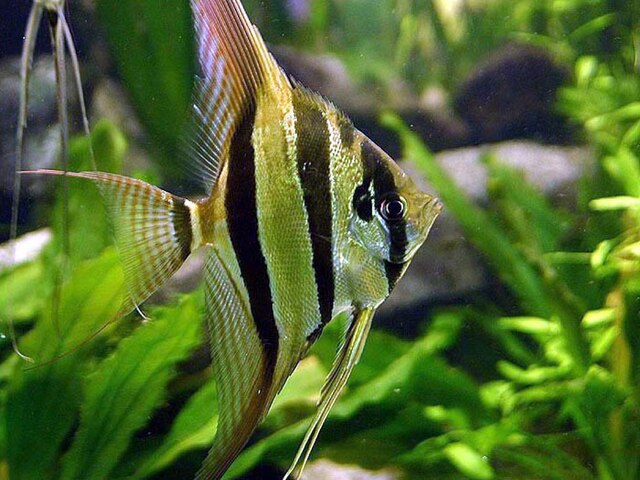
The Scalar Angelfish (Pterophyllum scalare) is one of the most popular tropical fish among aquarists for its beautiful form and intelligent behavior. While they are easy to keep, breeding them is more challenging. Success depends on correct knowledge from spawning induction through fry rearing. This article explains all the steps necessary for breeding angelfish in detail.
Pairing Angelfish
Distinguishing Males from Females
While difficult to distinguish by external appearance, they can be differentiated by breeding season behavior.
Male characteristics:
- Short genital papilla with a fine tip
- Dorsal fin tip is more pointed than females
- Forehead tends to protrude slightly during sexual maturity
Female characteristics:
- Long genital papilla with a rounded tip
- Ventral fins are slightly shorter
- Abdomen becomes distended just before spawning
Definitive identification is often only possible by observing spawning behavior.
Tips for Successful Pairing
Importance of Maturity: Males should be 6cm or larger, females 5cm or larger, and both should be at least 6-9 months old. Young individuals may spawn, but fertilization rates and fry survival rates will be reduced.
Checking Compatibility: When first housing them together, assess whether the male chases the female excessively or vice versa. If they begin fighting intensely, separate them immediately. A compatible pair will calm down and swim together peacefully within a few days.
Setting Up the Spawning Environment
Tank Size and Setup
A minimum of 60cm tank is recommended. While a 45cm tank is possible, it is cramped considering parental movement and fry space.
Water Parameters:
- Temperature: 28-30°C (important for spawning induction)
- pH: 6.0-6.8 (slightly acidic)
- Water hardness: soft to moderately soft water
Spawning Substrate:
- Slate (flat stone): Most natural, tends to encourage active parental egg-tending behavior
- Ceramic spawning cone: Easy to clean and allows for easy removal of failed eggs
- PVC pipe: Inexpensive but tends to suppress parental behavior
Position slate at a 45-degree angle or horizontally where the parents can easily access it for spawning.
Spawning Induction Through Feeding
The primary trigger for spawning is adequate nutrition and feeding.
- Feeding content: Frozen bloodworms twice daily, approximately one small spoonful per feeding
- Feeding period: Begin 1-2 weeks before setting up for spawning
- Result: Well-nourished individuals tend to naturally initiate spawning behavior
From Spawning to Hatching
Observing Spawning Behavior
Spawning occurs when the female deposits eggs on the substrate while the male follows, releasing sperm. Typically, 100-500 eggs are laid per spawning.
Immediately after spawning, the parents repeatedly fan the eggs with their mouths. This behavior keeps the eggs clean and prevents fungal infection.
Identifying Fertilized Eggs
Fertilized eggs: Cream or light tan colored, with a translucent appearance
Unfertilized eggs: Opaque white appearance, quickly develop mold
Remove unfertilized eggs with a dropper to prevent fungal infection.
Hatching Timeline
At water temperatures of 29-30°C, eggs hatch 24-48 hours after spawning. Immediately after hatching, fry (before becoming free-swimmers) remain inside the egg and continue to receive parental care.
Fry Rearing Phase
Transition to Free-Swimmers and First Feeding
4-5 days after hatching, fry become free-swimmers (capable of independent feeding). Begin first feeding at this time.
First Foods:
- Brine shrimp nauplii: Optimal choice. Feed newly hatched (within 24 hours) brine shrimp
- Egg yolk: A small amount of hard-boiled egg yolk given via dropper is also effective
- Powdered food: Commercial fry powder food can also be used
Feed 3-4 times daily in small amounts, and immediately remove uneaten food.
Fry Feeding Progression by Size
- 1-2 weeks old: Brine shrimp (4 times daily)
- 2-3 weeks old: Brine shrimp + fry powder food (3 times daily)
- 3-4 weeks old: Finely chopped frozen bloodworms + powder food (2 times daily)
- 1 month and older: Fry pellets + bloodworms (1-2 times daily)
Cannibalism and Separation
Angelfish fry cannibalize, so separation is essential if size differences develop. As a guideline, predation risk increases when there is a size difference of 1.5x or more in body length.
Prepare multiple isolation containers (45cm or larger tanks) and manage fry separately by size.
Sex Change and Sex Determination Mechanisms
Potential for Hormonal Sex Reversal
Research suggests that in angelfish, sex is determined by social environment (presence of other individuals).
When juveniles are kept in isolation, hormones may influence sex to become plastic and changeable. This is thought to be one cause of the phenomenon of "sex ratios becoming skewed in captive environments."
Application to Breeding Strategy
Breeders attempt to deliberately produce females by managing multiple fry separately and then pairing one individual.
Common Breeding Failures and Solutions
No spawning: Caused by inadequate temperature (27°C or below), insufficient feeding, or poor pair compatibility. Set temperature to 28-30°C and increase frozen bloodworm feedings.
Eggs develop mold: Caused by insufficient parental egg-tending behavior or water quality deterioration. If parents are active, leave them alone; if inactive, isolate the parents and switch to artificial hatching.
Fry fail to grow: Often caused by insufficient brine shrimp supply. Prepare multiple brine shrimp hatcheries to establish a stable supply system.
Ethics and Responsibility in Breeding
Successful angelfish breeding produces hundreds of fry in a short period. It is important to prepare routes for rearing, selling, or giving away all fry before beginning breeding. Unplanned breeding leads to overcrowding and mortality.