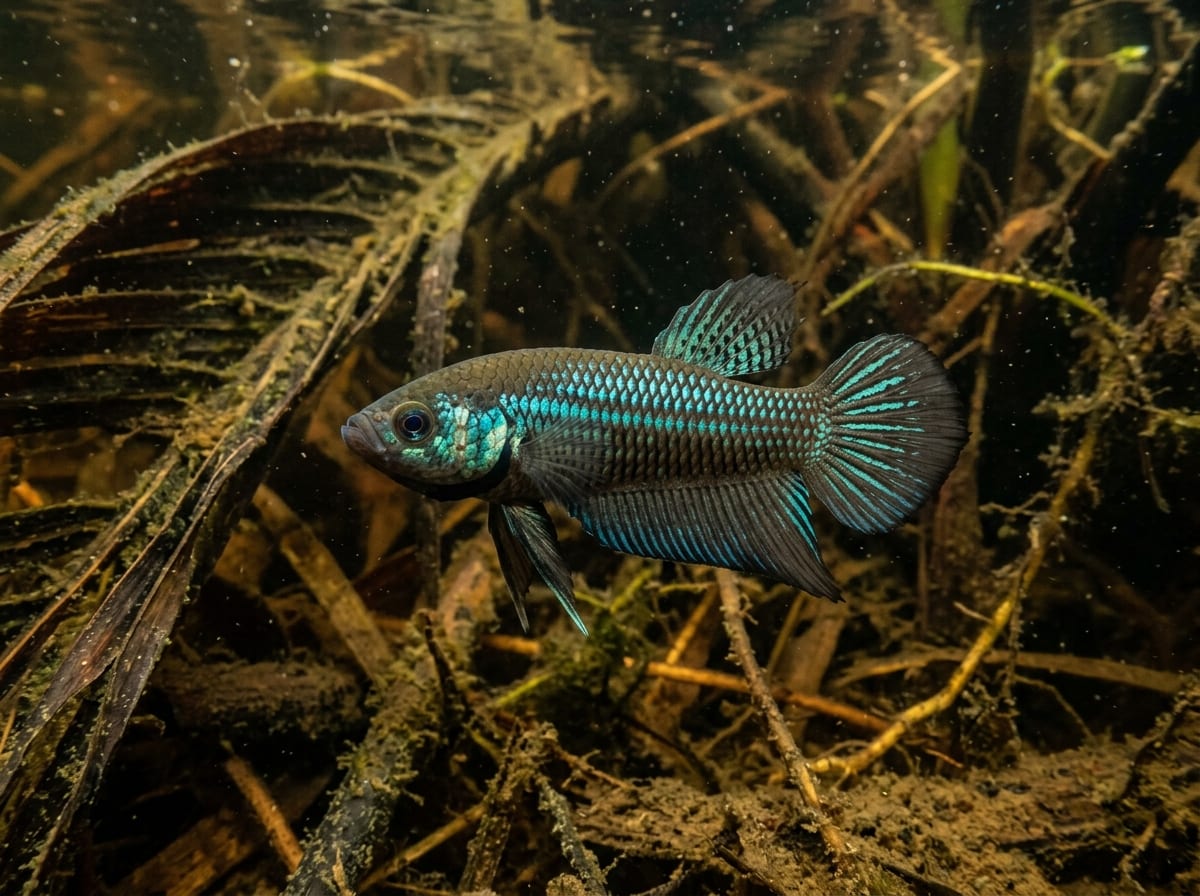
AI-generated image
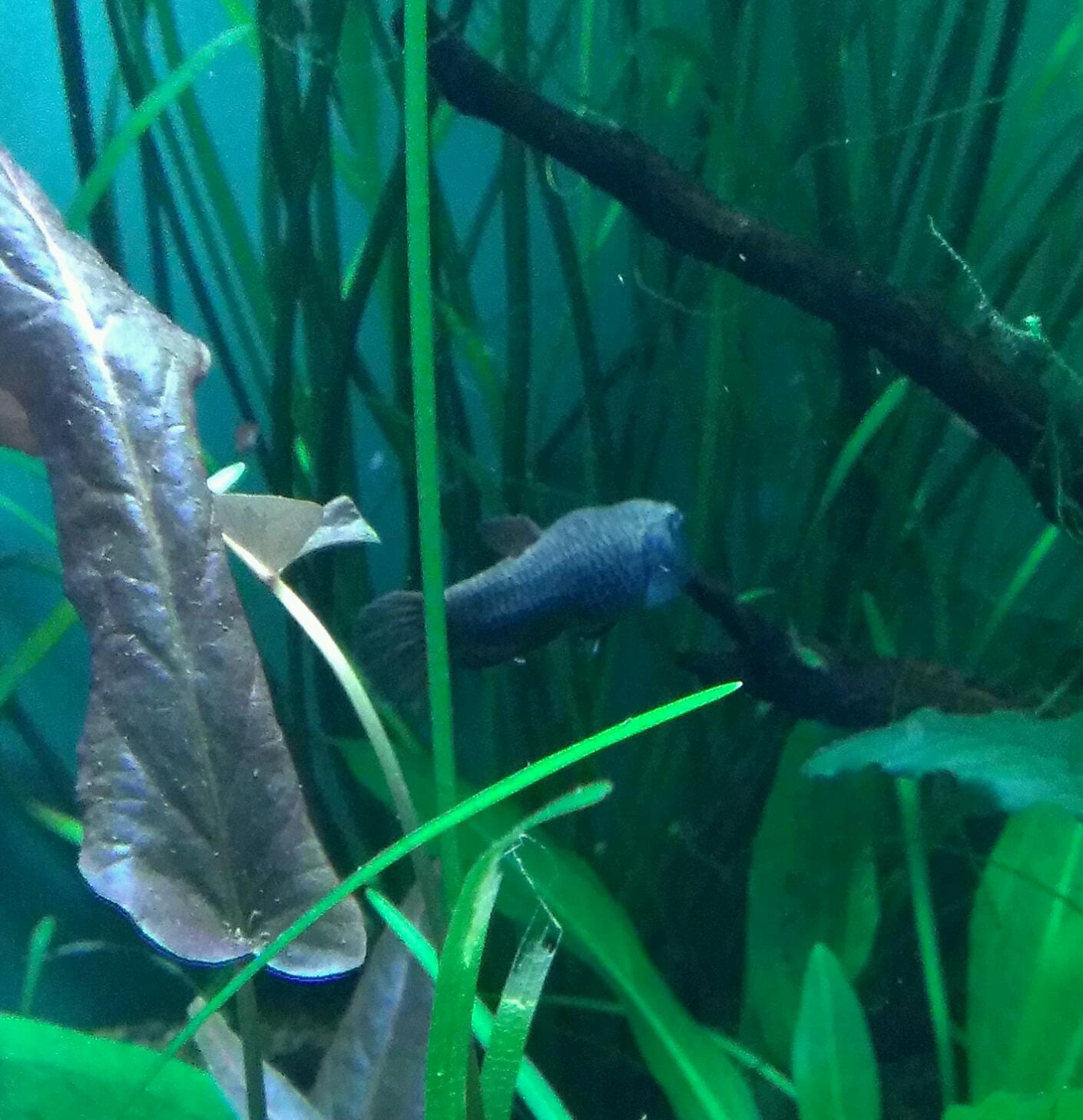
Mahachai fighter
IntermediateBetta mahachaiensis
A wild betta from brackish swamps in central Thailand. Males are dark with iridescent blue-green scales. Considered the only Betta found exclusively in brackish water, it builds bubble nests among nipa palm bracts.
Difficulty
Intermediate
Temperature
22〜28℃
Lifespan
Few reliable data
Size
Up to 4.4 cm SL (FishBase)
Diet
Carnivore (small frozen and live foods, small insects)
About
Betta mahachaiensis was described in 2012 and is known only from a few localities in Bangkok, Samut Sakhon (Mahachai), Samut Songkhram and Samut Prakan provinces on the Gulf of Thailand coast. FishBase gives a maximum of 4.4 cm SL. It lives in tidal brackish swamps closely associated with the nipa palm, and males build bubble nests in water held at the base of palm fronds. Salinity at its habitats has been measured at 1.1-10.6 ppt. Although brackish populations of B. splendens and B. imbellis exist, it is regarded as the only Betta found exclusively in such conditions. Its habitats are severely threatened by Bangkok's expansion, and recent surveys have failed to find it in some provinces. Populations differ slightly, for example in caudal-fin shape, and should not be hybridised. In Japan it is sold as 'Mahachai' by wild-betta specialists.
Source: Wikipedia (CC BY-SA 4.0)
Size of the Mahachai fighter
The Mahachai fighter grows to Up to 4.4 cm SL (FishBase).
Temperature & humidity for the Mahachai fighter
The ideal temperature for the Mahachai fighter is 22〜28℃.
Basic Info
Origin
Southeast Asia (brackish coastal swamps on the Gulf of Thailand, central Thailand)
Lifespan
Few reliable data
Size
Up to 4.4 cm SL (FishBase)
Temperature
References & Sources
Edited & verified by: BreederDirect editorial team
The taxonomic, regulatory, and husbandry data on this page are compiled and verified against the authoritative primary sources below.
Primary sources
Taxonomy & Authority
Regulations & Conservation Status
Not CITES-listedIUCN NE · Not Evaluated
Not listed in the CITES Appendices (checked on Species+). Not evaluated on the IUCN Red List, but its habitat is severely threatened by urban development. Not regulated under Japan's Invasive Alien Species Act. Never release aquarium fish into the wild.
Sources: Species+ (CITES) / FishBase
Regulations may change. Always verify the latest information with the relevant authorities.
Mahachai fighter Listings
Loading latest listingsFind listings for this species