Why Bettas Are Prone to Disease
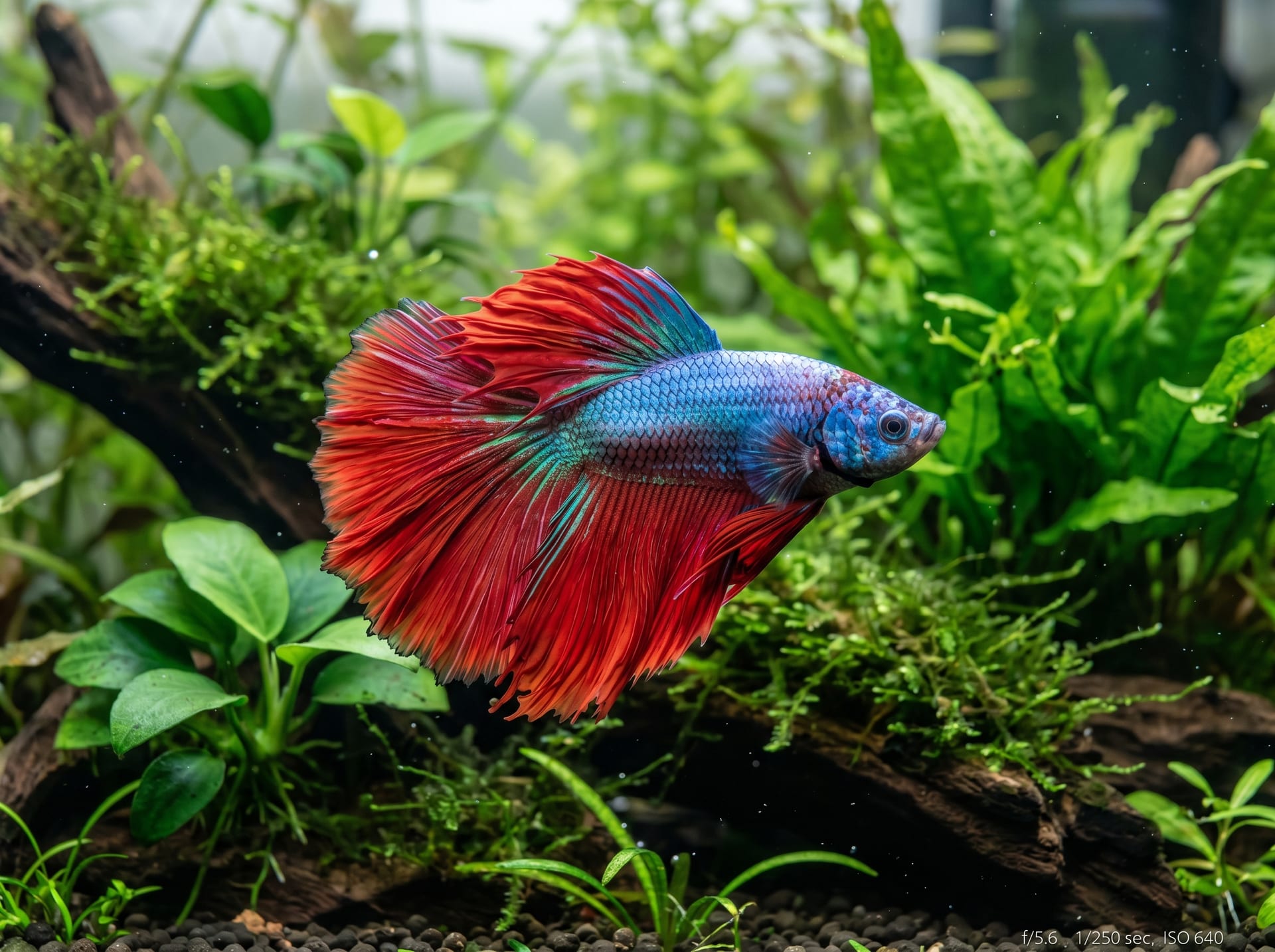
Despite their beautiful appearance, bettas (Betta splendens) are tropical fish that are sensitive to water quality fluctuations, low temperatures, and stress, making them prone to disease. Especially in cases where they are kept alone in small tanks, water quality can change rapidly, and it's not uncommon for the condition to become severe before you realize it.
To detect and treat betta disease early, daily observation habits and proper knowledge of medications are essential.
---
Symptoms and Causes of Major Diseases
Ich (Ichthyophthirius multifiliis Infection)
Symptoms: Small white spots (0.5–1 mm in diameter) appear on the body and fins. Initially only a few appear, but they multiply rapidly.
Cause: Ich protozoa multiply when immunity is compromised by sudden temperature fluctuations, especially rapid cooling. Inadequate water acclimation after purchase is also a contributing factor.
Stage Assessment:
- Early stage (5 or fewer spots): May improve with salt bath alone
- Mid-stage (spots covering the body): Medication bath required
- Severe (fin fusion, loss of appetite): Intensive treatment needed
Velvet Disease (Oodinium velvetinum Infection)
Symptoms: Fine, densely packed golden to brown spots coat the body, as if dusted with pepper. The spots are smaller than those of ich and appear to shimmer when light is directed on them.
Cause: Like ich, it develops when water quality deteriorates or immunity is compromised. It progresses faster than ich and can become fatal within 3–5 days if missed.
How to Distinguish: With ich, the spots are scattered and distinct, while with velvet disease, the spots are densely packed, appearing "dusted."
Fin Rot (Bacterial Infection)
Symptoms: Fin edges become cloudy white and gradually fray and dissolve. As it progresses, the tail can be lost entirely down to its base.
Cause: Bacterial infection caused by Flavobacterium columnare or Aeromonas species. Poor water quality, injuries, or stress after fighting can trigger it.
---
How to Choose Treatment Medications
Types of Medications and Their Uses
| Medication | Conditions Treated | Characteristics |
|---|
| Green F Gold (powder) | Fin rot, Aeromonas infection | Broad-spectrum antibiotic |
| Green F Liquid | Ich, velvet disease | Acriflavine-based, good for initial treatment |
| Methylene Blue | Ich, fungal infections | Classical, high safety, beginner-friendly |
| Hikosan Z | Ich, velvet disease | Minimal impact on filter bacteria |
| Salt (sodium chloride) | Recovery aid, early-stage disease | Adjusts osmotic pressure at 0.5% concentration |
Recommended Medications by Disease
Ich:
1. Raise the water temperature to 28–30°C first (suppresses Ich protozoa activity)
2. Medication bath with Green F Liquid or Hikosan Z (5–7 days)
Velvet Disease:
1. Reduce lighting (Oodinium protozoa depend on photosynthesis)
2. Medication bath with Green F Liquid or Hikosan Z (7–10 days)
3. For severe cases, also use Green F Gold concurrently
Fin Rot:
1. Medication bath with Green F Gold powder (5–7 days)
2. Maintain water temperature at 28°C to suppress bacterial activity
---
Correct Medication Bath Procedure
What You'll Need
- Medication bath bucket (5–10 L) or spare small tank
- Aeration (oxygen supply is critical during medication bath)
- Thermometer and heater
- Measuring spoon and syringe (for accurate medication dosing)
Medication Bath Steps
Step 1: Prepare the Medication Bath Water
Add medication to dechlorinated water. Always follow the concentration instructions (e.g., "X mL per 10 L of water"). Excessive concentration becomes toxic to bettas.
Step 2: Transfer the Betta
Mix a small amount (about 200 mL) of water from the main tank into the medication bath water to prevent sudden temperature and composition changes, then transfer the betta.
Step 3: Manage the Medication Bath Period
| Days | Action |
|---|
| Days 1–2 | Observe symptom changes. Continue if no worsening |
| Day 3 | 1/3 water change and re-dose medication at the same concentration |
| Days 5–7 | Confirm symptom improvement, then gradually change water to remove medication |
Step 4: Recovery and Return to Main Tank
After completely removing medication, observe for 1–2 days. Once you confirm symptoms have not returned, acclimate the water and return to the main tank.
---
Using Salt Baths
A salt bath promotes recovery without relying on medication and is particularly effective for early-stage symptoms.
Method:
1. Dissolve 50 g of table salt (0.5%) per 10 L of water
2. Add the betta and observe for 24–48 hours
3. If symptoms don't improve, switch to medication bath
Note: Do not apply salt bath directly to the main tank. It harms filter bacteria and aquatic plants.
---
Water Management During Medication Bath
What NOT to Do
- Using a filter: Filters with activated charcoal will absorb the medication. Remove the activated charcoal or use only a sponge filter.
- Excessive lighting: Especially during velvet disease treatment, darkness is essential.
- Sudden temperature changes: Always match water temperature before water changes.
Recommended Actions
- Always perform aeration (medication consumes oxygen)
- Observe daily and record symptom progression
- If there's no improvement after 3–4 days, reconsider the medication type
---
Tips to Prevent Recurrence
Reset the Main Tank
While the betta is in the medication bath, clean the substrate and decorations in the main tank. Ich and velvet disease protozoa survive as cysts in the substrate. Maintaining a water temperature of 30°C for 3+ days or a complete reset is ideal.
Daily Prevention Strategies
- Temperature control: Maintain a stable 26–28°C. Heater failure immediately triggers disease.
- Regular water changes: Change 1/4 to 1/3 of the water once per week.
- Quarantine: Isolate new bettas for 1–2 weeks upon arrival.
- Stress management: Prolonged exposure to mirrors that reflect their image compromises immunity.
---
Summary: Betta Medication Bath Response Flow
Upon discovering symptoms, first identify the disease type and select the appropriate medication. The standard responses are: Green F Liquid + 30°C for ich, Green F Liquid + darkness for velvet disease, and Green F Gold powder for fin rot. Manage the medication bath for 5–7 days, confirm symptom resolution, then gradually change water before returning to the main tank after reset and disinfection.
Early detection and treatment are the key to keeping bettas healthy and long-lived. Most importantly, develop a habit of daily observation.