When keeping tropical fish, you may suddenly notice one day that "white spots are appearing on the body" or "the fins are becoming torn and ragged." Tropical fish are susceptible to various diseases due to environmental changes and reduced immunity, and the later the disease is detected, the more difficult treatment becomes. This article focuses on four diseases with particularly high occurrence rates—white spot disease, fin rot, aeromonas infection, and fungal infections—and explains their symptoms, causes, and treatment methods in an easy-to-understand manner.
White Spot Disease | The Most Common Parasitic Infection in Tropical Fish
White spot disease is a common disease that most tropical fish keepers experience at least once.
Symptoms and Causes
The characteristic sign is white spots resembling sand grains appearing on the body surface and fins. In early stages there are only a few, but if left untreated, they spread across the entire body, and the fish begins to rub itself against the substrate and driftwood. The cause is a ciliate called white spot parasites (Ichthyophthirius multifiliis), which rapidly proliferates when the fish's immunity is compromised by sudden temperature drops or deteriorating water quality. Cysts (similar to eggs) introduced into the tank often lurk in the substrate, so care is needed when adding new fish.
Treatment Methods
- Raise the water temperature to 28–30°C to shorten the white spot parasite's reproduction cycle and enhance treatment effectiveness
- Perform a medicated bath using commercial malachite green-based medications (such as Hicosan or Agten)
- Using a salt bath (0.5% saline solution) as a supplement can support osmotic pressure regulation
- Thoroughly clean the substrate and gravel to physically remove cysts
Always perform medicated baths in an isolation tank to avoid damaging the beneficial bacteria in the main tank.
Fin Rot and Mouth Rot | Representative Bacterial Infections
Symptoms and Causes
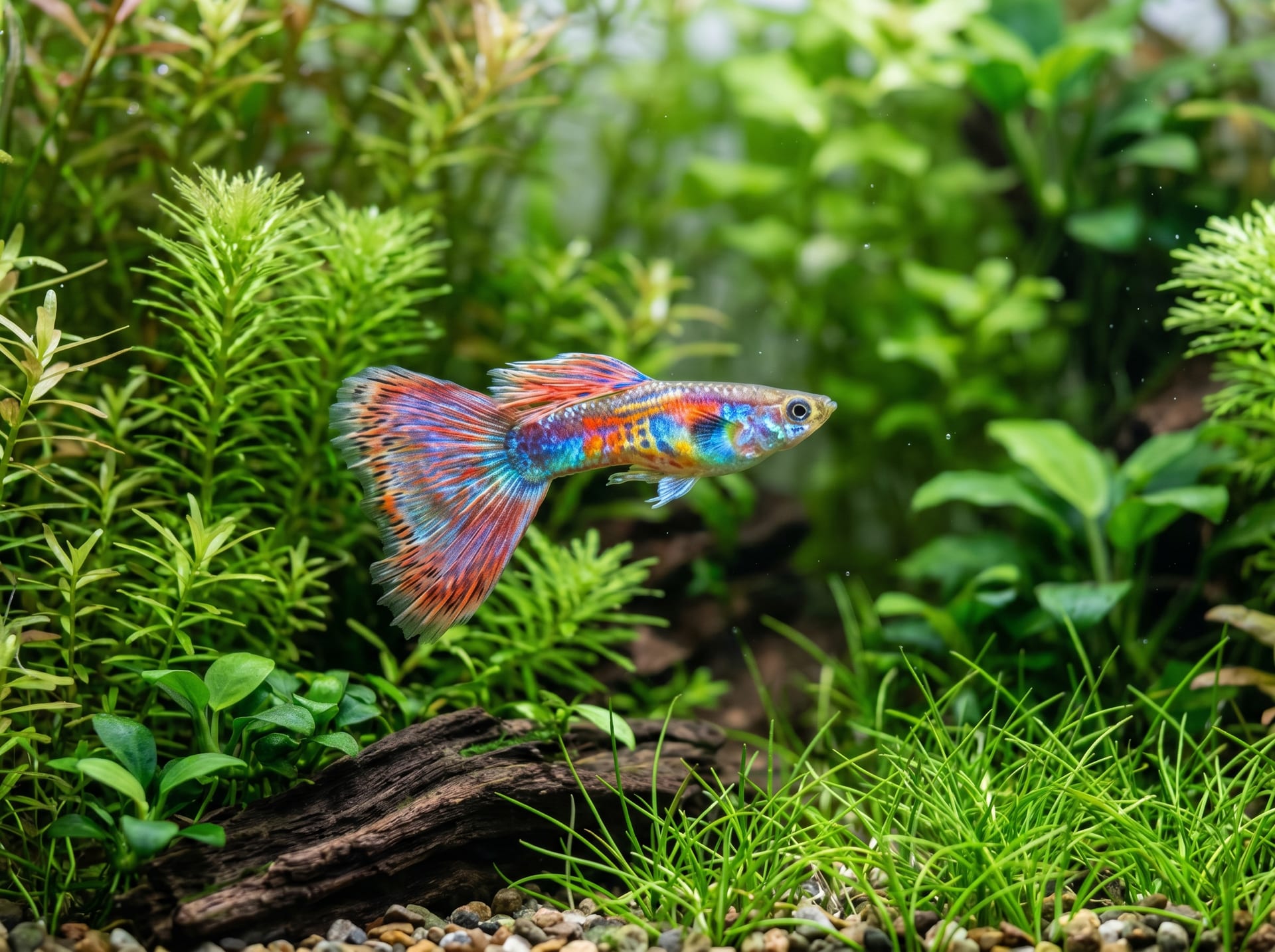
The fins' tips and area around the mouth become cloudy white and gradually deteriorate as if dissolving away. As the disease progresses, the infection spreads across the entire body and can even cause sepsis. The causative bacterium is Columnaris (Flavobacterium columnare), which develops when triggered by poor water quality, injuries, overcrowding, or stress. Fish with long fins such as guppies and bettas are especially susceptible to infection, so develop a habit of regularly observing their fins.
Treatment Methods
- Perform a medicated bath using antibacterial medications such as Green F Gold Liquid or Elbaage Ace
- Simultaneously increase water change frequency to improve water quality
- Use a parallel salt bath (0.3–0.5%) to reduce osmotic stress
- Review the tank layout and remove sharp driftwood or stones that could injure the fish
Mild cases can recover within a few days with early intervention, but if erosion has progressed to the base of the fins, complete recovery becomes difficult.
Aeromonas Infection | Treating Pinecone Disease and Hole-in-the-Body Disease
Symptoms and Causes
Aeromonas infection is divided into two types based on symptoms: pinecone disease and hole-in-the-body disease.
- Pinecone disease: Water seeping into the body causes scales to stand up, giving the fish a pinecone-like appearance. The abdomen becomes bloated, and in severe cases, breathing difficulties may occur.
- Hole-in-the-body disease: Reddish ulcers appear on the body surface and gradually develop into hole-like lesions.
The cause is Aeromonas bacteria (such as Aeromonas hydrophila), which are naturally present but worsen when immunity is compromised. Low water temperature, poor water quality, and overcrowding are the main triggers.
Treatment Methods
- Perform a medicated bath using Kan-Para D (oxolinic acid) or Green F Gold Granules
- Severe pinecone disease has major effects on internal organs and is difficult to cure completely, so early detection and early treatment are most critical
- Treat in an isolation tank and reset the main tank environment with a complete water change and substrate cleaning
- Keep the water temperature stable at 26–27°C during treatment to minimize stress on the fish
Whether you notice and address pinecone disease at the stage where "the scales seem slightly raised" determines the outcome. Daily observation saves lives.
Water Mold Disease | Fungal Infections of Wounds and Eggs
Symptoms and Causes
The characteristic sign is white to gray cotton-like material adhering to the body surface or wounds. Because it can also infect eggs, special care is needed if breeding. The cause is a fungus called water mold (such as Saprolegnia), which is triggered by injury, low water temperature, or deteriorating water quality. It rarely infects healthy skin, so the foundation of prevention is maintaining a rearing environment that prevents injuries.
Treatment Methods
- Medicated baths using New Green F or methylene blue are effective
- Salt baths (0.5%) also support antibacterial and antifungal action
- If the affected area is large, gently remove the fungal threads with tweezers before performing a medicated bath
- Hatching management in a diluted methylene blue solution is effective for preventing fungal infections on eggs
Basic Management and Treatment Principles for Disease Prevention
Preventing disease is less burdensome for both the fish and the keeper than treating it. Follow these basic principles:
- Water quality management: Establish a routine of weekly water changes (approximately 1/3) and filter cleaning
- Stable water temperature: Use heaters or coolers to prevent temperature fluctuations during seasonal changes
- Quarantine treatment: When introducing new fish, observe them in an isolation tank for at least 1–2 weeks before adding them to the main tank
- Avoid overcrowding: It is a major cause of stress between fish and water quality deterioration
- Follow medication dosage and duration: Insufficient dosage is ineffective, and excessive dosage damages the fish
- Remove the cause: Medication alone tends to lead to recurrence. Always address water quality and stress reduction together
When disease is suspected, quarantine promptly and observe symptoms carefully before selecting the appropriate medication.
Pepper Disease (Oodiniasis)
Symptoms
- The body surface appears dusted with extremely fine golden to white powder
- The grains are smaller than white spot disease, appearing "pepper-like"
- The fish rubs itself vigorously and breathing becomes labored
Cause
Parasitism by the dinoflagellate Oodinium.
Treatment Methods
- Darken the tank (Oodinium conducts photosynthesis)
- Perform a medicated bath using malachite green-based or copper-based medications
- Raise the water temperature to 28°C or above
- Use a salt bath (0.3–0.5%) in parallel
- Treatment is needed for 1–2 weeks
BreederDirect's Safety and Security System
In reducing the risk of tropical fish disease, acquiring healthy individuals from a trusted source is the most important first step. On BreederDirect, you can directly purchase tropical fish that have been managed and raised by established breeders in appropriate rearing environments.
Before purchase, you can directly message breeders to confirm details such as "quarantine status," "daily health management methods," and "pH and temperature of the rearing water," allowing transactions to proceed with confidence. Additionally, because you purchase directly from the breeder, you can minimize stress and infection risk from transportation and commingling that would occur if going through a pet shop.
To keep healthy individuals thriving over the long term, choosing a reliable source is the first requirement for long-term care. Welcome your ideal tropical fish on BreederDirect and nurture them to be healthy and vibrant for years to come.