Source: Wikimedia Commons
Japanese Freshwater Crab
BeginnerGeothelphusa dehaani
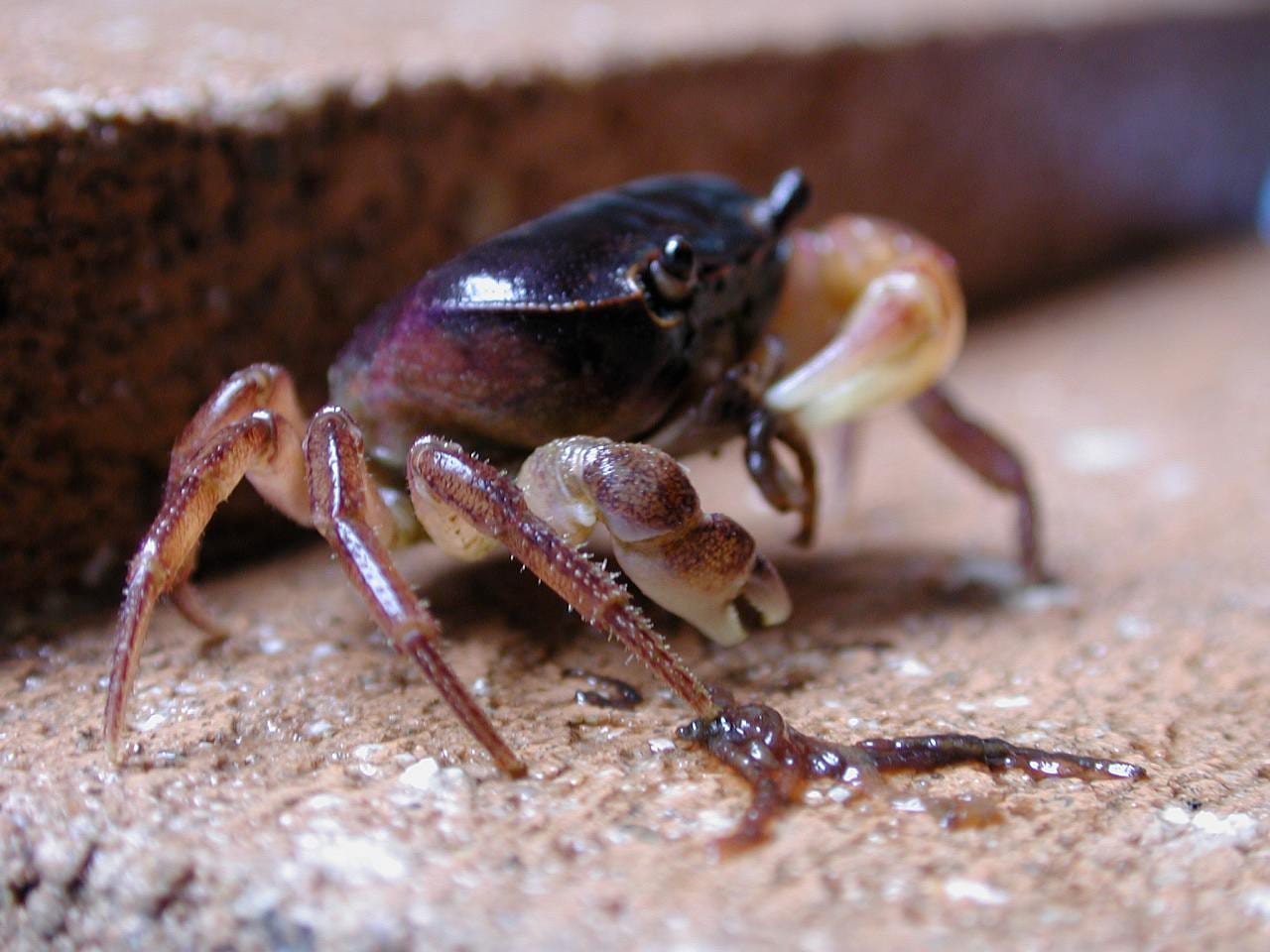
A small crab endemic to Japan that spends its whole life in fresh water. The carapace is 20-30mm wide, most often dark brown with orange-red legs. Used as an indicator of clean water, it needs cool, unpolluted conditions.
Difficulty
Beginner
Temperature
22〜28℃ (typical for Tropical Fish)
Lifespan
Several years up to about 10
Size
20-30mm carapace width
Diet
Algae, aquatic and terrestrial insects, worms and vegetables
About
Geothelphusa dehaani is a crab endemic to Japan that lives entirely in fresh water. It ranges from southern Hokkaido to Nakanoshima in the Tokara Islands, with a carapace width of 20-30mm and a span of 50-70mm including the legs. Most individuals are dark brown with orange-red legs, though pale blue and purplish forms occur and the usual colour differs between local populations. The carapace is smooth, without hairs or tubercles. It lives in the upper and middle reaches of streams and serves as an indicator of the cleanest water class. It hides under stones by day and moves at night, though it is active by day in rain and will wander from the water into woods and onto roads. An omnivore, it eats algae, aquatic and terrestrial insects, snails and worms. Mating takes place from spring into early summer, and the female carries several dozen eggs of about 2mm on her pleopods. The larvae metamorphose within the egg and hatch already shaped as crabs, so the species never needs the sea. It lives from several years up to about ten.
Source: Wikipedia (CC BY-SA 4.0)
Lifespan of the Japanese Freshwater Crab
The Japanese Freshwater Crab lives Several years up to about 10.
Size of the Japanese Freshwater Crab
The Japanese Freshwater Crab grows to 20-30mm carapace width.
Basic Info
Origin
Japan (southern Hokkaido to the Tokara Islands)
Lifespan
Several years up to about 10
Size
20-30mm carapace width
Care Specifications
Semi-aggressiveSolitary
Sources: Wikipedia (Geothelphusa dehaani, ja) / Wikipedia (Geothelphusa dehaani) / WoRMS
References & Sources
Edited & verified by: BreederDirect editorial team
The taxonomic, regulatory, and husbandry data on this page are compiled and verified against the authoritative primary sources below.
Taxonomy & Authority
Accepted name: Geothelphusa dehaani (White, 1847)
Synonyms: Thelphusa dehaani, Thelphusa japonica
Authority databases: GBIF
Nomenclature follows global taxonomic authority databases.
Regulations & Conservation Status
Not CITES-listed
Sources: CITES Appendices (species not listed) / IUCN Red List
Regulations may change. Always verify the latest information with the relevant authorities.
Japanese Freshwater Crab Listings
Loading latest listingsFind listings for this species