Source: Wikimedia Commons
Parkinson's Rainbowfish
IntermediateMelanotaenia parkinsoni
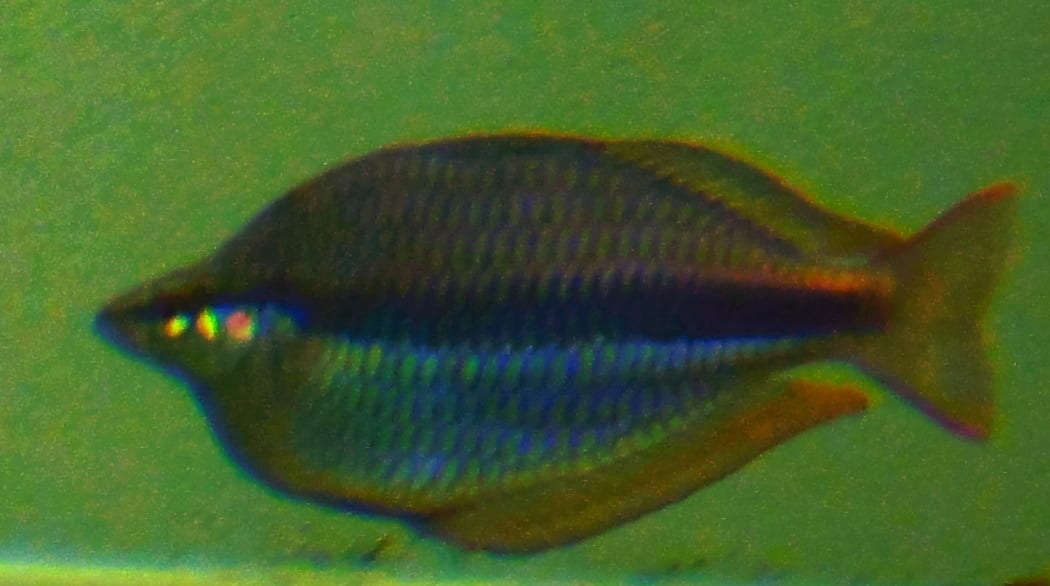
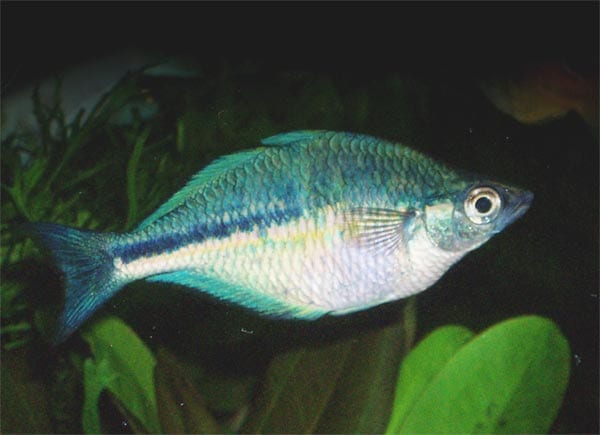
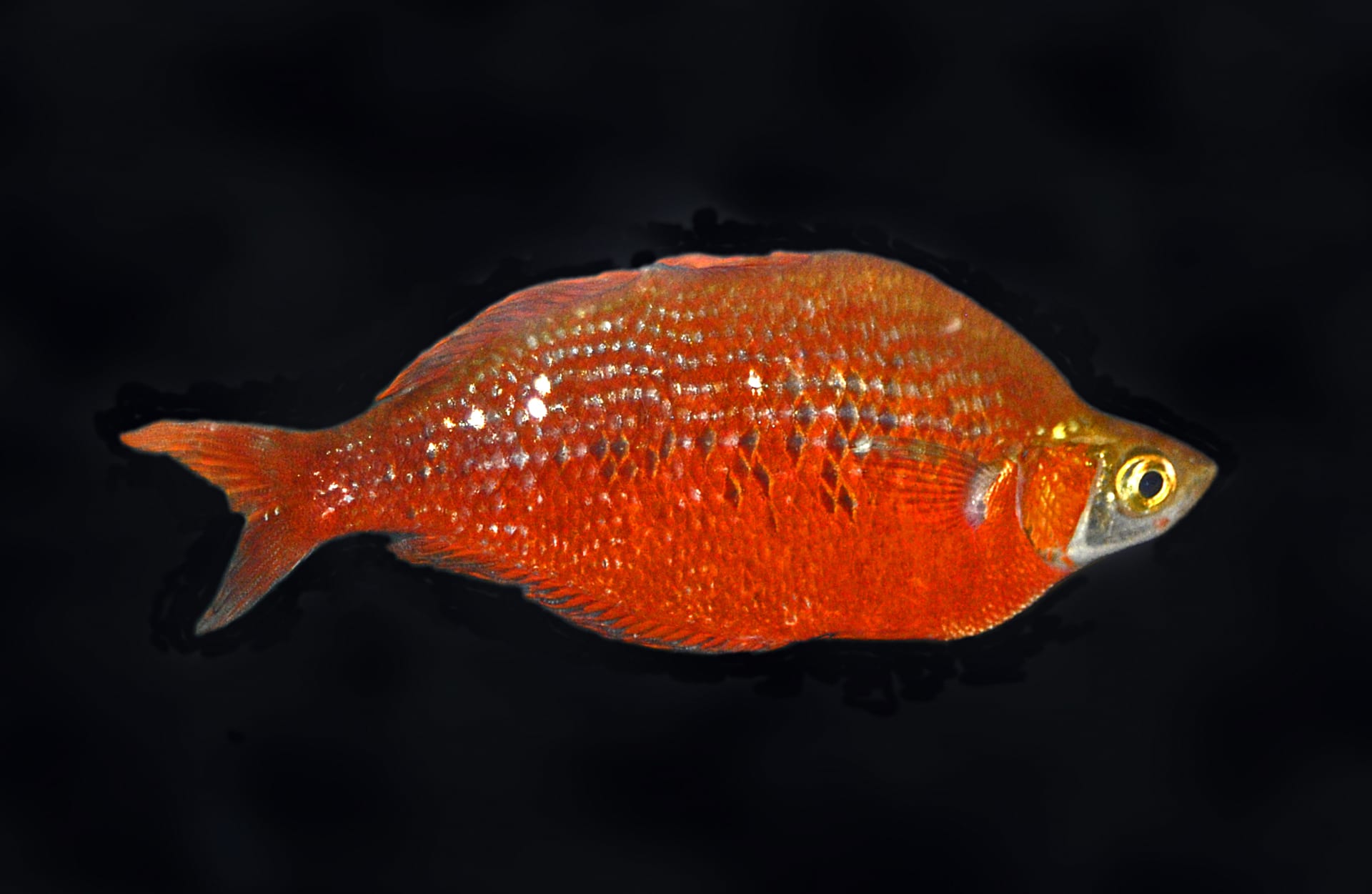
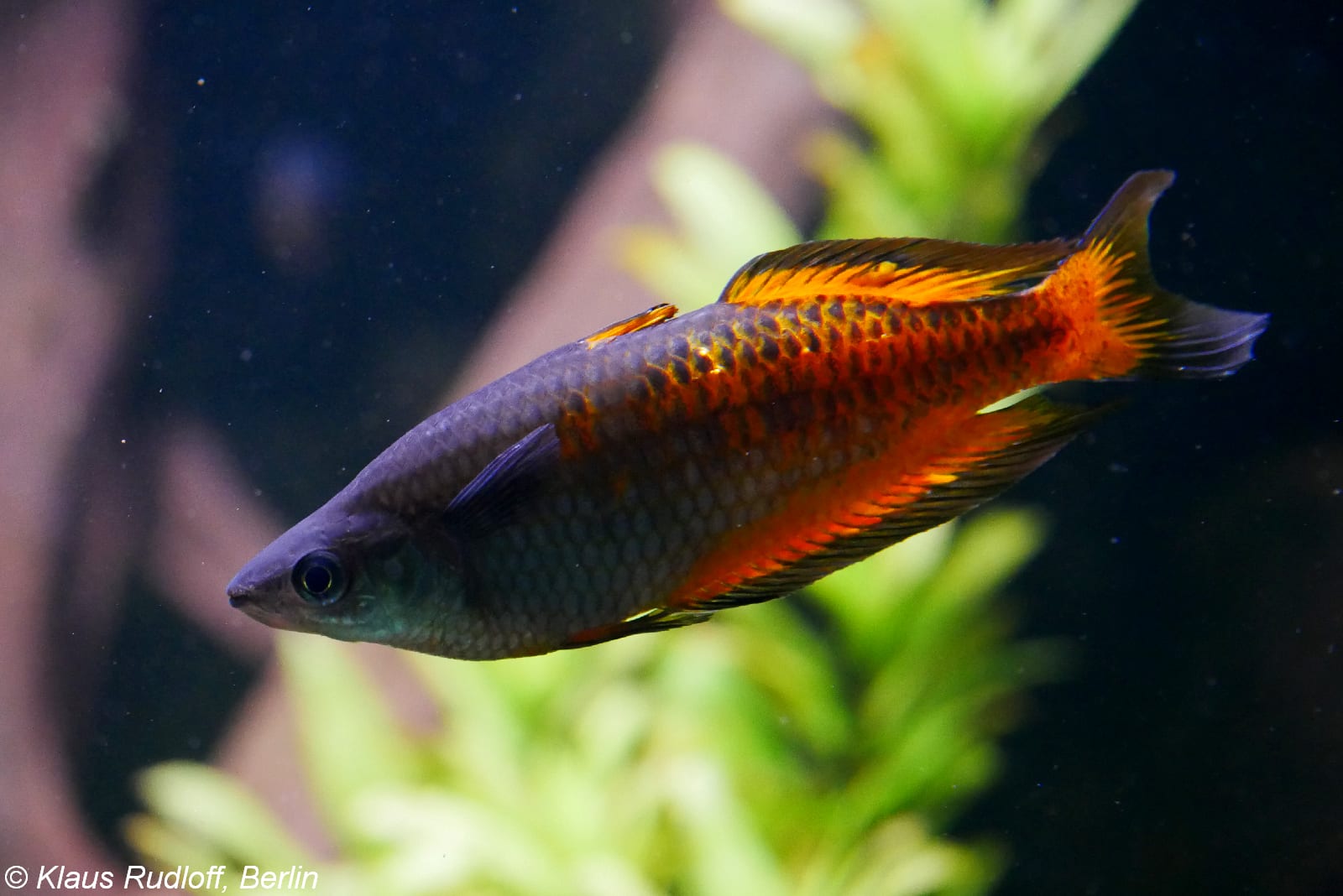
A rainbowfish from Papua New Guinea in which a pale lavender front half contrasts with a golden-orange rear. Males are deeper-bodied with extended fins. It likes hard, slightly alkaline water and colours up best in a shoal.
Difficulty
Intermediate
Temperature
26〜30℃
Lifespan
5-8 years
Size
Up to 11cm SL (male)
Diet
Dried, frozen and live foods
About
Melanotaenia parkinsoni inhabits lowland rainforest streams of south-eastern Papua New Guinea between the Kemp Welsh River and Milne Bay. FishBase records a maximum of 11cm SL for males and 9cm for females, pH 7.5-7.8, hardness from 8 dH and 26-30C. The fish is generally described as about 15cm, dark lavender with a rosy chest, the males deeper-bodied with extended fins and the rear half of the body covered in reflective golden-orange. That front-to-back contrast is the species' signature and is brightest in mature males. Like its congeners it is active and swims strongly, so a long tank and a group of six or more are preferable. Its restricted range has led the IUCN to list it as Near Threatened; it is not covered by CITES.
Source: Wikipedia (CC BY-SA 4.0)
Lifespan of the Parkinson's Rainbowfish
The Parkinson's Rainbowfish lives 5-8 years.
Size of the Parkinson's Rainbowfish
The Parkinson's Rainbowfish grows to Up to 11cm SL (male).
Temperature & humidity for the Parkinson's Rainbowfish
The ideal temperature for the Parkinson's Rainbowfish is 26〜30℃.
Basic Info
Origin
Papua New Guinea (lowlands between the Kemp Welsh River and Milne Bay)
Lifespan
5-8 years
Care Specifications
References & Sources
Edited & verified by: BreederDirect editorial team
The taxonomic, regulatory, and husbandry data on this page are compiled and verified against the authoritative primary sources below.
Taxonomy & Authority
Accepted name: Melanotaenia parkinsoni Allen, 1980
Authority databases: FishBase
Nomenclature follows global taxonomic authority databases.
Regulations & Conservation Status
Not CITES-listedIUCN NT · Near Threatened
Sources: CITES Appendices (species not listed) / IUCN Red List
Regulations may change. Always verify the latest information with the relevant authorities.
Parkinson's Rainbowfish Listings
Loading latest listingsFind listings for this species