Rainbow Fish Care Guide | Creating the Right Environment to Bring Out Their Colors and Breeding Tips
A guide to caring for the brilliantly iridescent rainbow fish. Covers the characteristics of popular species such as Boeseman's, Turquoise, and Madagascar rainbowfish, sex ratio management when keeping them in groups, and tips for spawning and breeding.
Key Takeaways
A guide to caring for the brilliantly iridescent rainbow fish. Covers the characteristics of popular species such as Boeseman's, Turquoise, and Madagascar rainbowfish, sex ratio management when keeping them in groups, and tips for spawning and breeding.
Related Species
Rainbow Fish: The Charm of Iridescent Freshwater Fish
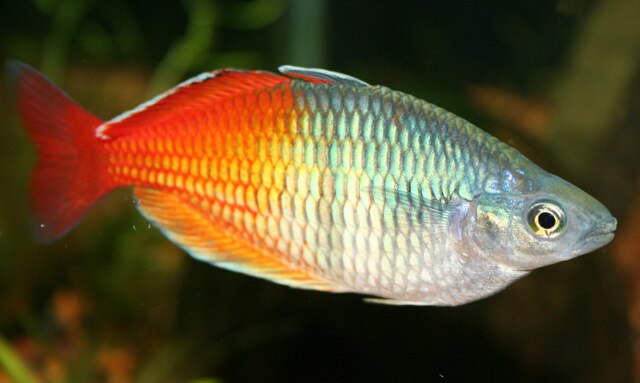
Rainbow fish (primarily from the families Melanotaeniidae and Bedotiidae, among others) are a group of small to medium-sized tropical fish distributed from northern Australia to New Guinea. True to their name, they are beloved by aquarists worldwide for the iridescent sheen of their scales, which shimmer like a rainbow—shifting from blue, green, yellow, red, and purple depending on the angle of light.
Their most distinctive feature is that males intensify their coloration during breeding and competitive behavior. When multiple males in the same tank develop a sense of rivalry, their body colors become more vivid. Because their natural beauty is maximized when kept in groups rather than alone, they are particularly well-suited to aquarists who want to make their aquarium more vibrant.
Popular Species and Selection
Dozens of rainbow fish species are available in the hobby, each with different coloration, size, and level of care difficulty.
Boeseman's rainbowfish (Melanotaenia boesemani) are endemic to New Guinea and have striking presence with their two-tone coloration—the front half blue-violet and the rear half orange. They grow to over 10 cm and stand out as a centerpiece in planted tanks. They prefer slightly warmer water (27–29°C), and mature males display more intense coloration.
Turquoise rainbowfish (Melanotaenia lacustris) come from Lake Kutubu in Papua New Guinea. Their beautiful blue-green coloration is reminiscent of lake water, making them the most commonly available beginner species. They have a gentle temperament and are easy to keep with other fish, maintaining stable coloration even in neutral water around pH 7.0.
Madagascar rainbowfish (Bedotia geayi) are endemic to Madagascar in Africa. Their yellow stripes and silvery body color are understated yet striking, setting them apart from other rainbow fish. They are somewhat smaller (6–7 cm) and relatively tolerant of water quality fluctuations, offering nice visual contrast when kept alongside other rainbowfish.
For first-time keepers, Turquoise or Madagascar rainbowfish are recommended, and as you gain experience, Boeseman's rainbowfish make a good next step.
Setting Up the Aquarium Environment
Tank Size and Schooling
The greatest appeal of rainbow fish is the spectacular sight of their schooling. When kept in groups of 10 or more in a tank 90 cm or larger, you can enjoy impressive schooling with light seeming to flash across a line of fish. For a 60 cm tank, aim for 6–8 fish.
The basic ratio should be 1 male to 1–2 females, with slightly more females. If there are too many males, constant chasing occurs and weaker individuals may become stressed and weakened. Conversely, too many females reduces competitive color displays and results in duller coloration.
Water Quality and Temperature
Ideal conditions are slightly alkaline (pH 7.0–7.8), hardness (GH) around 8–15, and water temperature 26–28°C. Most of their native habitats are limestone-based rivers and lakes, so they thrive in water slightly harder than typical Japanese tap water—this higher hardness brings out their coloration. You can easily maintain stable pH by adding a small amount of coral sand to the substrate or placing crushed oyster shells in a net bag in an external filter.
Perform water changes weekly at 30–40% of the tank volume. They can tolerate crowded conditions if water quality remains stable, but watch for buildup of ammonia and nitrite.
Filtration and Water Flow
Because they are active swimmers, weak flow will bore them. Use an external or hang-on filter to create gentle water movement. Directing the filter outlet as a spray at the water surface disperses the flow and prevents strong direct currents.
Layout and Lighting
Plant tall background vegetation (such as Vallisneria or Amazon sword) and keep the middle and foreground open for swimming space. Using full-spectrum LED lighting for 8–10 hours daily will enhance their coloration and promote plant photosynthesis.
Food and Color Enhancement
They are omnivorous and hardy fish that readily accept prepared foods. Feed high-quality flakes or sinking pellets as the staple, and supplement with animal protein such as frozen bloodworms or frozen brine shrimp 2–3 times weekly to dramatically enhance male coloration.
Incorporating "color-enhancing" foods with high levels of shrimp and krill ingredients containing astaxanthin will make the orange-to-red pigments of Boeseman's rainbowfish particularly vivid. Feed twice daily in amounts the fish will consume in 2–3 minutes, and always remove any uneaten food.
Breeding Steps and Fry Management
Rainbow fish are relatively easy to breed. Mature males swim near the water surface, fluttering their tail fins to court females, depositing adhesive eggs on fine-leaved plants or breeding mops (bundles of yarn).
- Spawning: Raising water temperature 1–2°C encourages spawning, which typically occurs early in the morning.
- Egg isolation: Move the breeding mop or plants with eggs to a separate nursery tank (10–20 L). Separate them promptly from the parents, as adults may eat the eggs.
- Until hatching: At 27°C, eggs hatch in 7–10 days. Use a sponge filter to ensure water movement and oxygen without creating strong currents.
- Early fry care: Feed newly hatched fry infusoria (Paramecium) or commercially available liquid fry food. After about a week, they will be able to eat brine shrimp nauplii.
- Growth management: When they reach about 1 cm in 2–3 weeks, gradually acclimate them to the same water conditions as the main tank before combining them.
Summary
Rainbow fish are excellent aquarium fish that, with proper setup and group management, can be enjoyably kept long-term by both beginners and intermediate aquarists. Simply keeping three points in mind—slightly alkaline water, an appropriate male-to-female ratio, and nutrient-rich food—will bring out even more vivid iridescence. If you also consider breeding, you can experience the joy of nurturing your own school of fish as the fry grow. Try creating a living rainbow in your aquarium with rainbow fish.