Melanotaenia (Rainbow Fish) Breeding & Care Guide by Species | Boesemani, Praecox, Australis, and More
A comprehensive guide to caring for and breeding representative Melanotaenia rainbow fish species—Boesemani, Turquoise, Australis, Praecox, and Parkinsoni—covering characteristics, care environments, and breeding methods for each type. Detailed guidance on water quality management in slightly alkaline, medium-hard water, lighting and feeding to enhance coloration, spawning substrate setup, and fry rearing—a practical guide to enjoying rainbow fish beautifully for the long term.
Key Takeaways
A comprehensive guide to caring for and breeding representative Melanotaenia rainbow fish species—Boesemani, Turquoise, Australis, Praecox, and Parkinsoni—covering characteristics, care environments, and breeding methods for each type. Detailed guidance on water quality management in slightly alkaline, medium-hard water, lighting and feeding to enhance coloration, spawning substrate setup, and fry rearing—a practical guide to enjoying rainbow fish beautifully for the long term.
Related Species
What is Melanotaenia?
Melanotaenia (Melanotaenia genus) is a freshwater fish distributed across Papua New Guinea, northern Australia, and surrounding islands. It is the representative genus of Rainbow Fish (family Melanotaeniidae). True to the name "Rainbow Fish," mature males display a brilliant spectrum of colors—green, blue, red, yellow, and orange—depending on lighting and arousal level.
Over 100 species have been described worldwide, with new species discovered annually. The balance of ease of care and beauty makes them popular among both beginners and advanced breeders.
Representative Species and Characteristics
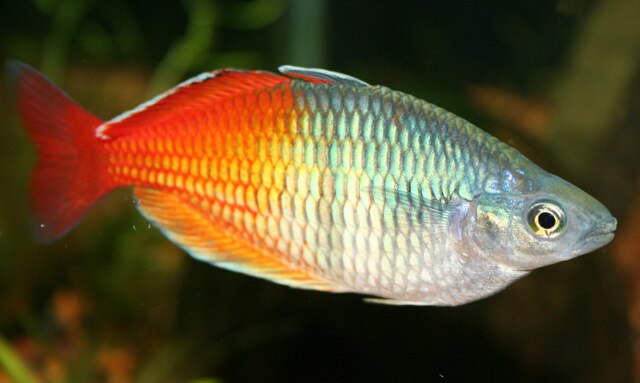
Boesemani Rainbow (Melanotaenia boesemani)
One of the most famous species. Distinctive "two-tone" coloring—the front half of the body is vivid purple-blue, and the back half is orange to yellow.
- Origin: Indonesia, Irian Jaya, Ajamaru Lake region
- Adult size: 8–11 cm
- Care temperature: 24–28°C
- pH: 7.0–8.0 (prefers slightly alkaline)
- Difficulty: Beginner to intermediate
- Note: Wild populations are highly localized, making conservation important. Captive-bred (CB) individuals dominate the trade.
Turquoise Rainbow (Melanotaenia lacustris)
A beautiful species whose body color shines from turquoise blue to green. Native to the Kumul region.
- Origin: Papua New Guinea, Kumul River and Kumul Lake
- Adult size: 10–12 cm
- Care temperature: 22–26°C
- pH: 6.8–7.8
- Difficulty: Intermediate
- Characteristic: Coloration fades if water temperature is too high; slightly cooler management is optimal.
Australis (Melanotaenia australis)
The most widely distributed and commercially available species, found throughout northern Australia and southwestern Papua New Guinea. Body coloration varies greatly by region, with rich color variations including red, orange, and yellow.
- Origin: Northwestern Australia and Papua New Guinea
- Adult size: 8–10 cm
- Care temperature: 22–28°C
- pH: 6.5–8.0 (wide tolerance range)
- Difficulty: Beginner
- Characteristic: Hardy with excellent water quality adaptation; ideal for beginners.
Praecox (Melanotaenia praecox)
Also called "Dwarf Neon Rainbow," this small species reaches only 5–6 cm maximum length. Despite its small size, mature males have stunning reddish fins and silver-blue bodies.
- Origin: Indonesia, Mamberamo River basin
- Adult size: 4–6 cm
- Care temperature: 24–28°C
- pH: 6.5–7.5
- Difficulty: Intermediate
- Characteristic: School beautifully in small tanks (60 cm).
Parkinsoni Rainbow (Melanotaenia parkinsoni)
A mid-sized species with reddish coloration on the tail and rear, featuring beautiful body gradation. Multiple males compete in color displays.
- Origin: Central Papua New Guinea
- Adult size: 10–12 cm
- Care temperature: 24–28°C
- pH: 7.0–8.0
- Difficulty: Intermediate to advanced
Setting Up a Care Environment
Tank Size
Melanotaenia are active swimmers requiring ample open swimming space.
| Species/Group | Minimum Tank Size |
|---|---|
| Small species (praecox, etc.) | 60 cm (60L+) |
| Mid-sized species (boesemani, australis, etc.) | 90 cm (100L+) |
| Large species (over 12 cm) | 120 cm (180L+) |
For schooling (6+ individuals), choose a tank one size larger.
Water Quality Management
Most Melanotaenia prefer slightly alkaline conditions.
- pH: 7.0–7.8 (up to 8.0 for some species)
- Hardness (GH): 8–15 dH (medium-hard to hard)
- Temperature: 22–26°C (varies by species; avoid constant 28°C)
- Ammonia/Nitrite: 0 mg/L
- Nitrate: Maintain below 40 ppm
Important: Soft, acidic water (blackwater) is unsuitable for most species. Placing crushed coral or oyster shells in the filter effectively maintains pH and hardness.
Lighting
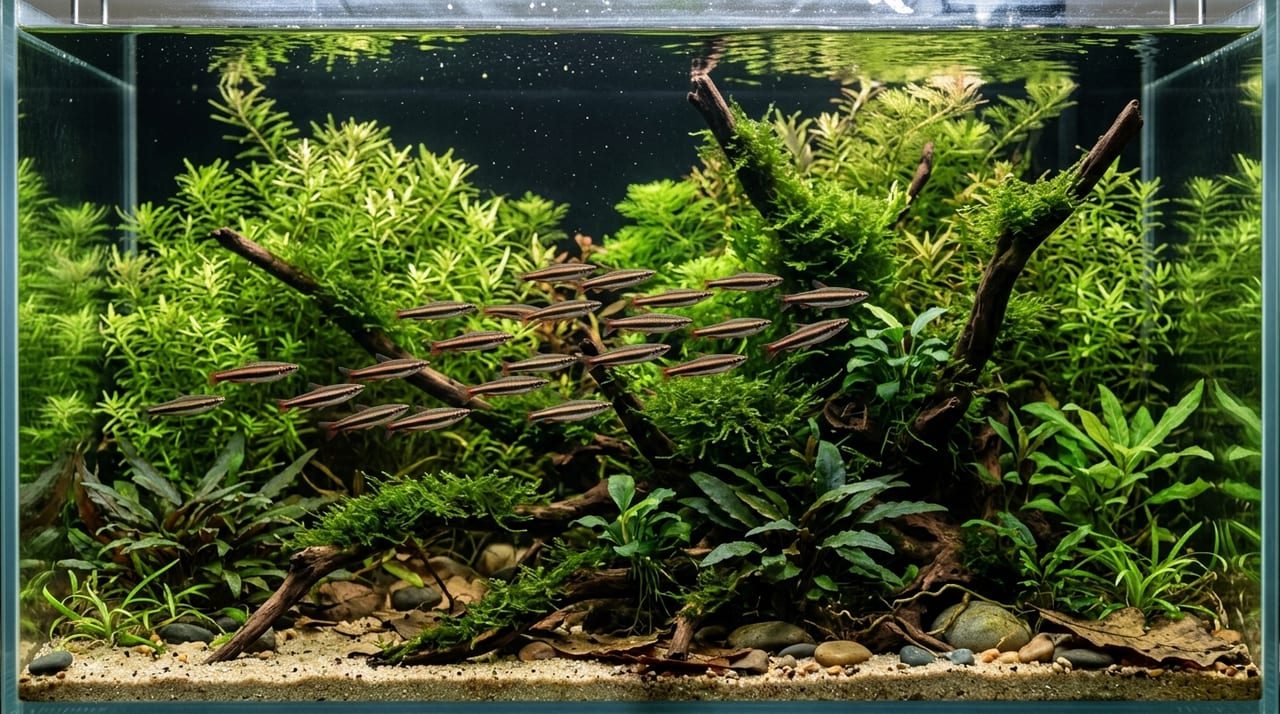
Bright, strong lighting (6000K–10000K) maximizes male coloration. When combined with aquatic plants, the contrast between the green background and radiant body colors becomes stunning.
Plants and Layout
- Background and floating plants (Monosolenium, Willow Moss, floating plants): Serve as spawning substrate and refuge for fry
- For a layout closer to Papua New Guinea's natural environment, use sand substrate, rocks, and simple medium-hard water setup
- Excessive decoration is unnecessary; maximize open swimming space for natural behavior.
Feeding
Omnivorous and readily eat frozen, dried, or live foods. A balanced diet is key to enhanced coloration.
- Pellets and flakes: Staple diet (color-enhancing formulas with astaxanthin are effective)
- Frozen bloodworms and brine shrimp: Secondary food 2–3 times weekly
- Dried spirulina: Enhances blue coloration
- Live insect feeders (small crickets, etc.): Improves conditioning during breeding season
Breeding Methods
Melanotaenia breeding is relatively easy compared to other egg-laying freshwater fish, with good success rates even for beginners.
Sex Differentiation
| Feature | Male | Female |
|---|---|---|
| Body shape | Slender to slightly deep-bodied | Easily swells in abdomen |
| Body color | Vivid, strong coloration | Dull, pale |
| Dorsal and caudal fins | Long and elongated | Shorter |
| Size | Tends to grow larger | Slightly smaller |
Triggering Spawning
- Large water change just before spawning (25–30%) often triggers the process
- Slight temperature increase (1–2°C) is also effective
- Spawning substrate: Spawning mop or Willow Moss/Java Moss placed in the tank
Spawning and Hatching
Melanotaenia attach eggs to spawning substrate (plants or mops) with sticky, thread-like filaments anchoring them to vegetation.
- Hatching time: 5–7 days at 26°C
- Fry size: Relatively large at hatching (approximately 5 mm)
Protecting Eggs from Adult Fish
To prevent egg and fry predation by adults and other fish:
- Move the spawning substrate to a separate container (10–20L)
- Or transfer adults to another tank once fry are observed
Fry Rearing
- Initial food: Infusoria, PSB, or commercial liquid fry food
- After reaching 3–5 mm: Brine shrimp nauplii
- After 1–2 months: Fine flakes or crushed pellets
Fry are relatively resilient to water parameter changes but thrive with daily small water changes (10–15%).
Tank Mates
Melanotaenia are peaceful mid-sized fish compatible with many species.
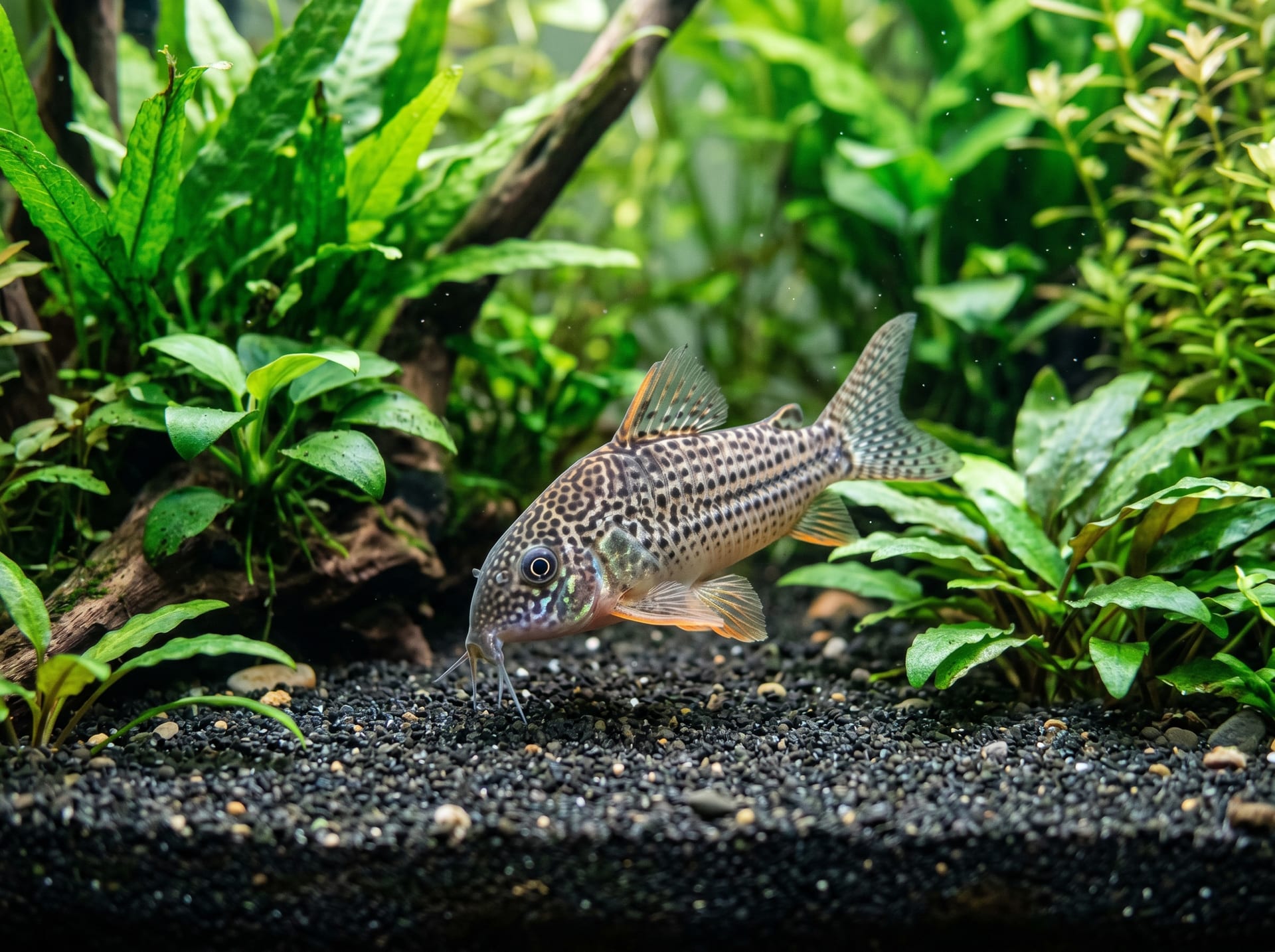
- Good tank mates: Corydoras, dwarf cichlids, characins, rasboras, loaches
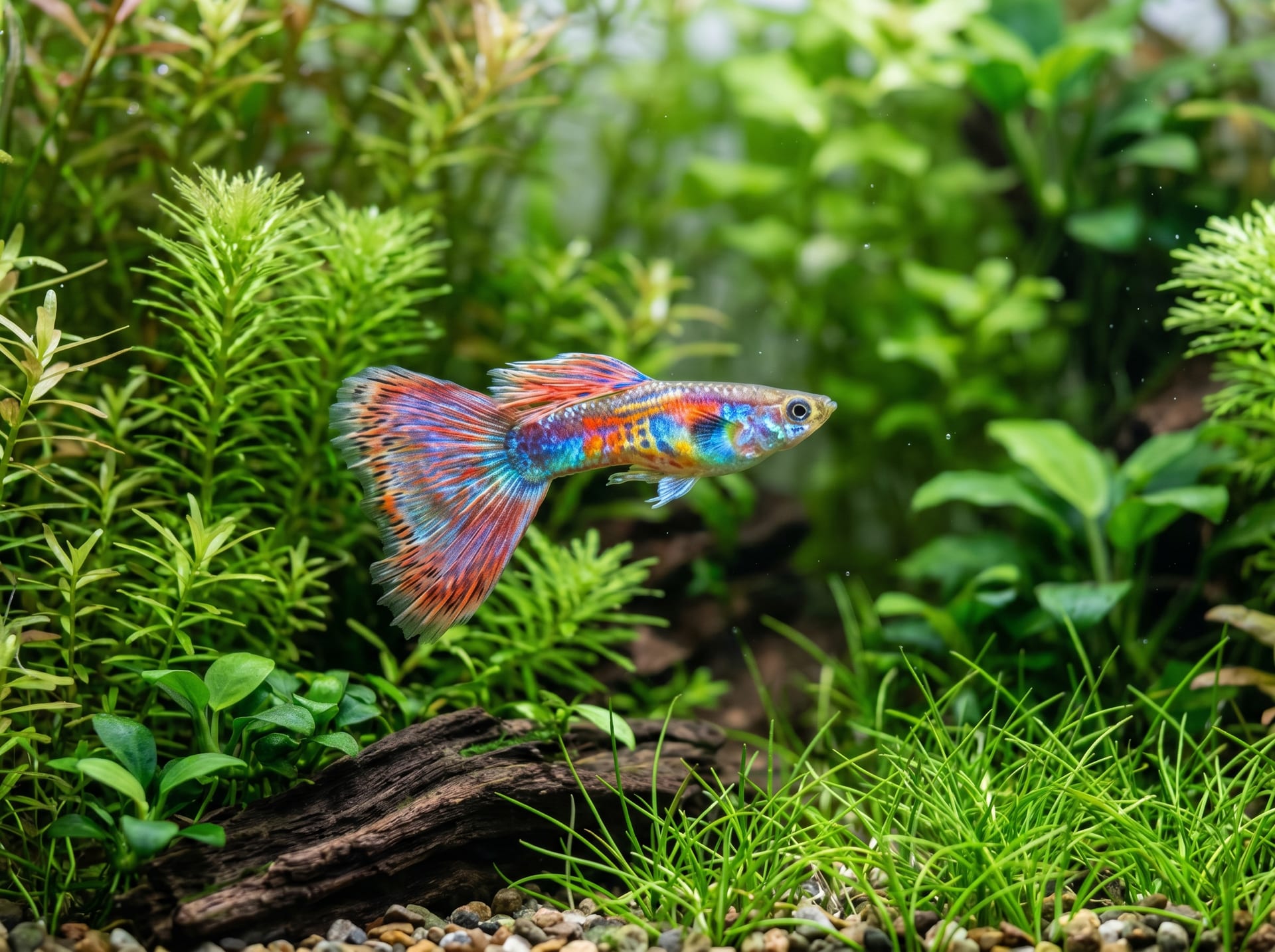
- Species to avoid: Long-finned fish like guppies (some individuals nip fins), aggressive large cichlids
Keeping multiple same-species or congeneric individuals is most recommended. With more males, color competition intensifies, creating beautiful display behaviors.
Conclusion
Melanotaenia combine beauty, hardiness, and ease of breeding—making them excellent aquarium fish. Proper species selection and maintaining appropriate water conditions (slightly alkaline, medium-hard water) are essential for long-term success. Enjoy the beauty of schooling fish competing in coloration and their graceful swimming behavior.