Source: Wikimedia Commons
Emerald Dwarf Rasbora
IntermediateDanio erythromicron
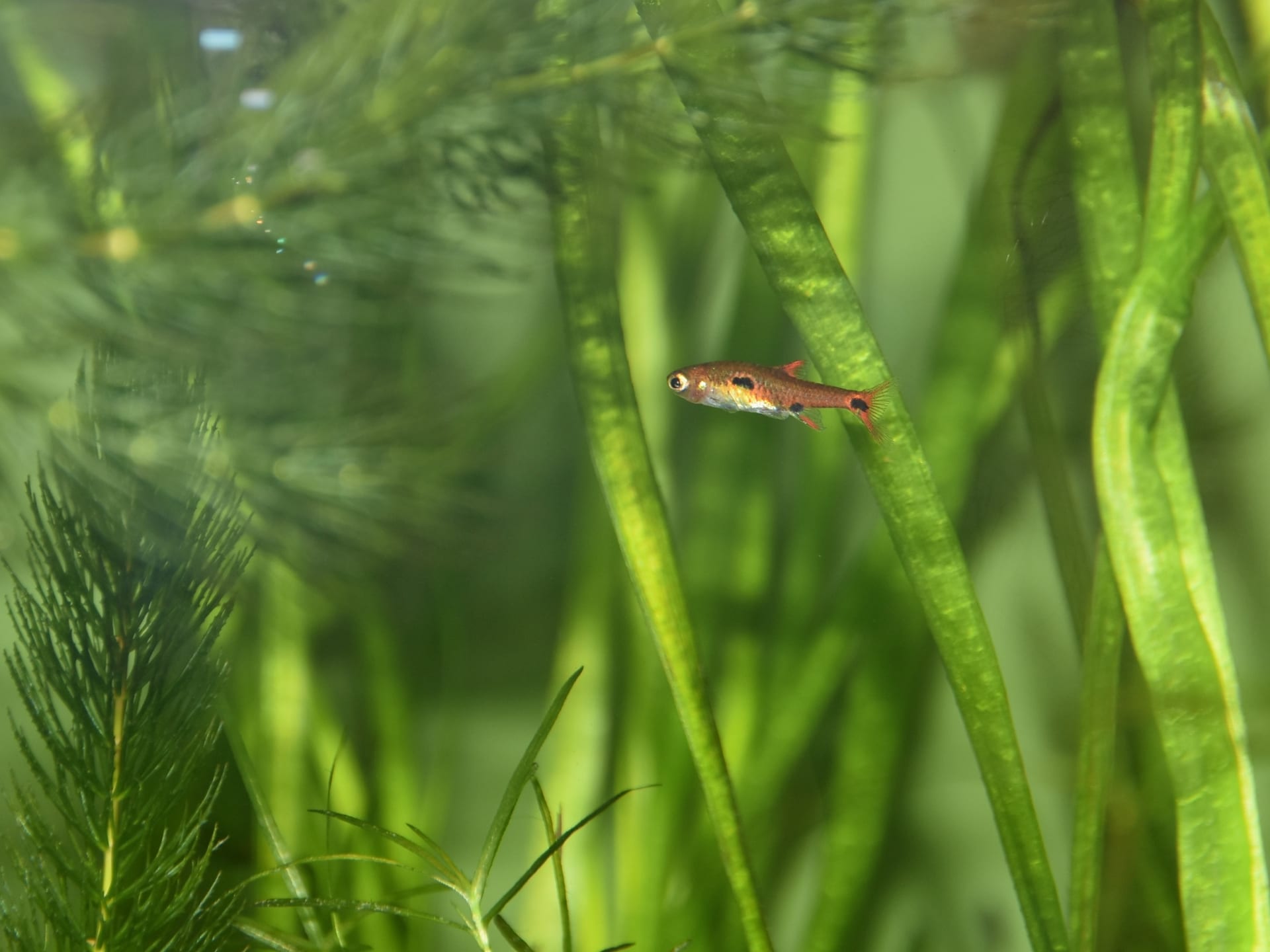
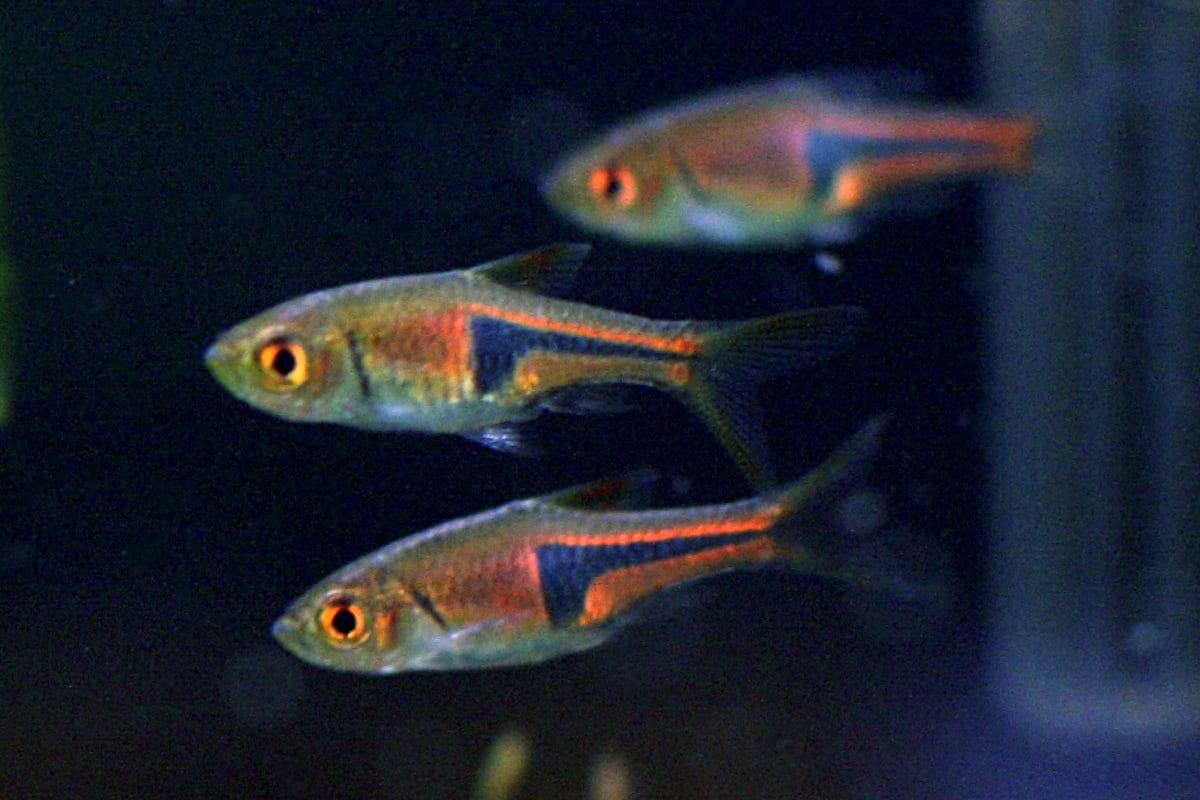
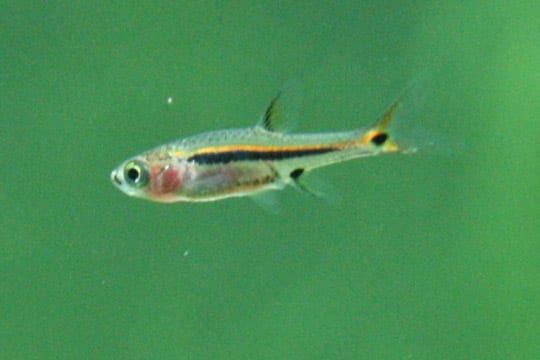
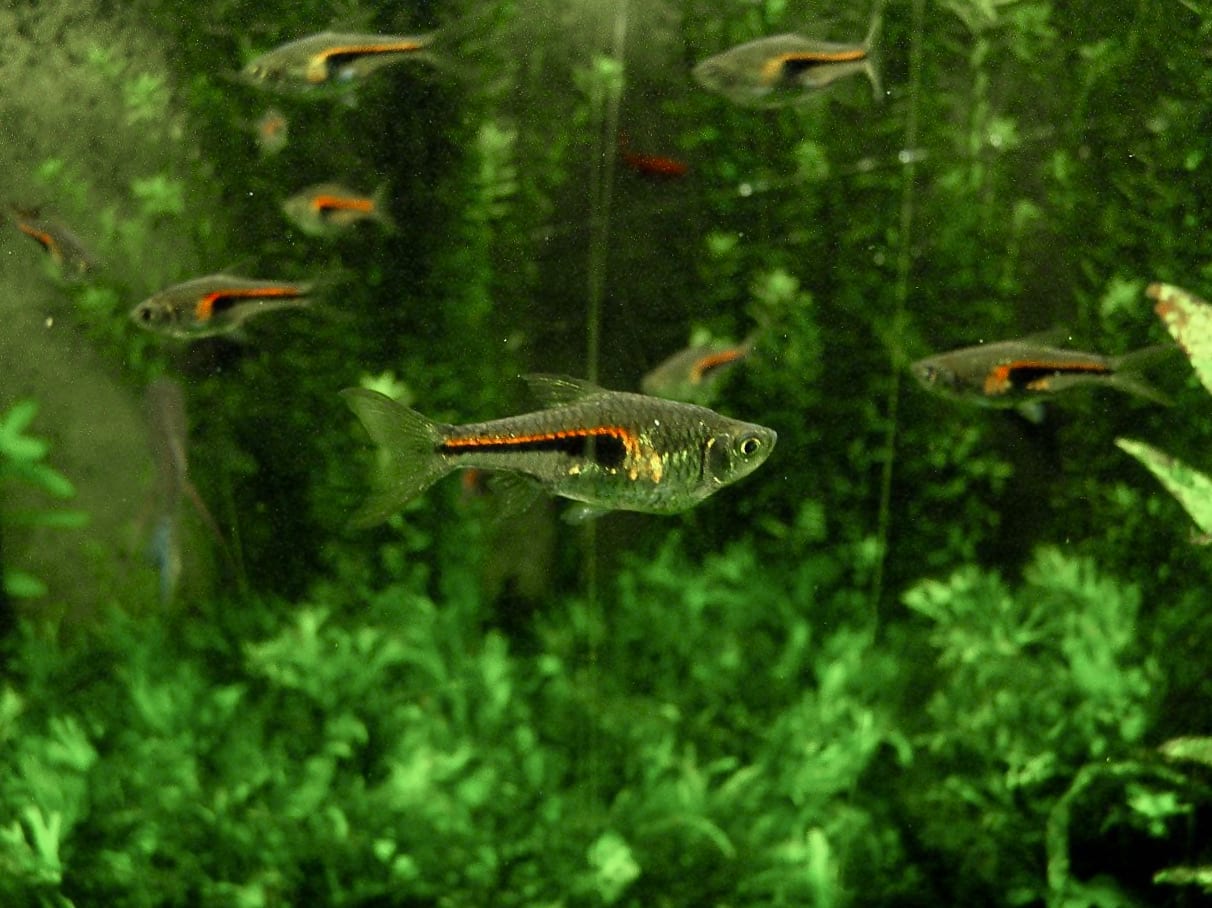
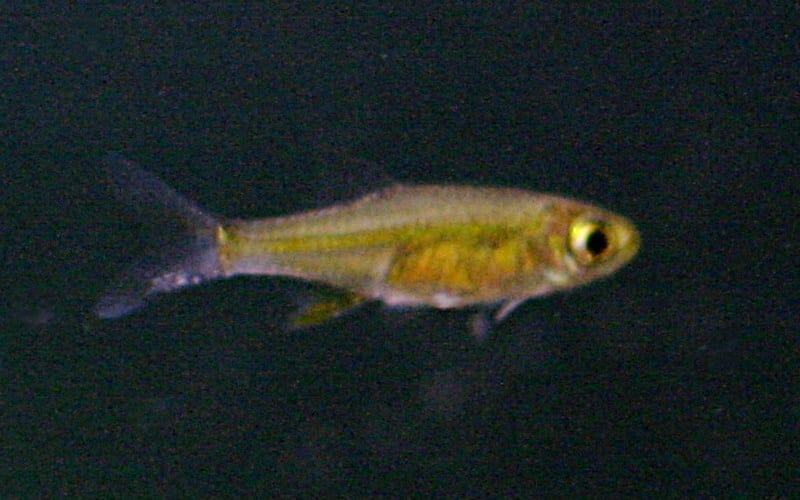
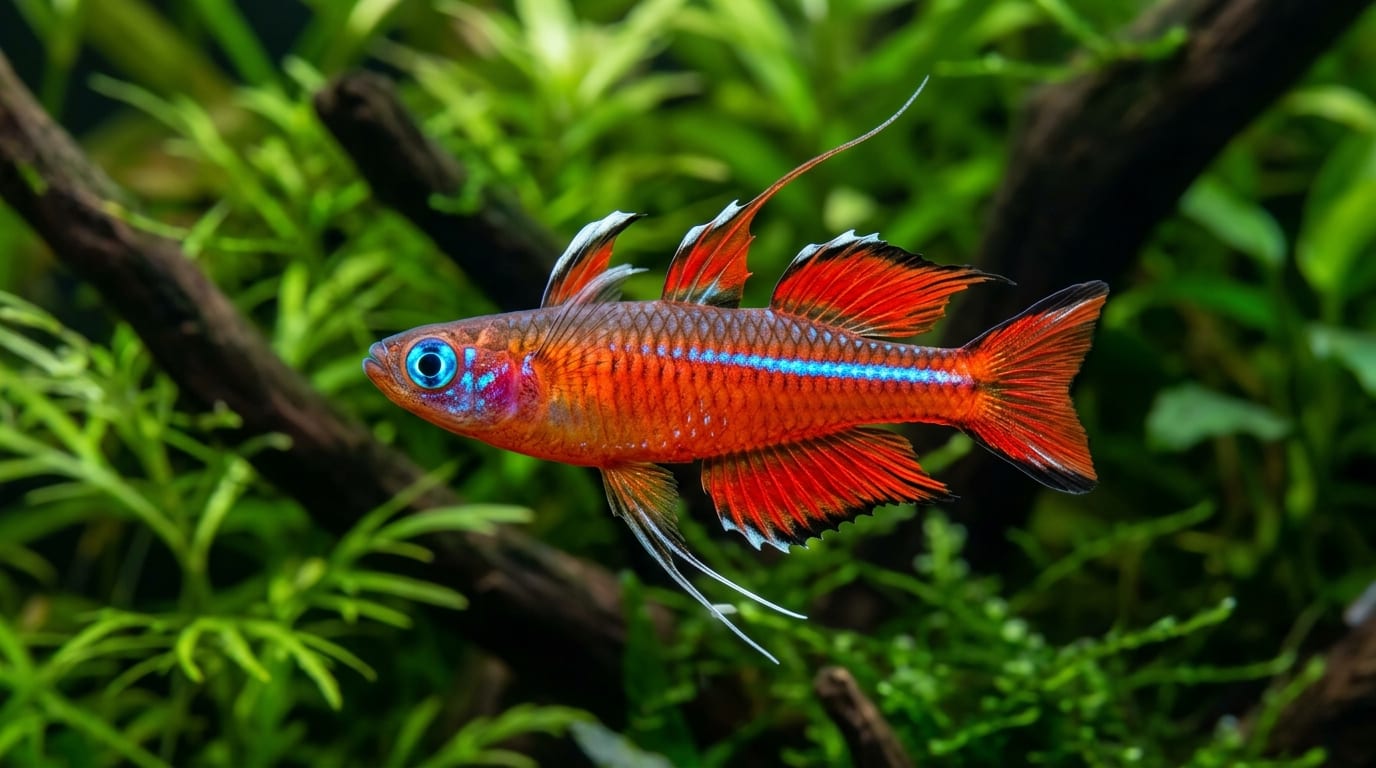
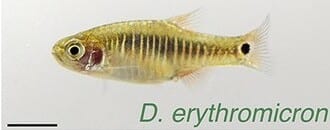
A tiny cyprinid about 2cm long with blue-green bars over an orange body, endemic to Lake Inle in Myanmar. It wants hard, slightly alkaline water and cooler temperatures than most of its genus. Males are the more colourful sex, with red in the fins.
Difficulty
Intermediate
Temperature
20〜24℃
Lifespan
3-5 years
Size
Up to 3cm
Diet
Fine dried foods and live or frozen Artemia nauplii and daphnia
About
Danio erythromicron is a tiny cyprinid found only in Lake Inle, Myanmar. FishBase records a maximum of 3cm, pH up to 7.0, 10-25 dH and 21-25C. Seriously Fish gives 2cm SL, 20-24C, pH 7.0-8.0, 12-20 dGH and a 60 x 30cm base, and treats the fish as Celestichthys erythromicron. Blue-green bars over an orange ground make it, along with Danio margaritatus from the same lake, one of the most sought-after nano fish. It was formerly placed in Microrasbora, then in Danio, and later in Celestichthys. It is timid and will be outcompeted and cowed by larger or boisterous tankmates; other small Myanmar danios and Microdevario species suit it better. It is an egg scatterer with no parental care. Degradation of Lake Inle has led the IUCN to list it as Endangered.
Source: Wikipedia (CC BY-SA 4.0)
Lifespan of the Emerald Dwarf Rasbora
The Emerald Dwarf Rasbora lives 3-5 years.
Size of the Emerald Dwarf Rasbora
The Emerald Dwarf Rasbora grows to Up to 3cm.
Temperature & humidity for the Emerald Dwarf Rasbora
The ideal temperature for the Emerald Dwarf Rasbora is 20〜24℃.
Basic Info
Origin
Myanmar (endemic to Lake Inle)
Lifespan
3-5 years
Size
Care Specifications
- pH
- 7–8
- Hardness (GH)
- 12–20 dGH
- Water Temp.
- 20–24℃
PeacefulGroupBreeding: Moderate
Sources: FishBase / Seriously Fish
References & Sources
Edited & verified by: BreederDirect editorial team
The taxonomic, regulatory, and husbandry data on this page are compiled and verified against the authoritative primary sources below.
Taxonomy & Authority
Accepted name: Danio erythromicron (Annandale, 1918)
Synonyms: Microrasbora erythromicron, Celestichthys erythromicron
Authority databases: FishBase
Nomenclature follows global taxonomic authority databases.
Regulations & Conservation Status
Not CITES-listedIUCN EN · Endangered
Sources: CITES Appendices (species not listed) / IUCN Red List
Regulations may change. Always verify the latest information with the relevant authorities.
Emerald Dwarf Rasbora Listings
Loading latest listingsFind listings for this species