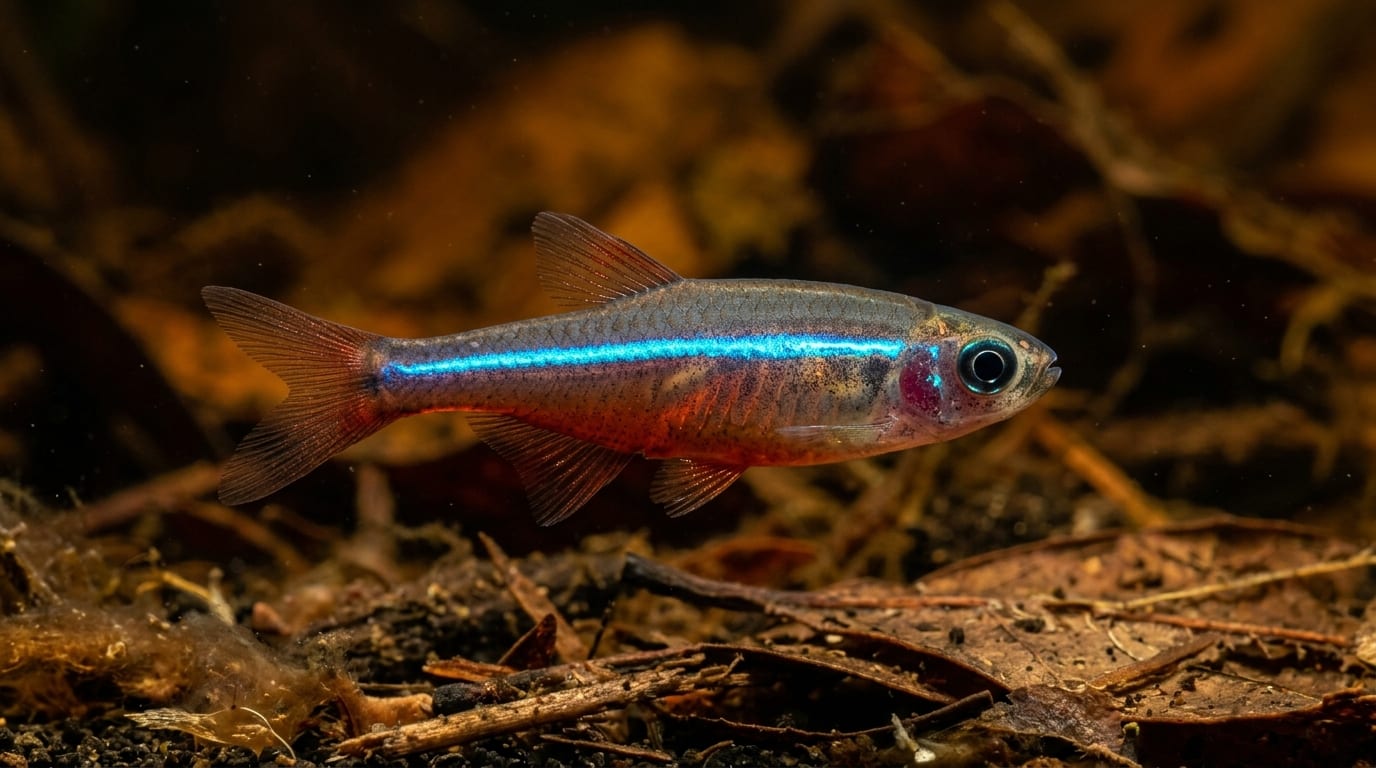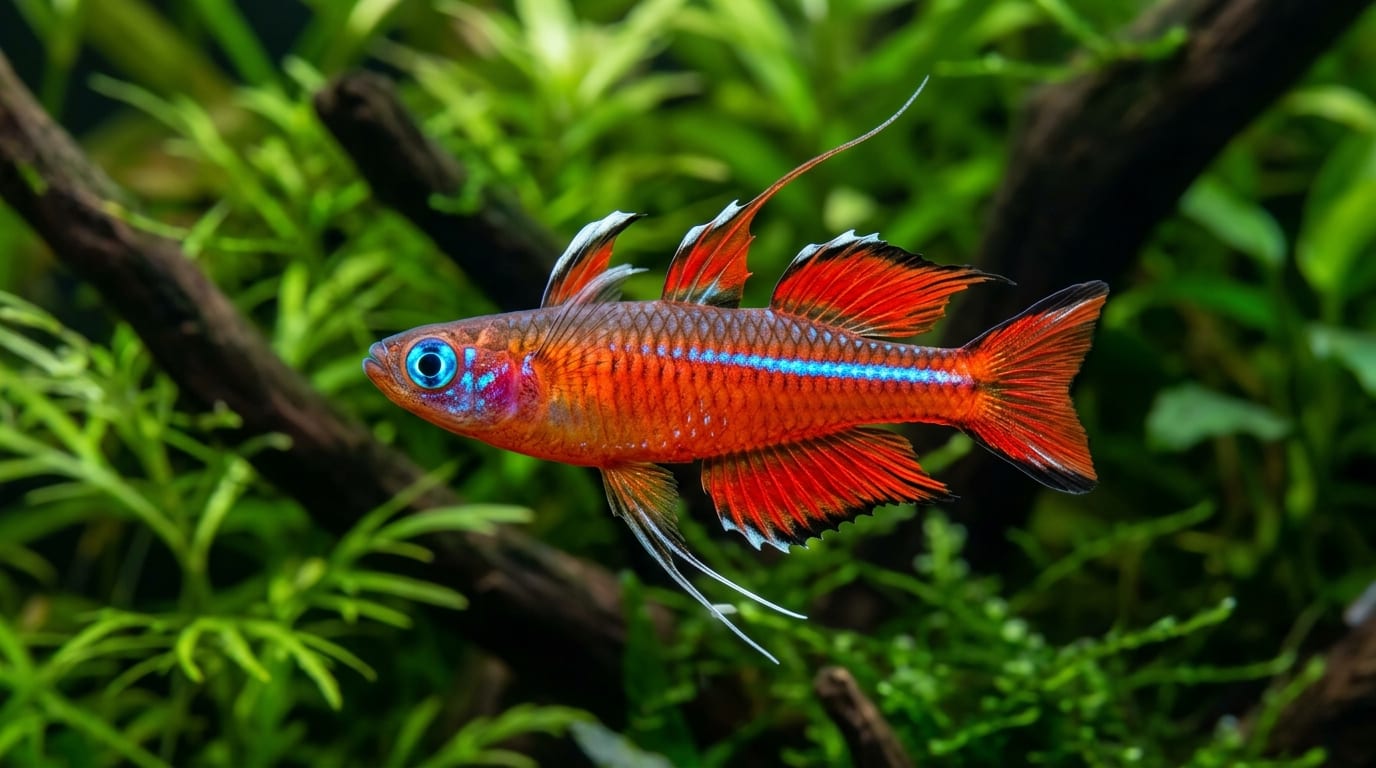
AI-generated image
Red Neon Blue-eye
IntermediatePseudomugil luminatus
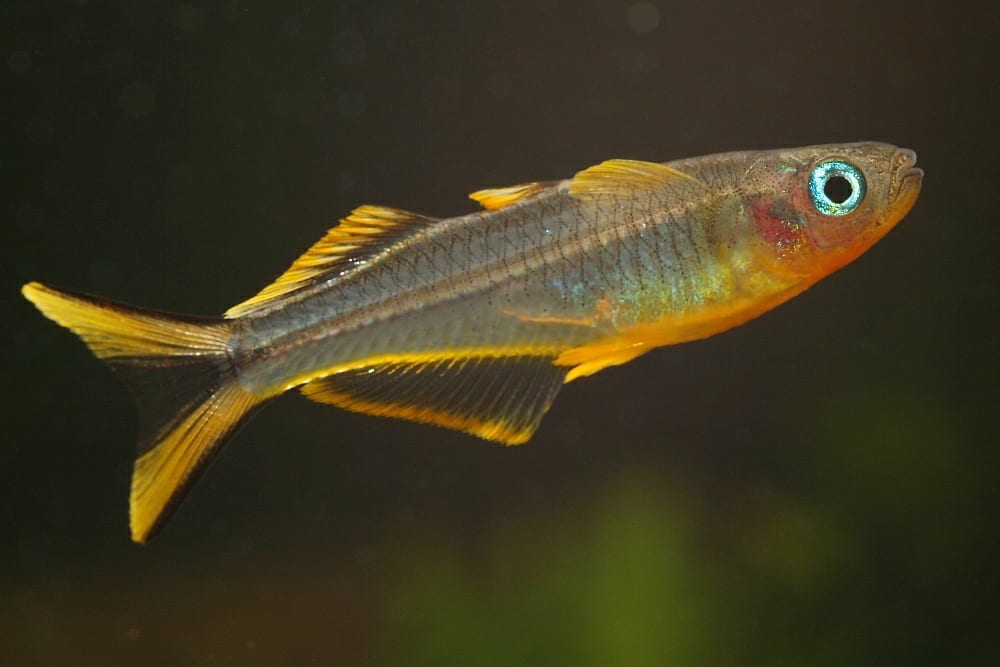
A tiny blue-eye in which males glow reddish-orange with a neon blue stripe along the flank. It is known only from swamps near Timika in Papua, Indonesia. Males carry filamentous extensions on the second dorsal spine and first pelvic ray.
Difficulty
Intermediate
Temperature
22〜28℃
Lifespan
4-6 years
Size
Up to 1.9cm SL
Diet
Fine dried foods and live or frozen brine shrimp and daphnia
About
Pseudomugil luminatus is a tiny blue-eye recorded only from swamps near Timika in Papua, Indonesia. FishBase records a maximum of 1.9cm SL, three to five dorsal spines with five to seven soft rays, eight to ten anal rays and 25-27 lateral scales, and notes that in adult males the second dorsal spine and first pelvic ray are drawn out into filaments while live males are yellowish to reddish with a neon blue stripe along the flank. Until Allen, Unmack and Hadiaty described it in Fishes of Sahul in 2016 it was traded as the related Pseudomugil paskai. Its extremely restricted range has led the IUCN to list it as Endangered; it is not covered by CITES.
Source: Wikipedia (CC BY-SA 4.0)
Lifespan of the Red Neon Blue-eye
The Red Neon Blue-eye lives 4-6 years.
Size of the Red Neon Blue-eye
The Red Neon Blue-eye grows to Up to 1.9cm SL.
Basic Info
Origin
Indonesia (swamps in the vicinity of Timika, Papua)
Lifespan
4-6 years
Size
Up to 1.9cm SL
Temperature
22〜28℃
Diet
Care Specifications
References & Sources
Edited & verified by: BreederDirect editorial team
The taxonomic, regulatory, and husbandry data on this page are compiled and verified against the authoritative primary sources below.
Taxonomy & Authority
Accepted name: Pseudomugil luminatus Allen, Unmack & Hadiaty, 2016
Authority databases: FishBase
Nomenclature follows global taxonomic authority databases.
Regulations & Conservation Status
Not CITES-listedIUCN EN · Endangered
Sources: CITES Appendices (species not listed) / IUCN Red List
Regulations may change. Always verify the latest information with the relevant authorities.
Red Neon Blue-eye Listings
Loading latest listingsFind listings for this species