Rasbora Schooling Behavior & Care Guide | How to Create Beautiful Schooling
Explains Rasbora schooling behavior and optimal care environments. Introduces species selection, school size, and tank layout tips.
Key Takeaways
Explains Rasbora schooling behavior and optimal care environments. Introduces species selection, school size, and tank layout tips.
Related Species
Rasbora Schooling Behavior & Care Guide | How to Create Beautiful Schooling
Rasboras are small tropical fish that create breathtakingly beautiful displays when schooling together in a planted tank. The coordinated behavior known as "schooling"—where a dense school changes direction in perfect synchronization—is one of the greatest joys of aquarium keeping. This is why rasboras are beloved by both beginners and experienced aquarists alike. In this article, we'll cover everything from the mechanics of rasbora schooling to practical tips for creating a tank that brings out their most beautiful schooling displays.
---
Why Is Rasbora Schooling So Beautiful?
First, let's ask: why do rasboras school in the first place? In their natural habitats, schooling is the most effective defense mechanism for small fish against predators. When individuals move together in tight formation with unified movements, predators either perceive the school as a single large organism or become confused about which fish to target.
This instinct is expressed beautifully in the aquarium, where the fish reflect light as they turn in unison, creating striking visual displays. Rasboras in particular have glossy body sides and vibrant coloration, so with each movement of the school, they shimmer as if they were a single living creature.
The strength of the schooling instinct varies by species and increases with the number of same-species individuals. Schools begin to form cohesively around 10 individuals, and with 20 or more, you'll observe the ideal schooling behavior: a dense, wall-like formation moving as one.
---
Representative Rasbora Species Known for Beautiful Schooling
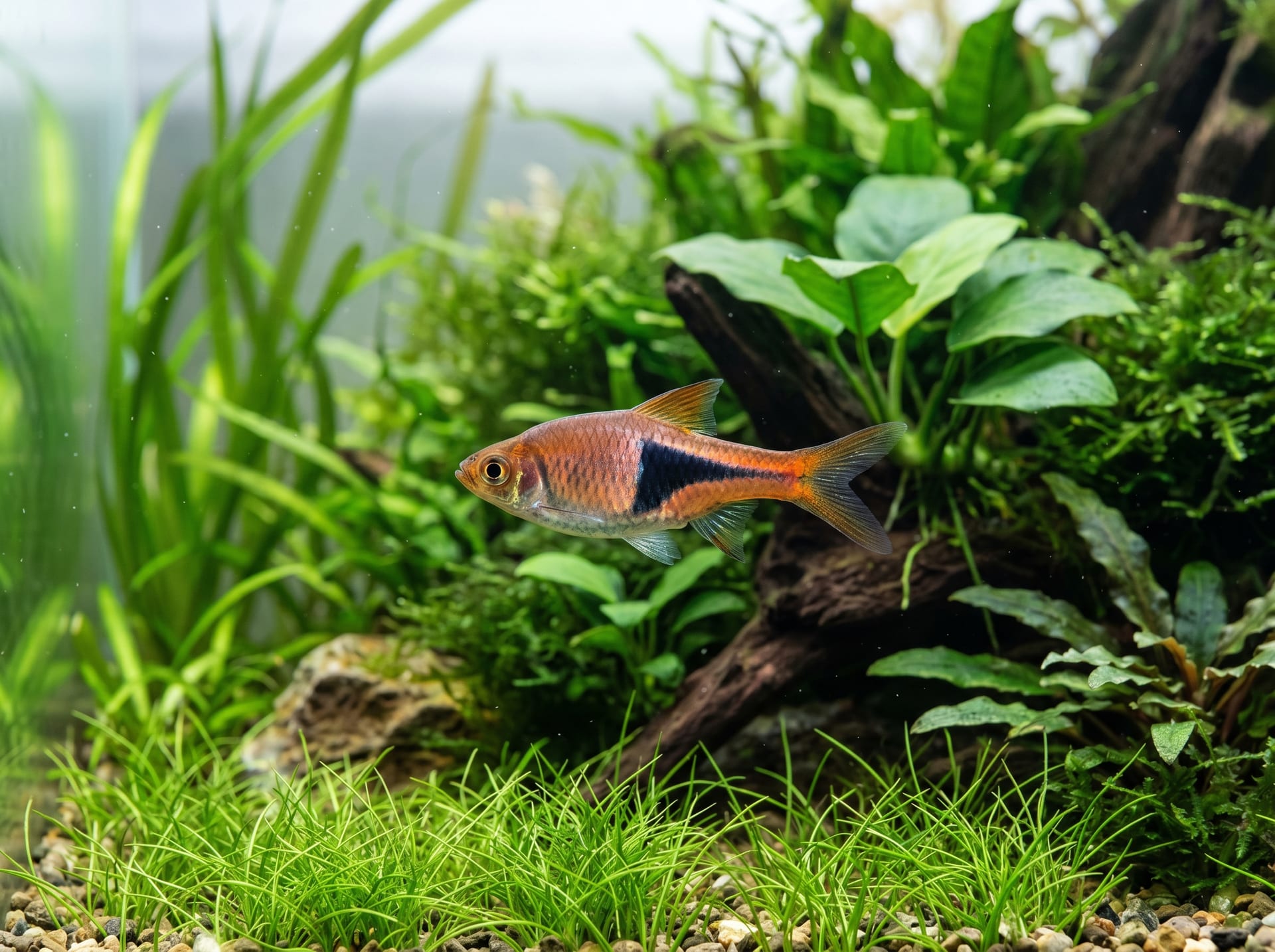
Red Rasbora (Rasbora espei)
A classic 3–4 cm species. Copper-orange bodies feature black wedge-shaped patches that taper toward the tail. They have particularly strong schooling instincts and maintain a consistently dense school when kept in groups of 20 or more. They pair exceptionally well with planted tanks—watching orange streaks flow through green plants is simply stunning.
Harlequin Rasbora (Rasbora heteromorpha)
Similar markings to the Red Rasbora but slightly larger with deeper body coloration. The more subdued tone gives it a classic appeal. Single-species groups of 10 or more are recommended over mixed rasbora communities. While their schooling instinct is somewhat weaker than espei, mature individuals form coherent schools.