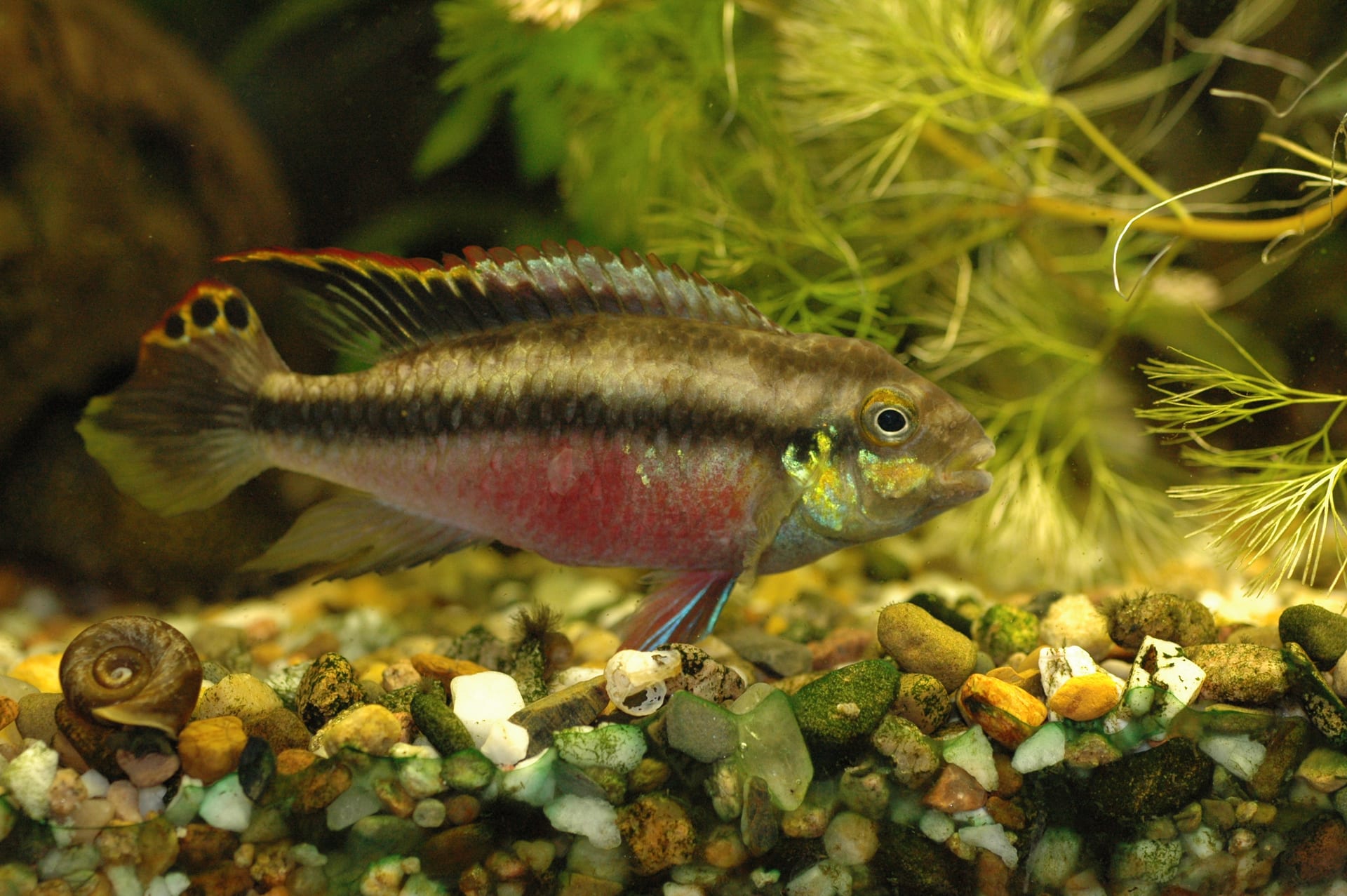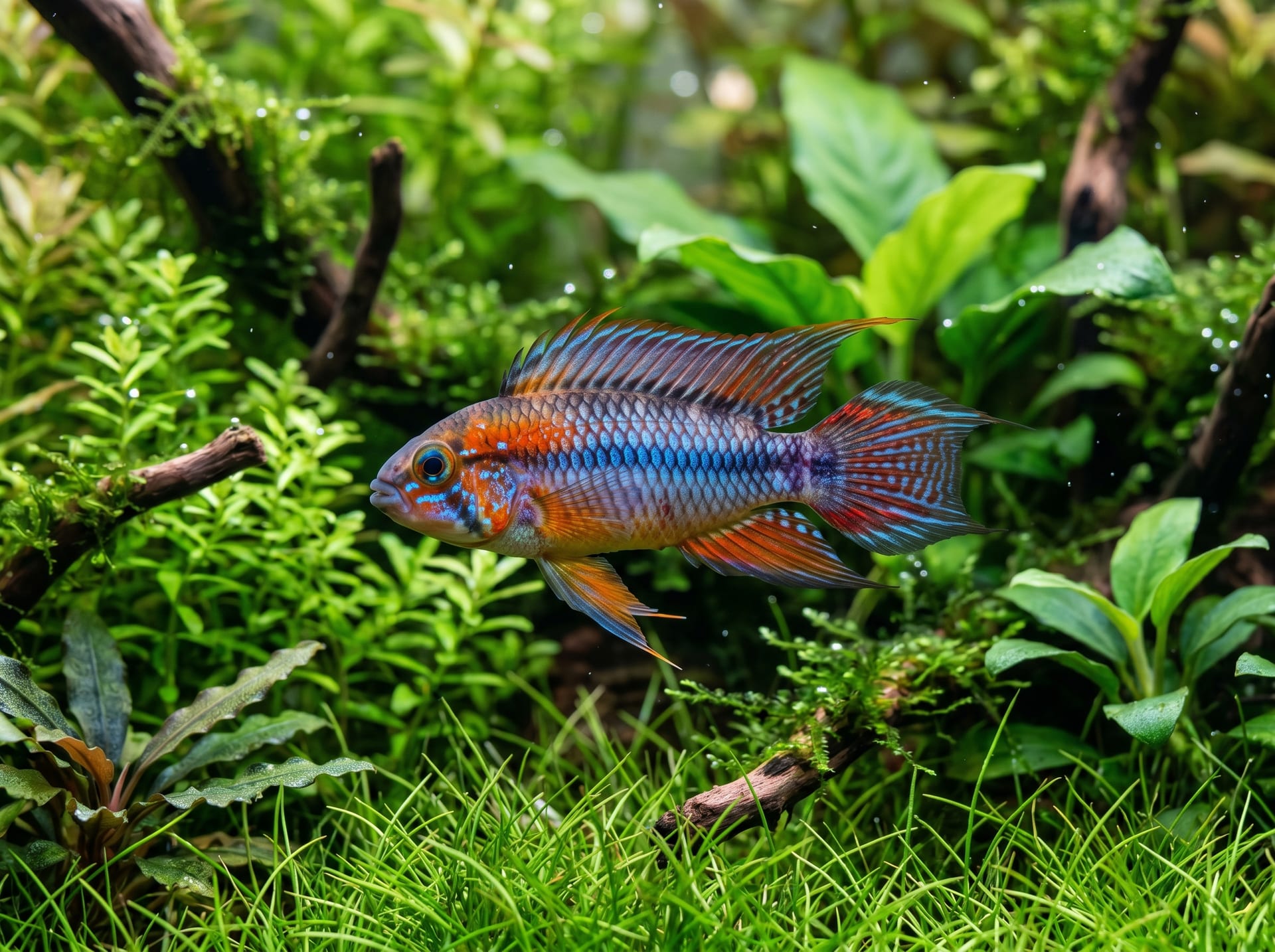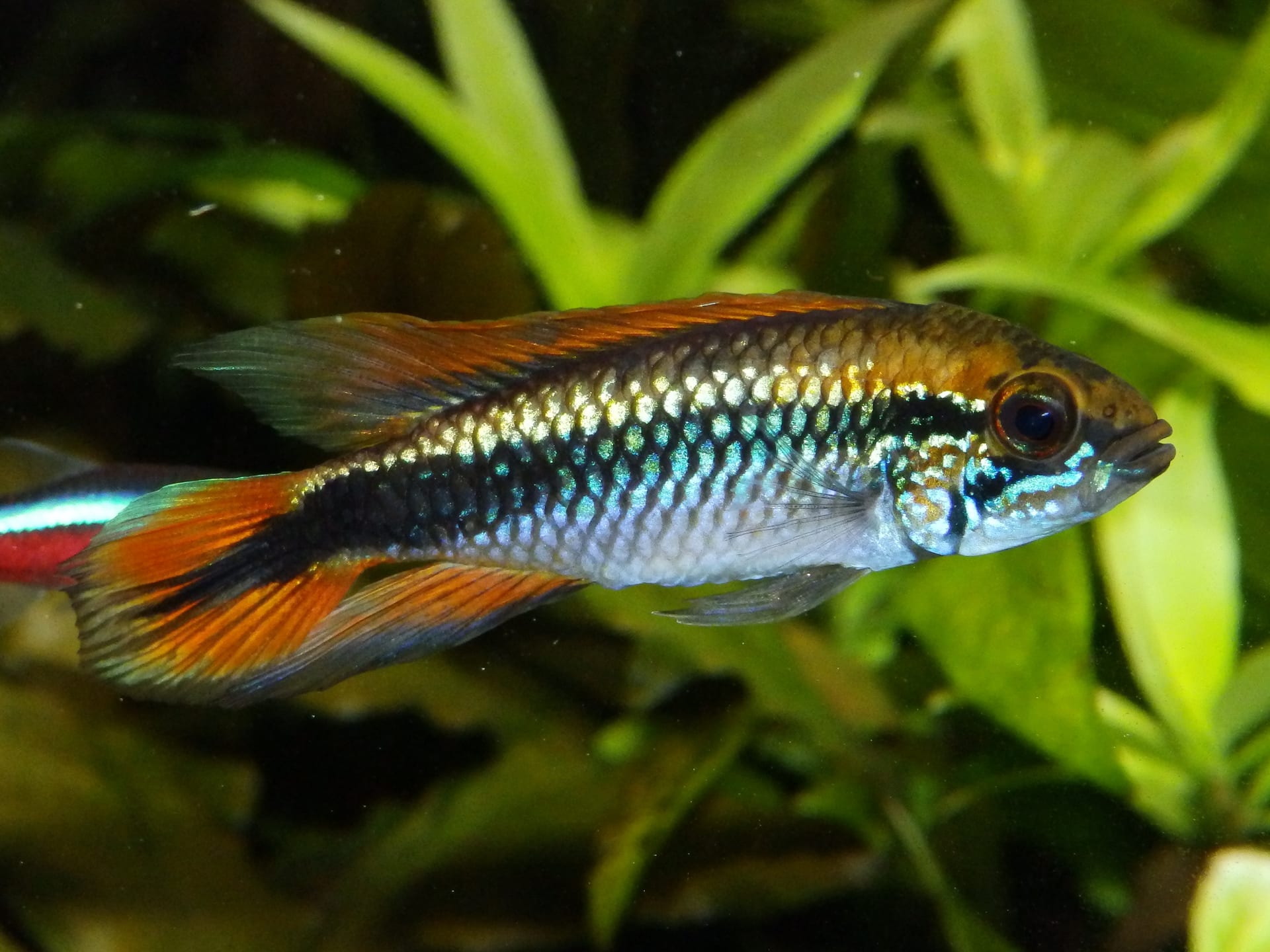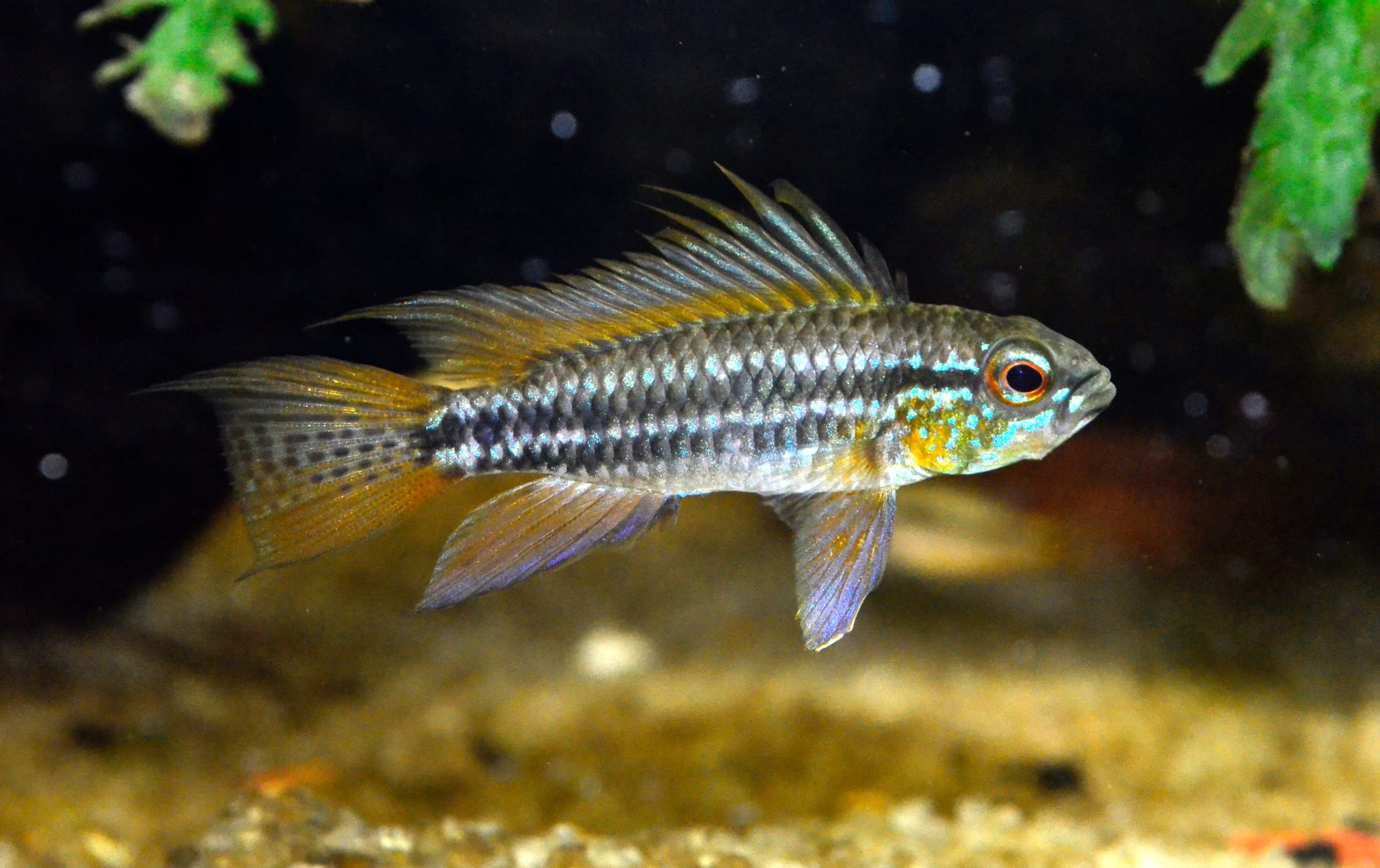
Source: Wikimedia Commons
Jewel Cichlid
BeginnerRubricatochromis bimaculatus
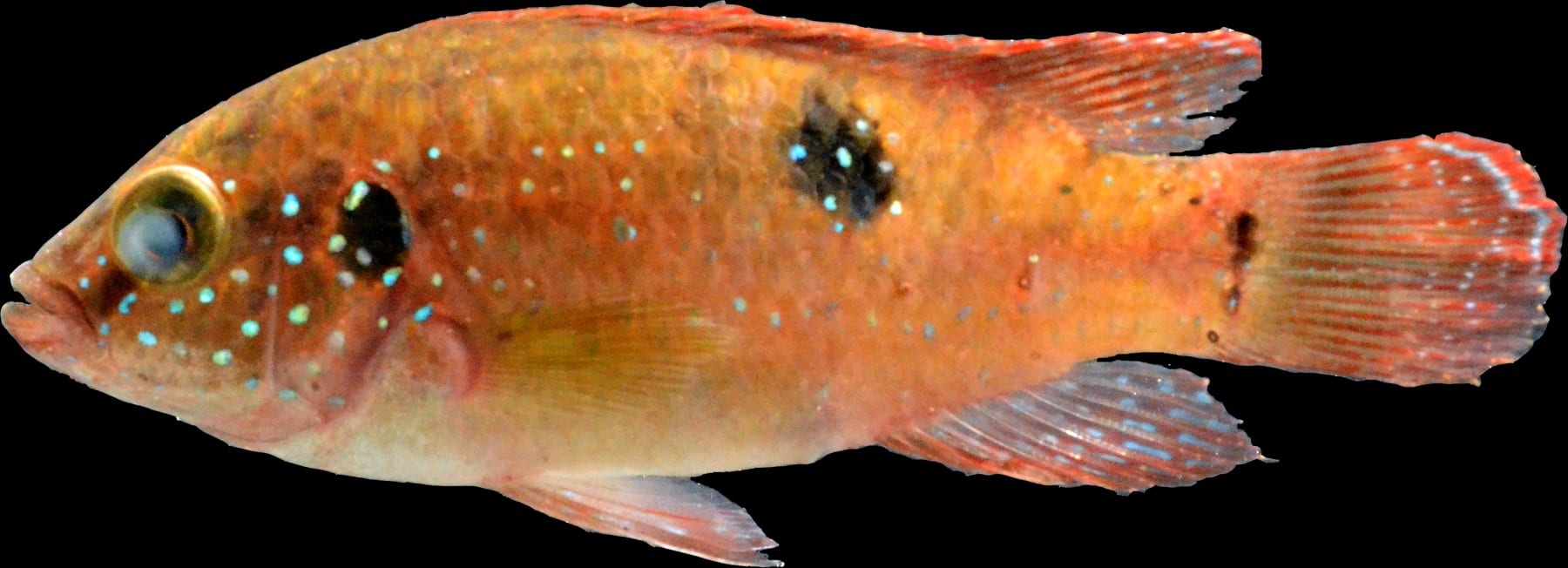
A red dwarf cichlid found across much of West Africa. The pale blue spangles scattered over the body give the fish its name, and breeding adults turn an intense red. It is an easy substrate spawner but extremely aggressive when in spawning condition.
Difficulty
Beginner
Temperature
22〜28℃
Lifespan
5-10 years
Size
Up to about 13.6cm standard length
Diet
Prepared foods, live and frozen foods, plus vegetable matter such as spirulina flake
About
The jewel cichlid (Rubricatochromis bimaculatus, formerly Hemichromis bimaculatus) is a dwarf cichlid found in most West African drainages, favouring forested biotopes, and reaches about 13.6cm standard length. Pale blue spangles are scattered over a red body, and spawning fish turn an intense red. Three dark flank spots separate it from the closely related Hemichromis lifalili, which has two. Care is straightforward: a tank from 120x30cm, about 108 litres, at pH 6.0-7.8, 4-18 dGH and 22-28C. It accepts almost any food, and live foods improve colour, but vegetable matter should be included. It is a substrate spawner producing up to 600 eggs, which hatch in about 48 hours and are free-swimming after 72; the parents guard the brood for roughly a month. It is strongly territorial and extremely aggressive when spawning, so tank mates and tank size need care.
Source: Wikipedia (CC BY-SA 4.0)
Lifespan of the Jewel Cichlid
The Jewel Cichlid lives 5-10 years.
Size of the Jewel Cichlid
The Jewel Cichlid grows to Up to about 13.6cm standard length.
Temperature & humidity for the Jewel Cichlid
The ideal temperature for the Jewel Cichlid is 22〜28℃.
Basic Info
Origin
Africa: most West African basins, coastal Cameroon, the Democratic Republic of the Congo and the Nile basin
Lifespan
5-10 years
Care Specifications
- pH
- 6–7.8
- Hardness (GH)
- 4–18 dGH
- Water Temp.
- 22–28℃
- Min. Tank
- 108 L
AggressivePairBreeding: Easy
Sources: Seriously Fish: Hemichromis bimaculatus / FishBase: Rubricatochromis bimaculatus
References & Sources
Edited & verified by: BreederDirect editorial team
The taxonomic, regulatory, and husbandry data on this page are compiled and verified against the authoritative primary sources below.
Taxonomy & Authority
Accepted name: Rubricatochromis bimaculatus (Gill, 1862)
Synonyms: Hemichromis bimaculatus
Authority databases: FishBase
Nomenclature follows global taxonomic authority databases.
Regulations & Conservation Status
Not CITES-listedIUCN LC · Least Concern
Sources: CITES Appendices (species not listed) / IUCN Red List
Regulations may change. Always verify the latest information with the relevant authorities.
Jewel Cichlid Listings
Loading latest listingsFind listings for this species