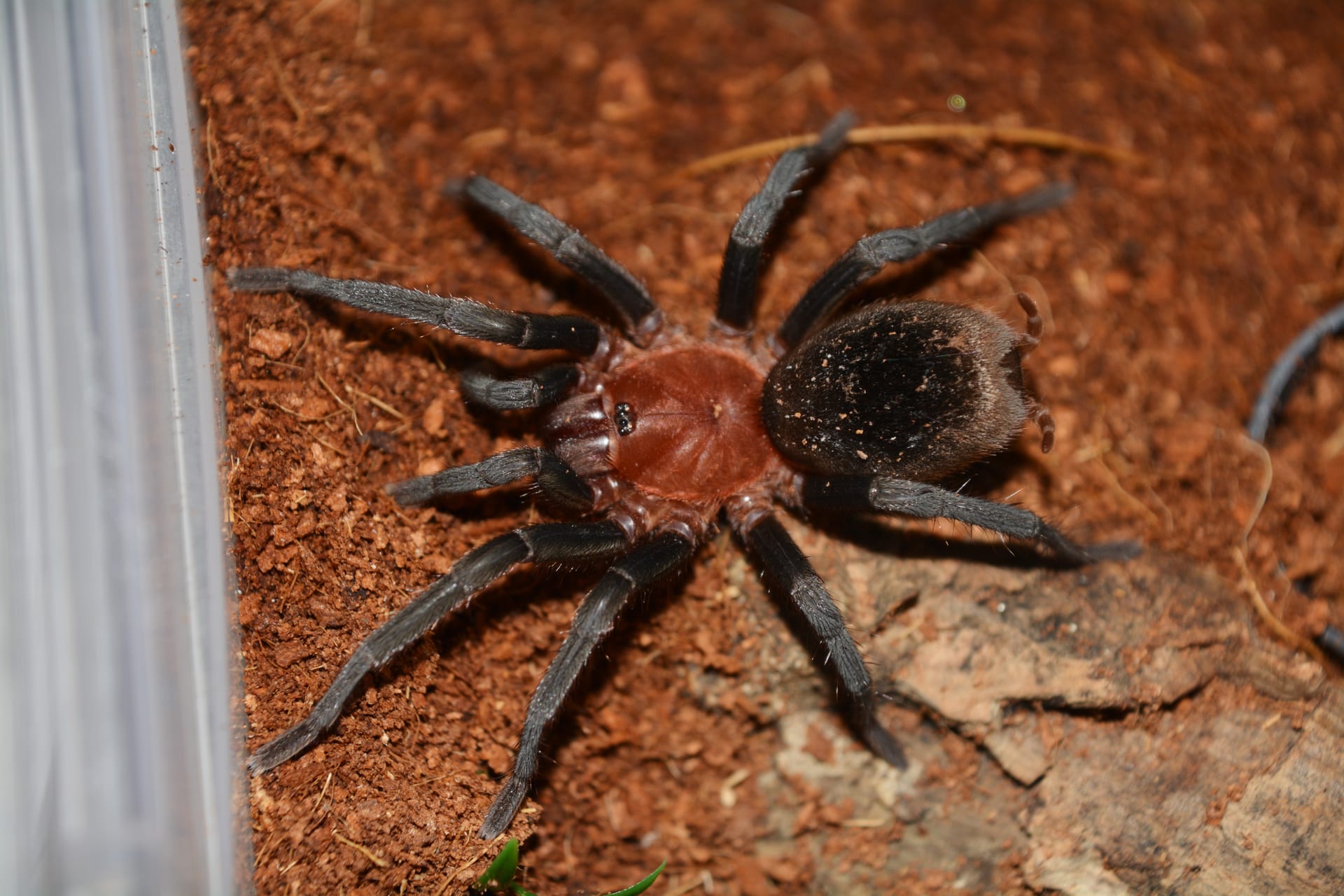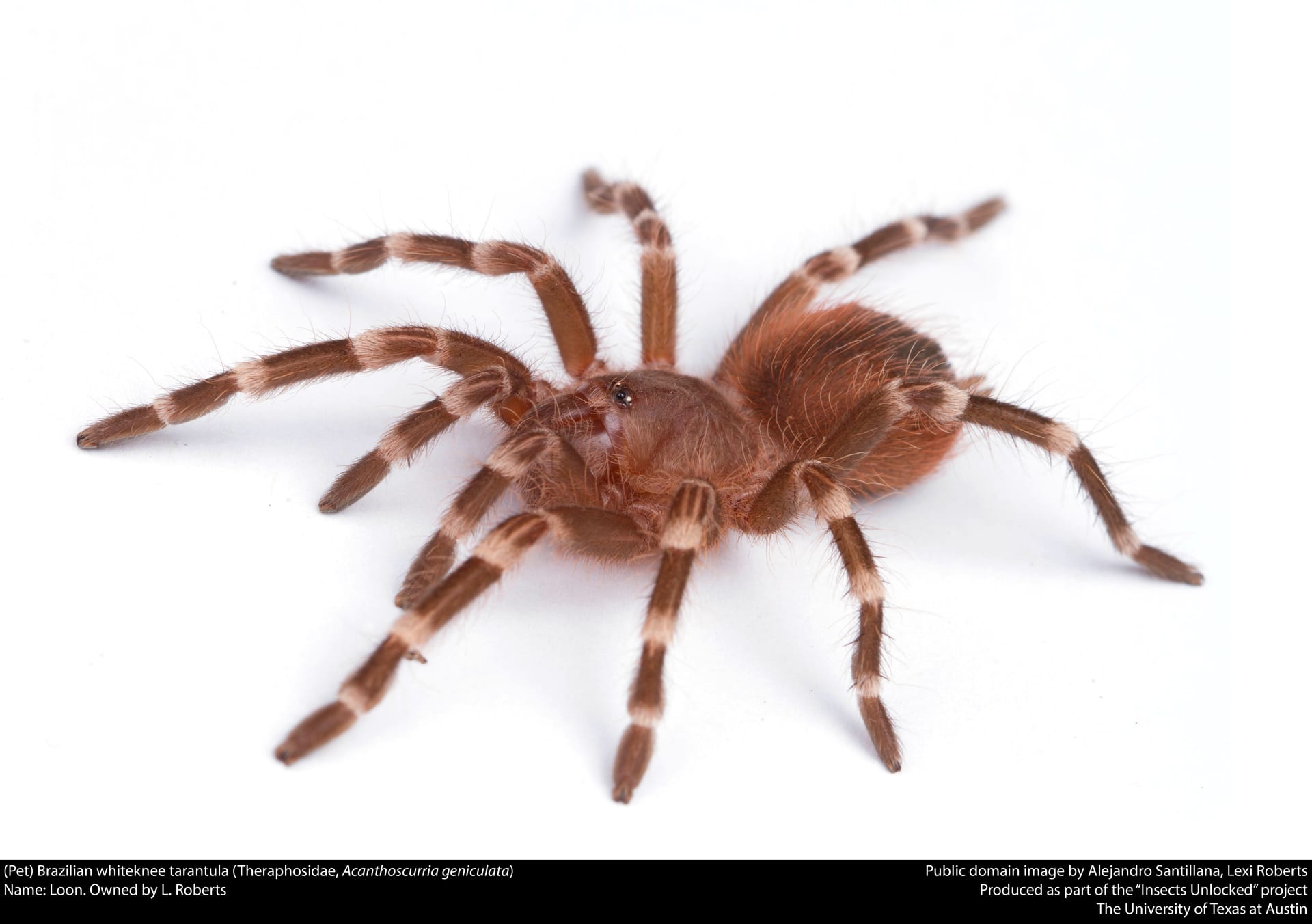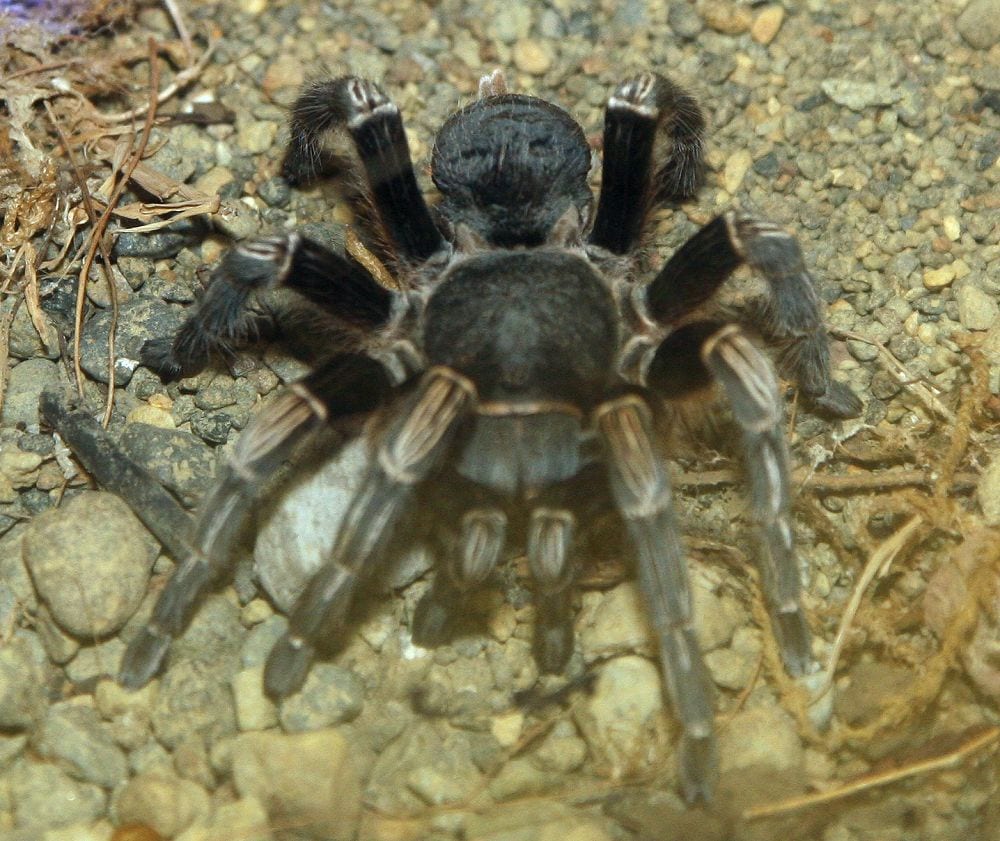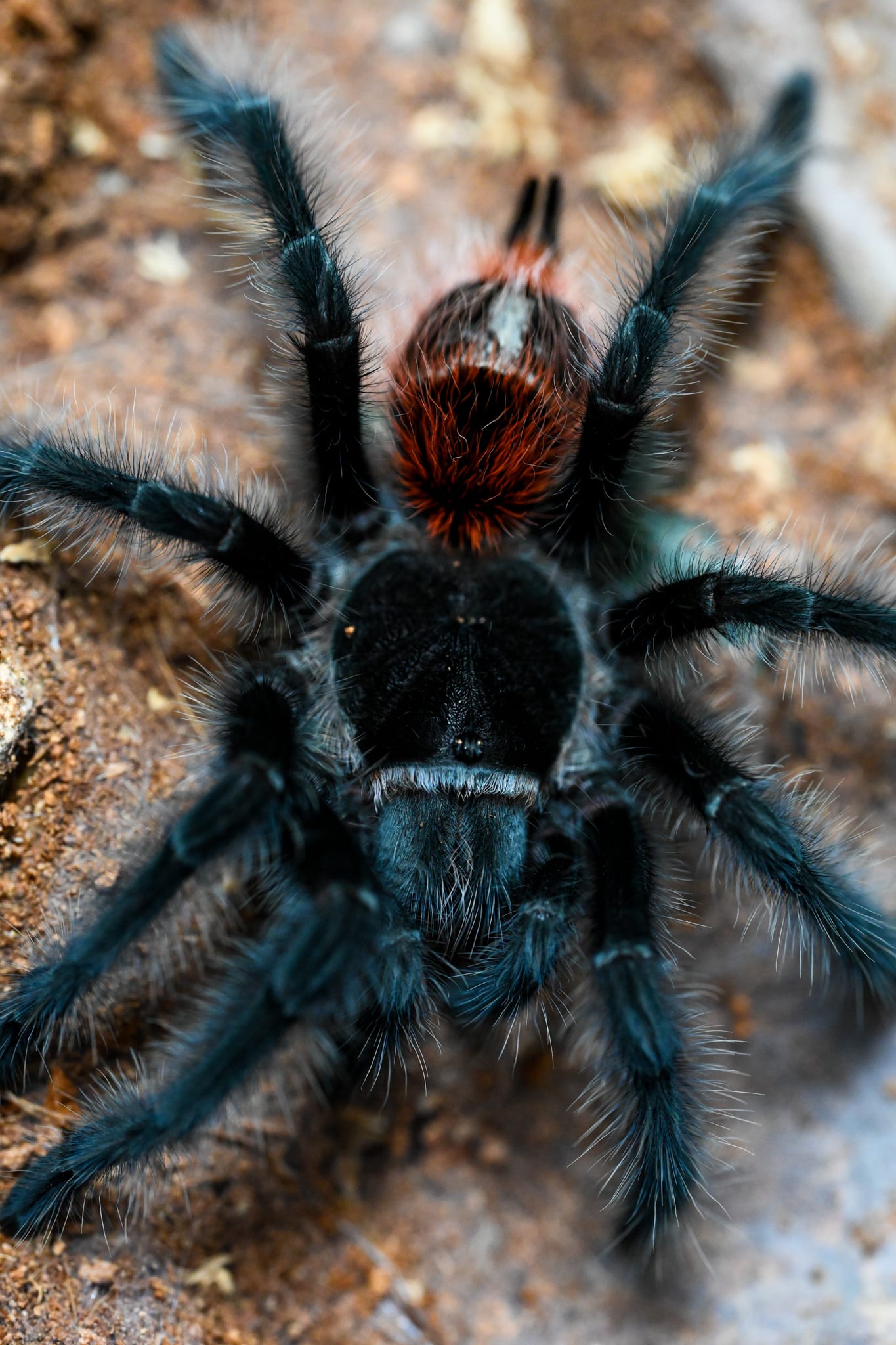
Source: Wikimedia Commons
Texas Brown Tarantula
BeginnerAphonopelma hentzi
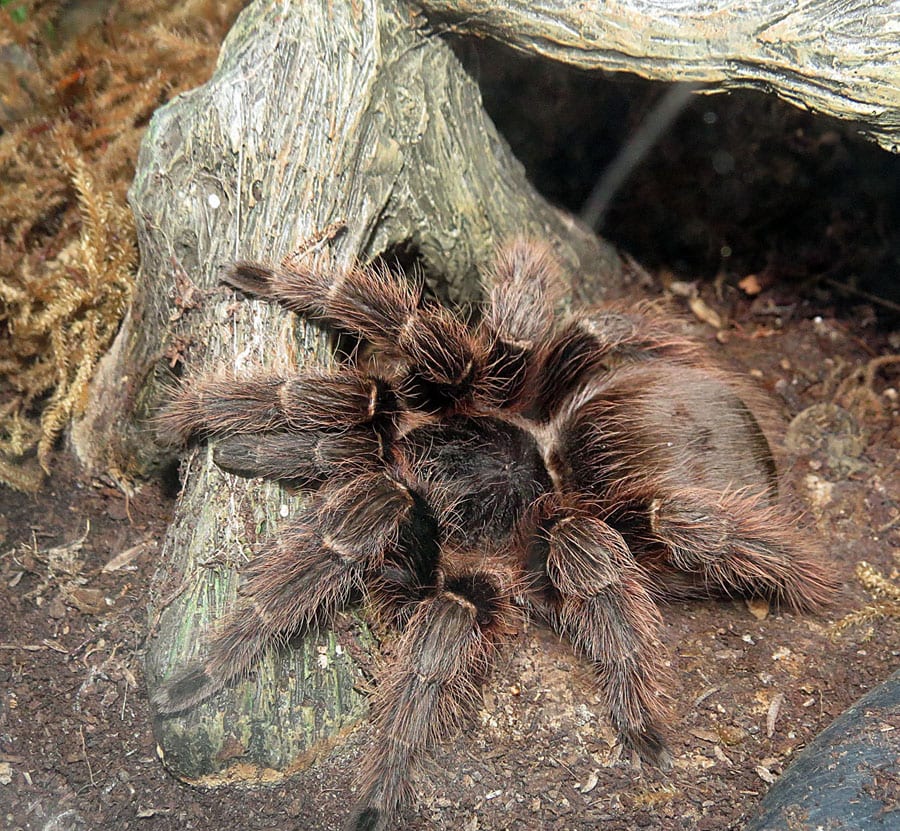
A large terrestrial tarantula common across the southern United States. It is a subdued brown all over, brightest just after a moult. It burrows in grassland, is calm and easy to keep, and females live more than 30 years.
Difficulty
Beginner
Temperature
21〜25℃
Lifespan
Females 30+ years; males about a year after maturing
Size
10-12.5cm leg span
Diet
Live insects such as crickets and roaches
About
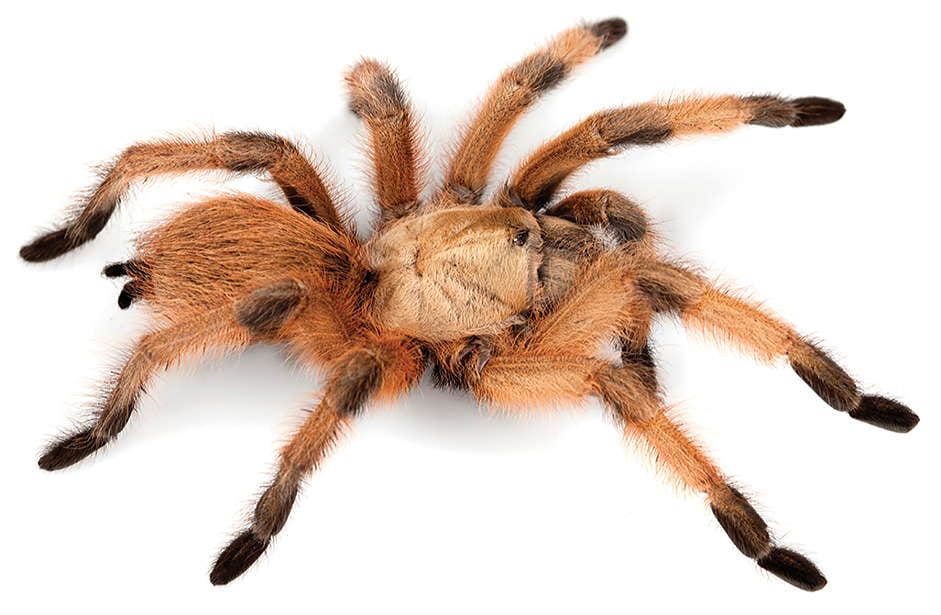
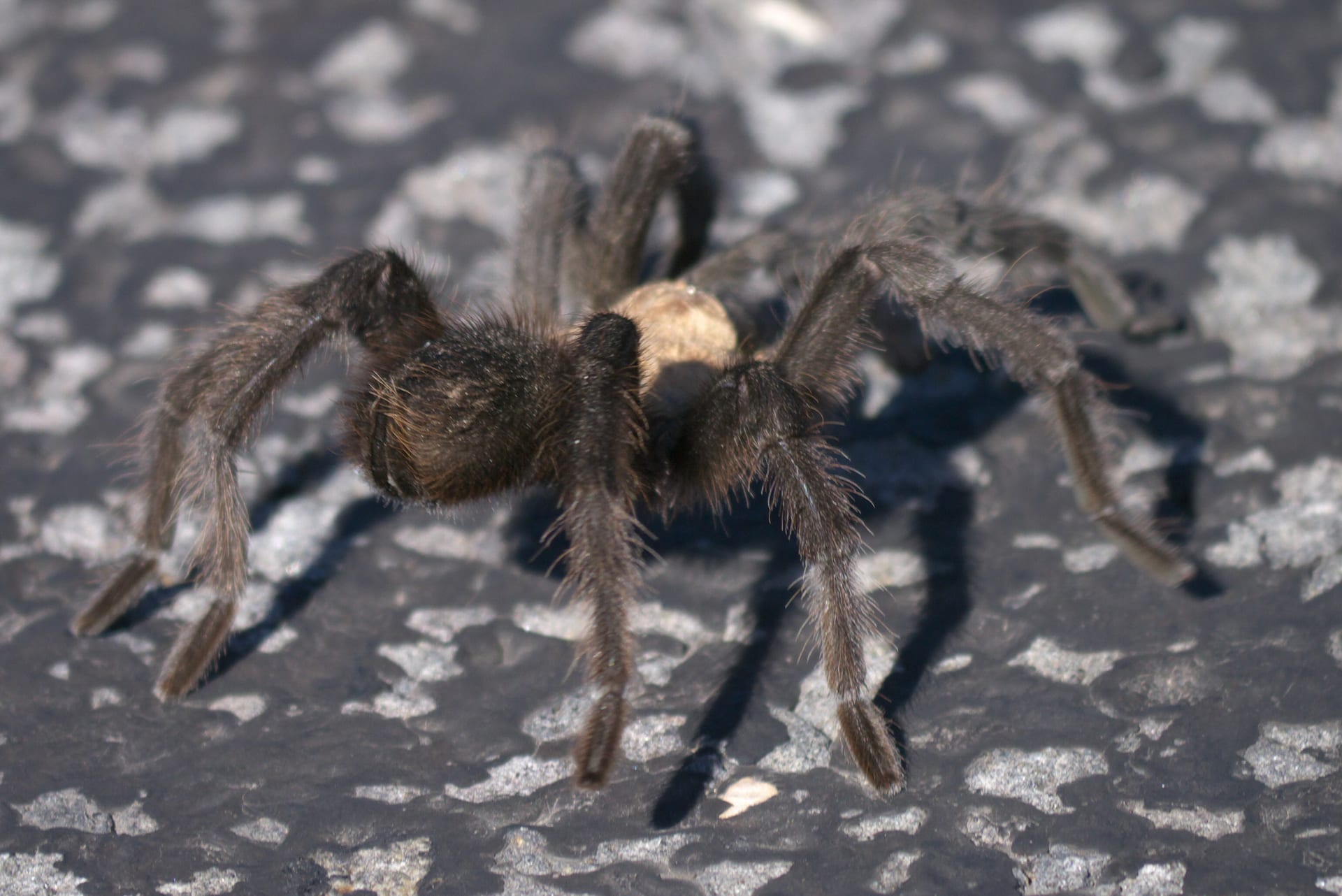
Aphonopelma hentzi is the most common tarantula of the southern United States and also occurs in northern Mexico. The body is dark brown with individual variation; mature males develop black legs and a copper carapace. It burrows in grassland and also uses logs, stones and dens abandoned by other animals, lining the entrance with silk to detect passing prey. Females lay 200 to 1,000 eggs in a hammock-shaped sac kept in the burrow, and they hatch in 45 to 60 days. Females live more than 30 years while males die about a year after maturing. In autumn males have been recorded travelling as far as 1.7 km in search of females. The species is placid: when disturbed it rears onto its hind legs with the front legs raised and kicks urticating hairs from its abdomen. Room temperature of 21-25 C and dry substrate are enough in captivity.
Source: Wikipedia (CC BY-SA 4.0)
Lifespan of the Texas Brown Tarantula
The Texas Brown Tarantula lives Females 30+ years; males about a year after maturing.
Size of the Texas Brown Tarantula
The Texas Brown Tarantula grows to 10-12.5cm leg span.
Temperature & humidity for the Texas Brown Tarantula
The ideal temperature for the Texas Brown Tarantula is 21〜25℃.
Basic Info
Origin
Southern United States (Texas, Oklahoma, Kansas, Missouri, Colorado and neighbouring states) and northern Mexico
Lifespan
Care Specifications
PeacefulSolitaryBreeding: Moderate
Sources: The Tarantula Collective: Aphonopelma hentzi / Wikipedia / GBIF
References & Sources
Edited & verified by: BreederDirect editorial team
The taxonomic, regulatory, and husbandry data on this page are compiled and verified against the authoritative primary sources below.
Taxonomy & Authority
Accepted name: Aphonopelma hentzi (Girard, 1852)
Synonyms: Aphonopelma clarki Smith, 1995, Aphonopelma coloradanum (Chamberlin, 1940), Aphonopelma gurleyi Smith, 1995
Authority databases: GBIF
Nomenclature follows global taxonomic authority databases.
Regulations & Conservation Status
Not CITES-listed
Sources: CITES Appendices (species not listed)
Regulations may change. Always verify the latest information with the relevant authorities.
Texas Brown Tarantula Listings
Loading latest listingsFind listings for this species