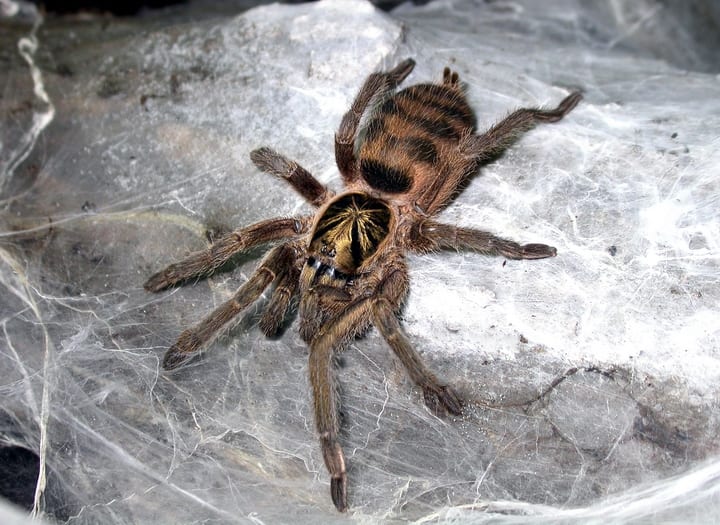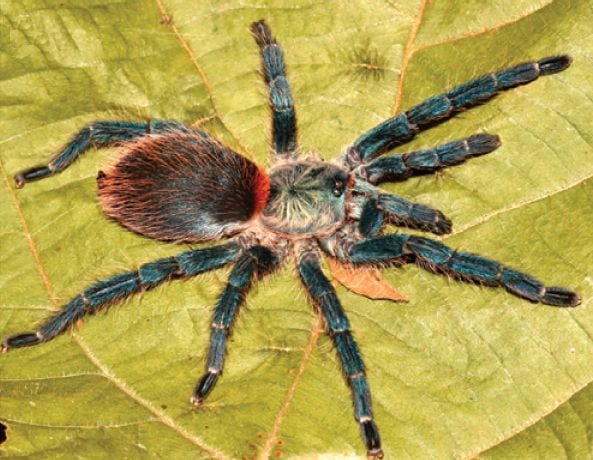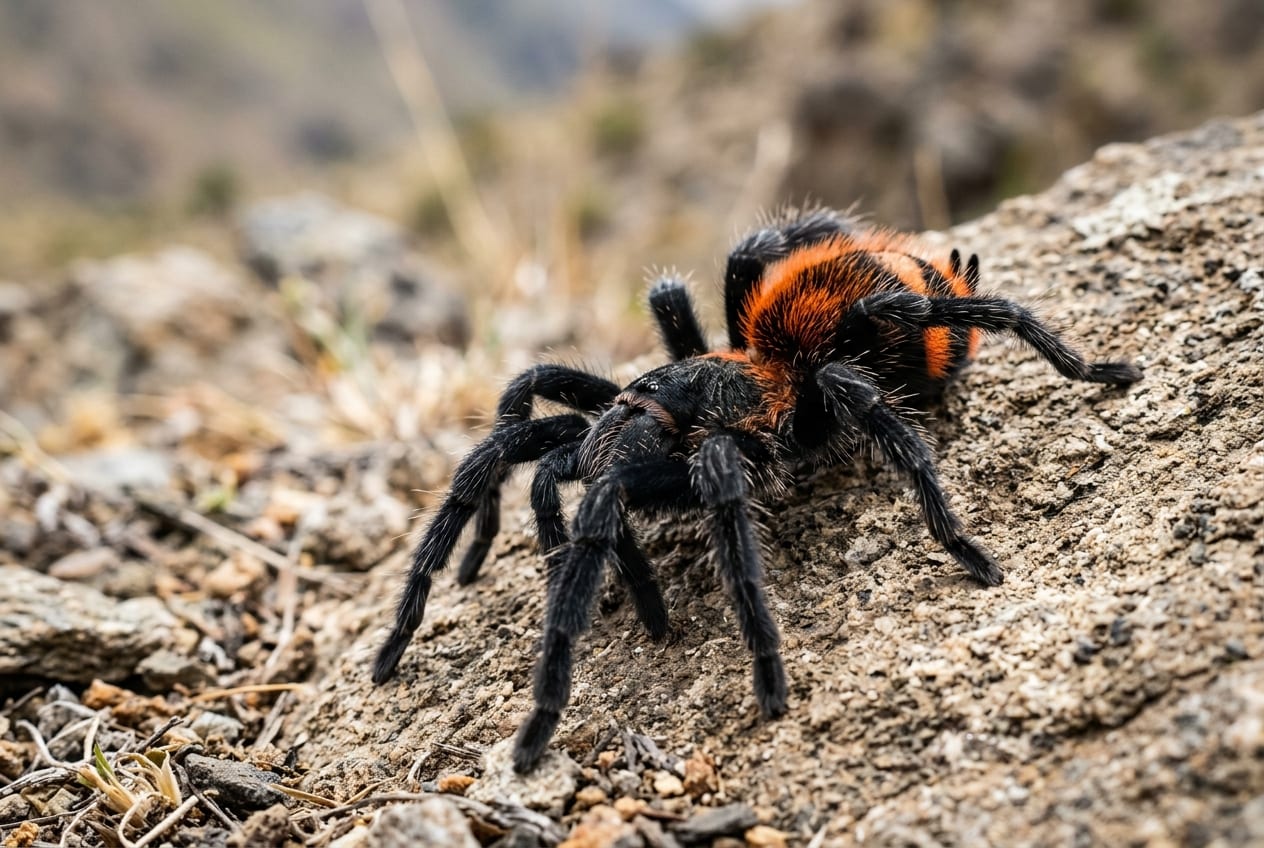
AI-generated image
Chilean Flame Dwarf Tarantula
BeginnerHomoeomma chilense
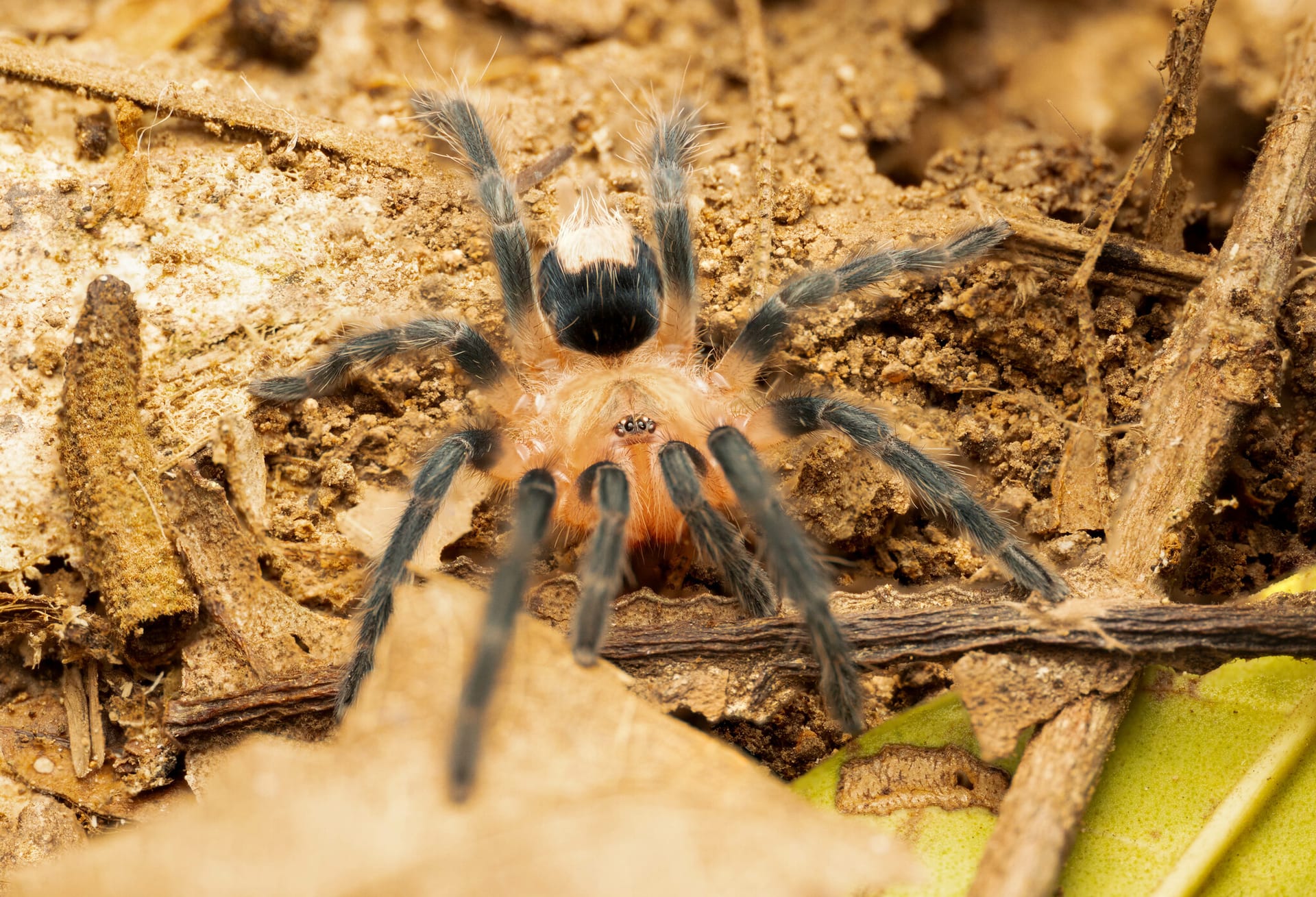
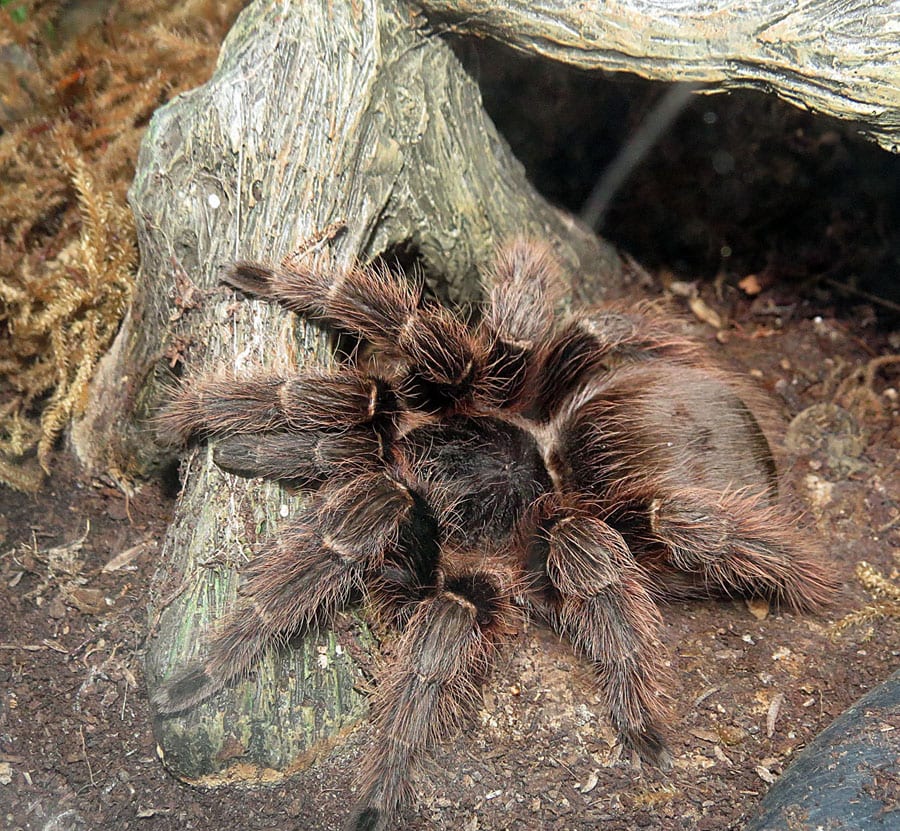
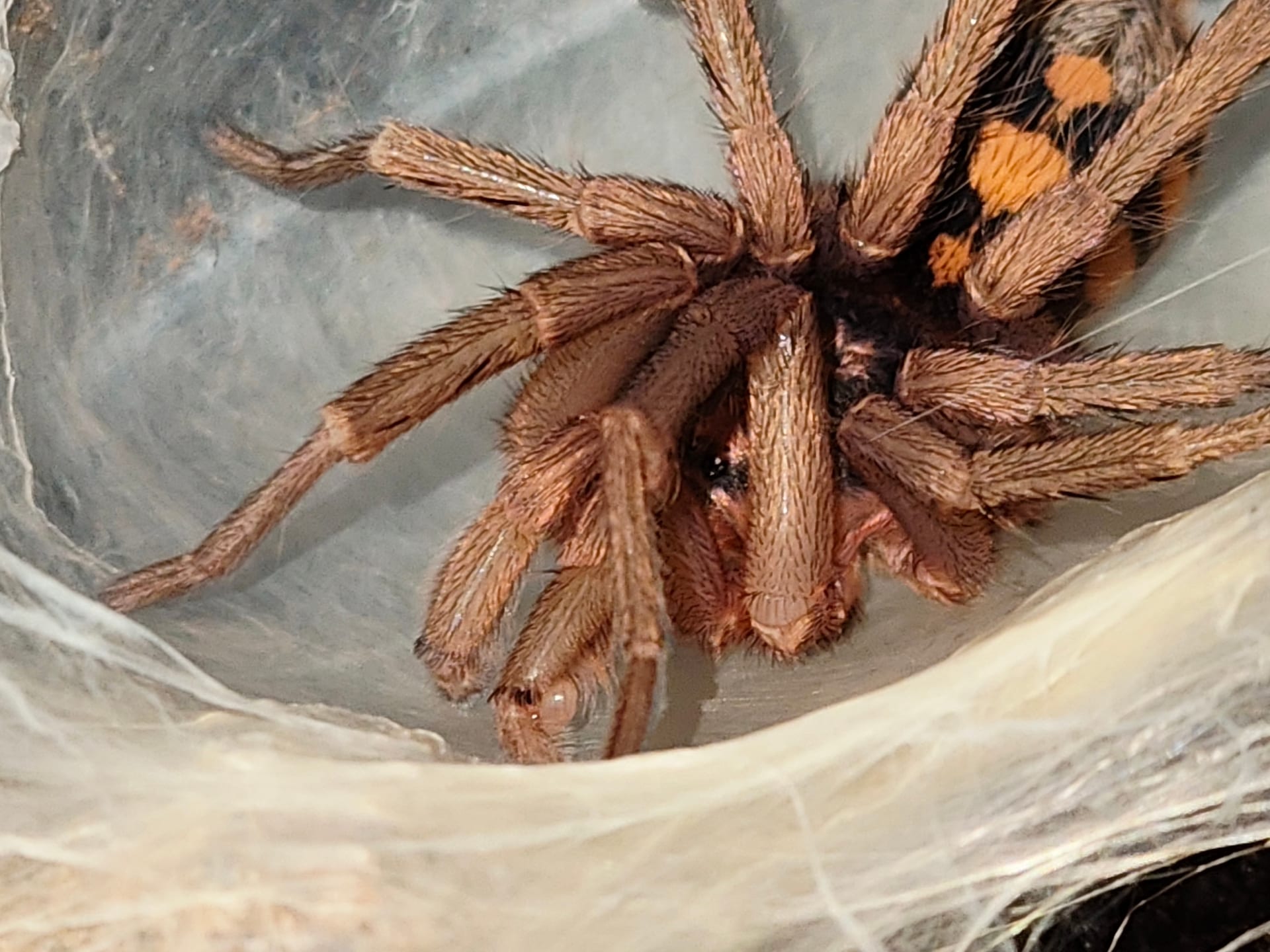
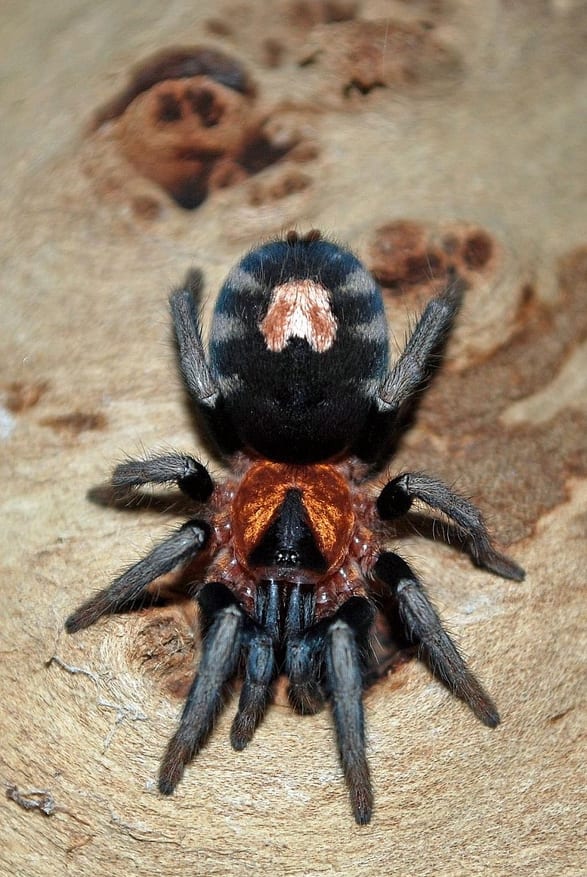
A small species from the mountains of central Chile. Its deep velvet-black body is dusted with short white hairs, set off by an orange-red tuft on the upper abdomen and an orange ring around the spinnerets. It is inquisitive and exceptionally docile.
Difficulty
Beginner
Temperature
18〜24℃
Lifespan
Females 8-10 years / males 2-3 years
Size
8-9cm leg span
Humidity
50〜60%
Diet
Live insects such as crickets and roaches
About
Homoeomma chilense was described in 2018 by Montenegro and Aguilera from Chile, the first record of the genus in that country. Its type locality is Ancoa in Linares Province, Maule Region, and specimens have been collected from mountains at around 1,800 m. Adults are a deep velvet black dusted with short white hairs, set off by an orange-red tuft on the upper abdomen and an orange ring around the spinnerets. Leg span stays at 8-9 cm. Long traded under the name Euathlus sp. Red, it is a classic beginner species: slow-moving, almost never biting or kicking hairs, and known for approaching the opening of its enclosure out of apparent curiosity. It keeps well on dryish substrate at low humidity and room temperatures of 18-24 C. Spiderlings may refuse food, and adults also go through periods of fasting.
Source: Wikipedia (CC BY-SA 4.0)
Lifespan of the Chilean Flame Dwarf Tarantula
The Chilean Flame Dwarf Tarantula lives Females 8-10 years / males 2-3 years.
Size of the Chilean Flame Dwarf Tarantula
The Chilean Flame Dwarf Tarantula grows to 8-9cm leg span.
Temperature & humidity for the Chilean Flame Dwarf Tarantula
The ideal temperature for the Chilean Flame Dwarf Tarantula is 18〜24℃. Ideal humidity is 50〜60%.
Basic Info
Origin
Chile (Ancoa area, Linares Province, Maule Region, at about 1,800m)
Lifespan
Care Specifications
PeacefulSolitary
Sources: The Spider Shop: Homoeomma chilensis / Tom's Big Spiders: Euathlus sp. red / Tarantupedia: Homoeomma chilensis / Wikipedia: Homoeomma / GBIF
References & Sources
Edited & verified by: BreederDirect editorial team
The taxonomic, regulatory, and husbandry data on this page are compiled and verified against the authoritative primary sources below.
Taxonomy & Authority
Accepted name: Homoeomma chilense Montenegro & Aguilera, 2018
Synonyms: Homoeomma bicolor, Homoeomma chilensis
Authority databases: GBIF
Nomenclature follows global taxonomic authority databases.
Regulations & Conservation Status
Not CITES-listed
Sources: CITES Appendices (species not listed)
Regulations may change. Always verify the latest information with the relevant authorities.
Chilean Flame Dwarf Tarantula Listings
Loading latest listingsFind listings for this species