Dwarf Angelfish (Centropyge) Compatibility Guide | Species Compatibility and Successful Combinations | ブリちょく
Marine Fish| ✍️ BreederDirect Editorial
Dwarf Angelfish (Centropyge) Compatibility Guide | Species Compatibility and Successful Combinations
Mixing guide for Centropyge (Dwarf Angelfish). Compare the temperament and reef-safety of popular species like Coral Beauty, Flame Angelfish, and Lemonpeel, and learn how to successfully set up mixed tanks.
Key Takeaways
Mixing guide for Centropyge (Dwarf Angelfish). Compare the temperament and reef-safety of popular species like Coral Beauty, Flame Angelfish, and Lemonpeel, and learn how to successfully set up mixed tanks.
Dwarf Angelfish (Centropyge Genus) - Overview
The Centropyge genus is a group of saltwater fish collectively known as dwarf angelfish. Even as adults, they reach only 10-15cm, making them significantly smaller than large angelfish species (Pomacanthus, Holacanthus, etc.), which is appealing for keeping in typical household aquariums in Japan.
✍️
BreederDirect Editorial
The BreederDirect editorial team specializes in care information for animals, covering veterinary care and breeding to deliver beginner-friendly guides.
Find Marine Fish on BreederDirect
Buy directly from verified breeders
Browse Related Listings
Find Marine Fish listings related to this article on BreederDirect. Buy directly from verified breeders.
Related Tools
Related Articles
Browse by Category
🪸Coral
🐠Marine Fish
🐟Tropical Fish
🐡Goldfish
🐟Medaka
🦎Reptiles
Share
They inhabit a wide range of environments from shallow coral reefs in the Indian and Pacific Oceans down to depths of 60 meters, with over 100 species documented. They offer abundant color variations, with popular species in Japan including Coral Beauty, Flame Angelfish, Lemonpeel, and Herald's Angelfish, many of which are regularly imported.
---
Factors That Make Mixing Difficult
Aggression Toward Same Species and Genus
Dwarf angelfish are characterized by extremely strong territorial behavior toward fish of the same genus. When multiple Centropyge are placed in the same tank, the dominant one may chase the weaker individuals, leading to stress, decline, and potentially death.
Occasionally, a "harem" may form (one male managing multiple females), but in typical amateur aquariums, keeping multiple fish of the same genus is not recommended.
Hermaphroditism (Protogyny)
Centropyge species are sequential hermaphrodites (protogynous), with females capable of changing sex to males. When kept in groups, the most dominant individual becomes male and establishes a hierarchical structure dominating others.
---
Popular Species: Temperament and Compatibility
Coral Beauty Angelfish (Centropyge bispinosa)
Origin: Indian Ocean to Western Pacific
Size: Maximum 10cm
Temperament: Relatively peaceful compared to other dwarf angelfish
Reef-Safe Rating: △ (May occasionally peck at corals)
The most commonly available species and the most beginner-friendly. While mixing with same-genus species should be avoided, it coexists well with damselfish, gobies, and clownfish. While occasional coral-picking behavior may be observed, it rarely causes significant destruction.
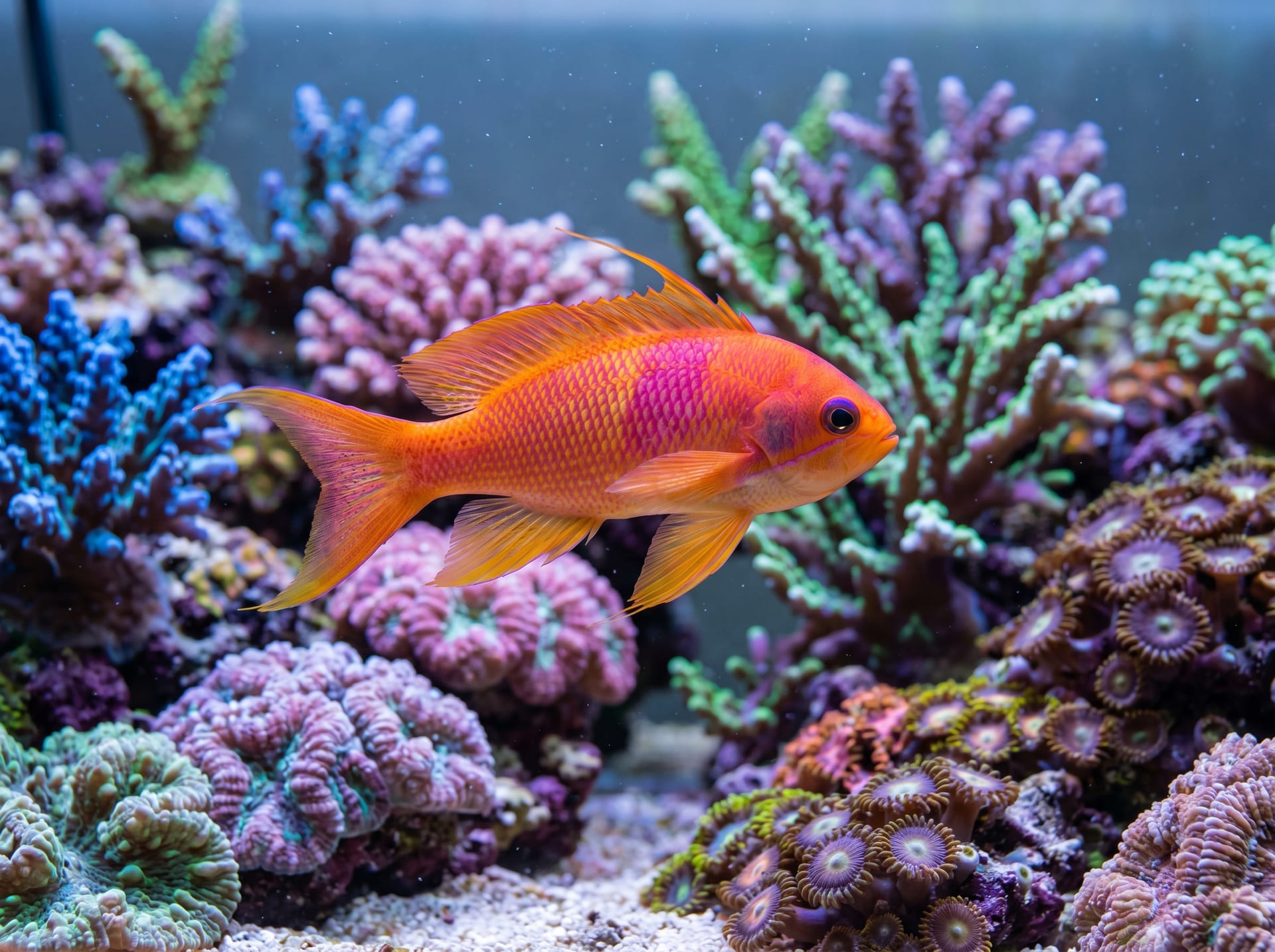
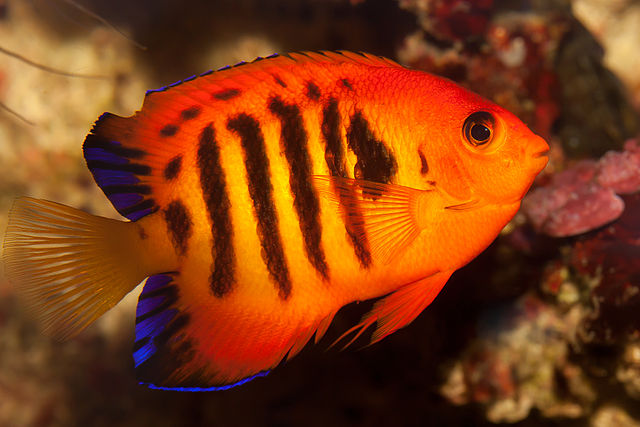
A popular species with striking bright orange-red coloring and black striped patterns. However, reef compatibility varies greatly by individual—some never touch corals while others actively peck at LPS, SPS, and soft corals. If compatibility cannot be verified before introduction, quarantine observation in an isolation tank is an option.
Lemonpeel Angelfish (Centropyge flavissima)
Origin: Indian Ocean to Central Pacific
Size: Maximum 14cm
Temperament: Moderate
Reef-Safe Rating: ✕ (Heavy coral-picking)
Beautiful uniform yellow coloring, but it's one of the species most frequently reported to damage corals in reef tanks. It's typically recommended for FOWLR (fish-only) setups.
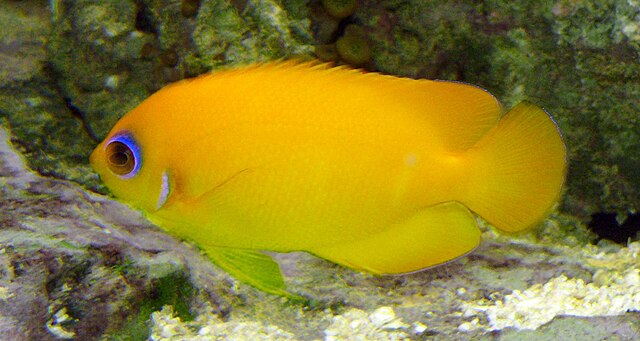
Similar yellow coloring to Lemonpeel but lacks the blue ring around the eyes, giving a paler appearance. Coral-picking is reportedly less frequent than Lemonpeel, though individual variation exists.
Potter's Angelfish (Centropyge potteri)
Origin: Hawaiian endemic
Size: Maximum 11cm
Temperament: Peaceful to moderate
Reef-Safe Rating: △
A rare Hawaiian endemic species with limited availability. It features beautiful orange and blue two-tone coloring. Reef tank reports are mixed, though individuals are said to be relatively reef-safe on average.
---
Practical Strategies for Successful Mixed Tanks
Priority of Establishing Resident Fish First
When introducing dwarf angelfish to a reef tank, introduce them last (or much later) after corals, shrimp, and other fish are already established. This reduces territorial conflicts. When a dwarf angelfish is introduced to an established tank with resident fish, it's less likely to become the dominant territory holder.
Trial Period in Quarantine Tank
For species with uncertain reef compatibility (such as Flame Angelfish), you can first test their compatibility with corals in a quarantine tank or breeder box for 1-2 weeks before moving to the main tank. While this "sandbox method" isn't perfect, it can help identify extreme coral-pickers beforehand.
If Attempting Same-Genus Mixing
If you absolutely must keep two dwarf angelfish species in the same tank:
- Large tanks (300L+): Larger territory allows fewer conflicts
- Simultaneous introduction: Start with both as newcomers
- Size difference: Combining species with different body types and coloration (e.g., Coral Beauty × Flame Angelfish) sometimes results in fewer conflicts
- Adequate hiding spots: Create multiple areas with rock formations that block line of sight
However, success rates are low, and keeping just one species is strongly recommended, especially in reef tanks.
---
Compatibility Chart with Other Fish Species
Fish Species
Compatibility
Notes
Clownfish / Damselfish
○
Minimal territory overlap
Gobies
○
Different habitat zones, no issues
Fairy Basslets / Bigeyes
○
Peaceful temperament, minimal competition
Surgeonfish (Tangs, etc.)
○
Larger size prevents mutual aggression
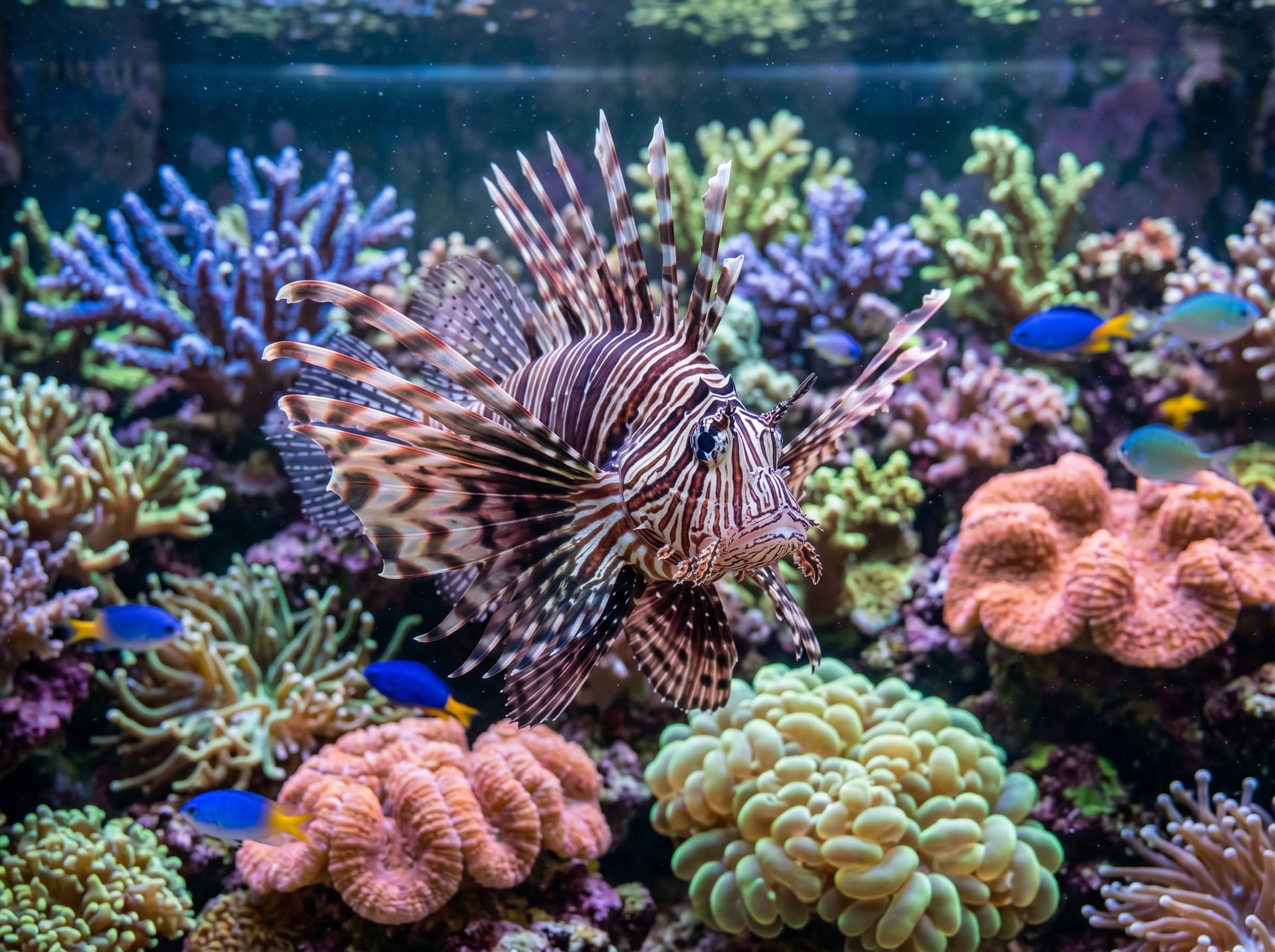
Lionfish / Scorpionfish
△
Unlikely to be eaten but may be intimidated
Other Dwarf Angelfish
✕
High risk of same-genus aggression
Shrimp (Cleaner Shrimp, etc.)
△
Individual variation; rarely eaten but may be chased
---
Summary
Dwarf angelfish are an attractive group that brings vibrancy to saltwater aquariums, but successful mixing requires understanding two key challenges: their strong territorial behavior toward same-genus species and individual variation in reef safety. The safest, most fail-proof approach is introducing only one relatively peaceful species like Coral Beauty to your reef tank. For species with coral-predation risks such as Flame Angelfish or Lemonpeel, either keep them in FOWLR systems with ample space or establish a trial period before introduction.