Pygmy Angelfish (Centropyge) Care Guide | Species, Care Methods, and Precautions | ブリちょく
Marine Fish| ✍️ BreederDirect Editorial
Pygmy Angelfish (Centropyge) Care Guide | Species, Care Methods, and Precautions
A comprehensive guide on how to care for Pygmy Angelfish (Centropyge), also known as dwarf angelfish. Covers the characteristics of popular species like Coral Beauty and Flame Angelfish, plus important considerations for keeping them in reef tanks.
Key Takeaways
A comprehensive guide on how to care for Pygmy Angelfish (Centropyge), also known as dwarf angelfish. Covers the characteristics of popular species like Coral Beauty and Flame Angelfish, plus important considerations for keeping them in reef tanks.
What Are Pygmy Angelfish?
Pygmy Angelfish (dwarf angelfish) are a collective term for small marine fish belonging to the genus Centropyge in the family Pomacanthidae, order Perciformes. Unlike larger angelfish species (such as Emperor Angelfish and French Angelfish), they reach a maximum size of only 8-15 cm, making them manageable for relatively small marine aquariums. This has made them popular among marine aquarists worldwide.
✍️
BreederDirect Editorial
The BreederDirect editorial team specializes in care information for animals, covering veterinary care and breeding to deliver beginner-friendly guides.
Find Marine Fish on BreederDirect
Buy directly from verified breeders
Browse Related Listings
Find Marine Fish listings related to this article on BreederDirect. Buy directly from verified breeders.
Related Tools
Related Articles
Browse by Category
🪸Coral
🐠Marine Fish
🐟Tropical Fish
🐡Goldfish
🐟Medaka
🦎Reptiles
Share
More than 30 species are currently classified in the genus Centropyge, and they are widely distributed across tropical and subtropical coral reefs in the Indian, Pacific, and Atlantic Oceans. Below are some representative species commonly seen in Japanese aquarium shops.
Popular Species
- Coral Beauty (C. bispinosa): Features a beautiful gradient of purple and orange. Hardy and beginner-friendly.
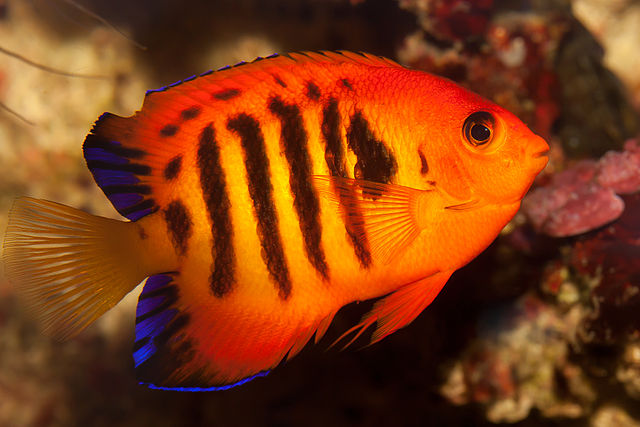
- Flame Angelfish (C. loricula): Characterized by fiery red and black stripes. Marshall Islands specimens are particularly popular.
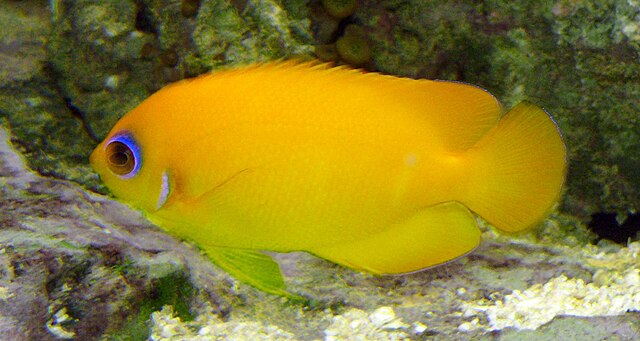
- Lemonpeel Angelfish (C. flavissima): Distinctive for its bright yellow coloration and blue eye-rings.
- Eibl's Angelfish (C. acanthops): A small Indian Ocean species with blue and yellow two-tone coloring.
- Potter's Angelfish (C. potteri): Endemic to Hawaii with a high rarity value.
Required Equipment and Tank Size
Despite their small size, Pygmy Angelfish are active swimmers with a wide range of movement, weaving through crevices in rockwork. A tank with ample live rock for hiding places is essential.
Recommended Tank Size
- Single specimen: 60 cm or larger (60×30×36 cm, approximately 65 L)
- Multiple specimens or community setup: 90-120 cm or larger
Required Equipment
- Protein skimmer (essential; an excellent water purification device)
- Powerful water circulation pump (to recreate reef currents)
- High-quality LED lighting or metal halide lamp (to enhance fish coloration)
- Live rock: aim for 10-15% of tank volume by weight (provides hiding places and biological filtration)
- Heater and cooler (to maintain water temperature at 25-26°C)
- Hydrometer and refractometer (to check salinity daily)
Use commercial sea salt mixes such as Seawater Series or similar products, adjusting the specific gravity (salinity) to 1.023-1.025.
Strict Water Quality Management
Water quality management is especially critical in marine fish keeping. Compared to brackish or freshwater, marine water is more sensitive to pollution, with narrow tolerance ranges for ammonia, nitrite, and nitrate.
Proper Water Quality Parameters
- Water temperature: 24-27°C (optimal 25-26°C)
- Specific gravity: 1.023-1.025
- pH: 8.1-8.4
- Ammonia and nitrite: 0 mg/L (address immediately if detected)
- Nitrate: ideally 20 mg/L or less (5 mg/L or less for coral systems)
- Phosphate: 0.03 mg/L or less
Perform water changes once weekly, changing 10-20% of the tank volume. Using a protein skimmer significantly reduces the accumulation of nitrate and phosphate. Remember to regularly maintain the live rock and clean the substrate.
Feeding and Nutritional Management
Pygmy Angelfish are omnivores that feed on coral polyps, algae, and encrusting organisms in their natural habitat. In captivity, providing a varied diet helps maintain optimal health.
Recommended Foods
- Frozen brine shrimp (most readily accepted; ideal for initial acclimation feeding)
- Pelleted marine fish food (use as a staple diet)
- Frozen mysis shrimp and copepods (for protein supplementation)
- Dried spirulina and seaweed (provides algae components and enhances coloration)
- Frozen krill (a treat given occasionally)
Feed 2-3 times daily in amounts the fish can consume in 3-5 minutes. Uneaten food directly pollutes the water. New individuals may take a few days to start eating, but if they're grazing on algae from the live rock, there's no cause for concern.
Keeping in Reef Tanks (Caution Required)
Pygmy Angelfish are known for potentially "picking" at corals, so care must be taken when introducing them to reef tanks. Individual behavior varies widely—some specimens leave corals alone, while others persistently eat coral polyps.
Species with Lower Risk
- Coral Beauty (individual variation, but generally docile)
- Eibl's Angelfish
Precautions When Introducing to Reef Tanks
- Observe the fish's behavior closely for the first week after introduction
- Soft corals (leather corals, mushroom corals, etc.) have a higher risk of damage than LPS or SPS corals
- Hungry fish are more likely to attack corals, so ensure adequate feeding
- If problematic behavior persists, isolate the fish and move it to a fish-only tank
Considerations for Tank Mates
Pygmy Angelfish have strong territorial instincts toward their own and related species, and can become aggressive.
Safe Compatibility Principles
- One specimen per species as a rule (same-sex pairs are possible but difficult to guarantee)
- Different angelfish species may coexist in tanks 90 cm or larger
- They generally coexist well with peaceful small marine fish (gobies, chromis, damselfish)
- Larger angelfish may chase them, so if the Pygmy Angelfish is the established resident, introduce larger species afterward
The basic principle is to introduce "smaller, peaceful fish first." Either acclimate the Pygmy Angelfish before introducing other fish, or introduce multiple fish simultaneously to reduce territorial conflicts.
Common Diseases
The most common diseases in marine fish are white spot disease (cryptocaryon infection) and "coral reef white spot disease," which is different from freshwater white spot disease.
Symptoms: Strawberry-like white nodules appear on fins and body surface
Treatment: No established medication. Support recovery through improved water quality and immune health. Isolate severe cases
Prevention is paramount for all diseases. Always quarantine new specimens in a separate tank before introducing them to the main tank. Maintaining healthy water quality is the best disease prevention strategy.