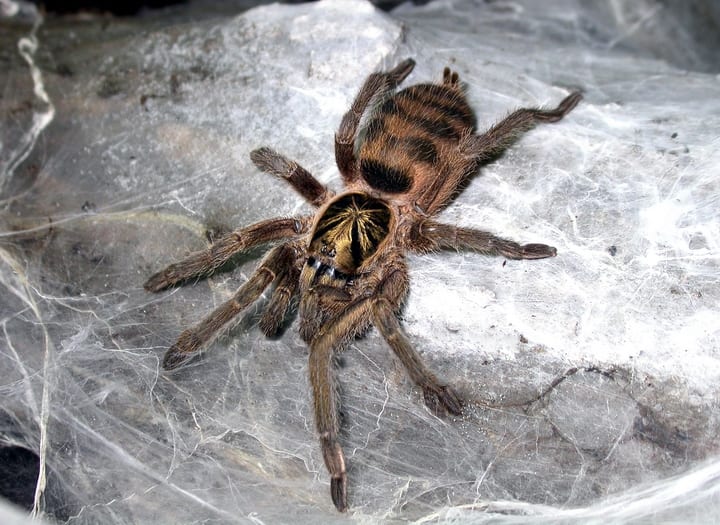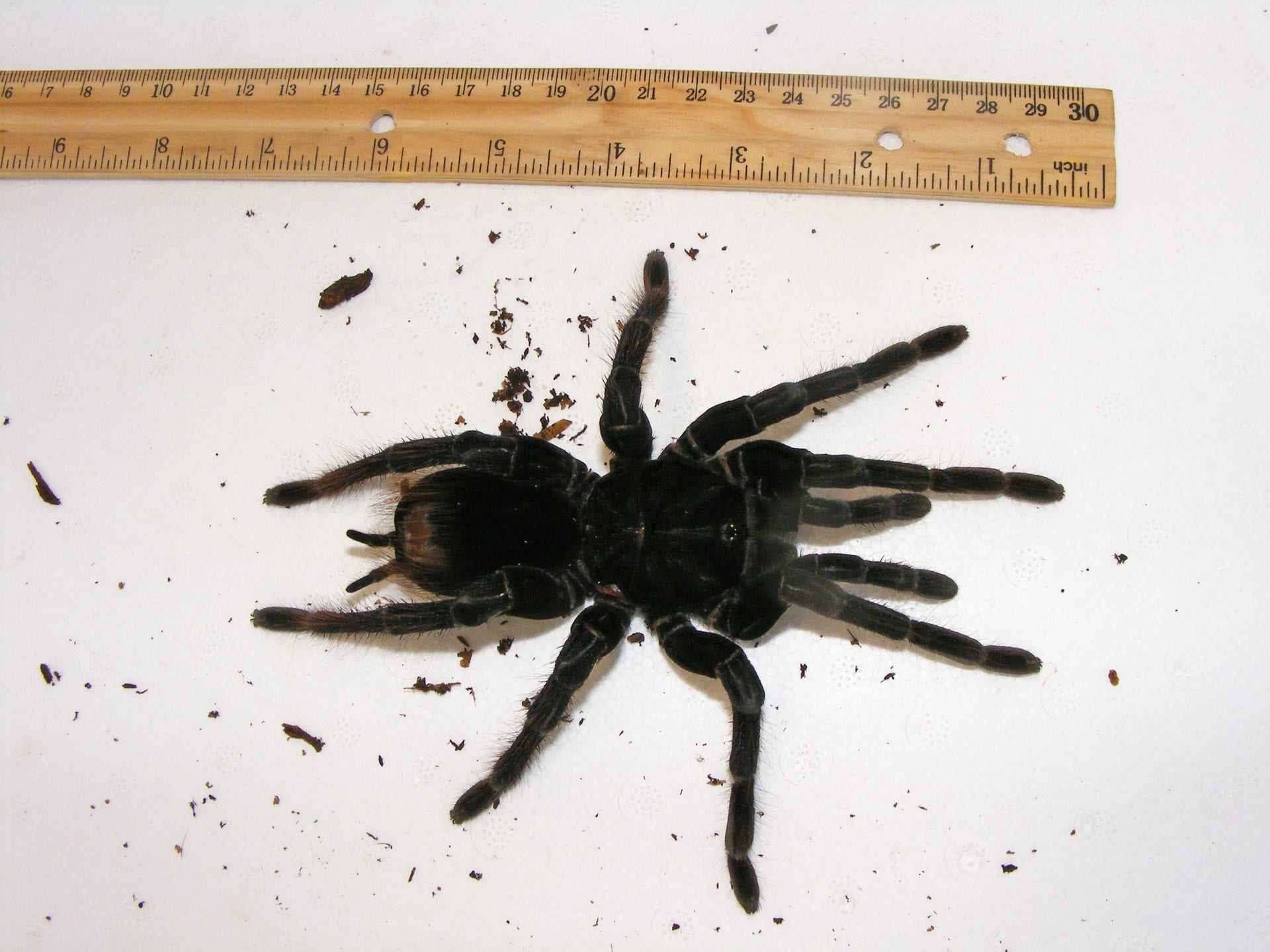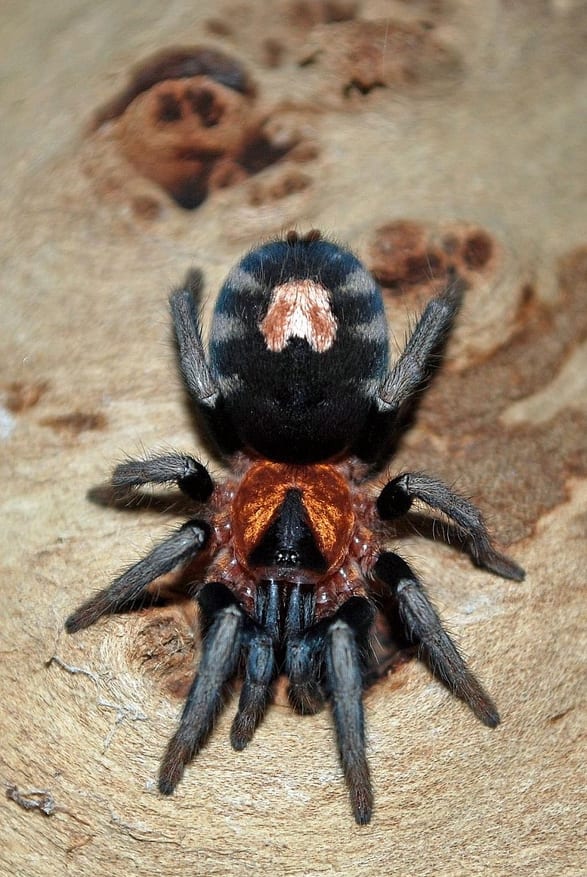
Source: Wikimedia Commons
Trinidad Dwarf Tiger
BeginnerCyriocosmus elegans
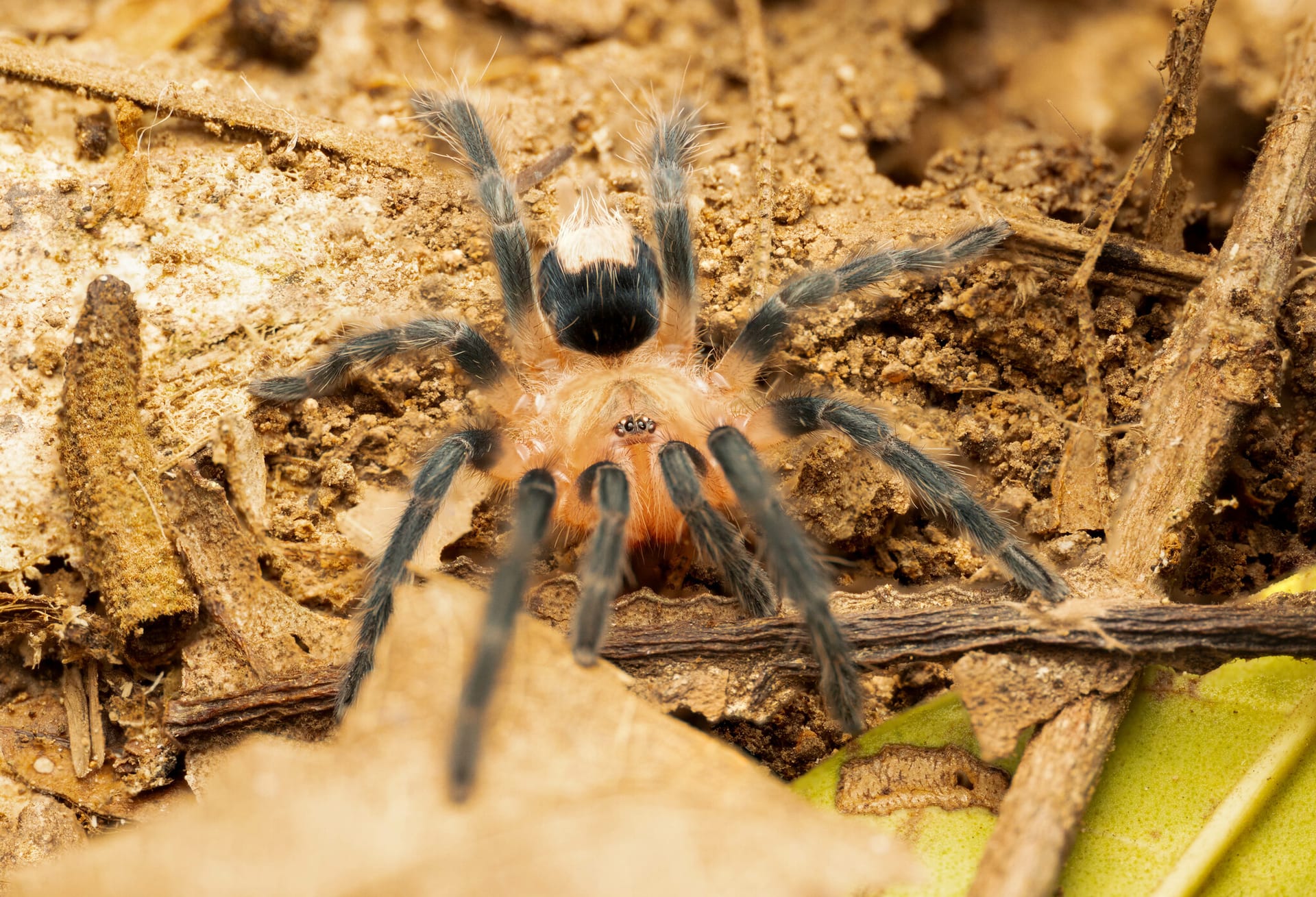
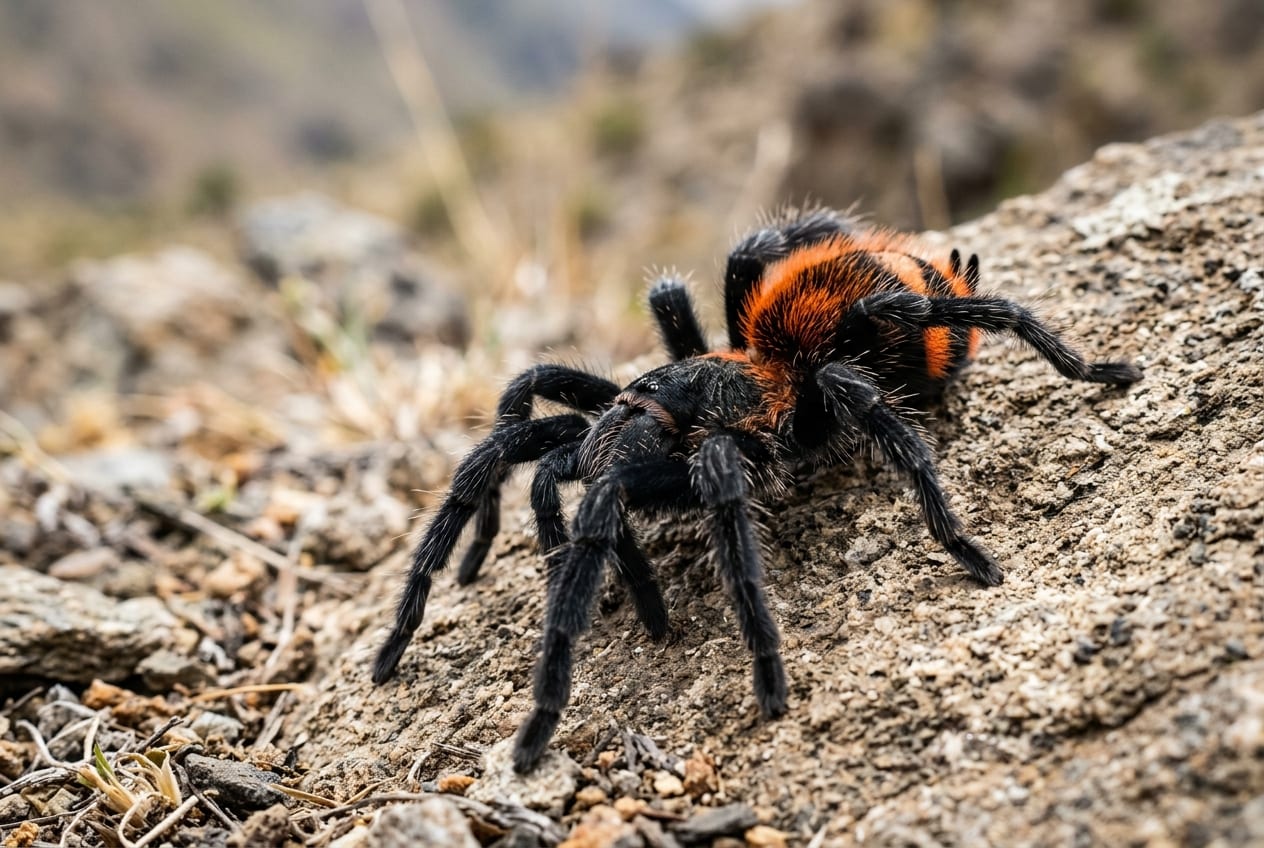
A very small tarantula with a leg span of about 5cm. It has a metallic carapace and a striped abdomen bearing a heart-shaped marking, and burrows readily. Growth is fast and it can mature in about a year.
Difficulty
Beginner
Temperature
20〜24℃
Lifespan
Females up to about 7 years, males about 2 years
Size
5-6cm leg span (body about 2cm)
Humidity
70〜80%
Diet
Live insects such as small crickets and fruit flies
About
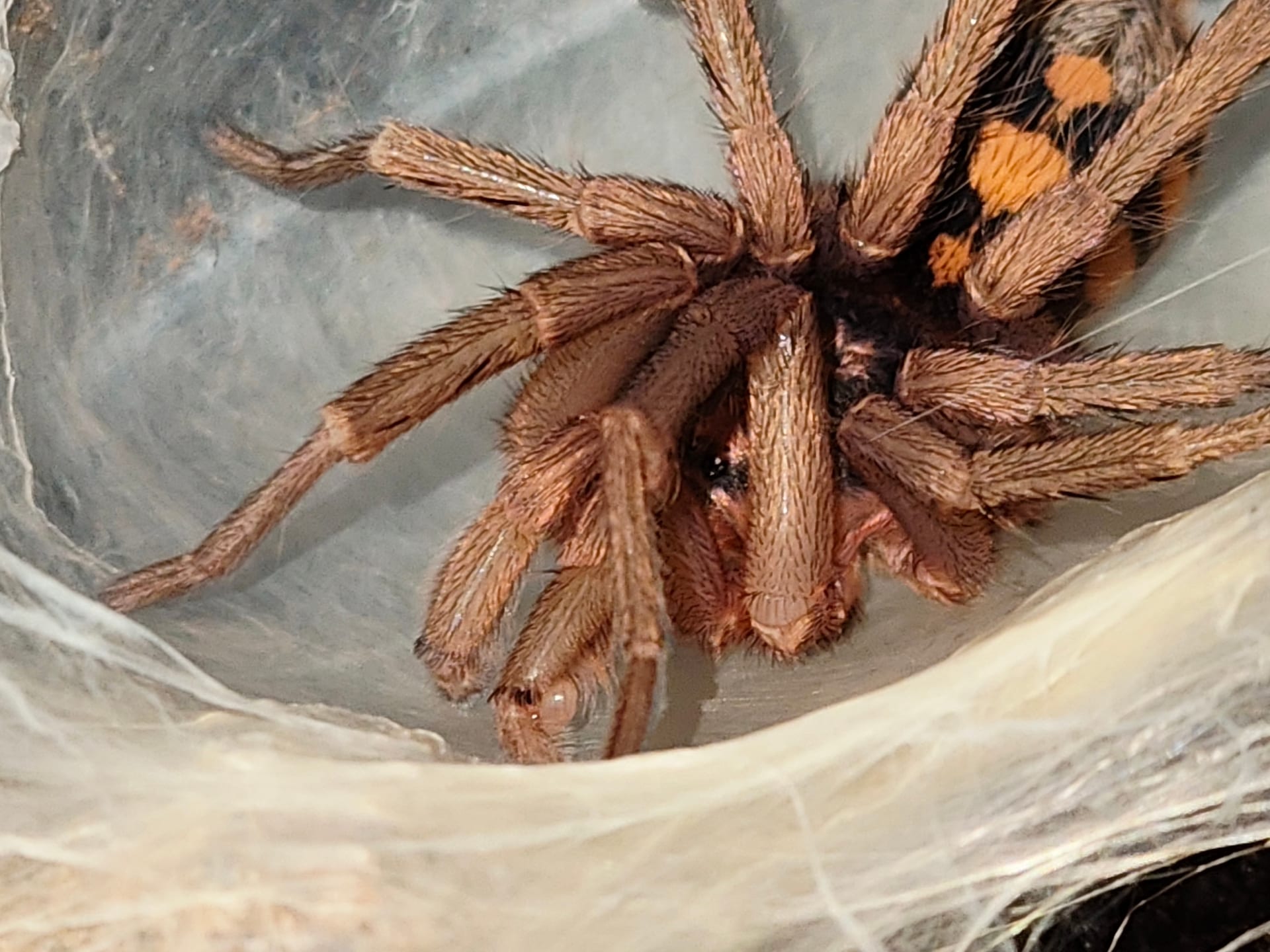
Cyriocosmus elegans is a small tarantula distributed from Venezuela through Trinidad and Tobago to Guyana. The metallic coppery carapace bears a black triangle, and the abdomen carries black and bronze stripes with a heart-shaped marking. It lives in lowland tropical forest under logs and stones, digging burrows in loose soil and lining them with thick webbing. In captivity give at least 5-6 cm of substrate so it can burrow, and create a moisture gradient with damp lower layers and a drier surface; poor ventilation quickly invites mould. Growth is very fast and it can mature in around a year. It is nervous rather than defensive and bolts into its burrow when startled. Its tiny body is easily killed by a fall, so handling should be avoided.
Source: Wikipedia (CC BY-SA 4.0)
Lifespan of the Trinidad Dwarf Tiger
The Trinidad Dwarf Tiger lives Females up to about 7 years, males about 2 years.
Size of the Trinidad Dwarf Tiger
The Trinidad Dwarf Tiger grows to 5-6cm leg span (body about 2cm).
At about 2 cm in body length and only 5-6 cm in leg span, it is among the smallest tarantulas in the hobby.
Temperature & humidity for the Trinidad Dwarf Tiger
The ideal temperature for the Trinidad Dwarf Tiger is 20〜24℃. Ideal humidity is 70〜80%.
Basic Info
Origin
Venezuela, Trinidad and Tobago, Guyana
Care Specifications
PeacefulSolitaryBreeding: Moderate
Sources: The Tarantula Collective: Cyriocosmus elegans / The Spider Shop: Cyriocosmus elegans / Wikipedia: Cyriocosmus elegans / GBIF
References & Sources
Edited & verified by: BreederDirect editorial team
The taxonomic, regulatory, and husbandry data on this page are compiled and verified against the authoritative primary sources below.
Taxonomy & Authority
Accepted name: Cyriocosmus elegans (Simon, 1889)
Synonyms: Hapalopus elegans, Cyriocosmus planus, Cyriocosmus semifasciatus
Authority databases: GBIF
Nomenclature follows global taxonomic authority databases.
Regulations & Conservation Status
Not CITES-listed
Sources: CITES Appendices (species not listed)
Regulations may change. Always verify the latest information with the relevant authorities.
Trinidad Dwarf Tiger Listings
Loading latest listingsFind listings for this species