Source: Wikimedia Commons
Bolivian Dwarf Beauty
BeginnerCyriocosmus perezmilesi
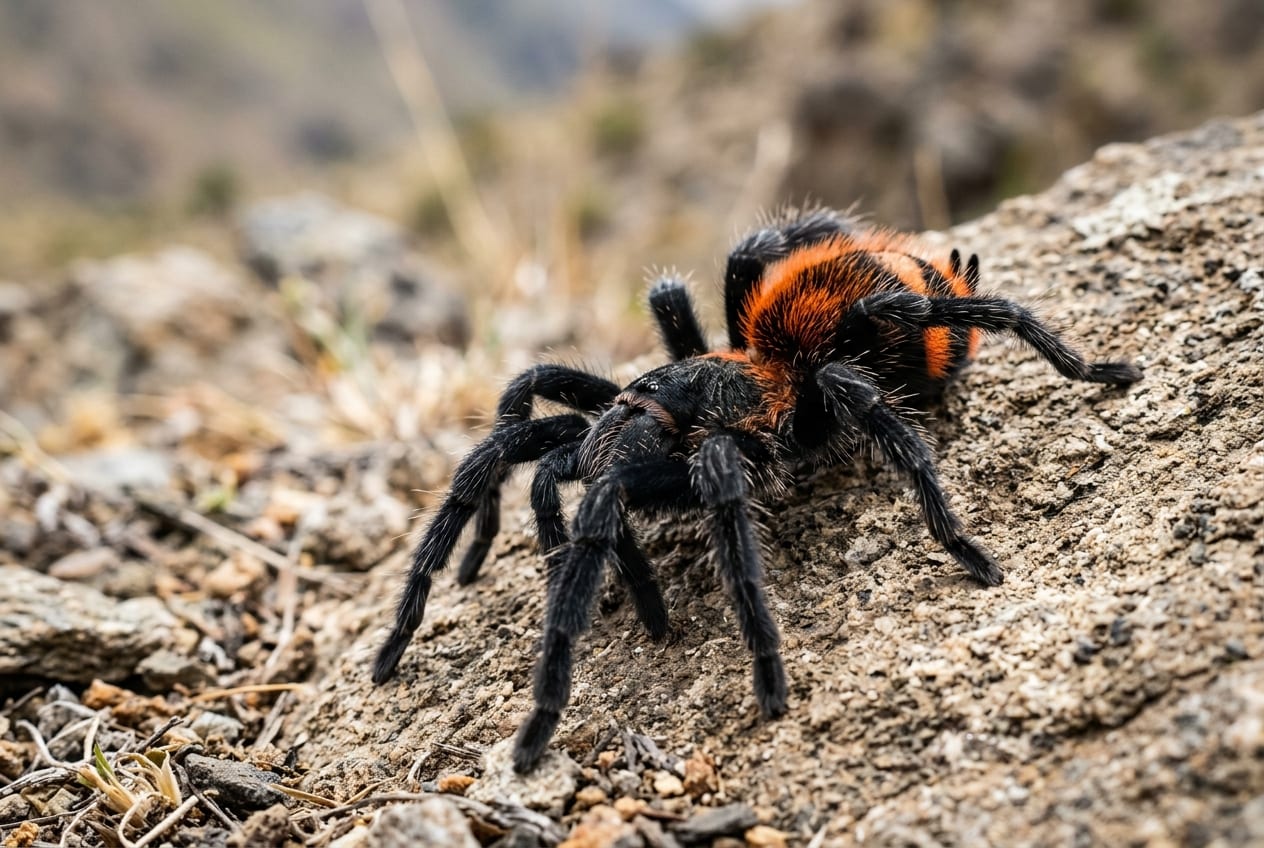
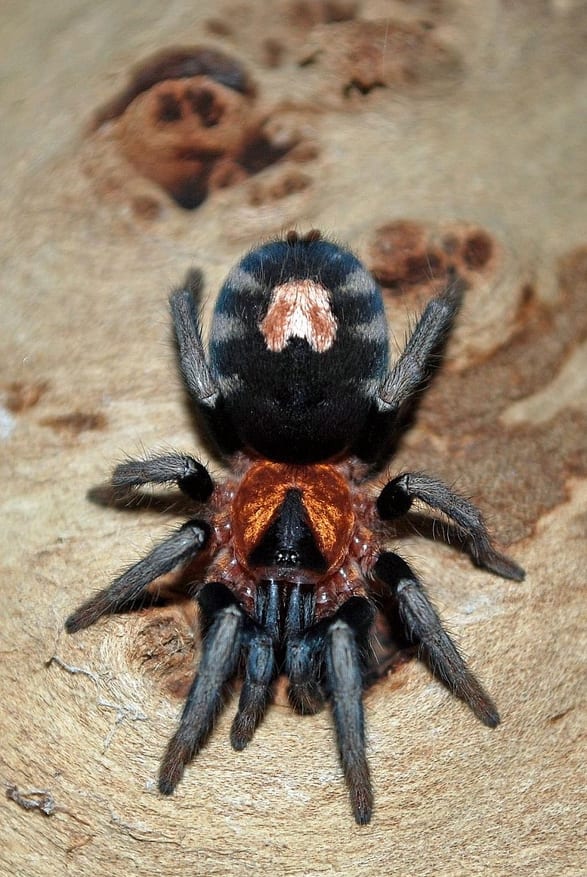
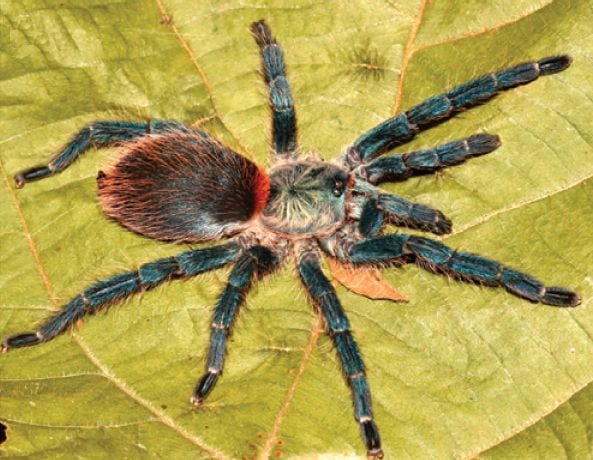
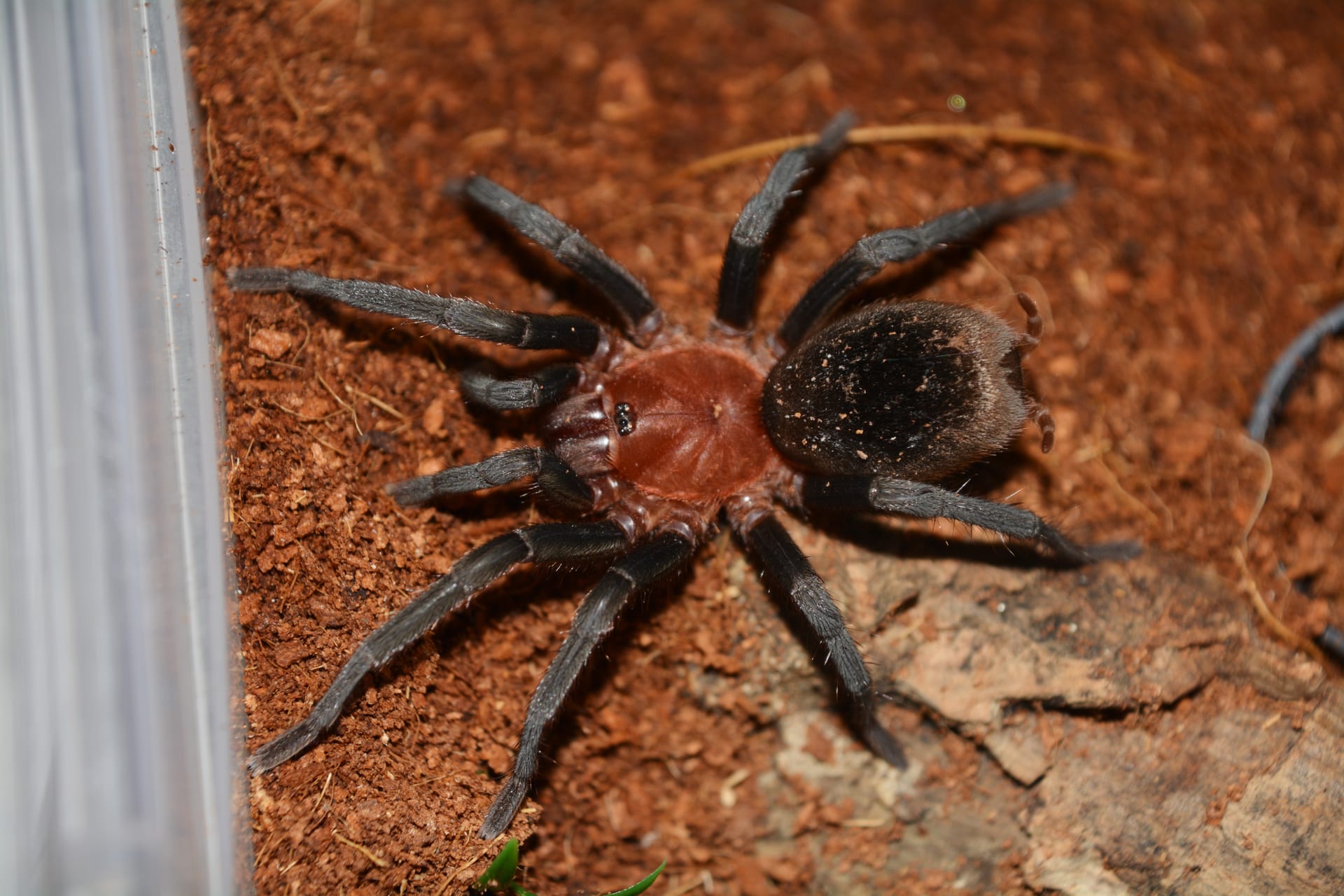
A dwarf species from Bolivia with a coppery carapace and a striking heart-shaped urticating patch on its black abdomen. Leg span stays around 6cm. It burrows and webs enthusiastically, and is calm enough that threat postures are rare.
Difficulty
Beginner
Temperature
20〜24℃
Lifespan
Females 7-15 years, males 2-6 years (sources vary)
Size
5-6cm leg span (body about 2cm)
Humidity
70〜80%
Diet
Live insects such as small crickets and fruit flies
About
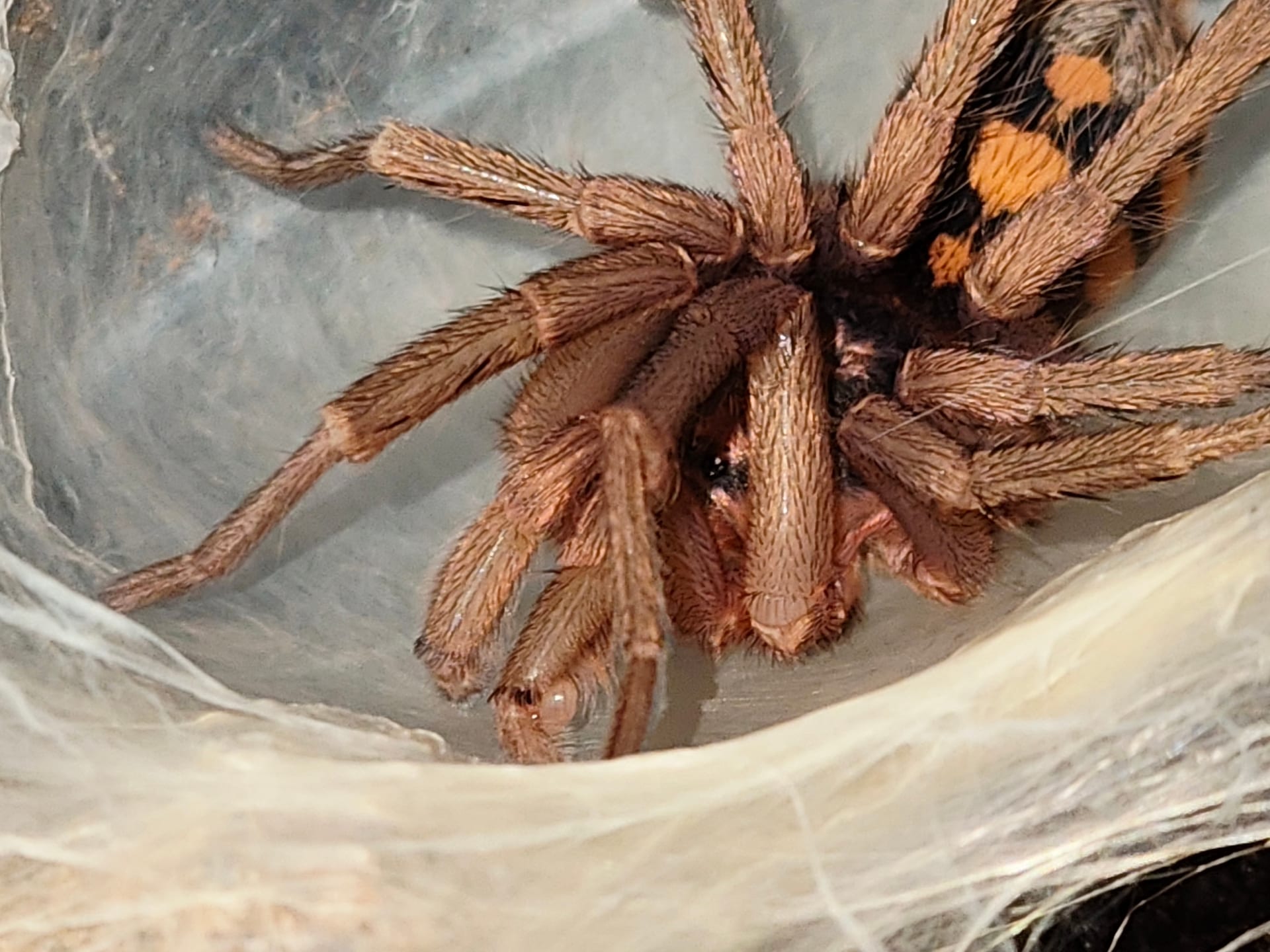
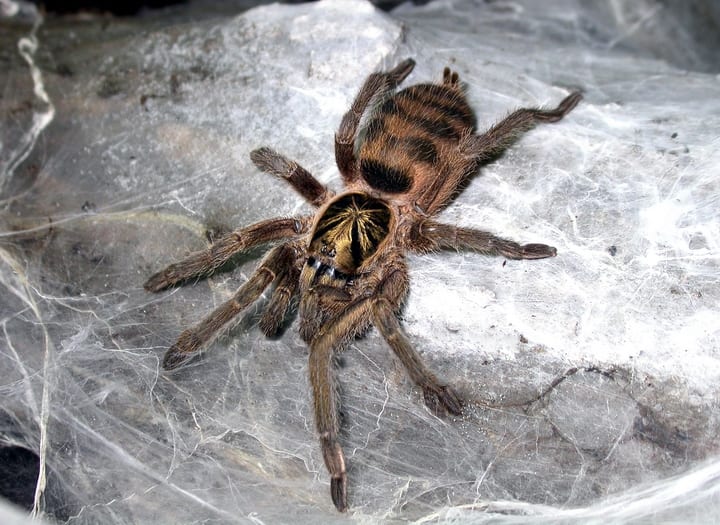
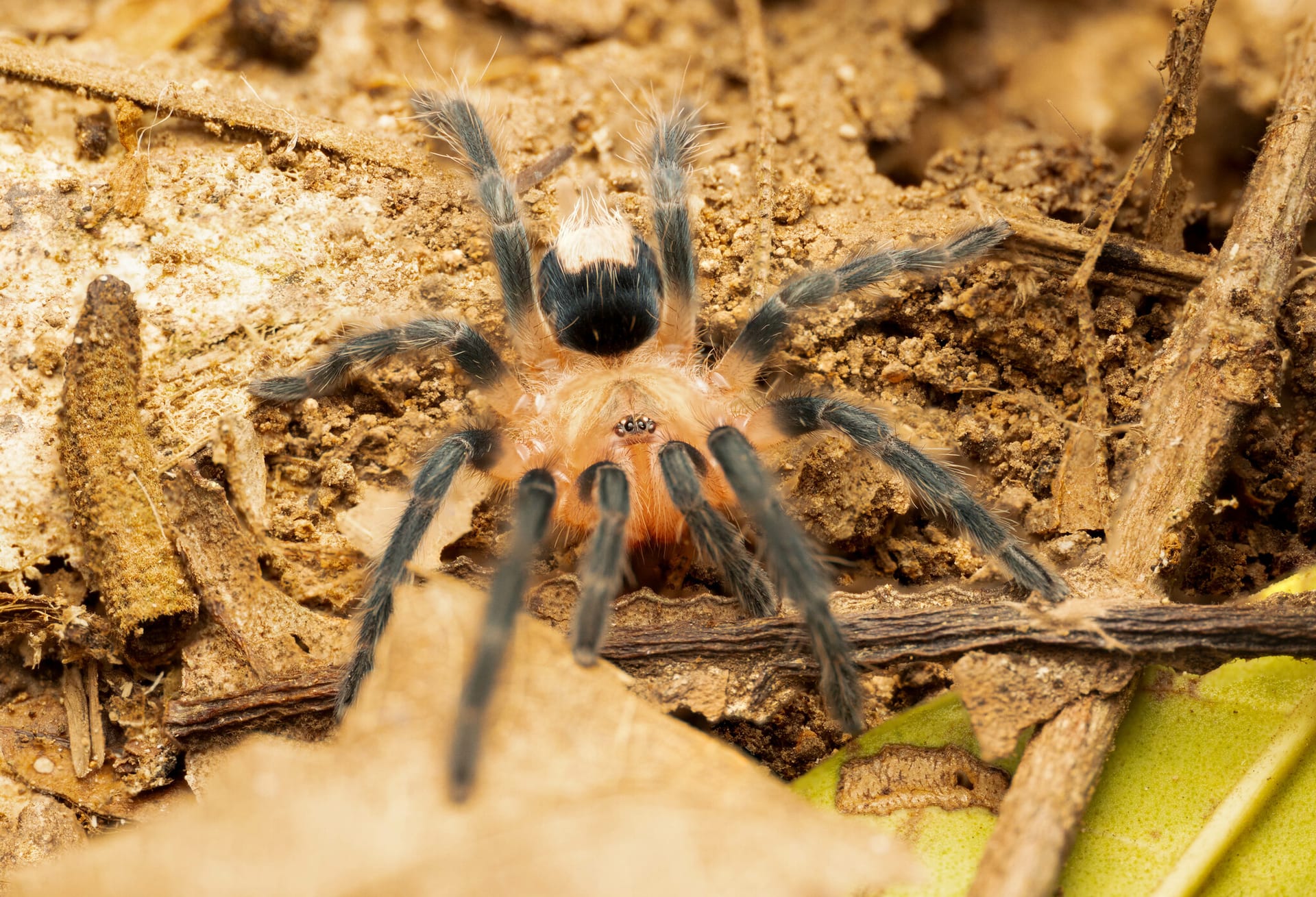
Cyriocosmus perezmilesi was described in 2007 by Radan Kaderka, the epithet honouring the Uruguayan arachnologist Fernando Perez-Miles. Its type locality is the Beni River basin in Bolivia, and it is also recorded from the Amazon of southeastern Peru. It inhabits lowland tropical forest at around 150 m elevation, where the mean annual temperature is about 22 C and annual rainfall around 1,200 mm. The carapace is copper-coloured while the abdomen is black with a central heart-shaped urticating patch, toward which eight vertical lines run; the legs are grey to black. It is fossorial, digging deep burrows that it lines with silk, so substrate should be generous. It is calm, rarely kicking hairs or assuming a threat posture, though it retreats into its burrow at speed when disturbed. Growth is fast and its feeding response is strong.
Source: Wikipedia (CC BY-SA 4.0)
Lifespan of the Bolivian Dwarf Beauty
The Bolivian Dwarf Beauty lives Females 7-15 years, males 2-6 years (sources vary).
Size of the Bolivian Dwarf Beauty
The Bolivian Dwarf Beauty grows to 5-6cm leg span (body about 2cm).
Temperature & humidity for the Bolivian Dwarf Beauty
The ideal temperature for the Bolivian Dwarf Beauty is 20〜24℃. Ideal humidity is 70〜80%.
Basic Info
Origin
Bolivia (Amazonian lowland forest around the Beni Department) and southeastern Peru
Lifespan
Care Specifications
PeacefulSolitaryBreeding: Moderate
Sources: The Tarantula Collective: Cyriocosmus perezmilesi / The Spider Shop: Cyriocosmus perezmilesi / Wikipedia: Cyriocosmus perezmilesi / Tarantupedia: Cyriocosmus perezmilesi / GBIF
References & Sources
Edited & verified by: BreederDirect editorial team
The taxonomic, regulatory, and husbandry data on this page are compiled and verified against the authoritative primary sources below.
Taxonomy & Authority
Accepted name: Cyriocosmus perezmilesi Kaderka, 2007
Authority databases: GBIF
Nomenclature follows global taxonomic authority databases.
Regulations & Conservation Status
Not CITES-listed
Sources: CITES Appendices (species not listed)
Regulations may change. Always verify the latest information with the relevant authorities.
Bolivian Dwarf Beauty Listings
Loading latest listingsFind listings for this species