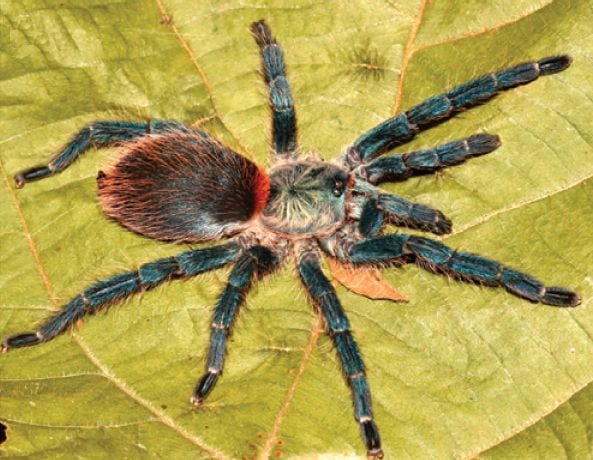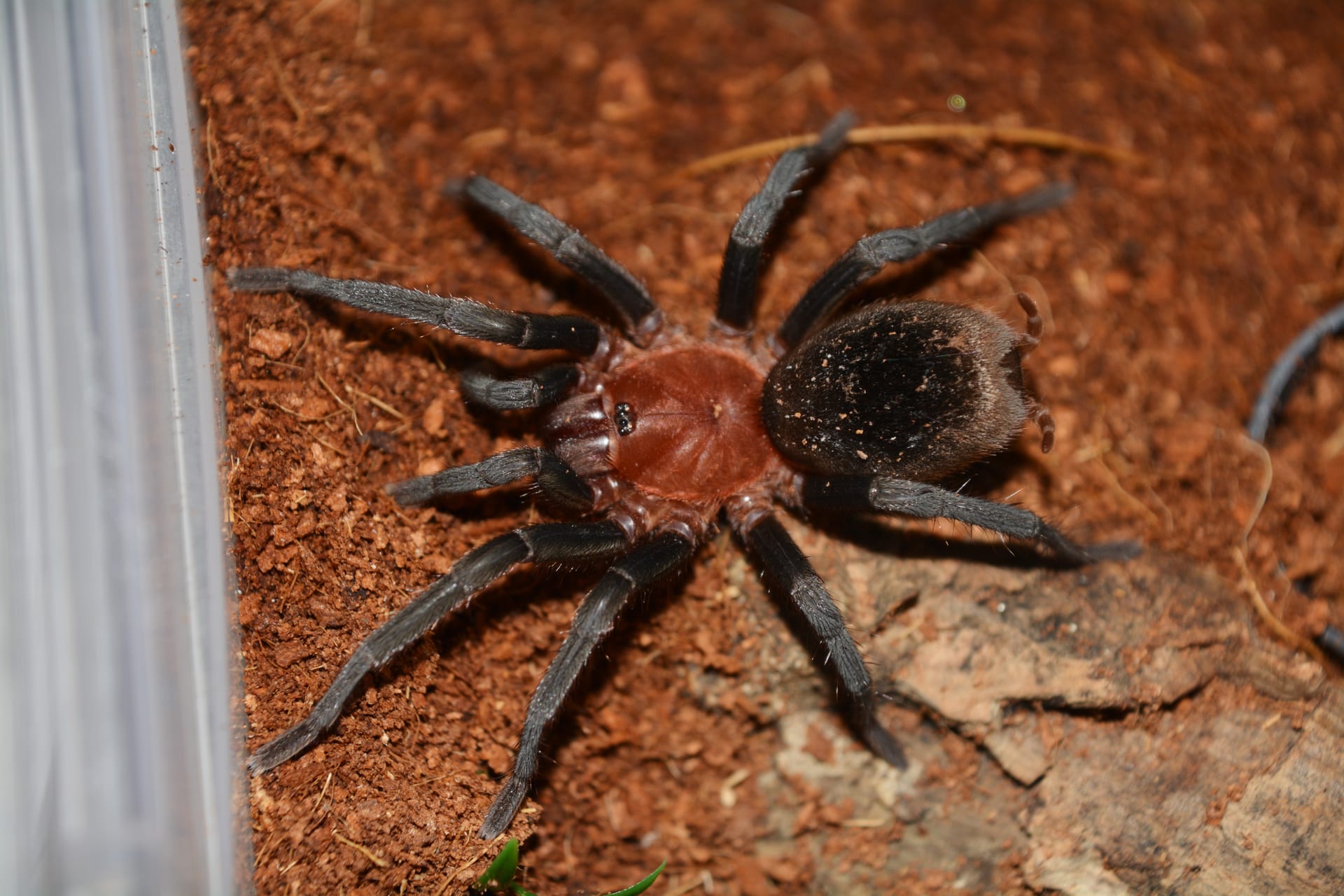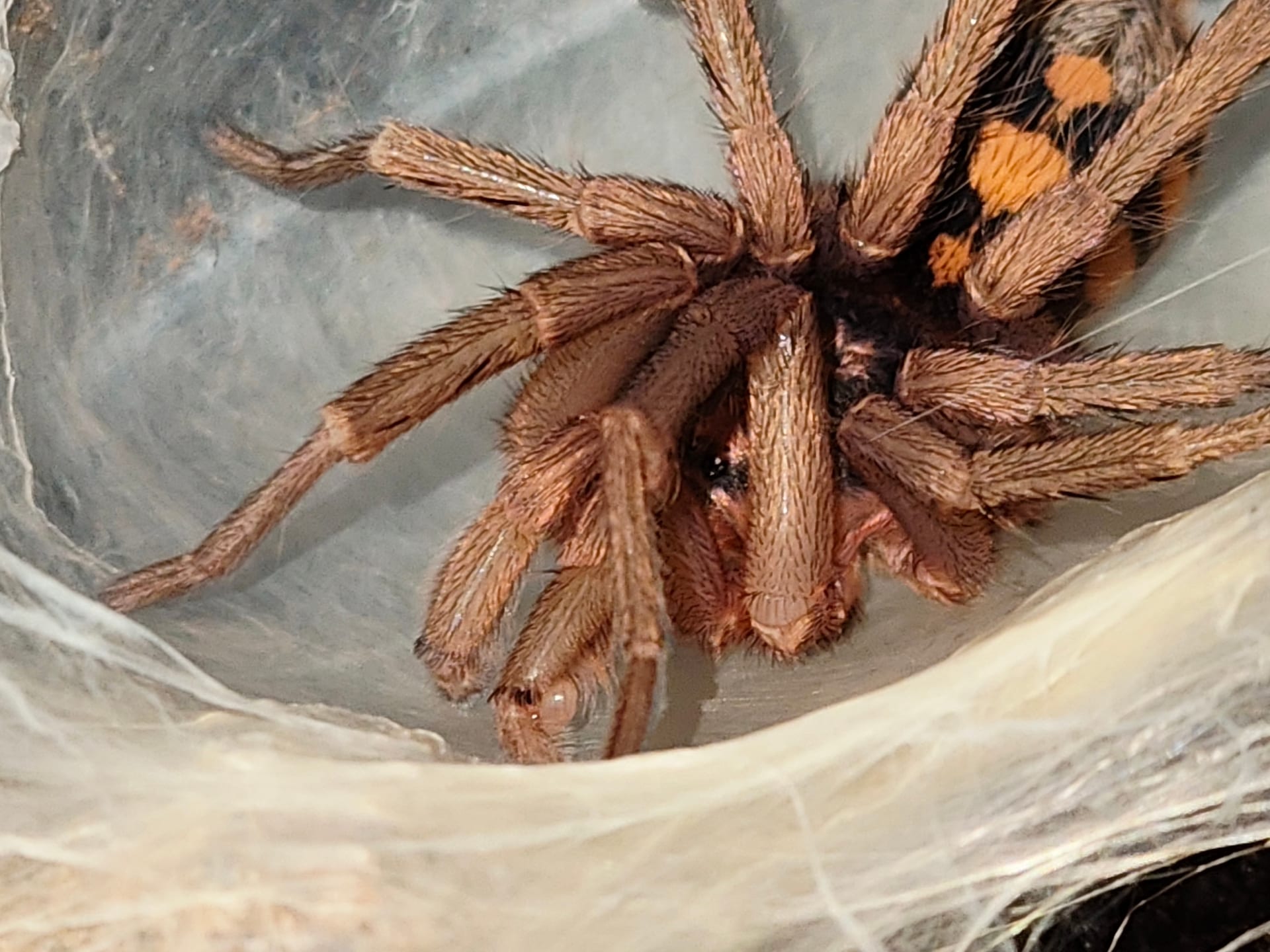
Source: Wikimedia Commons
Pumpkin Patch Tarantula
BeginnerHapalopus sp. "Colombia"
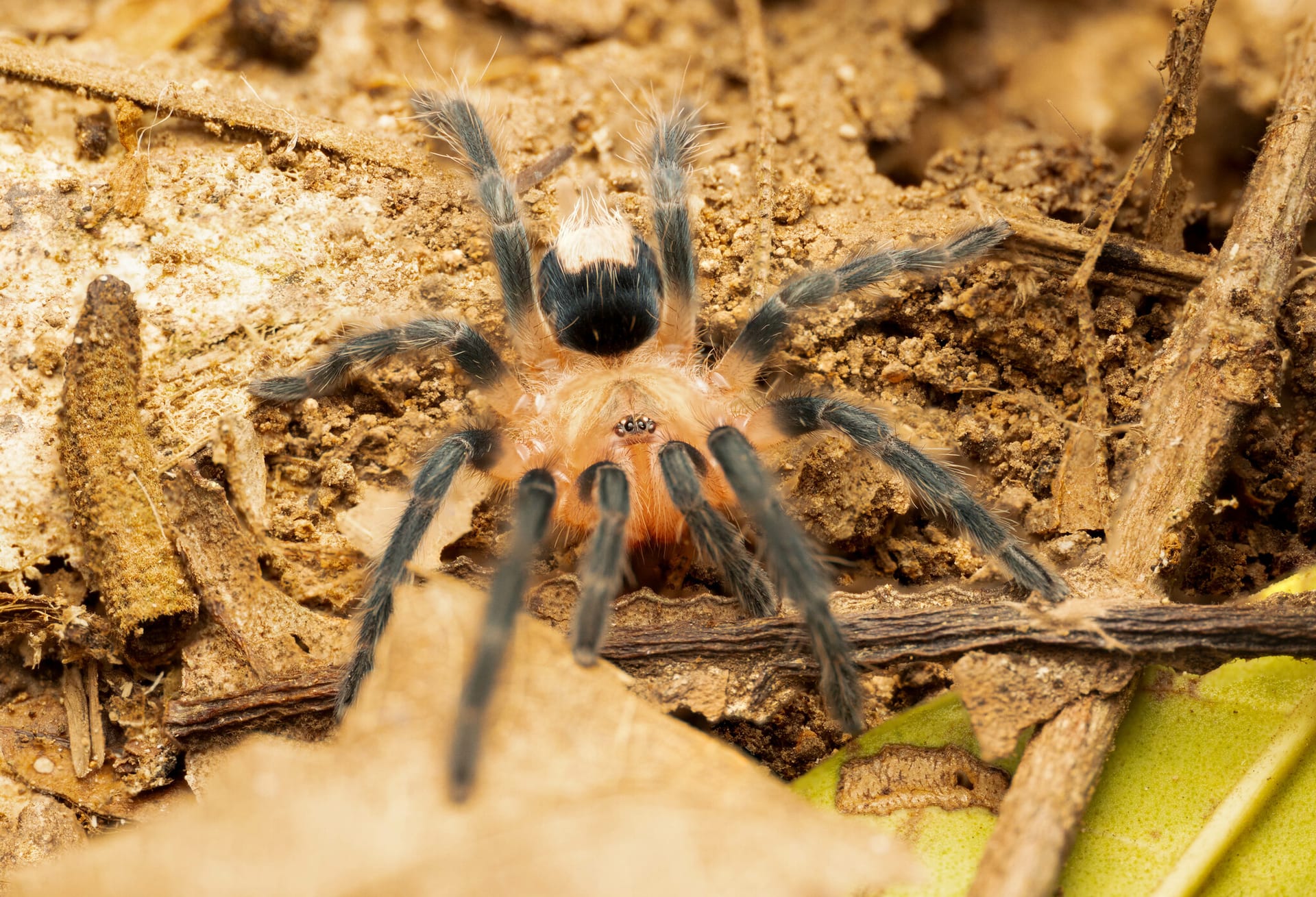
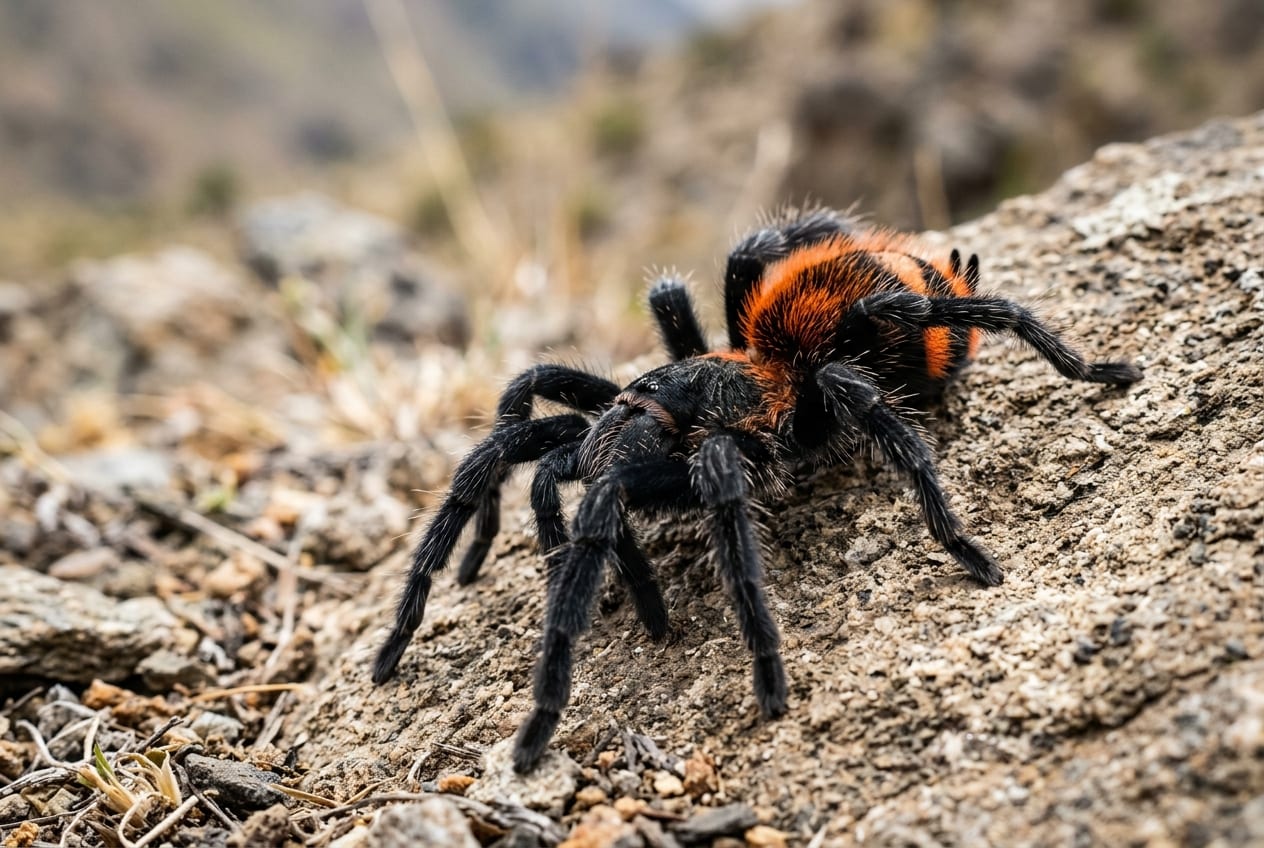
A dwarf species from Colombia named for the orange blotches scattered across its black abdomen, likened to a pumpkin patch. It builds thick webbing and burrows yet stays out in view, making it a fine display animal, and it breeds readily.
Difficulty
Beginner
Temperature
20〜24℃
Lifespan
Females 8-10 years, males 3-4 years
Size
Up to about 10cm leg span in the large form, about 6cm in the small (klein) form
Humidity
70〜80%
Diet
Live insects such as small crickets and roaches
About
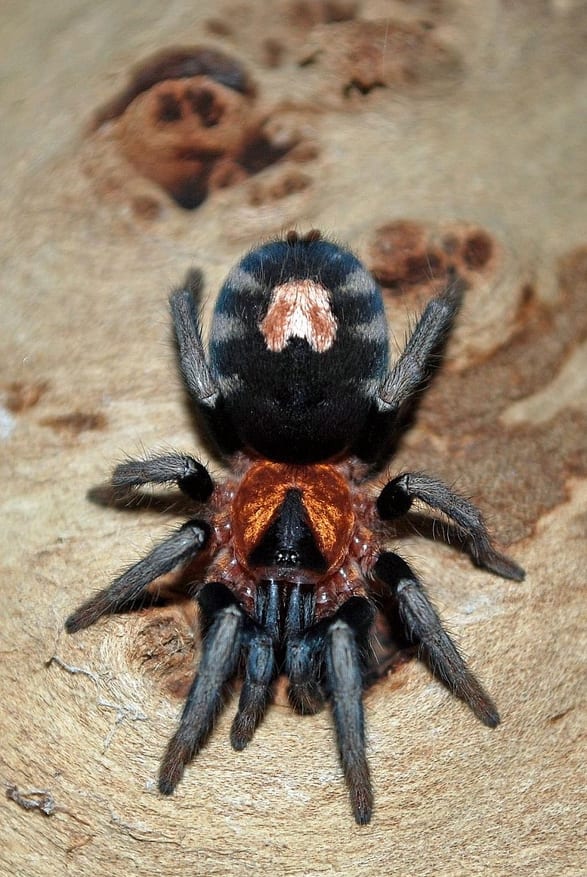
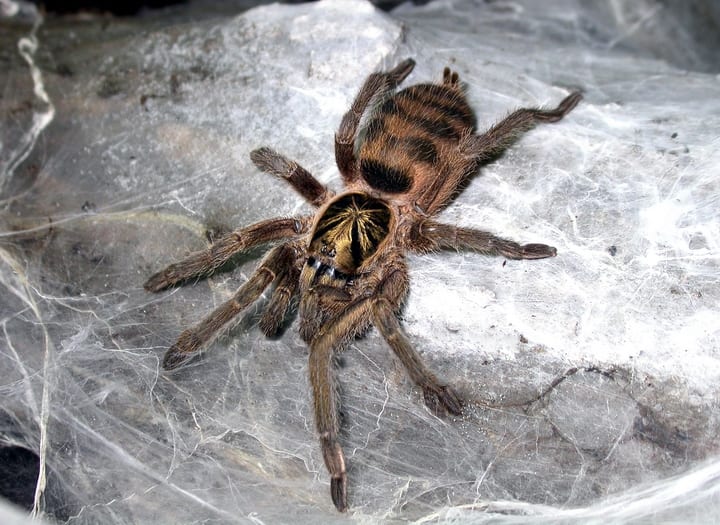
The Pumpkin Patch is a dwarf tarantula from Colombia, named for the orange blotches on its black abdomen that suggest a field of pumpkins. The legs are pale brown and the carapace is marked in black and orange. Leg span reaches about 10 cm in the large form and 6 cm in the small one, and in captivity females are reported to live 8-10 years and males 3-4. It spins intricate webbing and digs burrows, but does not stay hidden and is usually out in the open, which makes it a rewarding display animal. It is docile and lacks medically significant venom, though it is decidedly skittish and does bear urticating hairs. A small enclosure with deep substrate is enough, with a permanent water dish and the lower substrate kept damp. It breeds readily and captive generations are well established. The trade distinguishes large and klein (small) forms, but their formal taxonomic status is unsettled.
Source: Wikipedia (CC BY-SA 4.0)
Lifespan of the Pumpkin Patch Tarantula
The Pumpkin Patch Tarantula lives Females 8-10 years, males 3-4 years.
Size of the Pumpkin Patch Tarantula
The Pumpkin Patch Tarantula grows to Up to about 10cm leg span in the large form, about 6cm in the small (klein) form.
Temperature & humidity for the Pumpkin Patch Tarantula
The ideal temperature for the Pumpkin Patch Tarantula is 20〜24℃. Ideal humidity is 70〜80%.
Basic Info
Origin
Colombia
Care Specifications
PeacefulSolitaryBreeding: Easy
Sources: The Tarantula Collective: Hapalopus sp. Colombia / The Spider Shop: Hapalopus sp. Colombia / Wikipedia: Hapalopus formosus / Tarantupedia: Hapalopus formosus
References & Sources
Edited & verified by: BreederDirect editorial team
The taxonomic, regulatory, and husbandry data on this page are compiled and verified against the authoritative primary sources below.
Regulations & Conservation Status
Not CITES-listed
Sources: CITES Appendices (species not listed)
Regulations may change. Always verify the latest information with the relevant authorities.
Pumpkin Patch Tarantula Listings
Loading latest listingsFind listings for this species