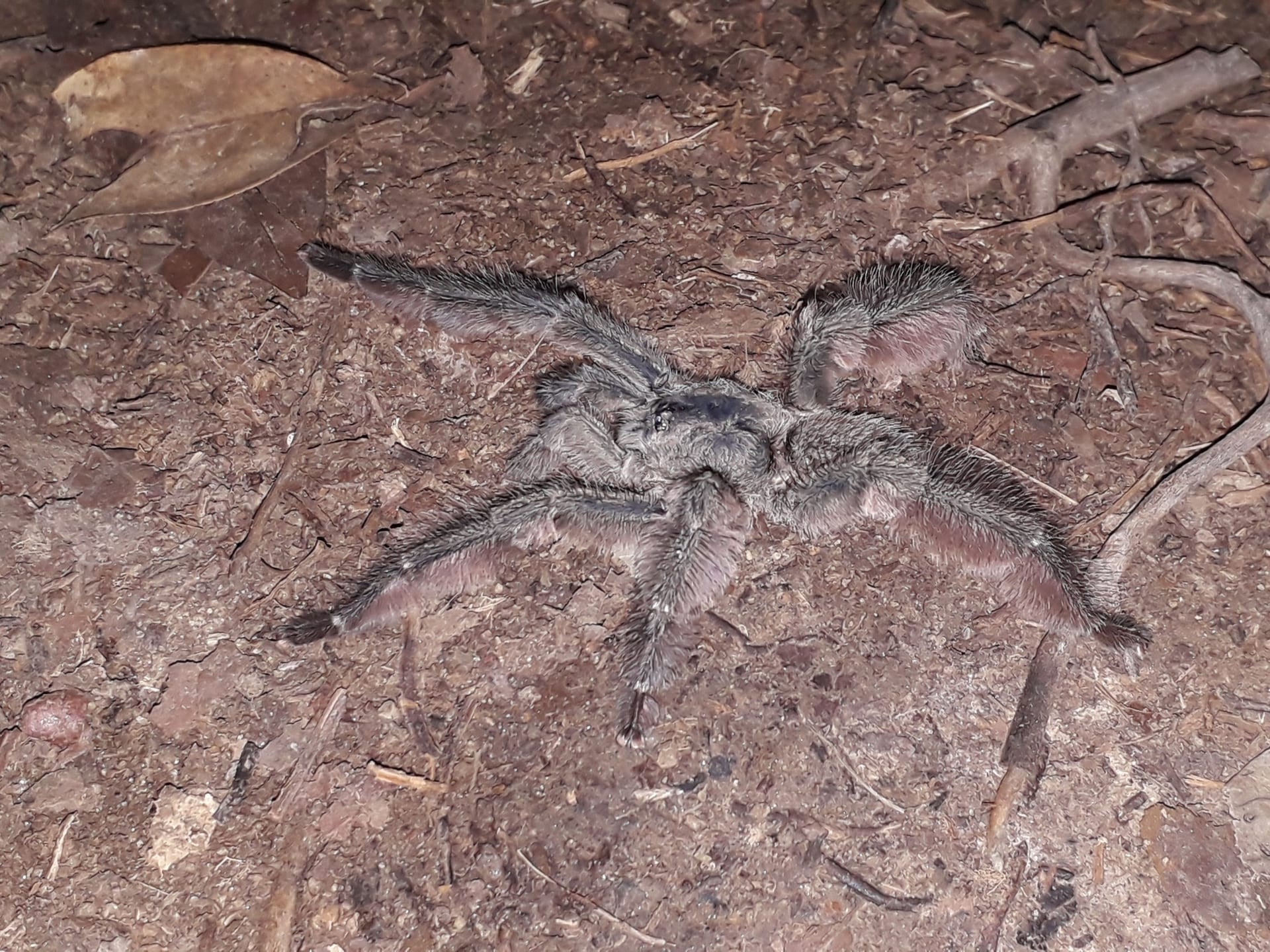
 © Tommy Andriollo / CC BY 4.0
Purple Tree Spider
The Purple Tree Spider is an arboreal tarantula known for its dusky, purple-tinged body and long, slender legs. It's also sold under the name Tapinauchenius violaceus, though that name is now considered a synonym for this species. Extremely quick and agile, it builds a pouch-like retreat tucked into bark or driftwood, alternating between long stillness and sudden bursts of speed. Adults reach roughly 6 cm in body length for females and about 3.5 cm for males, with a leg span of around 10 cm. Considered suitable for intermediate keepers, it rewards those who enjoy its striking coloring and lively behavior.
View Purple Tree Spider encyclopedia →0% commission on your first sales!Register by September 30, 2026 and your first 2 sales are commission-free!
Breeder Wanted!
List on BreederDirect and sell directly to customers nationwide!
BreederDirect's 5 Transparency Commitments
When listing Exotic Invertebrates, Breeders disclose the following. We guarantee transparency on growth stage and breeding unit.
- Real Photos
- Breeding Unit
- Generation Info
- Body Length (mm)
- Country of Origin
Browse all 286 breeds
Verified breeders wanted for Exotic Invertebrates
Breeders are signing up now ahead of launch. Subscribe to be notified when new listings go live.
Getting alerts is free with a member account. When new listings match your saved search, we'll notify you by email and in-app.
Browse other categories
Verified breeders (preview)
Are you raising exotic invertebrates?
Register as a breeder and connect with buyers directly.
Apply as a breederPurple Tree Spider key facts
- Care level
- Intermediate
- Lifespan
- Females 8-12 years / males 2-3 years
- Size
- Body about 6cm (female) and 3.5cm (male), leg span about 10cm
- Temperature
- 25〜27℃
- Humidity
- About 80%
- Diet
- Active live insects such as crickets and roaches
- Temperature & Humidity
- Keep 25-27 C by day and a few degrees cooler at night. Aim for humidity near 80 percent, dampening the substrate and walls regularly while keeping airflow.
- Enclosure
- Use a vertical enclosure of about 20 by 20 by 35cm with cork bark set upright as an anchor for webbing. A shallow substrate layer is sufficient.
- Diet & Feeding
- It prefers active live prey such as crickets and roaches, and responds best when food is dropped near the web entrance.
- Temperament & Venom
- The venom is weak and the spider is not aggressive, but it is extremely fast and jumps well. Lacking urticating hairs, it defends itself mainly by fleeing.
- Notes
- Escape during maintenance is the main risk, so secure the lid and check for gaps. Females produce an egg sac 1.5 to 5 months after mating, usually containing 80-200 eggs. The orange animals long called T. gigas in the hobby are not this species but Amazonius germani, so check the scientific name when choosing by colour.
About Purple Tree Spider
Purple Tree Spider: an arboreal tarantula with a purple-tinged body and rapid movement. Learn about its intermediate care level, pouch-web habit, and adult size before bringing one home.
7 things to know before welcoming a Purple Tree Spider
1A Tall, Vertical Enclosure
As an arboreal species, the Purple Tree Spider does better in a tall enclosure than a wide one. Provide climbing branches or cork bark to create vertical hiding spots, and make sure the lid fits snugly, since it can escape through small gaps.
2Extremely Fast Movement
This species moves unusually fast for an arboreal tarantula. It may dart out the moment the lid is opened during feeding or cleaning, so work calmly and deliberately. It's not a species suited to handling.
3Builds a Pouch-Like Web
In the wild, it shelters in pouch-like webs tucked into bark crevices. In captivity, offering cork bark or dense foliage lets it build a similar retreat where it can settle in comfortably.
4Best Suited to Intermediate Keepers
The Purple Tree Spider is generally considered suitable for intermediate keepers. Because of its speed and skittish nature, it's best kept by those with some prior tarantula experience.
5Bites Are Possible
As with tarantulas in general, this species may bite if startled or provoked. Minimize direct hand contact and use tools for routine enclosure maintenance.
6Prefers Warm, Humid Air
Arboreal tarantulas like this one favor warm, humid conditions but dislike stagnant air. Keep the enclosure ventilated while avoiding excessive dryness.
7Handle With Care Near Molting
Reduced appetite or dulling of color can signal an approaching molt. Avoid handling or startling the spider during this period, and give it quiet, undisturbed time right after molting too.
Frequently asked questions about Purple Tree Spider
- Q.Can beginners keep this species?
- A.The Purple Tree Spider is generally considered suitable for intermediate keepers. Its speed and skittish nature make it a better fit for those with some prior tarantula experience.
- Q.Can it be handled by hand?
- A.It moves extremely fast and may bite if startled, so it's not well suited to handling. It's best enjoyed as a species to observe rather than touch.
- Q.How large does it get as an adult?
- A.Adults reach a body length of roughly 6 cm for females and about 3.5 cm for males. Leg span reaches around 10 cm.
- Q.Is it listed under CITES?
- A.The Purple Tree Spider is not listed under CITES. There's no need for concern on this point.
- Q.What kind of enclosure does it need?
- A.As an arboreal species, it does better in a tall enclosure than a wide one. Add climbing branches or cork bark for vertical hiding spots, and choose one with a secure, tight-fitting lid.
Learn more about Purple Tree Spider in the encyclopedia
View Purple Tree Spider encyclopedia entry →
Care difficulty, lifespan, size and diet — all basics covered.
More in this category
Can't find the one you're looking for?
Post your wishes for free and breeders with matching animals will contact you with introductions.