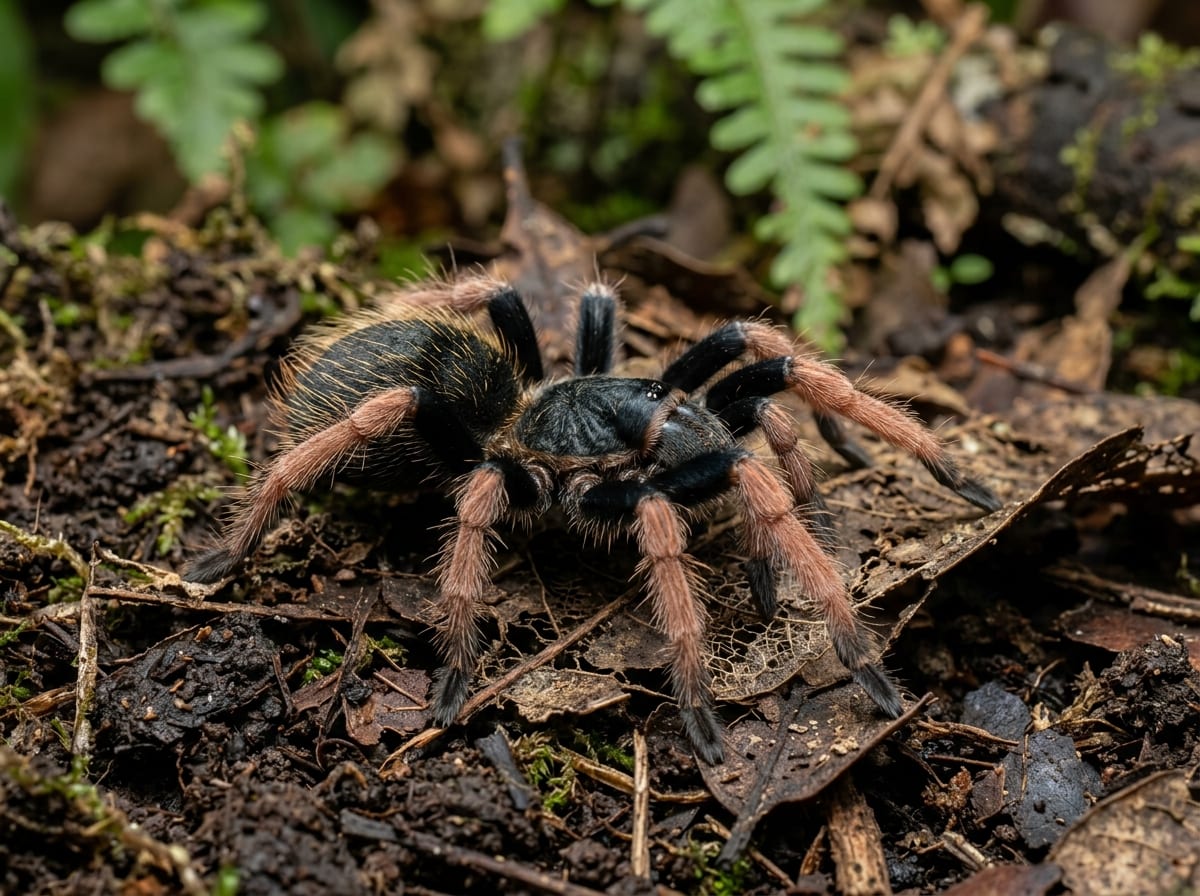
Dwarf pinkleg tarantula
The dwarf pinkleg tarantula is a small Brazilian species with a black body and legs that turn a reddish pale brown from the patella outward. Golden urticating hairs on the abdomen add to its striking contrast. It is the only species in the genus Kochiana, it is uncommon in the trade, and reliable information on lifespan and adult size is limited, so it is rated as suited to intermediate keepers. This is a species to admire rather than handle, and it suits keepers who already have tarantula experience and are comfortable working with limited information.
View Dwarf pinkleg tarantula encyclopedia →0% commission on your first sales!Register by September 30, 2026 and your first 2 sales are commission-free!
Breeder Wanted!
List on BreederDirect and sell directly to customers nationwide!
5 Transparency Standards You Can Trust
When listing Exotic Invertebrates, Breeders disclose the following. We guarantee transparency on growth stage and breeding unit.
- Real Photos
- Breeding Unit
- Generation Info
- Body Length (mm)
- Country of Origin
Browse all 286 breeds
Verified breeders wanted for Exotic Invertebrates
Breeders are signing up now ahead of launch. Subscribe to be notified when new listings go live.
Getting alerts is free with a member account. When new listings match your saved search, we'll notify you by email and in-app.
Browse other categories
Verified breeders (preview)
Are you raising exotic invertebrates?
Register as a breeder and connect with buyers directly.
Apply as a breederDwarf pinkleg tarantula key facts
- Care level
- Intermediate
- Lifespan
- Little data
- Size
- Little data (a small species)
- Diet
- Carnivorous (small live insects such as crickets and roaches)
- Enclosure
- As a small ground-dwelling species, use a compact enclosure with substrate, a hide and a small water dish. Keep singly.
- Temperature & Humidity
- Little temperature or humidity data exist for this species. Avoid extreme heat and dryness and keep part of the substrate moist.
- Diet & Feeding
- Offer small live prey sized to the spider and remove leftovers the next day.
- Temperament & Venom
- It carries golden urticating hairs on its abdomen, which irritate skin, eyes and nose, so wash your hands after maintenance and keep your face away. Little is documented about its venom.
- Notes
- Being small, it can slip through narrow gaps, so use a container with fine ventilation. Trade names resemble those of other dwarf species, so check the scientific name, and never release captive animals.
About Dwarf pinkleg tarantula
A small Brazilian tarantula with a black body, reddish pale brown legs and golden urticating hairs. Intermediate-level care, limited data, and what to know before bringing one home.
7 things to know before welcoming a Dwarf pinkleg tarantula
1Why intermediate
Care difficulty is rated intermediate. The species is uncommon in the trade and documentation is thin, so you may need to adjust the setup by drawing on experience with other tarantulas. If you have never kept a tarantula, it may be reassuring to start with a better-documented species first.
2A small species
It is described as a small species, but data on adult size and lifespan is limited, so no reliable figures can be given. When you inquire, ask the seller about the individual's growth stage, molting record and whether it has been sexed. This makes it easier to plan long-term care.
3Temperament and handling
Tarantulas are meant for observation, not for handling. The golden urticating hairs on the abdomen are a defensive feature and may irritate skin and eyes, so avoid bare-hand contact and protect your eyes during maintenance. Temperament varies between individuals, so move slowly and avoid startling it.
4Escape-proof enclosure
Because it is small, it can slip out through surprisingly narrow gaps. Use fine-meshed ventilation and a snug lid, and keep openings to a minimum during maintenance. Starting with an enclosure sized to the animal rather than an oversized one also makes it easier to keep track of feeding.
5Substrate and humidity
As a Brazilian species, aim for conditions that are neither too dry nor stuffy, and adjust based on how the individual behaves. Provide a reasonably deep substrate and keep only part of it damp so the tarantula can choose where to settle. Add a shallow water dish, and replace the substrate promptly if mold or odor appears.
6Feeding and molting
Offer small insects sized to the tarantula's body and remove uneaten prey promptly. Before a molt it may stop eating or stay still, so skip feeding and leave it undisturbed. Right after a molt the body is soft, so avoid touching it or adding prey.
7Checks before and after arrival
Before purchase, ask the seller about the most recent molt, what the tarantula has been eating and the conditions it was kept in. After arrival, leave it undisturbed for a few days and observe from a distance for missing legs or an unusually shrunken abdomen. Condition can change around a molt, so it is worth discussing delivery timing with the seller.
Frequently asked questions about Dwarf pinkleg tarantula
- Q.Can a beginner keep a dwarf pinkleg tarantula?
- A.Care difficulty is rated intermediate. Because the species is uncommon in the trade and information is limited, some of the setup involves trial and adjustment, so it is reassuring to gain experience with a better-documented tarantula first.
- Q.How large does it get and how long does it live?
- A.It is described as a small species, but data on adult size and lifespan is limited, so no reliable figures can be given. Asking the seller about the individual's growth stage and history helps you set realistic expectations.
- Q.How should I handle the urticating hairs?
- A.The hairs on the abdomen may cause discomfort on skin or in the eyes, so avoid bare-hand contact and protect your eyes during maintenance. If irritation occurs, rinse without rubbing and consult a medical professional if symptoms persist.
- Q.Can I keep several in one enclosure?
- A.Tarantulas can be cannibalistic, so keeping each individual in its own enclosure is the standard approach. With so little information on this species, separate housing is the safer choice.
- Q.What should I feed a dwarf pinkleg?
- A.Small live insects sized to the tarantula's body, such as small crickets, are typical. Adjust frequency and amount by watching the abdomen and the molting cycle, and remove uneaten prey promptly.
Learn more about Dwarf pinkleg tarantula in the encyclopedia
View Dwarf pinkleg tarantula encyclopedia entry →
Care difficulty, lifespan, size and diet — all basics covered.
More in this category
Can't find the one you're looking for?
Post your wishes for free and breeders with matching animals will contact you with introductions.