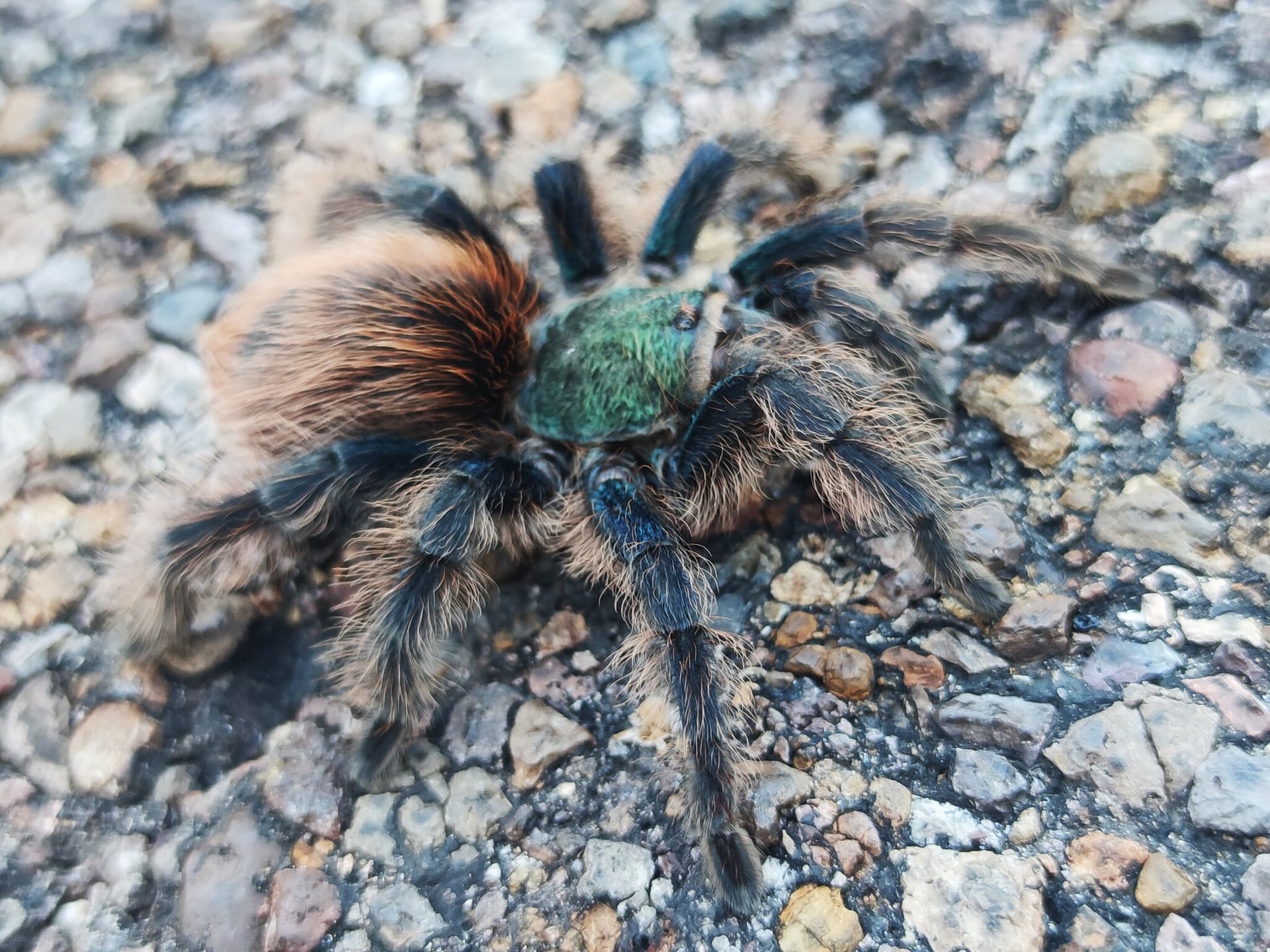
 © Liliana Ramírez-Freire / CC BY 4.0
Mexican jade tarantula
The Mexican jade tarantula is an Aphonopelma species from the mountains of northwestern Mexico. Its legs and carapace have a metallic blue to blue-green sheen, and long red-orange hairs cover the legs and abdomen. This color combination is unusual for the genus and makes the spider stand out. Adults reach about 10 to 13 cm and live on the ground, so you can watch them move around their enclosure. It is rated for intermediate keepers, so it is best to have some basic tarantula experience first. Lifespan differs greatly by sex: wild females can live up to 25 years, while males usually live 5 to 7 years.
View Mexican jade tarantula encyclopedia →0% commission on your first sales!Register by September 30, 2026 and your first 2 sales are commission-free!
Breeder Wanted!
List on BreederDirect and sell directly to customers nationwide!
5 Transparency Standards You Can Trust
When listing Exotic Invertebrates, Breeders disclose the following. We guarantee transparency on growth stage and breeding unit.
- Real Photos
- Breeding Unit
- Generation Info
- Body Length (mm)
- Country of Origin
Browse all 286 breeds
Verified breeders wanted for Exotic Invertebrates
Breeders are signing up now ahead of launch. Subscribe to be notified when new listings go live.
Getting alerts is free with a member account. When new listings match your saved search, we'll notify you by email and in-app.
Browse other categories
Verified breeders (preview)
Are you raising exotic invertebrates?
Register as a breeder and connect with buyers directly.
Apply as a breederMexican jade tarantula key facts
- Care level
- Intermediate
- Lifespan
- Wild females up to 25 years; males typically 5-7 years (Wikipedia)
- Size
- Adults about 10-13 cm (Wikipedia)
- Diet
- Carnivorous (live insects such as crickets and roaches)
- Enclosure
- Terrestrial and sometimes burrows. Provide deep substrate, a hide and a shallow water dish. Keep singly.
- Temperature & Humidity
- Its native highlands average about 14 C a year, and species care data are scarce. Care information for the congener A. moderatum gives 20-24 C and 50-60% humidity with good ventilation.
- Diet & Feeding
- Live prey such as crickets and roaches sized to the spider. Remove uneaten prey and wait a few days after a moult before feeding.
- Temperament & Venom
- Aphonopelma are New World tarantulas that kick abdominal urticating setae in defence; these can cause itching and rashes and may seriously harm eyes, so keep your face away and wash hands after maintenance.
- Notes
- Females are long-lived, so plan for long-term care. Confirm the scientific name, as similar-coloured species are confused. Use a lockable enclosure and never release captive animals.
About Mexican jade tarantula
Mexican jade tarantula, an Aphonopelma from northwestern Mexico with metallic blue-green legs and red-orange hairs. Rated intermediate; adults reach about 10 to 13 cm.
7 things to know before welcoming a Mexican jade tarantula
1Intermediate level
This species is rated for intermediate keepers, so it suits people who already know basic tarantula care. Experience helps when you read the signs around a molt and fine-tune the enclosure. Because it can be a long-term commitment, it is wise to plan your care routine before you buy.
2Lifespan by sex
Wild females can live up to 25 years, while males usually live 5 to 7 years, so how long you keep one depends heavily on its sex. Females suit keepers who want a long-term companion, but sexing young spiderlings is often difficult. When you buy, ask the breeder whether the sex is confirmed or only an estimate.
3Ground-level setup
This species lives on the ground in mountain habitat, so choose an enclosure with generous floor space rather than height. Provide deep substrate for digging and a shelter such as cork bark so it can settle in. Keep tall climbing decor to a minimum to avoid falls that could injure the abdomen.
4Climate and airflow
Because it comes from mountain habitat, a constantly stuffy, wet enclosure is not a good fit. Keep a water dish available, moisten only part of the substrate lightly, and make sure the enclosure has good airflow. Plan seasonal temperature control to handle hot Japanese summers and cold winters.
5Feeding and molting
Offer insects sized to the spider, and remove leftovers because they can cause mold or pests. Before a molt it may stop eating, so do not force food and simply leave it undisturbed. Right after molting the body is soft, so avoid touching it or putting live prey in the enclosure.
6Urticating hairs
New World tarantulas, including Aphonopelma, may flick hairs from the abdomen as a defense. These hairs can irritate skin and eyes, so wash your hands after cleaning the enclosure and avoid touching your face. Do not handle the spider with bare hands, and consult a medical professional if you are bitten or feel unwell.
7Before you buy
Set up the enclosure before the spider arrives and use a lid that is hard to escape from. Ask the breeder about the sex, the date of the last molt, and how well it is eating. The metallic blue-green sheen and red-orange hairs can vary between individuals, so check photos or videos to see the actual coloring.
Frequently asked questions about Mexican jade tarantula
- Q.Can a beginner keep one?
- A.It is rated for intermediate keepers. If you are new to tarantulas, learn about feeding, molting, and enclosure care first, and talk to the breeder before deciding.
- Q.How long does it live?
- A.Wild females can live up to 25 years, while males usually live 5 to 7 years. Since females live much longer, you should be prepared for a long-term commitment. Actual lifespan also depends on the individual and its care.
- Q.How big do adults get?
- A.Adults reach about 10 to 13 cm. Since it lives on the ground, an enclosure with plenty of floor space suits it better than a tall one.
- Q.Can I handle it?
- A.Handling is not recommended. It may flick abdominal hairs, and a fall from your hand could injure it, so treat it as a display animal. Use tools such as tongs for enclosure care and wash your hands afterward.
- Q.What does it eat?
- A.Insects such as crickets, sized to the spider's body, are the usual food. It may stop eating before a molt, so stay calm, remove leftovers, and watch how it does.
Learn more about Mexican jade tarantula in the encyclopedia
View Mexican jade tarantula encyclopedia entry →
Care difficulty, lifespan, size and diet — all basics covered.
More in this category
Can't find the one you're looking for?
Post your wishes for free and breeders with matching animals will contact you with introductions.