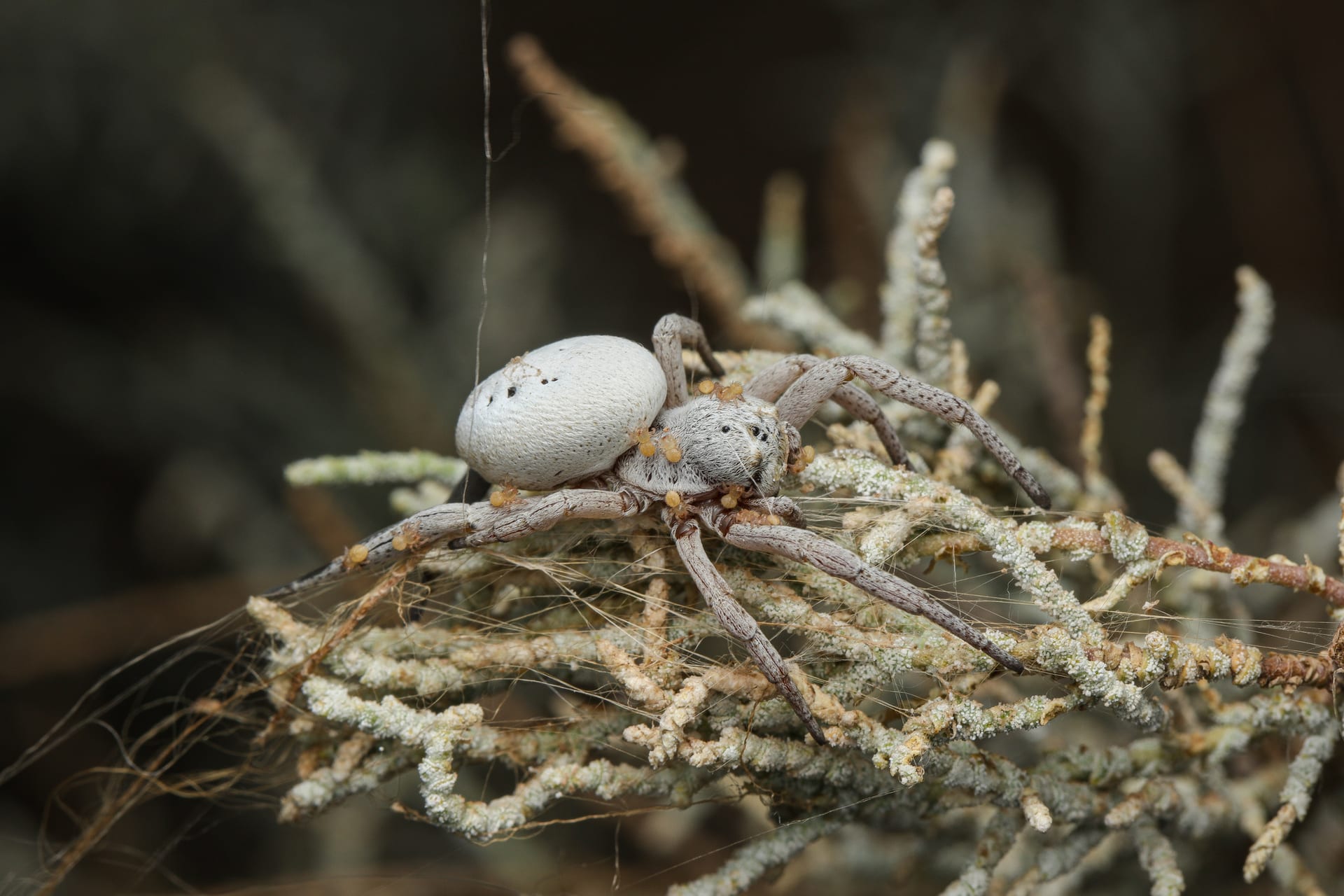
 © Kian Kaftarbaz / CC BY 4.0
Desert velvet spider
The Desert velvet spider is a member of the family Eresidae, and many individuals carry two broad black lengthwise stripes on the abdomen. In the wild it spins a web and a conical retreat among the branches of low shrubs, and in a tank set up with twigs you can watch it build much the same kind of nest. It is also known for a striking life-history habit: the hatched spiderlings eventually eat their mother. Adults are small, with males reaching up to 12 mm and females up to 15 mm. Care is rated intermediate, and reliable information on lifespan is scarce.
View Desert velvet spider encyclopedia →0% commission on your first sales!Register by September 30, 2026 and your first 2 sales are commission-free!
Breeder Wanted!
List on BreederDirect and sell directly to customers nationwide!
5 Transparency Standards You Can Trust
When listing Exotic Invertebrates, Breeders disclose the following. We guarantee transparency on growth stage and breeding unit.
- Real Photos
- Breeding Unit
- Generation Info
- Body Length (mm)
- Country of Origin
Browse all 286 breeds
Verified breeders wanted for Exotic Invertebrates
Breeders are signing up now ahead of launch. Subscribe to be notified when new listings go live.
Getting alerts is free with a member account. When new listings match your saved search, we'll notify you by email and in-app.
Browse other categories
Verified breeders (preview)
Are you raising exotic invertebrates?
Register as a breeder and connect with buyers directly.
Apply as a breederDesert velvet spider key facts
- Care level
- Intermediate
- Lifespan
- Little data
- Size
- Body length up to 12 mm (males), up to 15 mm (females)
- Diet
- Carnivorous (flying insects and other prey caught in the web)
- Enclosure
- It builds a web and cone-shaped retreat among shrub twigs, so use a well-ventilated enclosure with several branches. Mated females become aggressive towards males and may kill them, so keep animals singly.
- Temperature & Humidity
- Little data on keeping temperatures exist. It comes from deserts and dry Mediterranean climates, so avoid stuffiness, keep it on the dry side and mist occasionally for drinking water.
- Diet & Feeding
- It catches prey in its web, so offer flying insects such as flies or small crickets placed on the web.
- Temperament & Venom
- Little has been published on its venom. It stays in its web and retreat, so enjoy it by observation rather than handling.
- Notes
- Because the young consume their mother and disperse, a successful brood produces many spiderlings. Keep them in escape-proof containers, and as a non-native spider never release captive animals.
About Desert velvet spider
Desert velvet spider: an Eresidae spider with two black abdominal stripes that builds a conical retreat among twigs. Males up to 12 mm, females 15 mm; intermediate-level care.
7 things to know before welcoming a Desert velvet spider
1An intermediate species
Care difficulty is rated intermediate. It is easier to enjoy once you are comfortable with escape-proofing and feeding small spiders. If this would be your first spider, it helps to learn the basics with another species first.
2Small, so watch for escapes
Adults are small, with males up to 12 mm and females up to 15 mm. They are small enough to slip through narrow gaps and vents, so check the mesh size and how snugly the lid closes. Open the lid slowly during routine care.
3Give it anchor points
In the wild this spider builds a web and a conical retreat between the branches of low shrubs. Standing twigs or thin sticks upright in the enclosure gives it anchor points and a choice of where to build. Once a nest is in place, avoid tearing it down.
4Ventilation and humidity
The name Desert velvet spider points to a species from dry surroundings. Keep the enclosure well ventilated and avoid stuffy, damp air. Fine details can depend on how an individual was raised, so ask the seller about their setup when you bring one home.
5Feed small live prey
It catches small insects that land in its web. Offer prey smaller than the spider itself near the nest, and remove leftovers before they spoil. Adjust how often you feed by watching the spider's abdomen and general condition.
6The matriphagy habit
This species is known for a habit in which the hatched spiderlings eventually eat their mother. If you are thinking about breeding, it helps to understand beforehand that this is natural behavior. Detailed accounts are limited, so keeping notes as you observe is a good idea.
7Lifespan data is limited
Sources on lifespan are scarce, and no reliable figure is available. Before you buy, ask the seller about the individual's age, sex, and care history. Keeping your own notes after bringing it home will also be useful.
Frequently asked questions about Desert velvet spider
- Q.Can a beginner keep this spider?
- A.Care difficulty is rated intermediate. If you are new to keeping spiders, it is safer to learn the basics of spider care first and then consider this species.
- Q.How big do adults get?
- A.Body length is up to 12 mm for males and up to 15 mm for females. Because they are so small, watch for escapes through gaps in the enclosure.
- Q.How long does it live?
- A.There is little reliable information on lifespan, so no firm figure can be given. When you get one, ask the seller about the individual's condition and care history.
- Q.Do the spiderlings really eat their mother?
- A.Yes, this species is known for that habit: the hatched spiderlings eventually eat their mother. It is natural behavior, so it is worth understanding in advance if you plan to breed them.
- Q.What kind of setup suits it?
- A.Use a well-ventilated container with twigs or thin sticks standing upright as anchor points for the nest. Offer live prey smaller than the spider near the nest, and remove any leftovers.
Learn more about Desert velvet spider in the encyclopedia
View Desert velvet spider encyclopedia entry →
Care difficulty, lifespan, size and diet — all basics covered.
More in this category
Can't find the one you're looking for?
Post your wishes for free and breeders with matching animals will contact you with introductions.