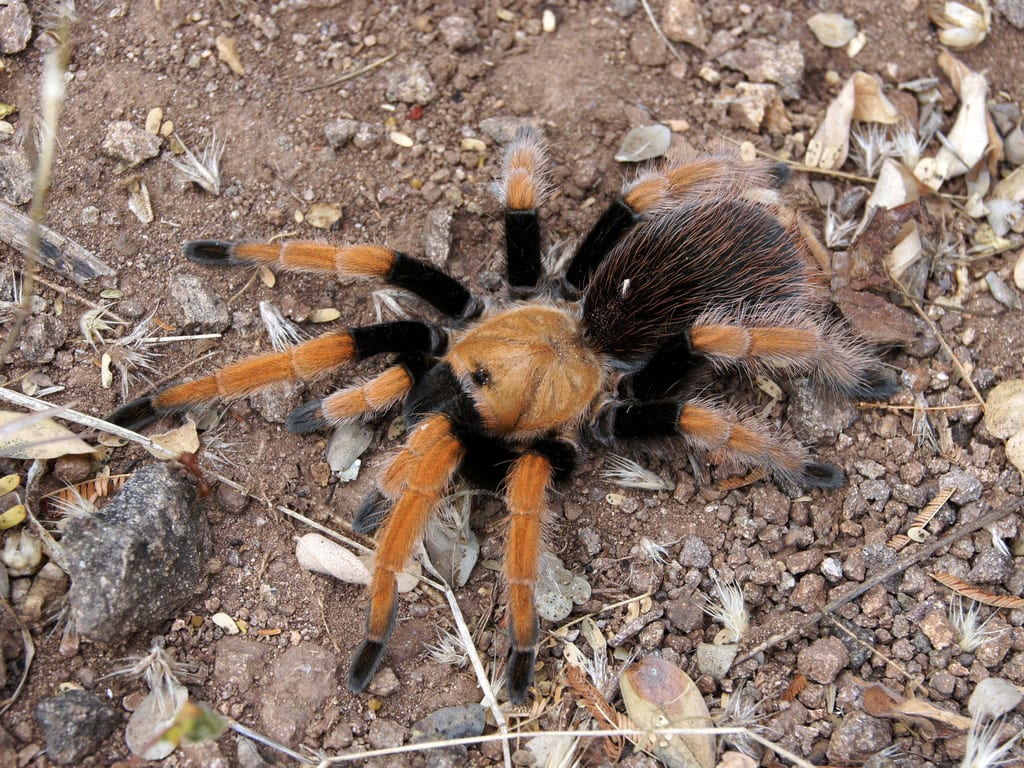
 © Milan08Studio / CC BY-SA 4.0
Mexican bloodleg
The Mexican bloodleg is a ground-dwelling tarantula from southwestern Mexico, admired for its striking contrast: an orange carapace and legs set against a black abdomen. It is calm, slow-growing and considered beginner-friendly. Adults reach a leg span of about 12 cm. Females can live up to 25 years and males about 7, so a female makes a genuinely long-term companion. Because it is easily confused with the similar-looking Brachypelma boehmei, it is worth confirming the species name before you bring one home.
View Mexican bloodleg encyclopedia →0% commission on your first sales!Register by September 30, 2026 and your first 2 sales are commission-free!
Breeder Wanted!
List on BreederDirect and sell directly to customers nationwide!
BreederDirect's 5 Transparency Commitments
When listing Exotic Invertebrates, Breeders disclose the following. We guarantee transparency on growth stage and breeding unit.
- Real Photos
- Breeding Unit
- Generation Info
- Body Length (mm)
- Country of Origin
Browse all 286 breeds
Verified breeders wanted for Exotic Invertebrates
Breeders are signing up now ahead of launch. Subscribe to be notified when new listings go live.
Getting alerts is free with a member account. When new listings match your saved search, we'll notify you by email and in-app.
Browse other categories
Verified breeders (preview)
Are you raising exotic invertebrates?
Register as a breeder and connect with buyers directly.
Apply as a breederMexican bloodleg key facts
- Care level
- Beginner-friendly
- Lifespan
- Females up to 25 years / males about 7 years (care information)
- Size
- Diagonal leg span about 12 cm (care information)
- Temperature
- 20〜24℃
- Diet
- Carnivorous (live insects such as crickets and roaches)
- Enclosure
- Terrestrial. Use a wide enclosure with fairly deep substrate, a hide and a water dish. Keep singly.
- Temperature & Humidity
- Care information gives 20-24 C. Keep humidity moderate, with only the lower substrate moist and the surface on the dry side.
- Diet & Feeding
- Live prey such as crickets and roaches sized to the spider. It grows slowly and can become overweight, so cut back when the abdomen is much wider than the carapace.
- Temperament & Venom
- Generally docile and slow-moving, but it may kick off urticating hairs from its abdomen when threatened. The hairs irritate skin, eyes and nose, so wash your hands after maintenance and keep your face away.
- Notes
- It is easily confused with Brachypelma boehmei, so confirm the scientific name and origin when buying. Secure the lid against escapes and never release captive animals.
About Mexican bloodleg
Calm, beginner-friendly tarantula from southwestern Mexico with orange legs on a black abdomen. About 12 cm leg span; females live up to 25 years.
7 things to know before welcoming a Mexican bloodleg
1Ground-dweller setup
This is a ground-dweller, so floor space matters more than height. Provide a hide, a shallow water dish and a substrate it can dig into, and it will settle in more easily.
2Prevent falls
Ground-dwelling tarantulas have a soft abdomen, and a fall from height can cause serious injury. Choose a low enclosure and avoid tall ledges or decor that invites climbing. Handle the lid carefully so the spider is never dropped or knocked off during maintenance.
3Calm temperament
It is known as a calm, slow-moving species, but when startled it may flick urticating hairs from its abdomen as a defense. These can irritate the eyes and skin, so do cleaning and feeding calmly. Treat it as a display animal and avoid touching it with bare hands.
4Slow growth
Growth is slow, and a young spider takes a long time to reach its adult leg span of about 12 cm. There are often long stretches with little visible change, so this species suits keepers who enjoy a patient, long-term approach.
5Lifespan by sex
Lifespan differs a lot by sex: females can live up to 25 years, while males live about 7. If you want a very long-term pet, a female may suit you better, so check the sex in the listing details.
6Feeding and molting
Feed live prey such as crickets or roaches. It is natural for a tarantula to stop eating around a molt, so there is no need to worry. Always remove uneaten live prey, since it can injure a spider that is molting.
7Check the species
It is easily confused with the similar-looking Brachypelma boehmei, so confirm the species name with the seller before you commit. Do not rely on photos alone; asking about its origin, care history and sex will give you more confidence.
Frequently asked questions about Mexican bloodleg
- Q.Is it suitable for beginners?
- A.It is rated as beginner-friendly, and its calm temperament makes it easy to work with. However, females can live up to 25 years, so think ahead about whether you can care for one that long.
- Q.How long does it live?
- A.Females can live up to 25 years and males about 7. Because the difference is so large, check the sex of the individual you plan to bring home.
- Q.How large does it get?
- A.Adults reach a leg span of about 12 cm. Since it lives on the ground, an enclosure with generous floor space suits it better than a tall one.
- Q.Will it bite, and can I handle it?
- A.It is considered calm, but if startled it may flick urticating hairs or bite in defense. Keep it as a display animal and avoid handling it with bare hands.
- Q.Is it a problem if it stops eating?
- A.Refusing food before or after a molt is natural behavior. If it seems unusual for your spider in other ways, ask the seller or an experienced keeper for advice.
Learn more about Mexican bloodleg in the encyclopedia
View Mexican bloodleg encyclopedia entry →
Care difficulty, lifespan, size and diet — all basics covered.
More in this category
Can't find the one you're looking for?
Post your wishes for free and breeders with matching animals will contact you with introductions.