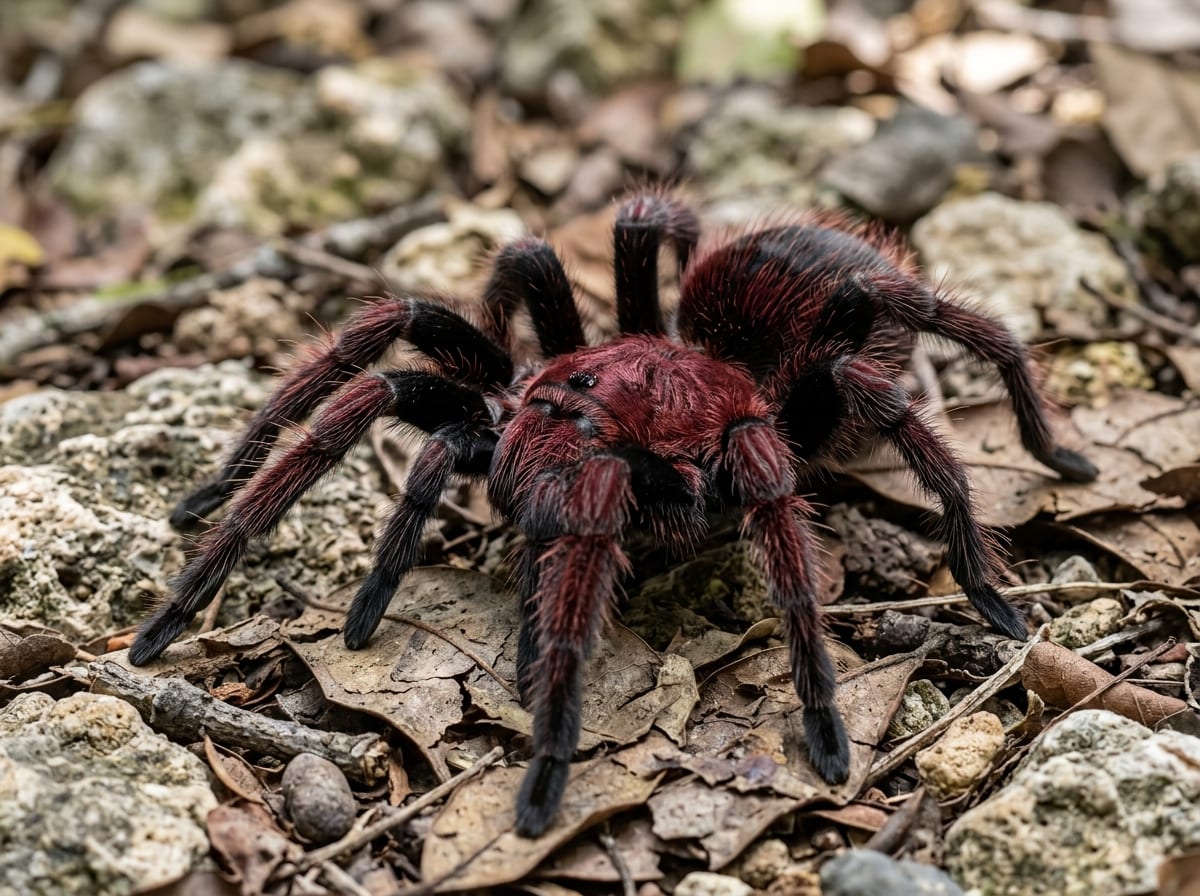
Red island birdeater
The Red island birdeater is a large tarantula of the genus Phormictopus, said to come from the Caribbean island of Hispaniola. When it was first described, the locality was given as Honduras, but its present range is thought to be Hispaniola. It is rated intermediate in difficulty, and because some individuals can be defensive, it suits keepers who are patient and careful. Reliable information on lifespan and adult size is still scarce, so this is a spider to enjoy by watching rather than handling.
View Red island birdeater encyclopedia →Breeder Wanted!
List on BreederDirect and sell directly to customers nationwide!
BreederDirect's 5 Transparency Commitments
When listing Exotic Invertebrates, Breeders disclose the following. We guarantee transparency on growth stage and breeding unit.
- Real Photos
- Breeding Unit
- Generation Info
- Body Length (mm)
- Country of Origin
Browse all 286 breeds
Verified breeders wanted for Exotic Invertebrates
Breeders are signing up now ahead of launch. Subscribe to be notified when new listings go live.
Getting alerts is free with a member account. When new listings match your saved search, we'll notify you by email and in-app.
Browse other categories
Verified breeders (preview)
Are you raising exotic invertebrates?
Register as a breeder and connect with buyers directly.
Apply as a breederRed island birdeater key facts
- Care level
- Intermediate
- Diet
- Carnivorous (live insects such as crickets and roaches)
- Enclosure
- As a large terrestrial species, use a wide enclosure with fairly deep substrate, a hide and a water dish. Keep singly.
- Temperature & Humidity
- The temperature and humidity suited to this species are unclear. Care information for the congener P. auratus gives 20-24 C and moderate humidity, with moist lower substrate and a drier surface.
- Diet & Feeding
- Live prey such as crickets and roaches sized to the spider. The genus is known for a strong feeding response.
- Temperament & Venom
- Its temperament and venom are not well understood. The genus is described as active and sometimes feisty, so do not handle it; use long tongs for maintenance.
- Notes
- Trade and scientific names have been mixed up in this genus, so confirm the scientific name and origin when buying. Secure the lid against escapes and never release captive animals.
About Red island birdeater
A large Phormictopus tarantula thought to be native to Hispaniola. Intermediate difficulty; read about temperament, housing and what to know before bringing one home.
7 things to know before welcoming a Red island birdeater
1A large, intermediate-level species
It is rated intermediate in difficulty, so some basic tarantula-keeping experience is reassuring. Because it is large and can be defensive, you should already be comfortable with escape prevention and feeding routines. Before bringing one home, ask the breeder about the spider's molting history and what it has been eating.
2Origin and naming notes
Honduras was given as the locality when it was first described, but the species is now thought to come from Hispaniola. Trade names do not always match scientific names one to one, so ask the seller about the spider's origin and collection data. Look at the photos and description as well, rather than relying on the name alone.
3Be ready for a defensive spider
Some Phormictopus are described as feisty, threatening or moving quickly when disturbed. Avoid handling with bare hands, and use long tongs or similar tools for cleaning and watering, moving calmly. Individuals differ a lot, so watch how yours reacts after arrival and learn how much space it needs.
4Urticating hairs
New World tarantulas can flick hairs from their abdomen with their legs to defend themselves. These hairs may cause itching or irritation if they land on skin or in the eyes, so protect your eyes when opening the enclosure and wash your hands afterward. If symptoms persist, consult a medical professional.
5Enclosure and escape prevention
It tends to live on the ground, so choose a container with generous floor space rather than height, with deep substrate for burrowing and a hide. Some individuals move fast, so fix the lid firmly to prevent escapes and avoid tall décor that could lead to a fall. Since it is a large species, consider a size that leaves room for growth.
6Temperature, humidity and water
Keep a water dish available at all times, lightly dampen part of the substrate, and make sure there is enough ventilation to prevent stuffiness. Avoid extreme heat and excessive humidity, and adjust the enclosure's location with the seasons. Ideal readings vary with the individual and the room, so use a thermometer and hygrometer and fine-tune gradually.
7Feeding and molting
Offer live prey such as crickets or roaches, sized to suit the spider's body. It may stop eating before a molt and its body is soft right afterward, so remove uneaten live prey promptly. If the abdomen looks markedly shrunken, review its water supply and feeding.
Frequently asked questions about Red island birdeater
- Q.Can a beginner keep this species?
- A.It is rated intermediate in difficulty. Because it is large and some individuals are defensive, it is safer to gain basic experience with a species that has plenty of care information first.
- Q.How long does it live and how big does it get?
- A.Reliable figures for both lifespan and adult size are scarce, so no firm numbers can be given. It is regarded as a large species, though individuals may vary. Asking the seller how the spider has grown so far can be a useful guide.
- Q.Can I hold it in my hand?
- A.It is not recommended. Some individuals are feisty, there is a risk of urticating hairs or a bite, and a fall can easily injure the spider. Treat it as a species to admire rather than handle.
- Q.Does a birdeater really eat birds?
- A.Birdeater is a common label for large tarantulas. In captivity they are usually fed insects such as crickets or roaches, and there is no need to offer birds despite the name.
- Q.Can I keep several in one enclosure?
- A.Tarantulas are generally kept alone. Housing them together risks cannibalism, so give each spider its own enclosure.
Learn more about Red island birdeater in the encyclopedia
View Red island birdeater encyclopedia entry →
Care difficulty, lifespan, size and diet — all basics covered.
More in this category
Can't find the one you're looking for?
Post your wishes for free and breeders with matching animals will contact you with introductions.