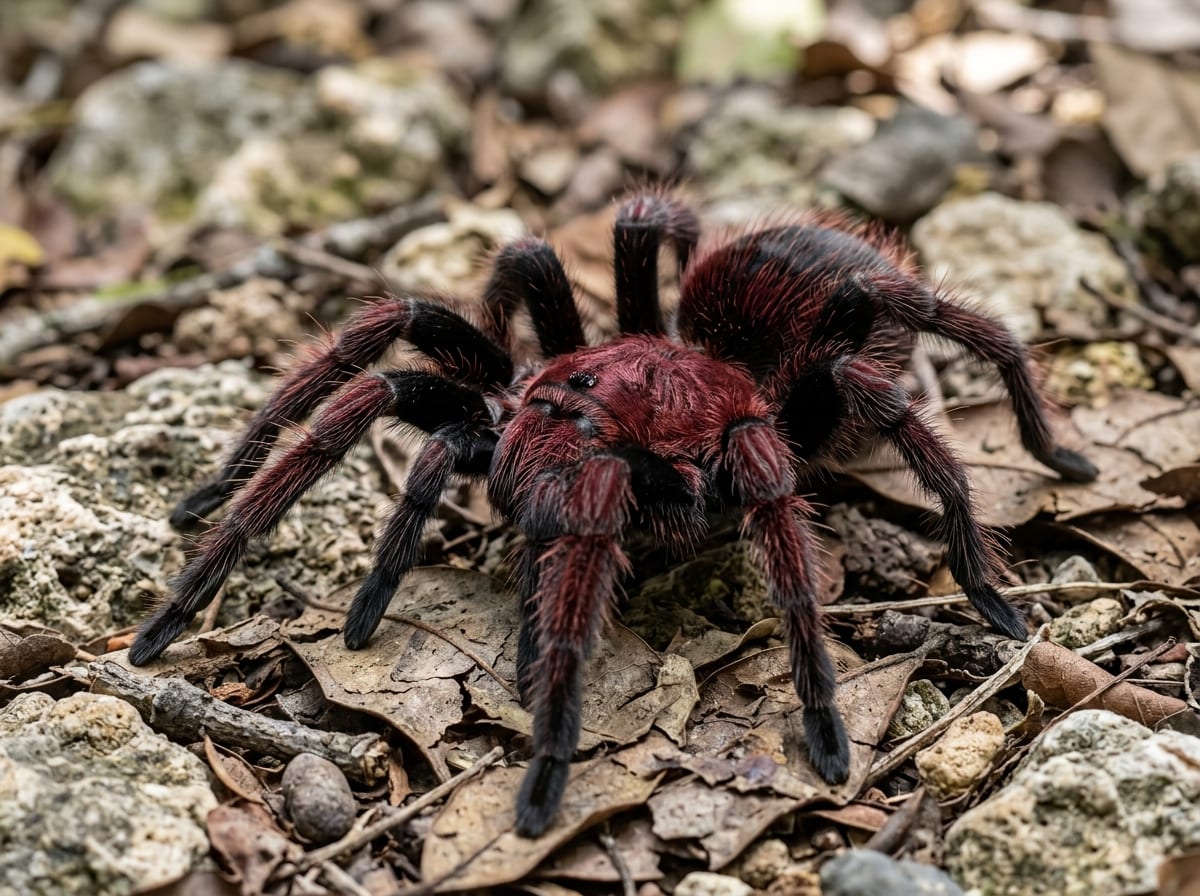
AI-generated image
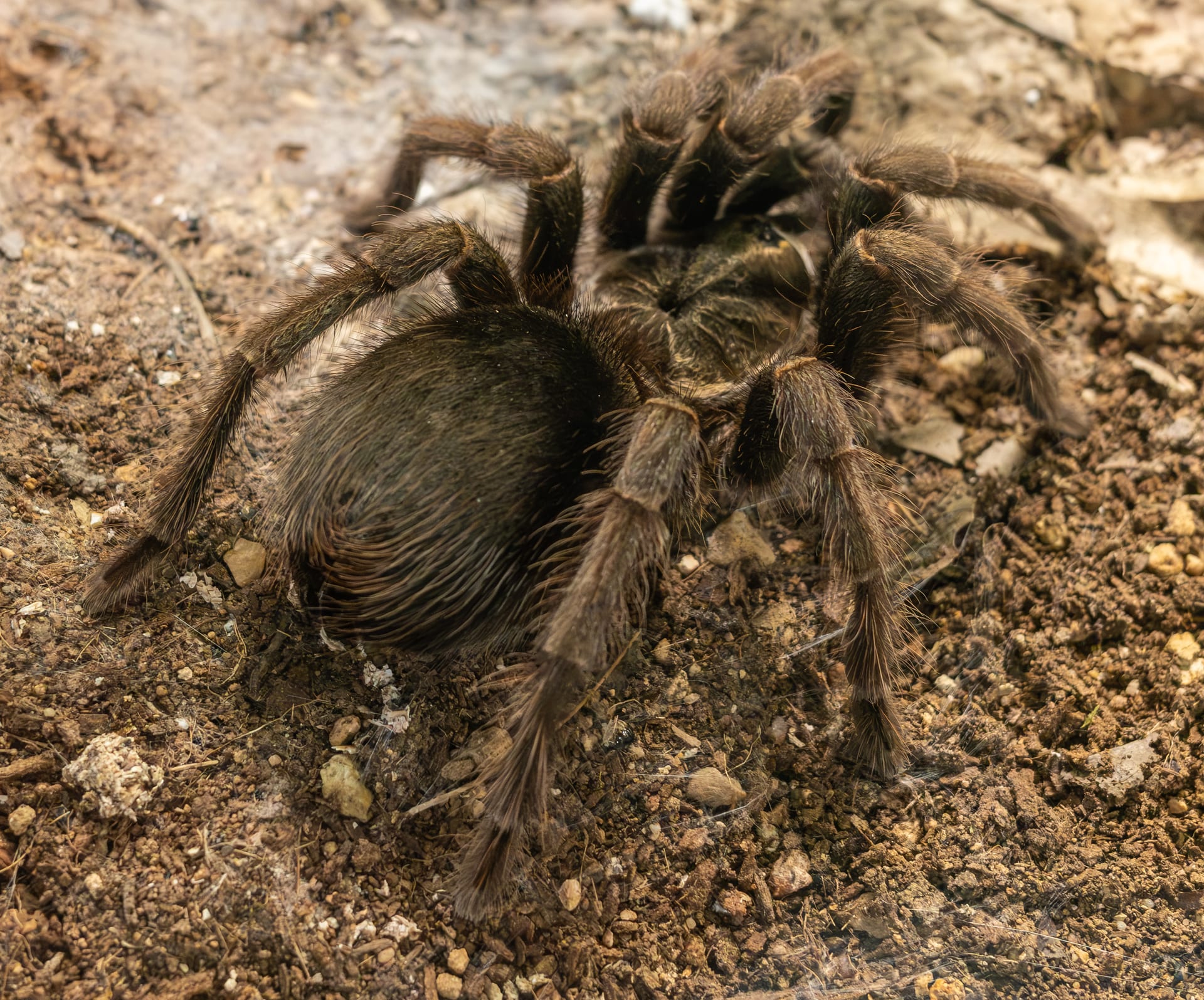
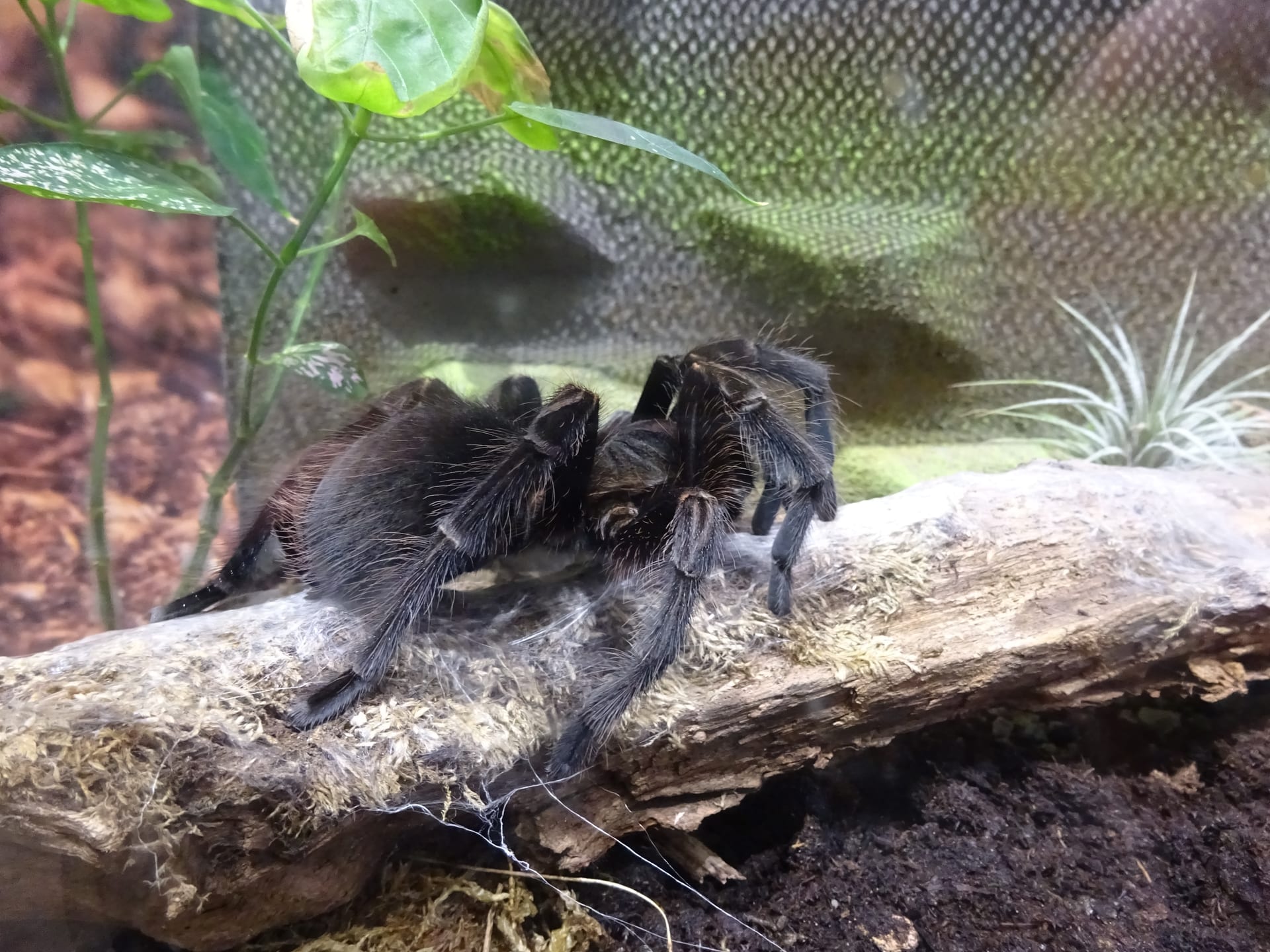
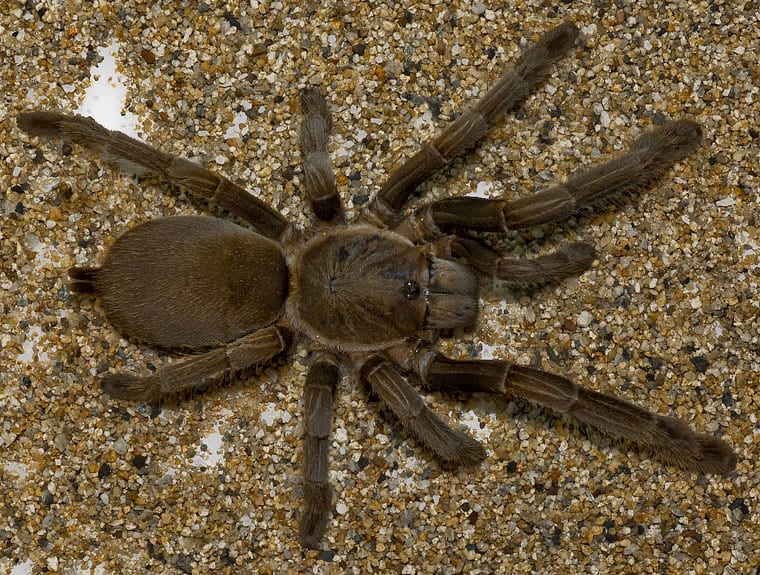
Red island birdeater
IntermediatePhormictopus atrichomatus
A large Phormictopus tarantula thought to come from Hispaniola in the Caribbean. It was described with Honduras as the locality, but its range is now considered to be Hispaniola.
Difficulty
Intermediate
Diet
Carnivorous (live insects such as crickets and roaches)
About
Phormictopus atrichomatus Schmidt, 1991 is a tarantula of the family Theraphosidae, described by Schmidt in 1991 as a 'new bird spider from Honduras'. However, its current distribution, based on the World Spider Catalog, is given as 'probably Hispaniola', and almost all records held by GBIF come from the Dominican Republic. Its congeners include P. cancerides and the Cuban endemic P. auratus. Trade names and scientific names in the genus have been confused, and specimens have been misidentified as other species. Care information for the congener P. auratus describes a terrestrial species kept at 20-24 C, active and a strong feeder, and sometimes feisty. In Japan specialist shops sell young labelled with the scientific name.
Basic Info
Origin
Probably Hispaniola (the original description gave Honduras)
Diet
Carnivorous (live insects such as crickets and roaches)
Care Guide
Enclosure
As a large terrestrial species, use a wide enclosure with fairly deep substrate, a hide and a water dish. Keep singly.
Temperature & Humidity
The temperature and humidity suited to this species are unclear. Care information for the congener P. auratus gives 20-24 C and moderate humidity, with moist lower substrate and a drier surface.
Diet & Feeding
Live prey such as crickets and roaches sized to the spider. The genus is known for a strong feeding response.
Temperament & Venom
References & Sources
Edited & verified by: BreederDirect editorial team
The taxonomic, regulatory, and husbandry data on this page are compiled and verified against the authoritative primary sources below.
Primary sources
- Ministry of the Environment: List of regulated alien species, including taxa needing an identification certificate (JA)
- Species+ CITES query (not listed)
- GBIF: Phormictopus atrichomatus Schmidt, 1991
- Catalogue of Life (distribution from the World Spider Catalog)
- The Tarantula Collective: Phormictopus auratus care sheet
Taxonomy & Authority
Regulations & Conservation Status
Not CITES-listed
It is not a designated invasive species, an uncategorised alien species or a taxon needing an identification certificate in Japan, and it is not listed by CITES (September 2026). It is a non-native tarantula, so keep it in escape-proof housing and never release captive animals.
Sources: Ministry of the Environment: List of regulated alien species, including taxa needing an identification certificate (JA) / Species+ CITES query (not listed)
Regulations may change. Always verify the latest information with the relevant authorities.
Red island birdeater Listings
Loading latest listingsFind listings for this species