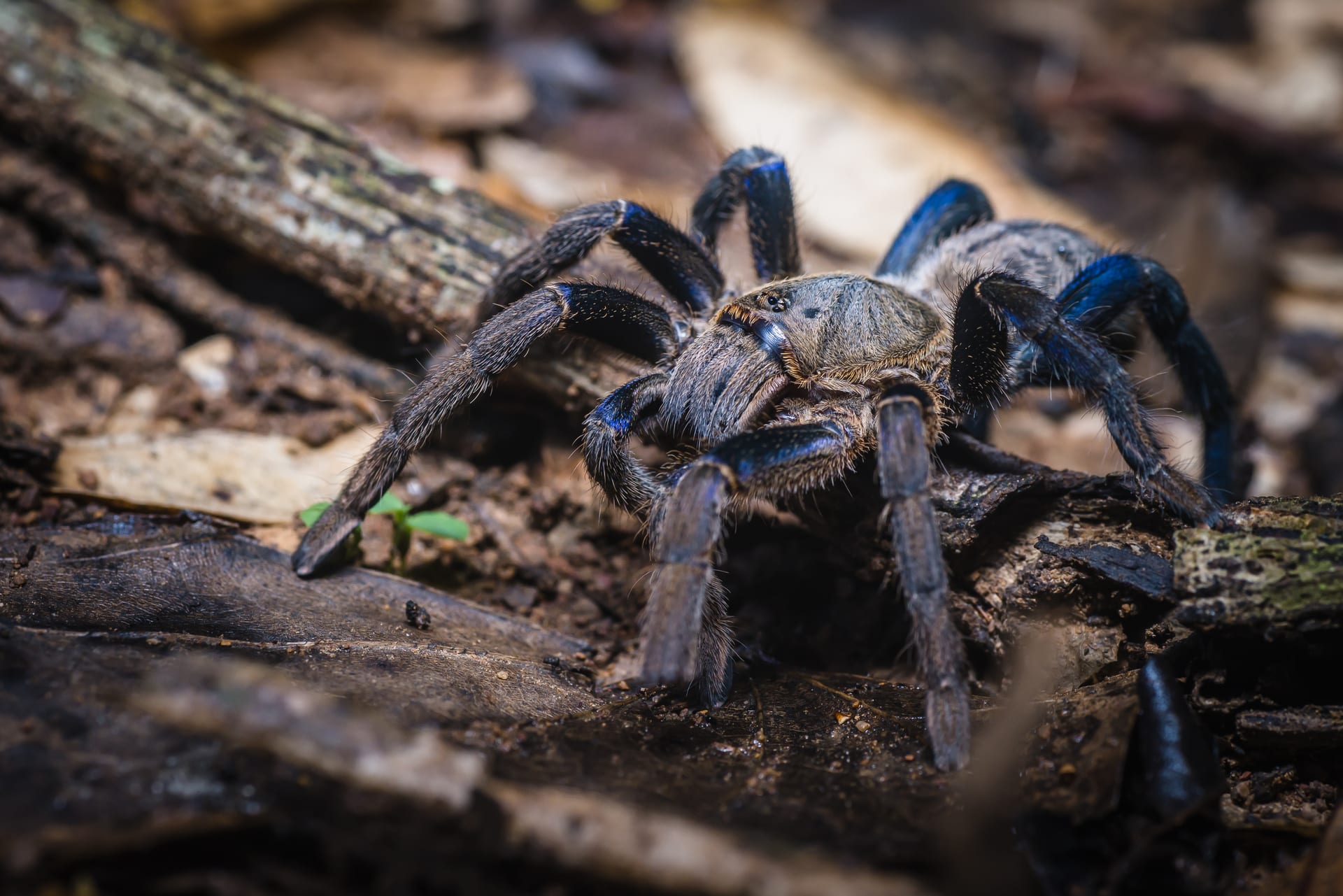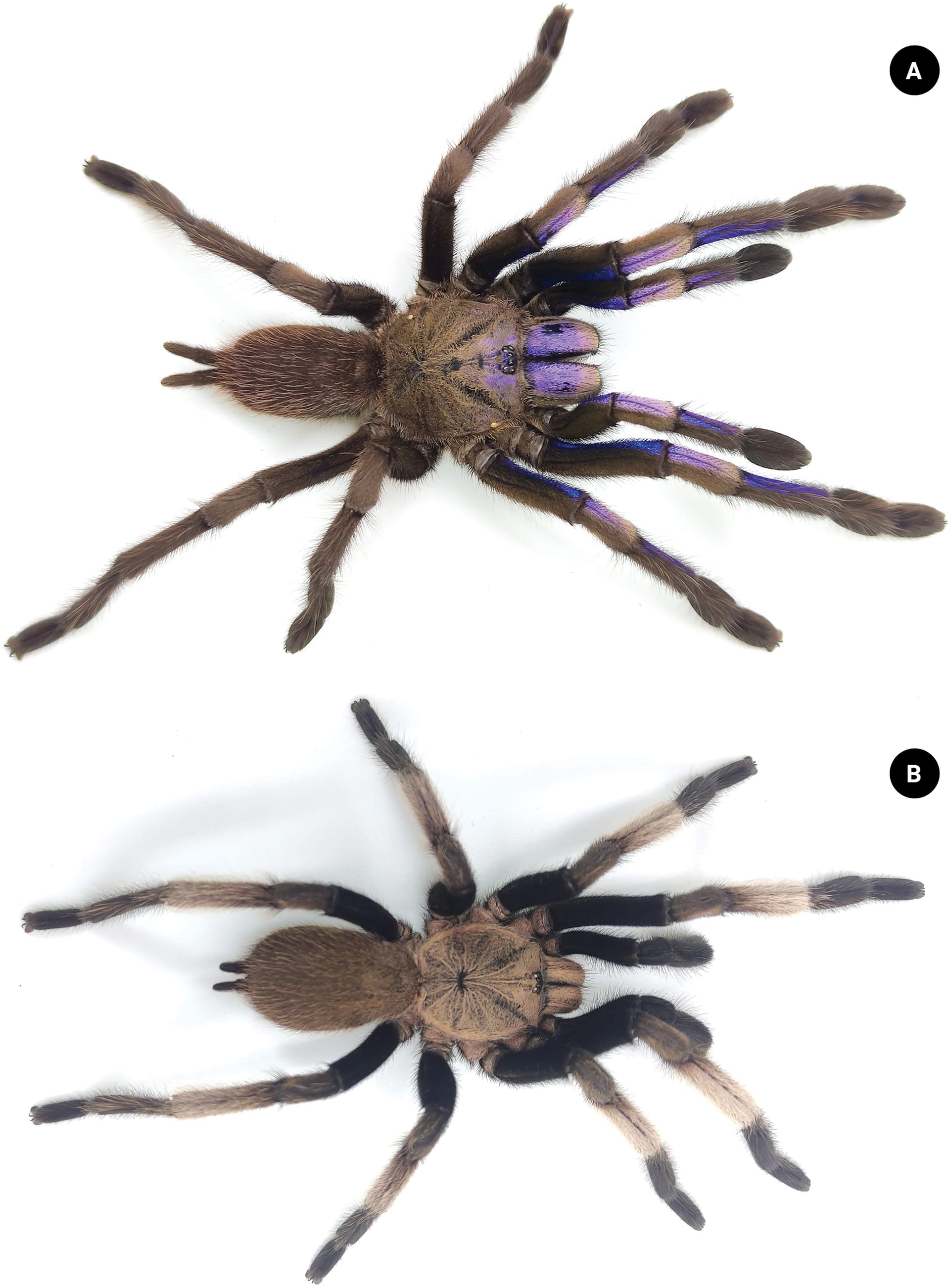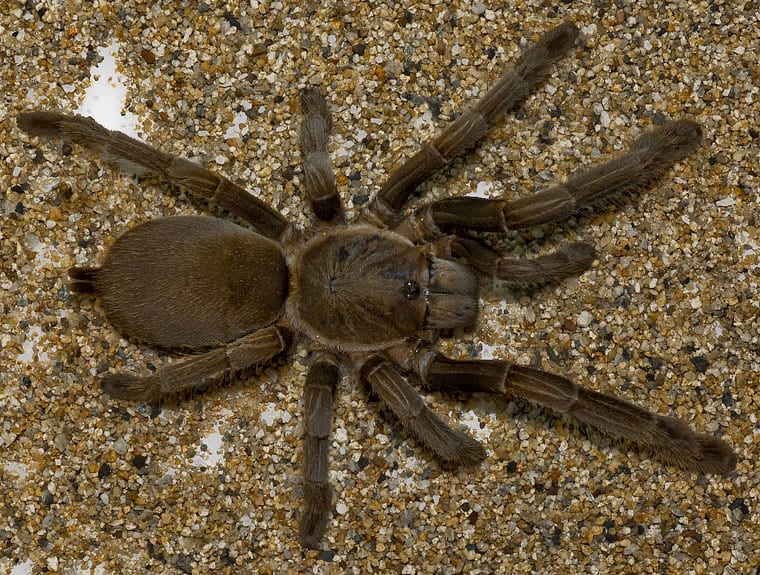
Source: Wikimedia Commons
Queensland whistling tarantula
AdvancedSelenocosmia crassipes
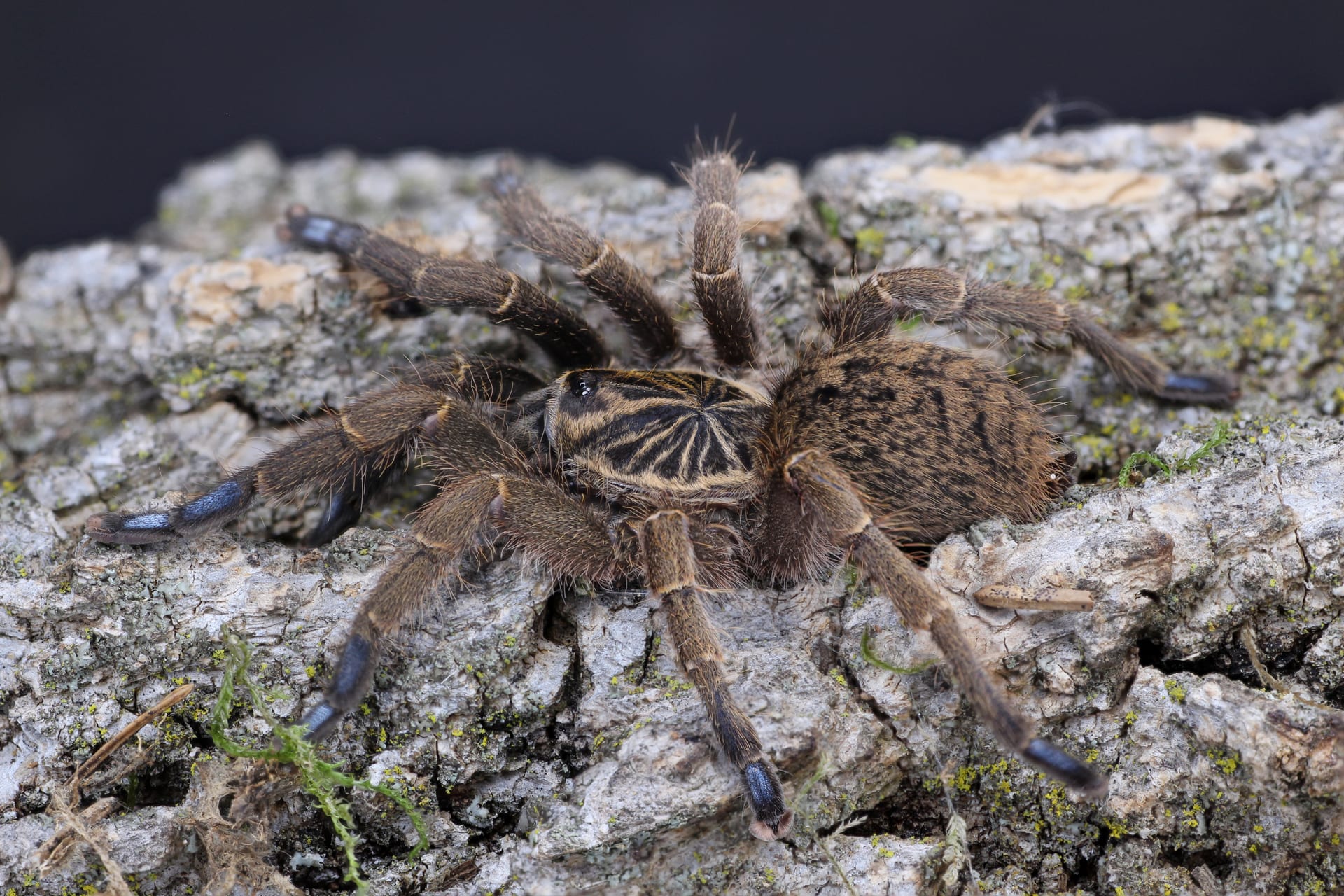
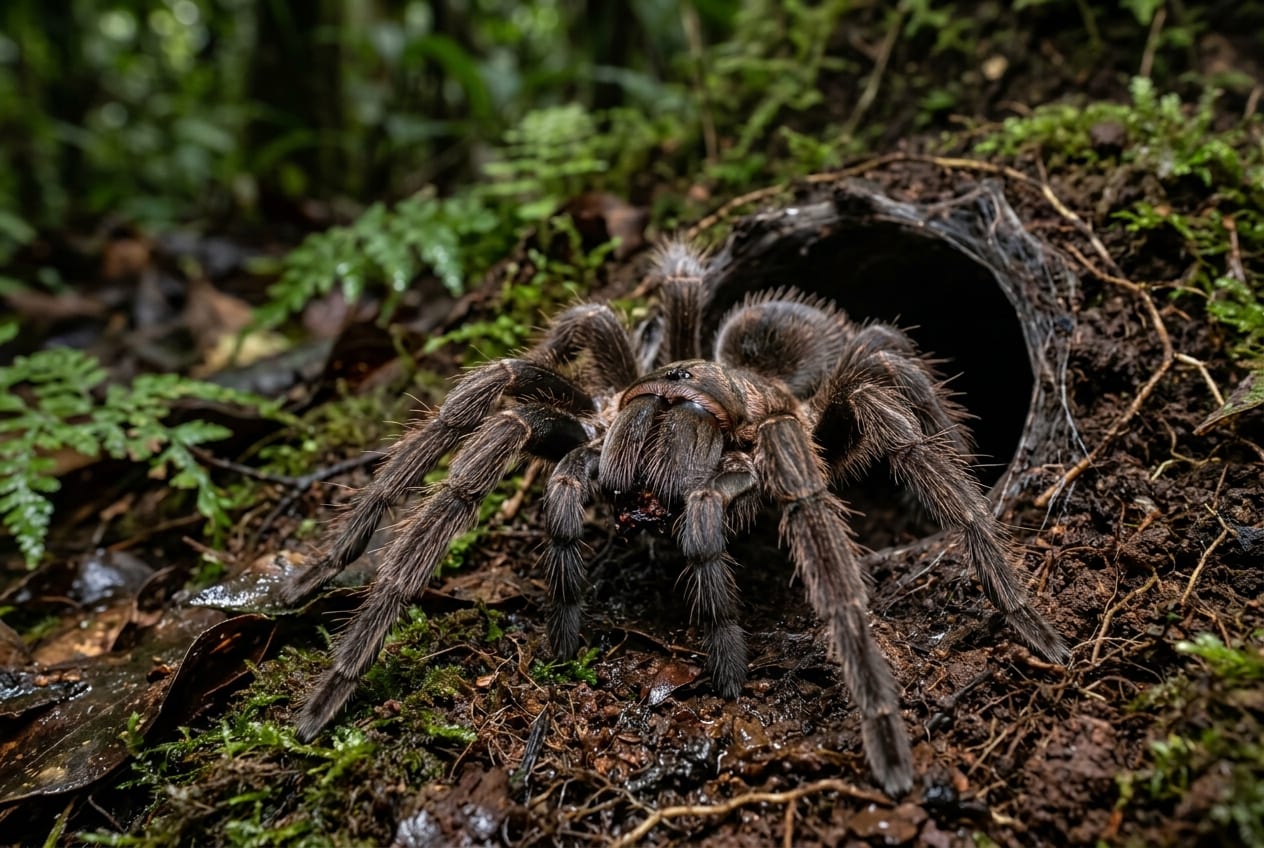
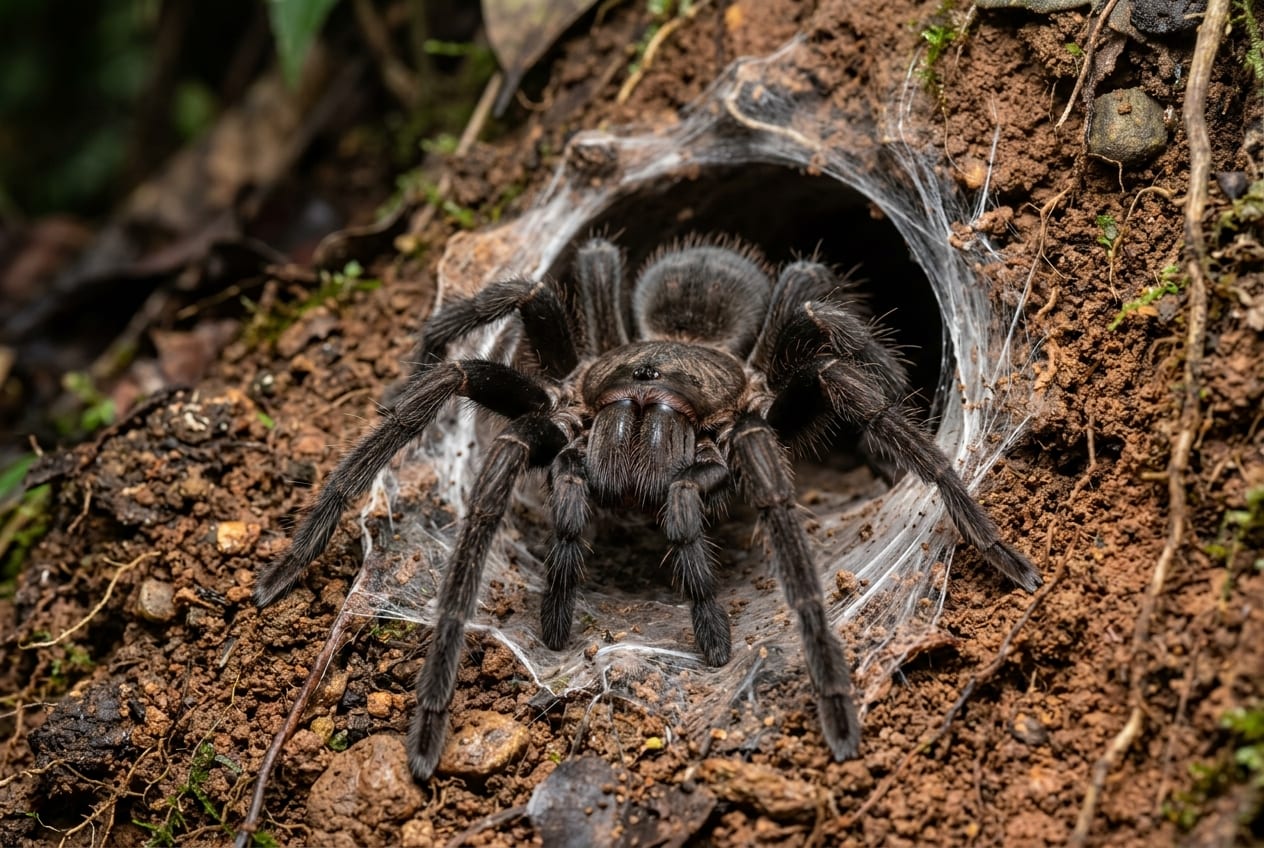
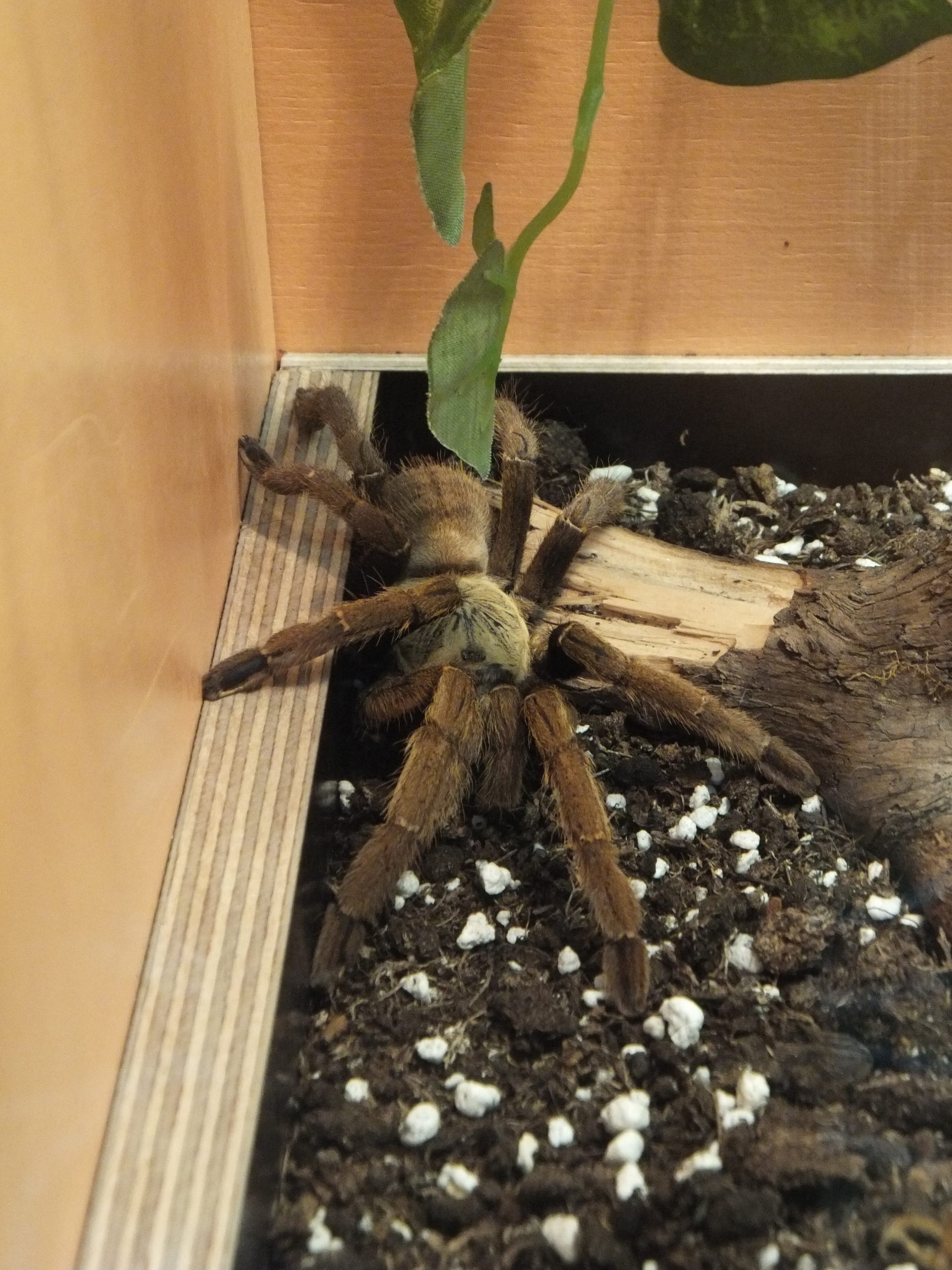
A burrowing tarantula from the east coast of Queensland, said to be Australia's largest spider. It has thick front legs and hisses when provoked by rubbing setae on its chelicerae.
Difficulty
Advanced
Lifespan
Females up to 30 years / males up to 8 years
Size
Body length 6-9 cm; leg span up to 22 cm
Diet
Carnivorous (insects and other invertebrates; in the wild also small lizards and frogs)
About
Selenocosmia crassipes (L. Koch, 1874) is a tarantula of the family Theraphosidae native to the east coast of Queensland, Australia. Besides 'Queensland whistling tarantula' it is called the barking spider or eastern tarantula, names that come from the hissing sound it makes when provoked by stridulating a patch of setae on its chelicerae. The species name is Latin for 'fat leg', and the front legs are thicker than the hind legs. It was described in 1874 as Phrictus crassipes and its genus has changed several times; it is sometimes placed in Phlogius. It is a nocturnal burrower that seldom strays far from its burrow, eating insects, other spiders and other invertebrates as well as small vertebrates such as geckos, skinks and frogs. Females are said to live up to 30 years and males up to 8. The fangs reach 1 cm, a bite has been reported to cause up to six hours of vomiting, and a 2010 case described intense swelling and pain in the finger lasting until about 26 hours after the bite.
Source: Wikipedia (CC BY-SA 4.0)
Lifespan of the Queensland whistling tarantula
The Queensland whistling tarantula lives Females up to 30 years / males up to 8 years.
Size of the Queensland whistling tarantula
The Queensland whistling tarantula grows to Body length 6-9 cm; leg span up to 22 cm.
It reaches a leg span of up to 22 cm and a body length of 6-9 cm, and is regarded as Australia's largest spider. In Japan animals of around 4 cm body length are occasionally offered by specialist shops.
Basic Info
Origin
Australia (east coast of Queensland)
Lifespan
References & Sources
Edited & verified by: BreederDirect editorial team
The taxonomic, regulatory, and husbandry data on this page are compiled and verified against the authoritative primary sources below.
Taxonomy & Authority
Regulations & Conservation Status
Not CITES-listed
It is not a designated invasive species, an uncategorised alien species or a taxon needing an identification certificate in Japan, and it is not listed by CITES (September 2026). It is a non-native tarantula, so keep it in escape-proof housing and never release captive animals.
Sources: Ministry of the Environment: List of regulated alien species, including taxa needing an identification certificate (JA) / Species+ CITES query (not listed)
Regulations may change. Always verify the latest information with the relevant authorities.
Queensland whistling tarantula Listings
Loading latest listingsFind listings for this species