Source: Wikimedia Commons
Blue Foot Baboon
IntermediateIdiothele mira
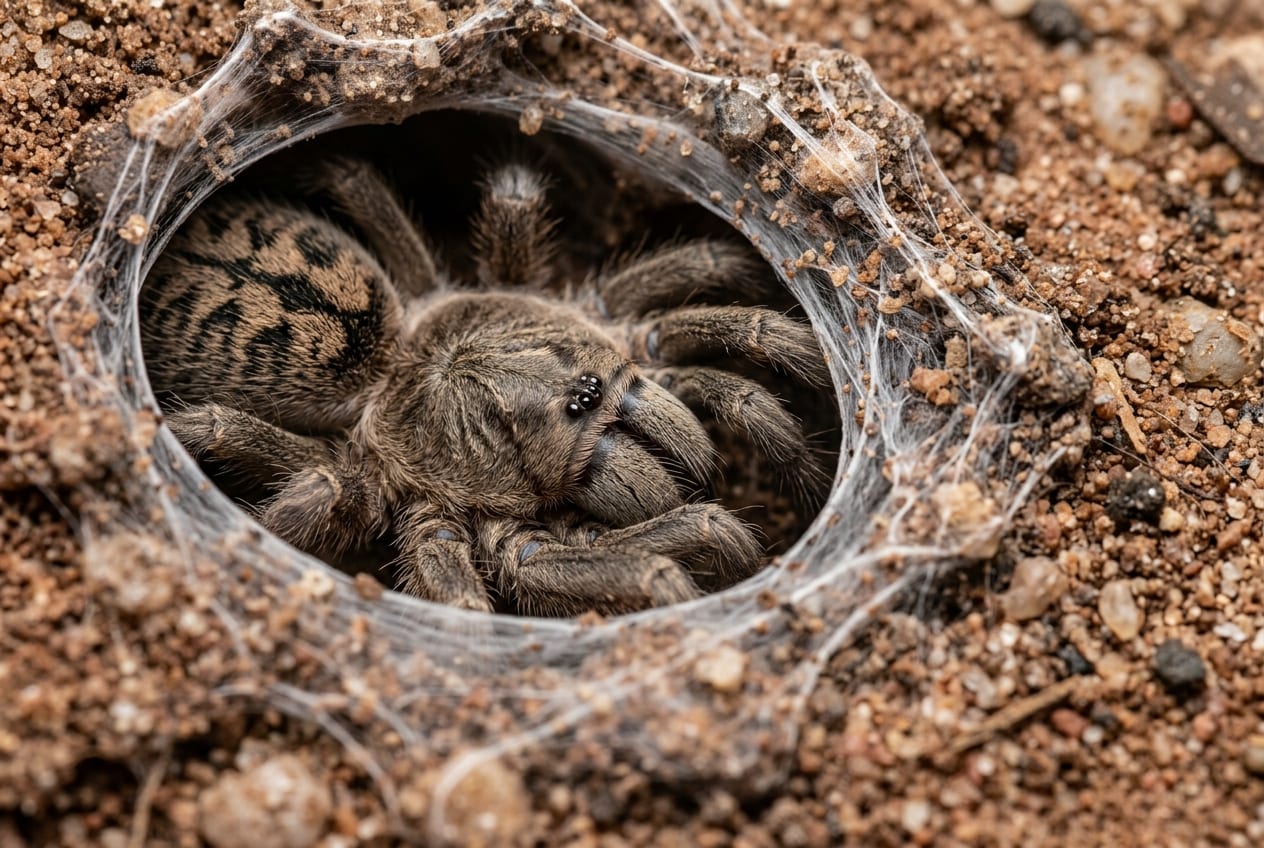
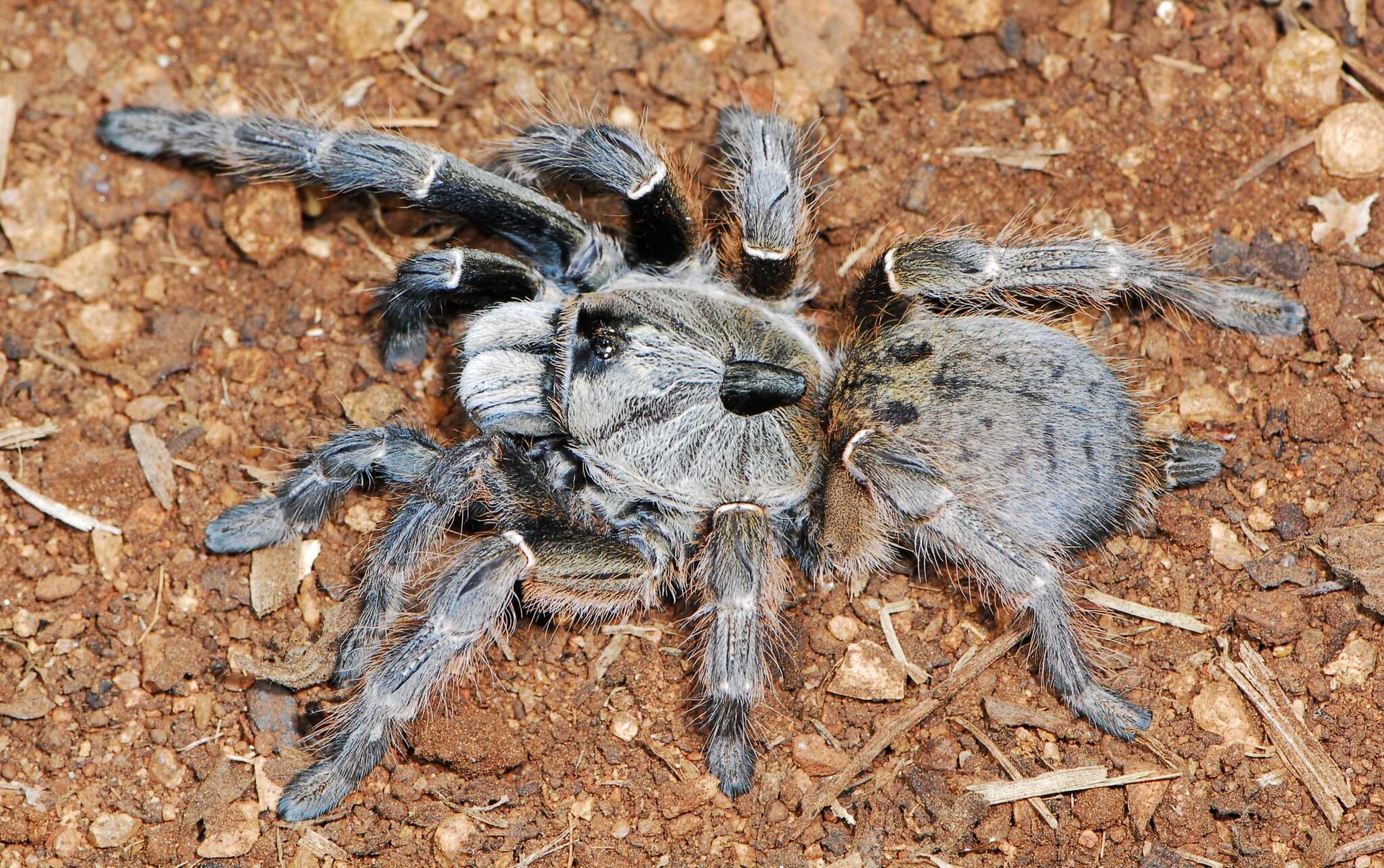
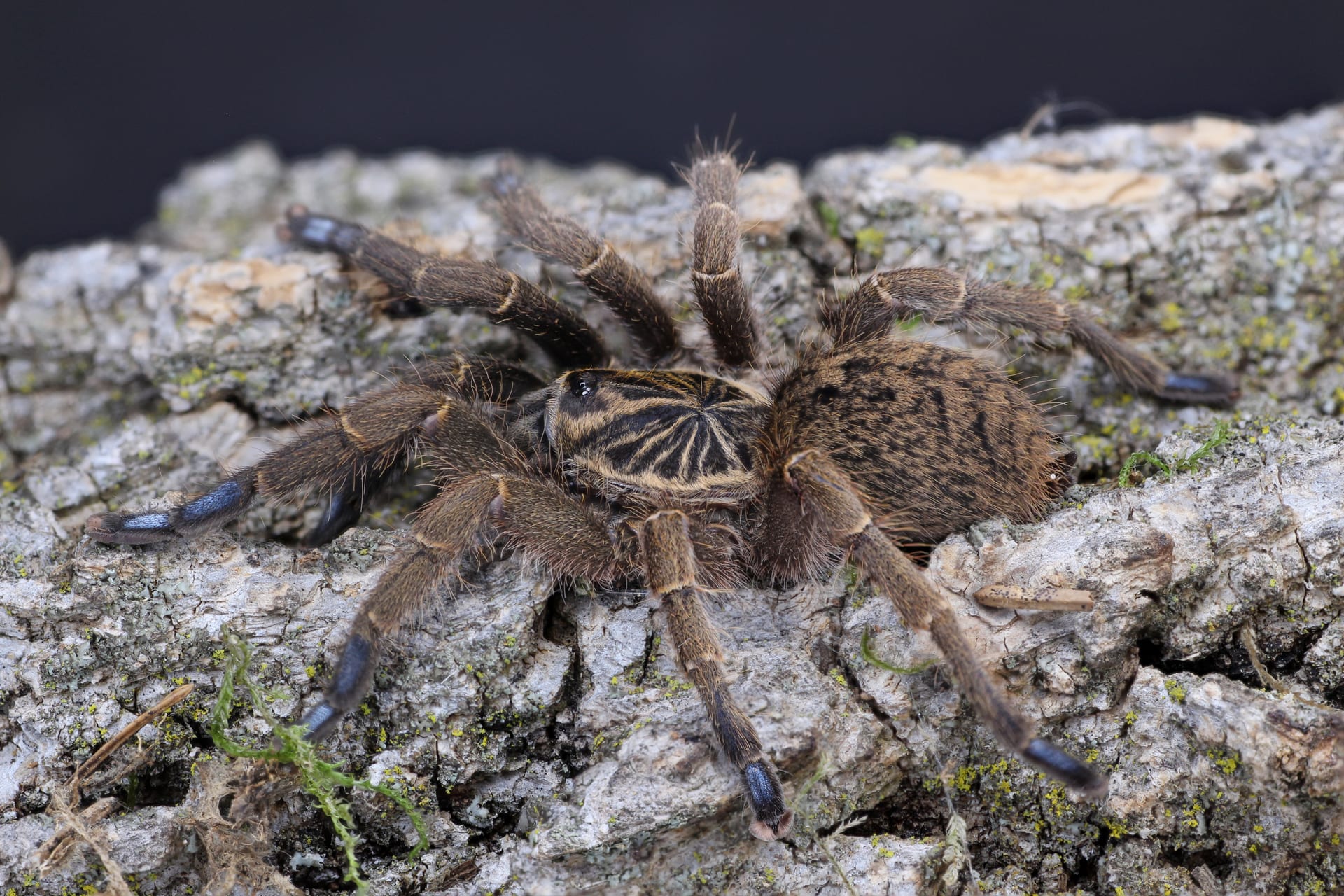
A small tarantula endemic to South Africa whose tarsi and metatarsi alone are sky blue. It seals its burrow entrance with a silk trapdoor, a habit rare among tarantulas.
Difficulty
Intermediate
Temperature
22〜25℃
Lifespan
Females 12-15 years / males 3-4 years
Size
Body 3-4cm (female), leg span about 11cm
Humidity
60〜70%
Diet
Live insects such as crickets and roaches
About
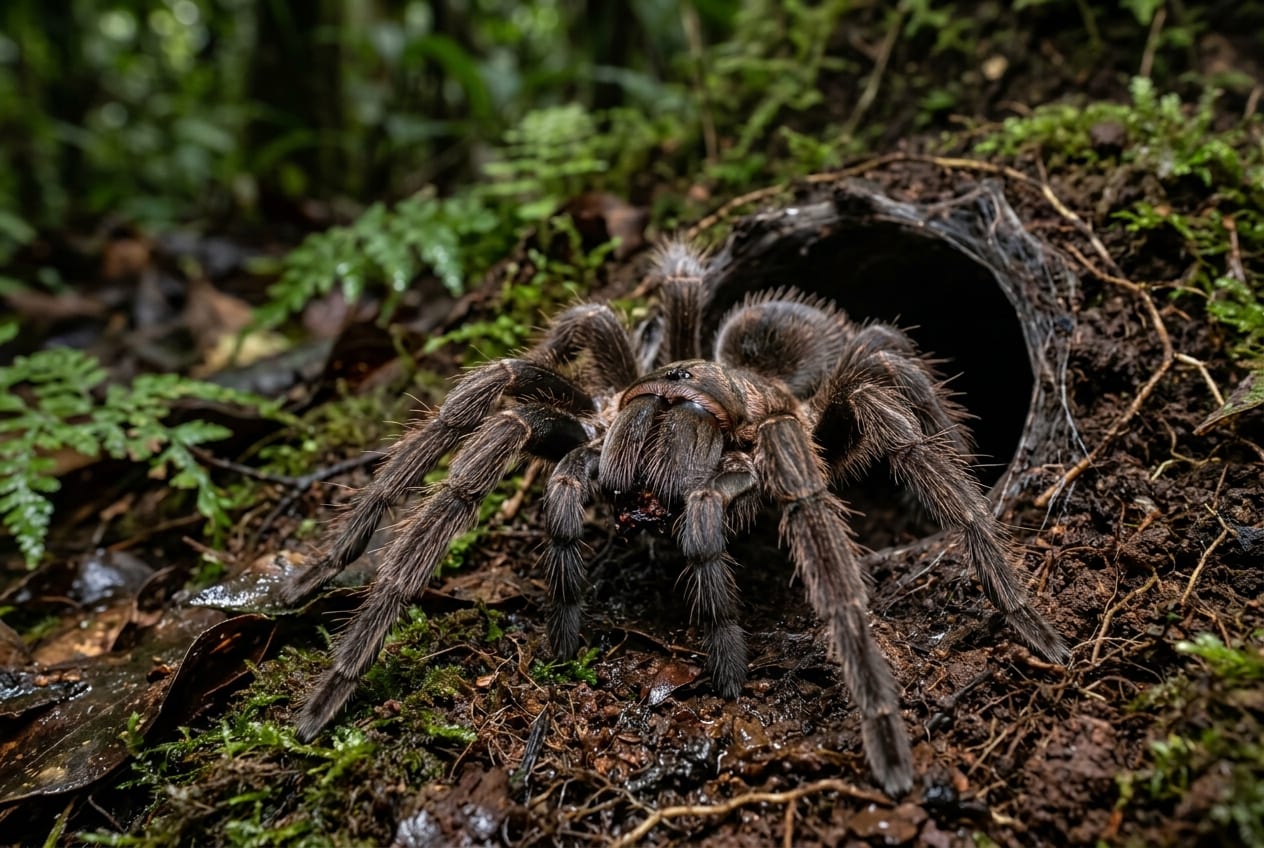
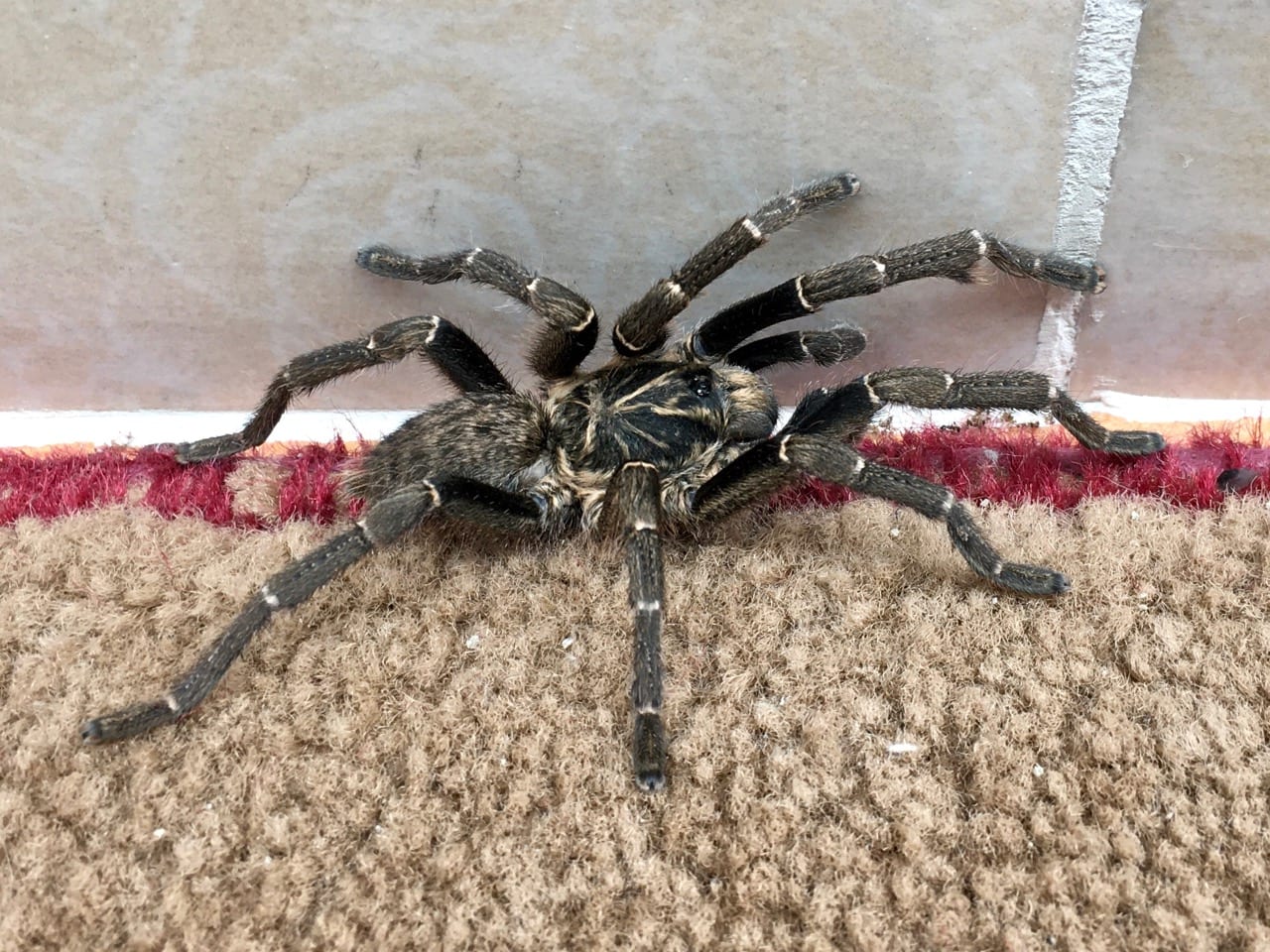
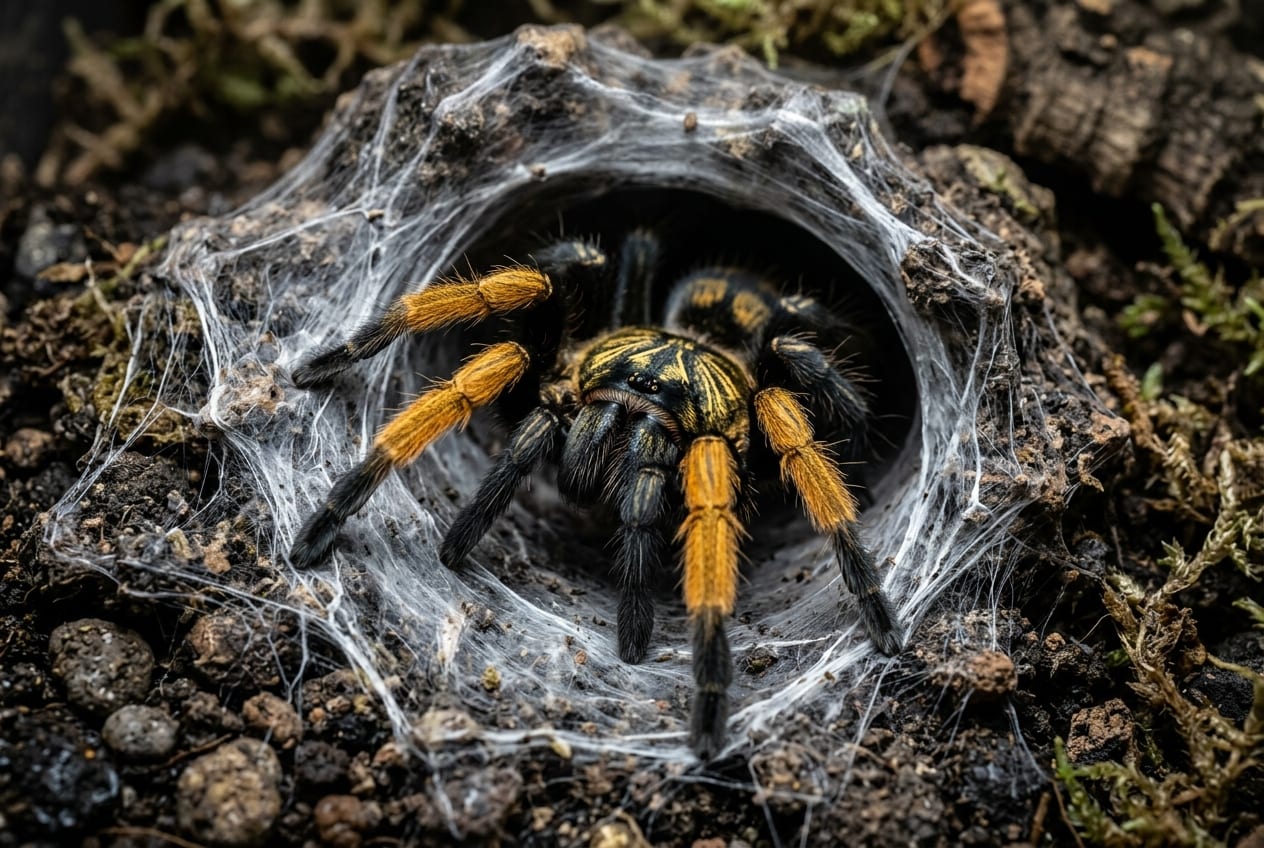
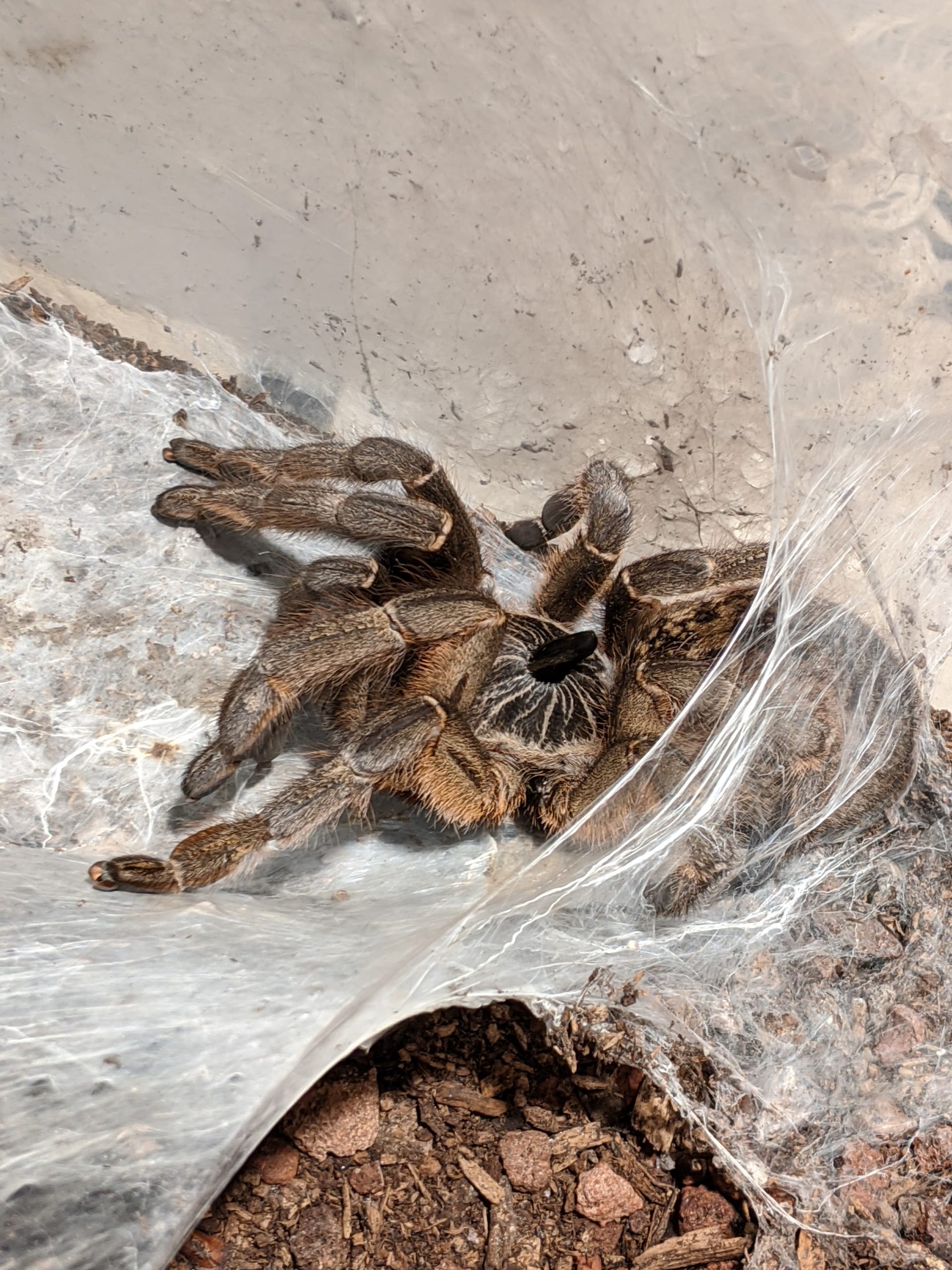
Idiothele mira was described by Gallon in 2010 and belongs to the Harpactirinae, known from the Ndumo and Tembe Elephant Game Reserves in KwaZulu-Natal, South Africa. The epithet mira is Latin for wonderful and refers to the sky-blue colour of its feet. Only the dorsal surfaces of the tarsi and metatarsi are bright blue, a colour produced not by setae but by a farinaceous coating on the feet; freshly moulted spiders lose the blue and regain it soon afterwards. The carapace is black with gold radiating in a starburst pattern and the abdomen is golden with black speckling. Along with the genus Typhochlaena it is one of the few tarantulas that build a trapdoor, digging silk-lined tunnels under rocks or logs and sealing the entrance with a thin silk door. The egg sac is hammock-like and suspended inside the tunnel, typically producing 25 to 45 spiderlings.
Source: Wikipedia (CC BY-SA 4.0)
Lifespan of the Blue Foot Baboon
The Blue Foot Baboon lives Females 12-15 years / males 3-4 years.
Size of the Blue Foot Baboon
The Blue Foot Baboon grows to Body 3-4cm (female), leg span about 11cm.
Females measure 3-4cm in body length with a leg span of about 11cm, and males are smaller.
Temperature & humidity for the Blue Foot Baboon
The ideal temperature for the Blue Foot Baboon is 22〜25℃. Ideal humidity is 60〜70%.
Basic Info
Origin
South Africa (Ndumo and Tembe, KwaZulu-Natal)
Care Specifications
PeacefulSolitary
Sources: The Spider Shop: Idiothele mira / Tarantupedia: Idiothele mira / Wikipedia: Idiothele mira / Polish Wikipedia: Idiothele mira / GBIF
References & Sources
Edited & verified by: BreederDirect editorial team
The taxonomic, regulatory, and husbandry data on this page are compiled and verified against the authoritative primary sources below.
Taxonomy & Authority
Accepted name: Idiothele mira Gallon, 2010
Authority databases: GBIF
Nomenclature follows global taxonomic authority databases.
Regulations & Conservation Status
Not CITES-listed
Sources: CITES Appendices (species not listed)
Regulations may change. Always verify the latest information with the relevant authorities.
Blue Foot Baboon Listings
Loading latest listingsFind listings for this species