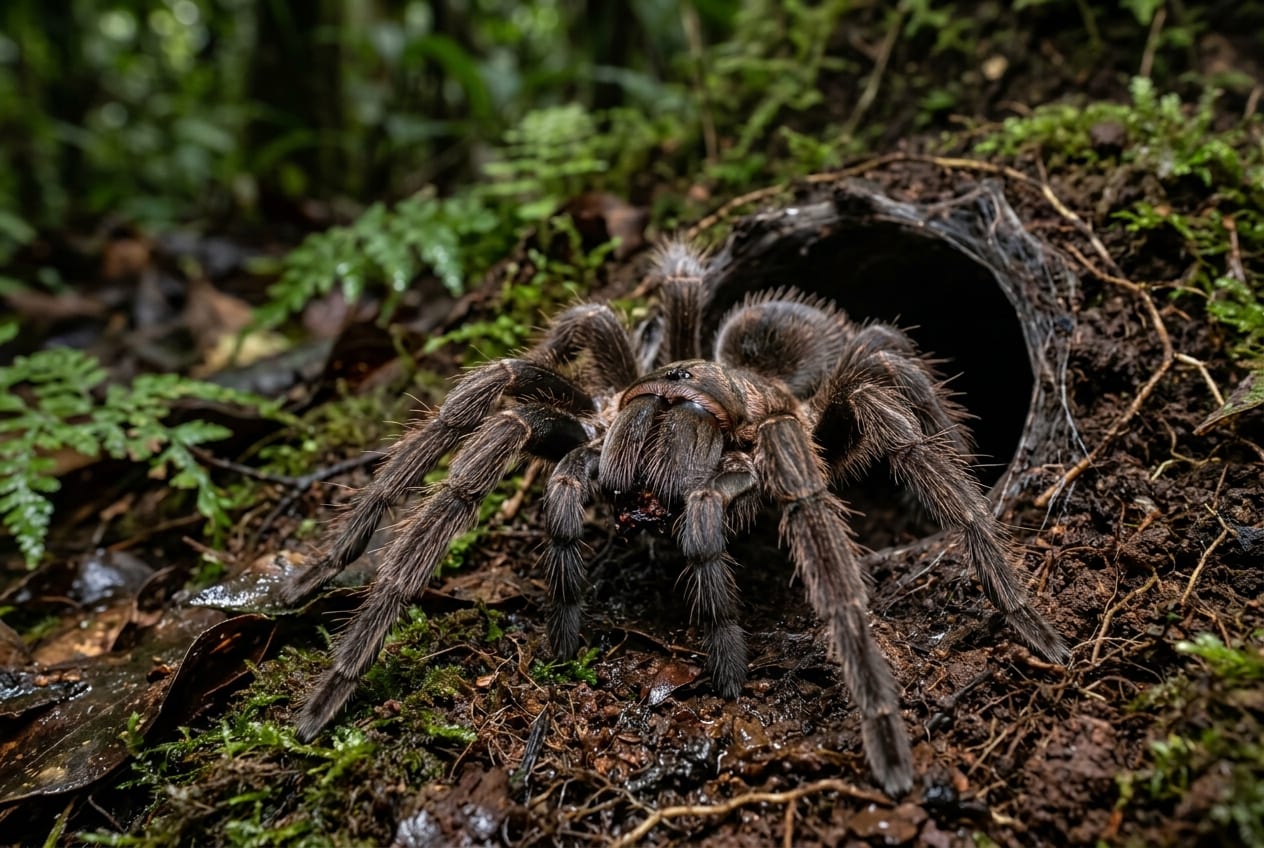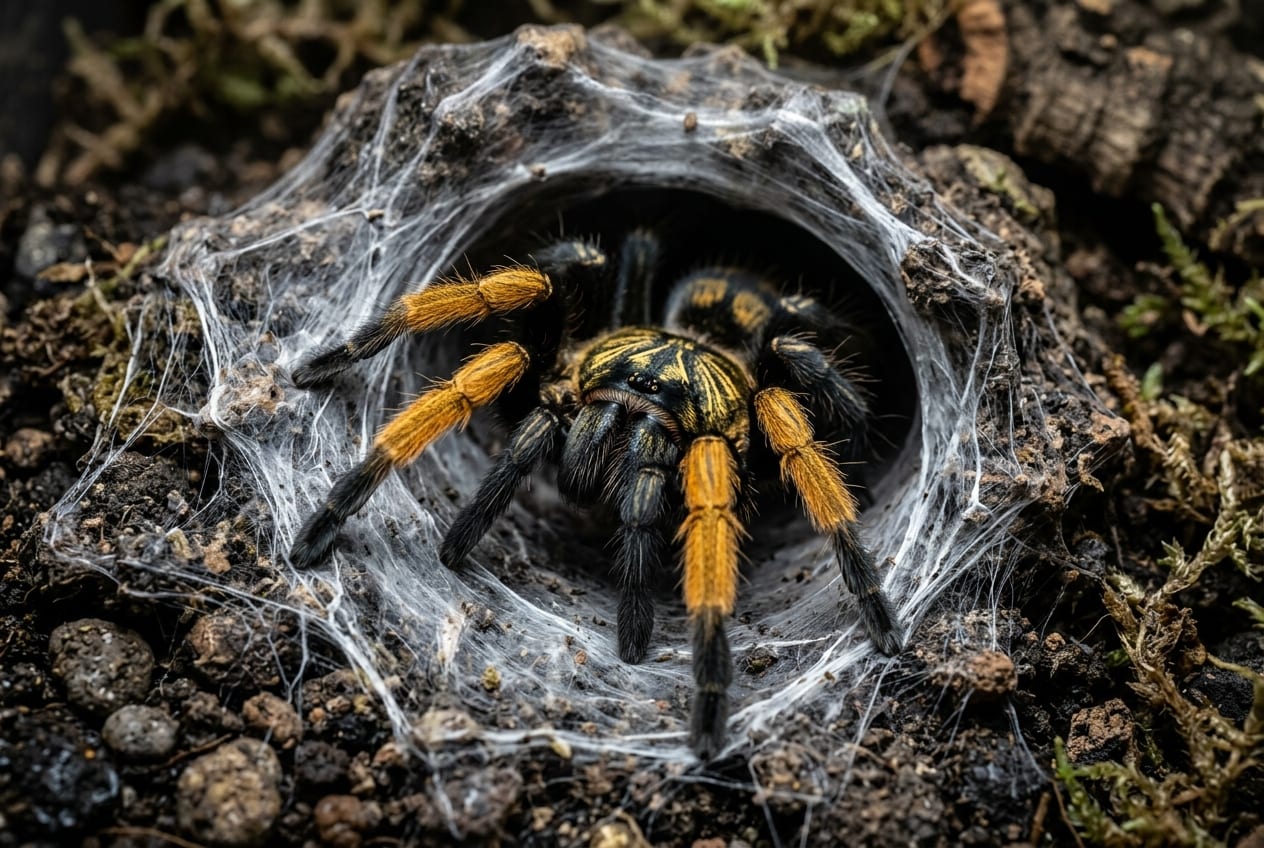
AI-generated image
Mozambique Golden Baboon
IntermediateAugacephalus ezendami
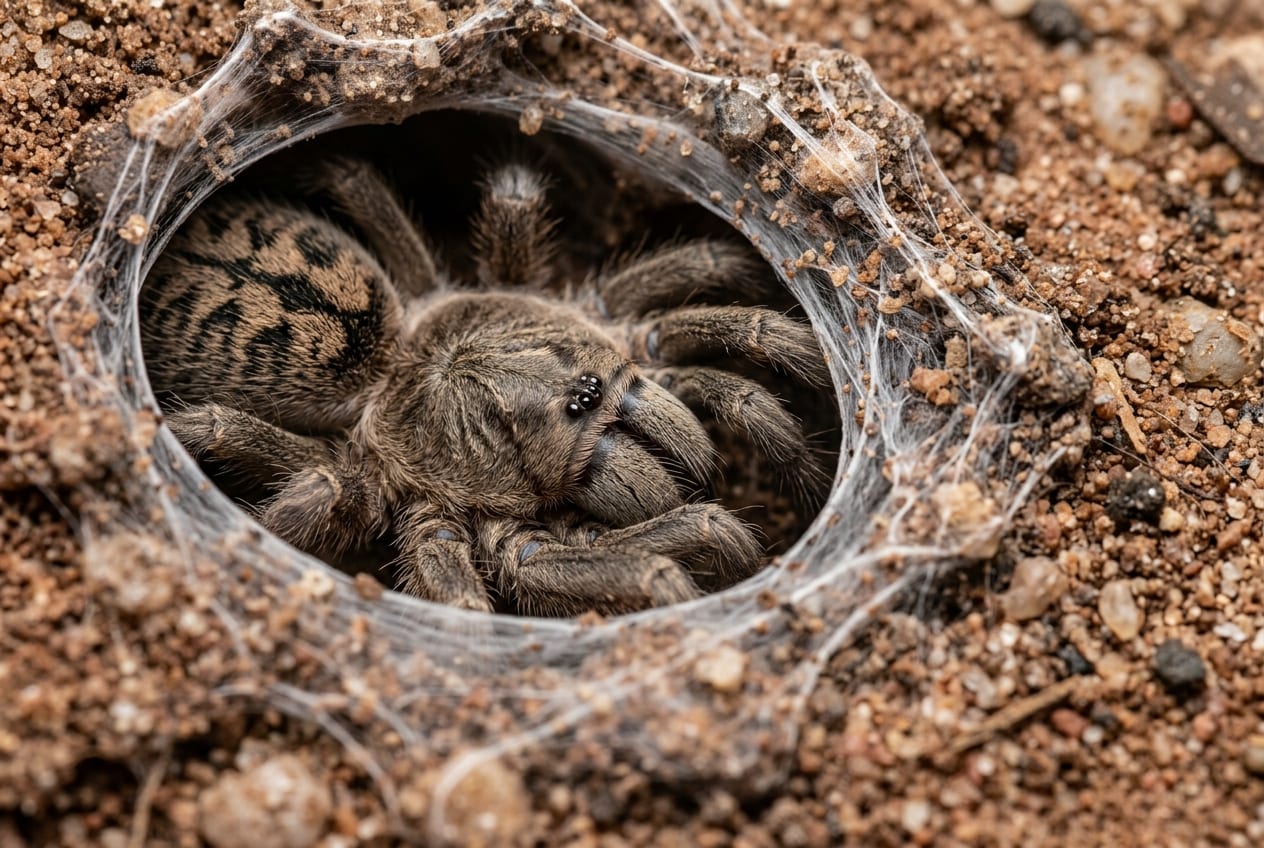
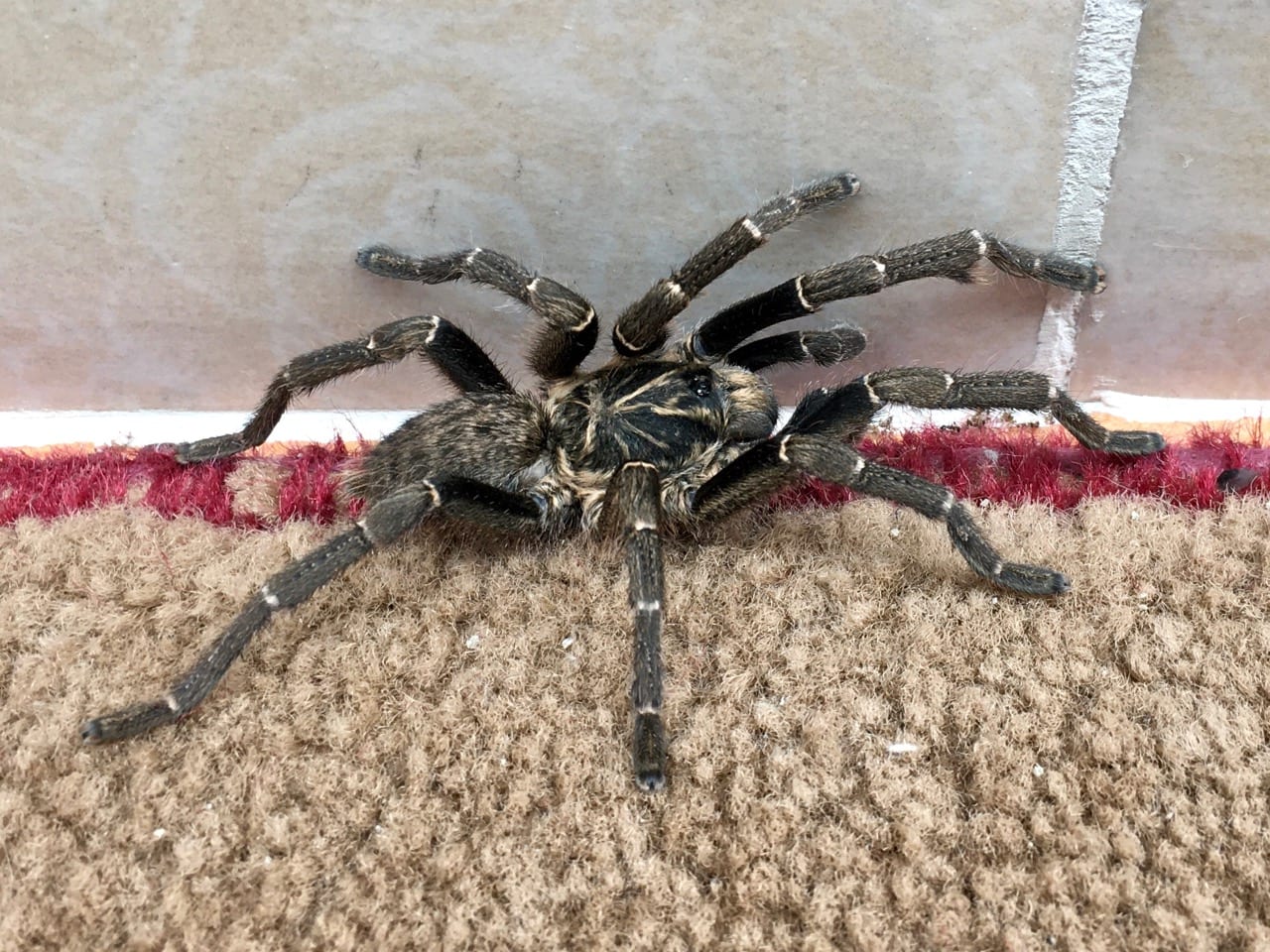
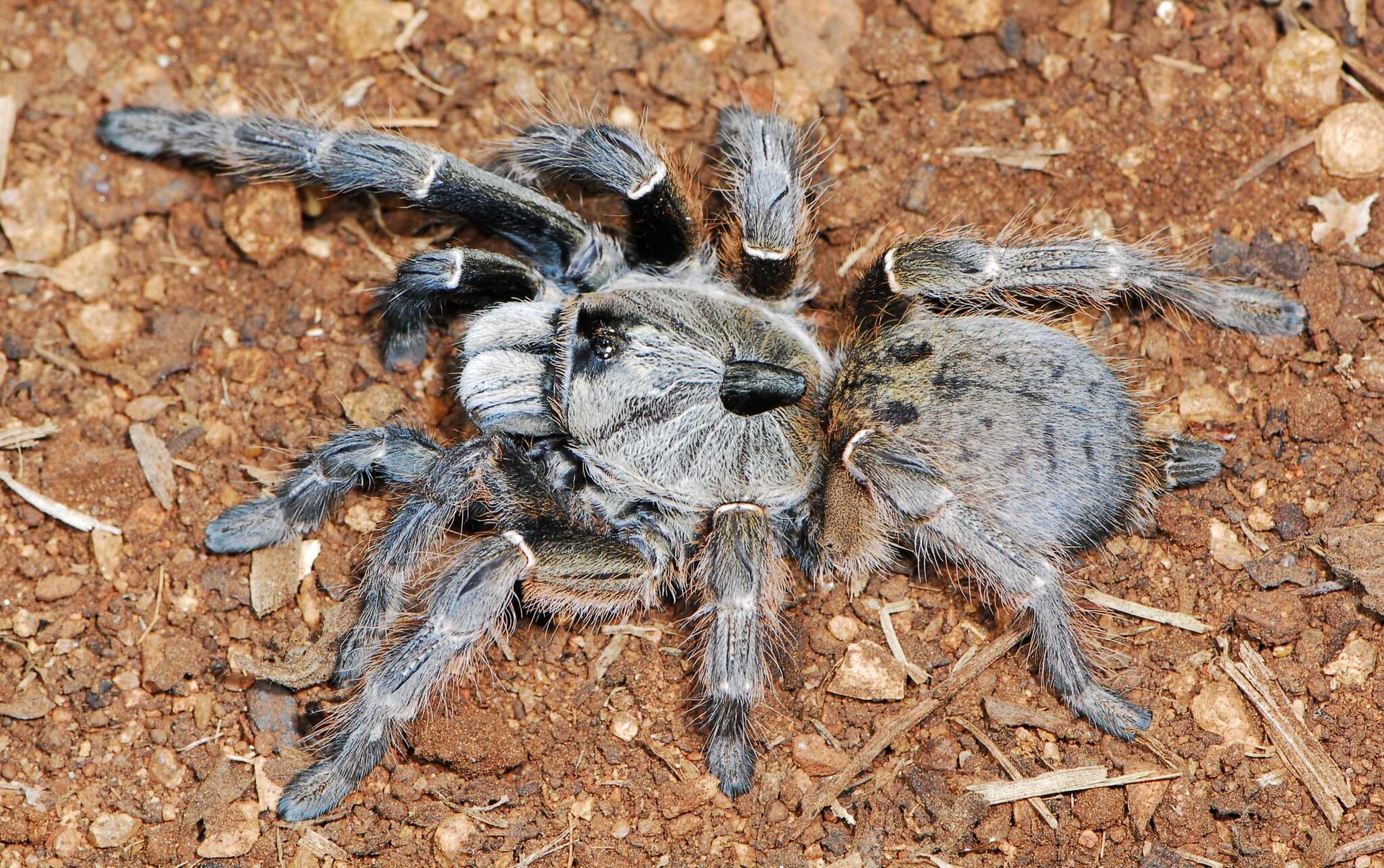
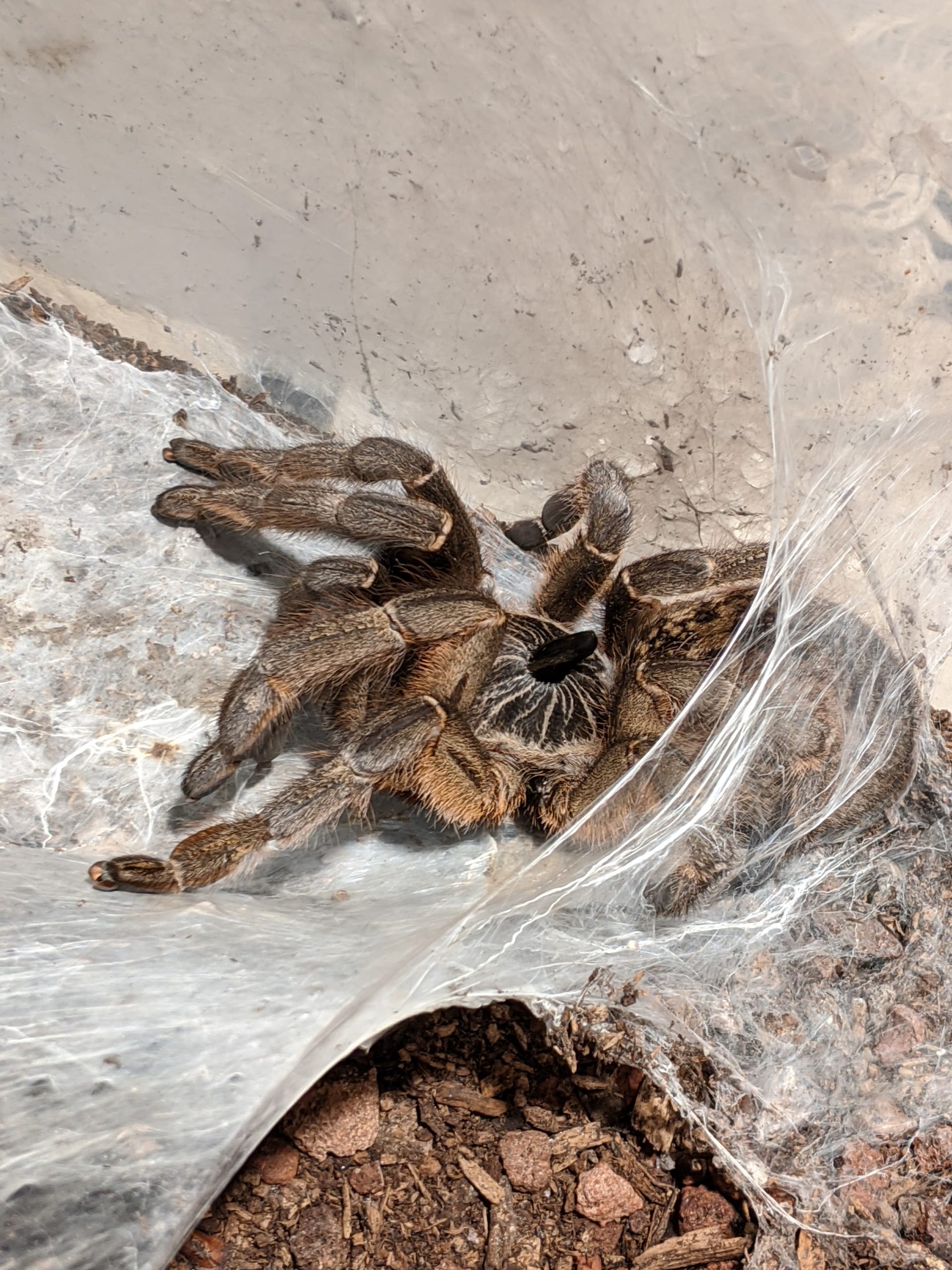
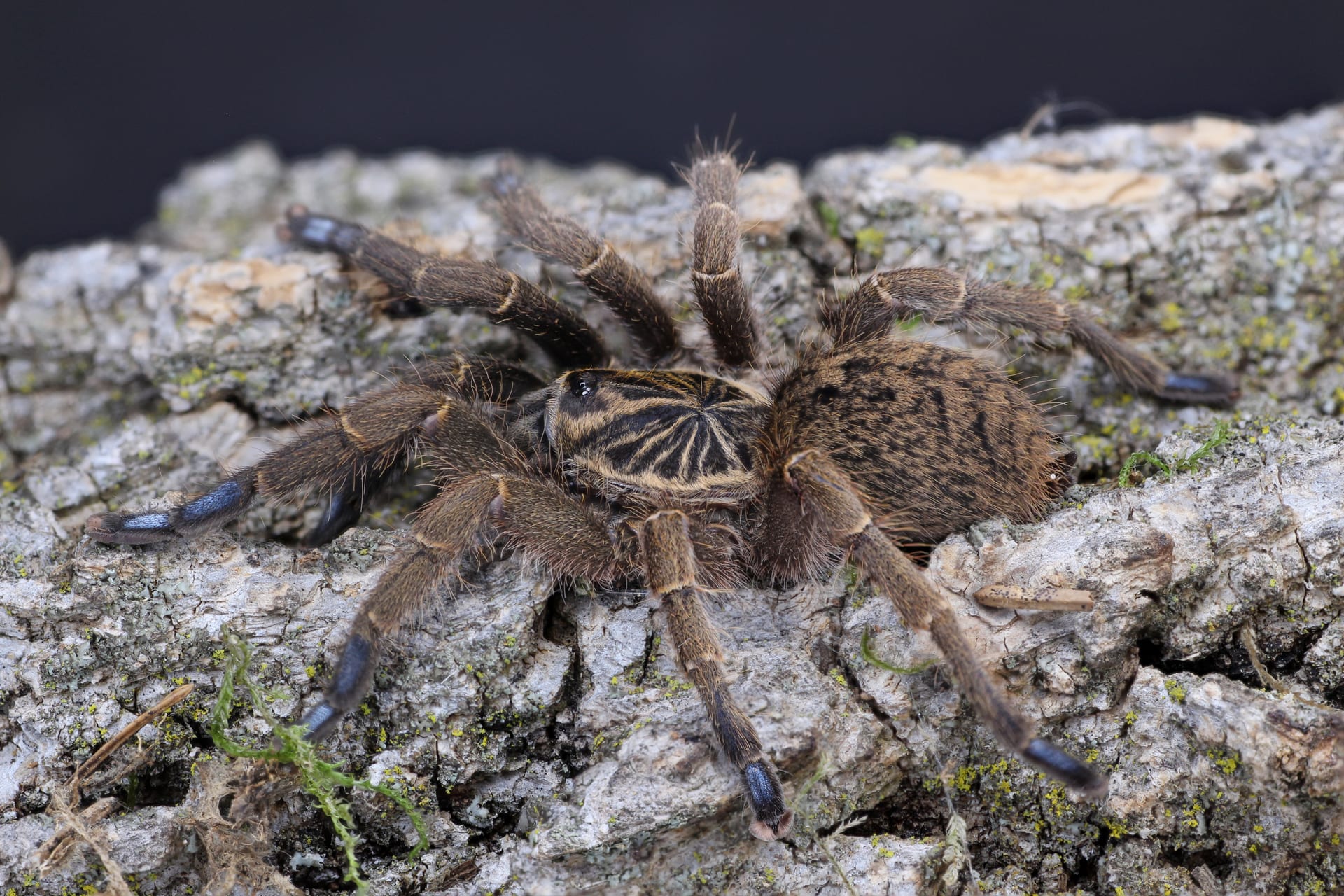
A tarantula endemic to Mozambique with golden striping radiating across a black carapace and golden femora. An obligate burrower, it webs heavily to build a retreat where it cannot dig.
Difficulty
Intermediate
Temperature
26〜28℃
Lifespan
Females 12-15 years / males 3-4 years
Size
Body about 3.4cm (female specimen), leg span 12-14cm
Humidity
55〜65%
Diet
Live insects such as crickets and roaches
About
Augacephalus ezendami was described by Gallon in 2001 and belongs to the Harpactirinae, endemic to the tropical savanna of Mozambique. It was handled in a revision of the Ceratogyrus species formerly placed in Coelogenium and still circulates under the name Ceratogyrus ezendami. The specific epithet honours Thomas Ezendam, who supplied the author with numerous specimens. Golden striping radiates across the black carapace and the femora are golden, while the abdomen and legs are creamy to tan with a black fishbone pattern. In the original description the male holotype measures 26.2mm and the female paratype 33.6mm. An obligate burrower, it waits at the mouth of its burrow to ambush passing prey. It is also a prolific webber and will build a silk-covered retreat where it cannot dig. It is defensive in temperament and, as an Old World species, has no urticating hairs.
Source: Wikipedia (CC BY-SA 4.0)
Lifespan of the Mozambique Golden Baboon
The Mozambique Golden Baboon lives Females 12-15 years / males 3-4 years.
Size of the Mozambique Golden Baboon
The Mozambique Golden Baboon grows to Body about 3.4cm (female specimen), leg span 12-14cm.
Temperature & humidity for the Mozambique Golden Baboon
The ideal temperature for the Mozambique Golden Baboon is 26〜28℃. Ideal humidity is 55〜65%.
Basic Info
Origin
Mozambique (endemic)
Lifespan
Care Specifications
Semi-aggressiveSolitary
Sources: The Spider Shop: Augacephalus ezendami / Tarantupedia: Augacephalus ezendami / Wikipedia: Augacephalus ezendami / French Wikipedia: Augacephalus ezendami / GBIF
References & Sources
Edited & verified by: BreederDirect editorial team
The taxonomic, regulatory, and husbandry data on this page are compiled and verified against the authoritative primary sources below.
Taxonomy & Authority
Accepted name: Augacephalus ezendami (Gallon, 2001)
Synonyms: Ceratogyrus ezendami Gallon, 2001
Authority databases: GBIF
Nomenclature follows global taxonomic authority databases.
Regulations & Conservation Status
Not CITES-listed
Sources: CITES Appendices (species not listed)
Regulations may change. Always verify the latest information with the relevant authorities.
Mozambique Golden Baboon Listings
Loading latest listingsFind listings for this species