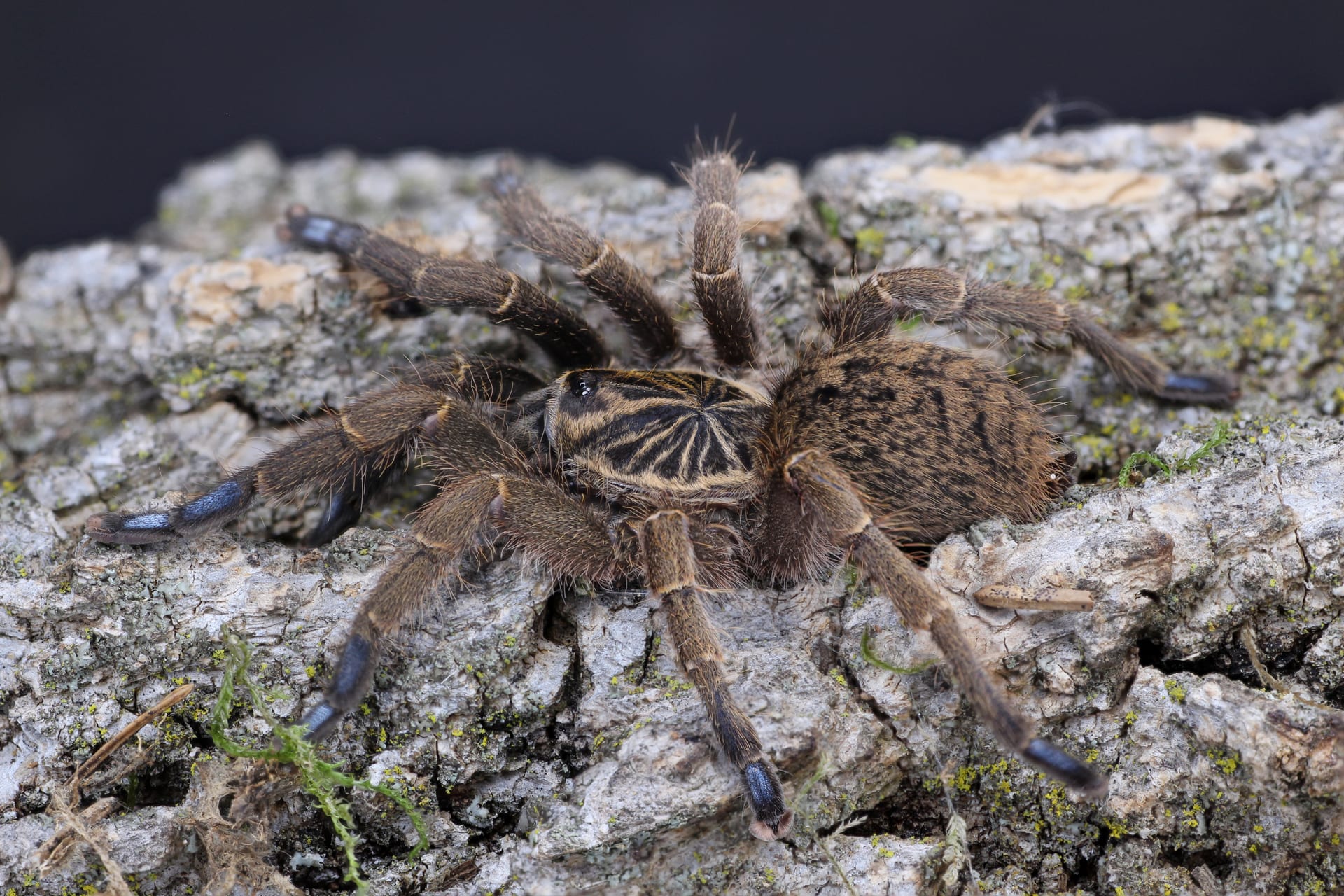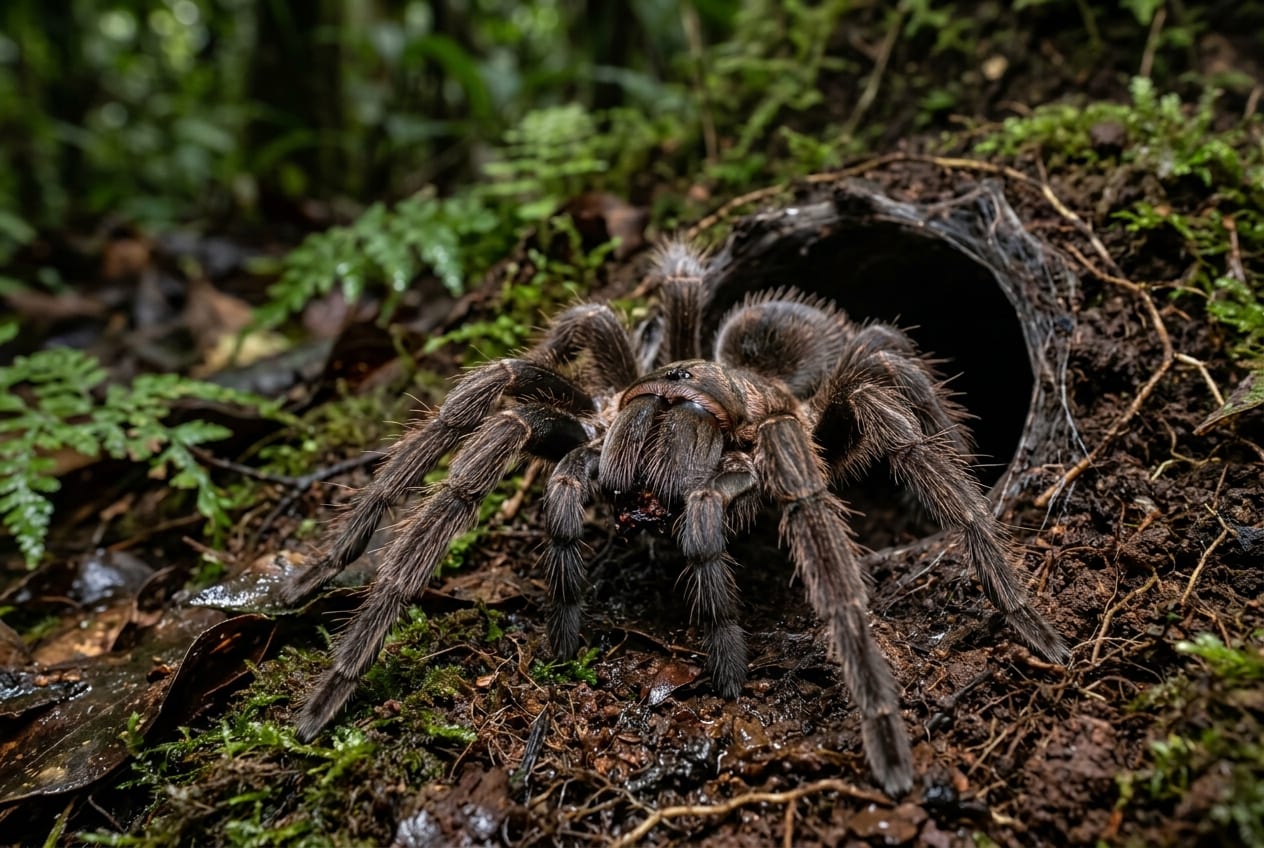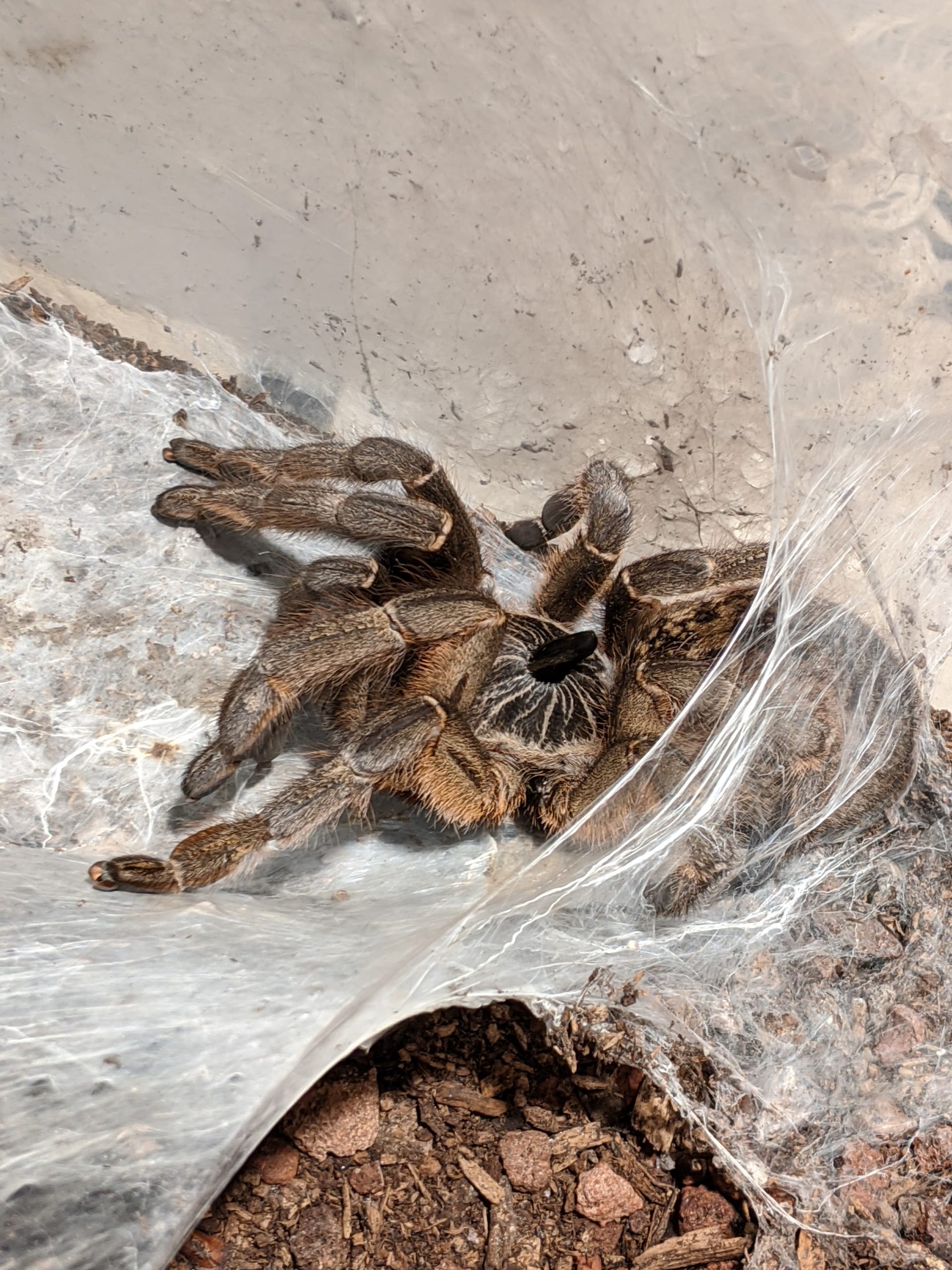
Source: Wikimedia Commons
Straight Horned Baboon
IntermediateCeratogyrus marshalli
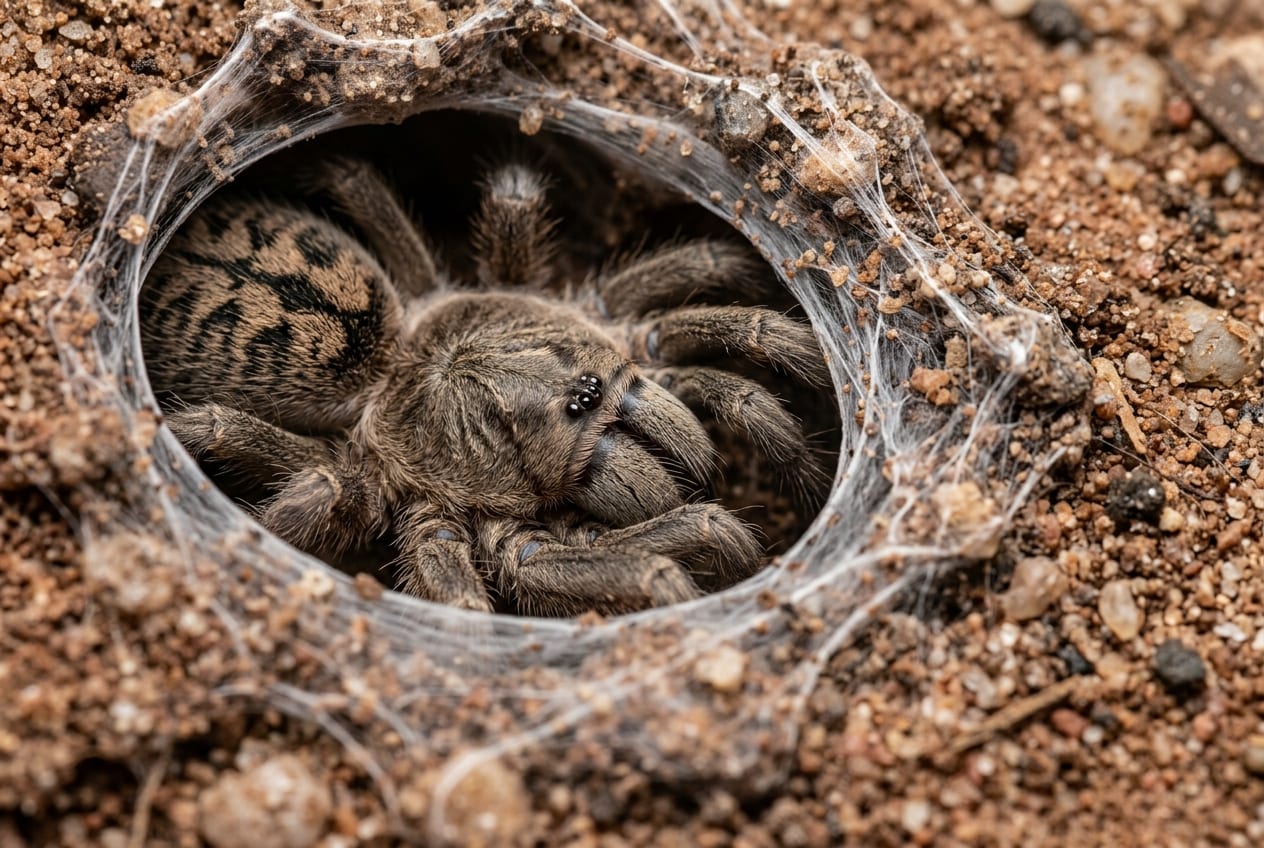
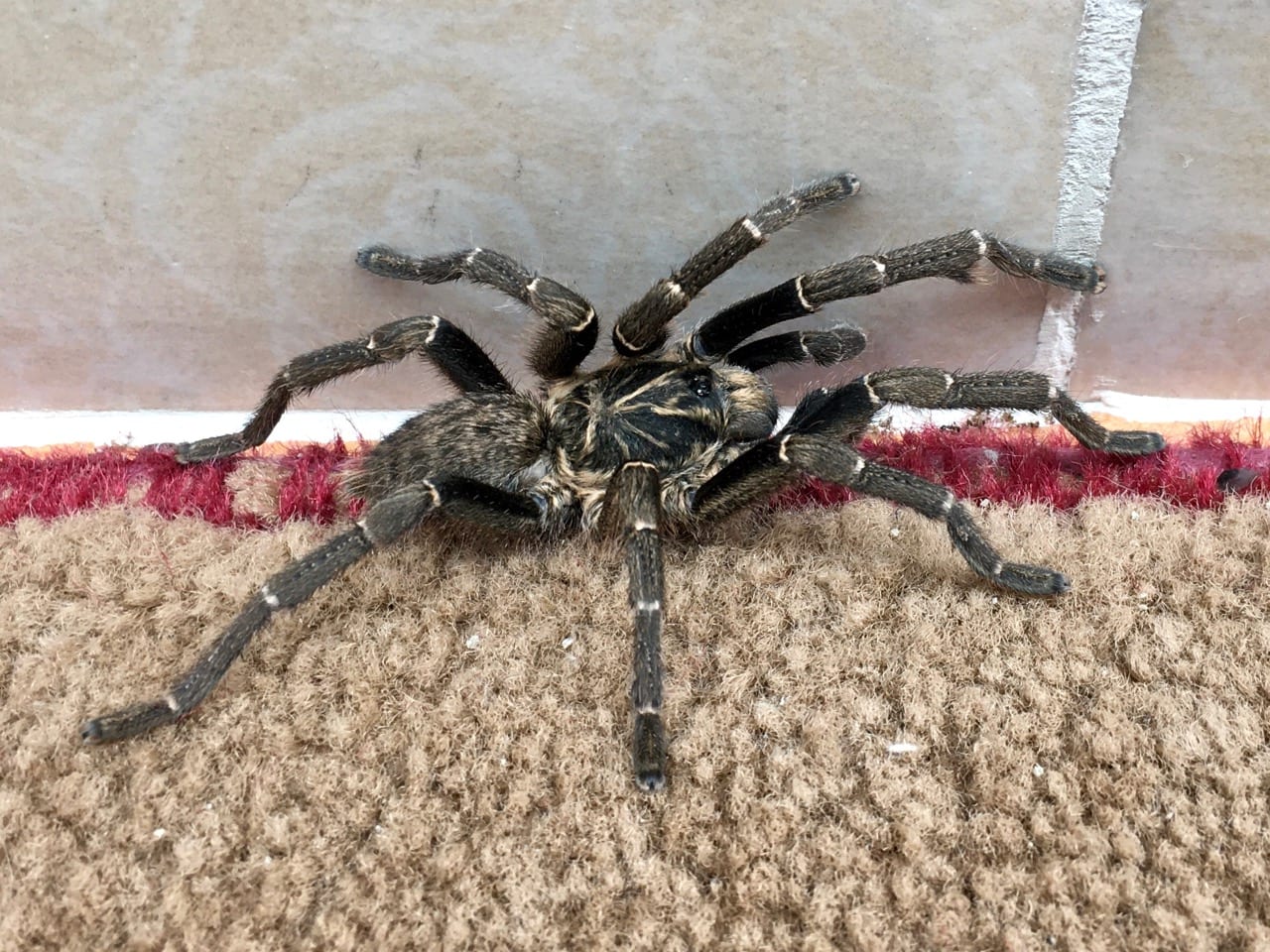
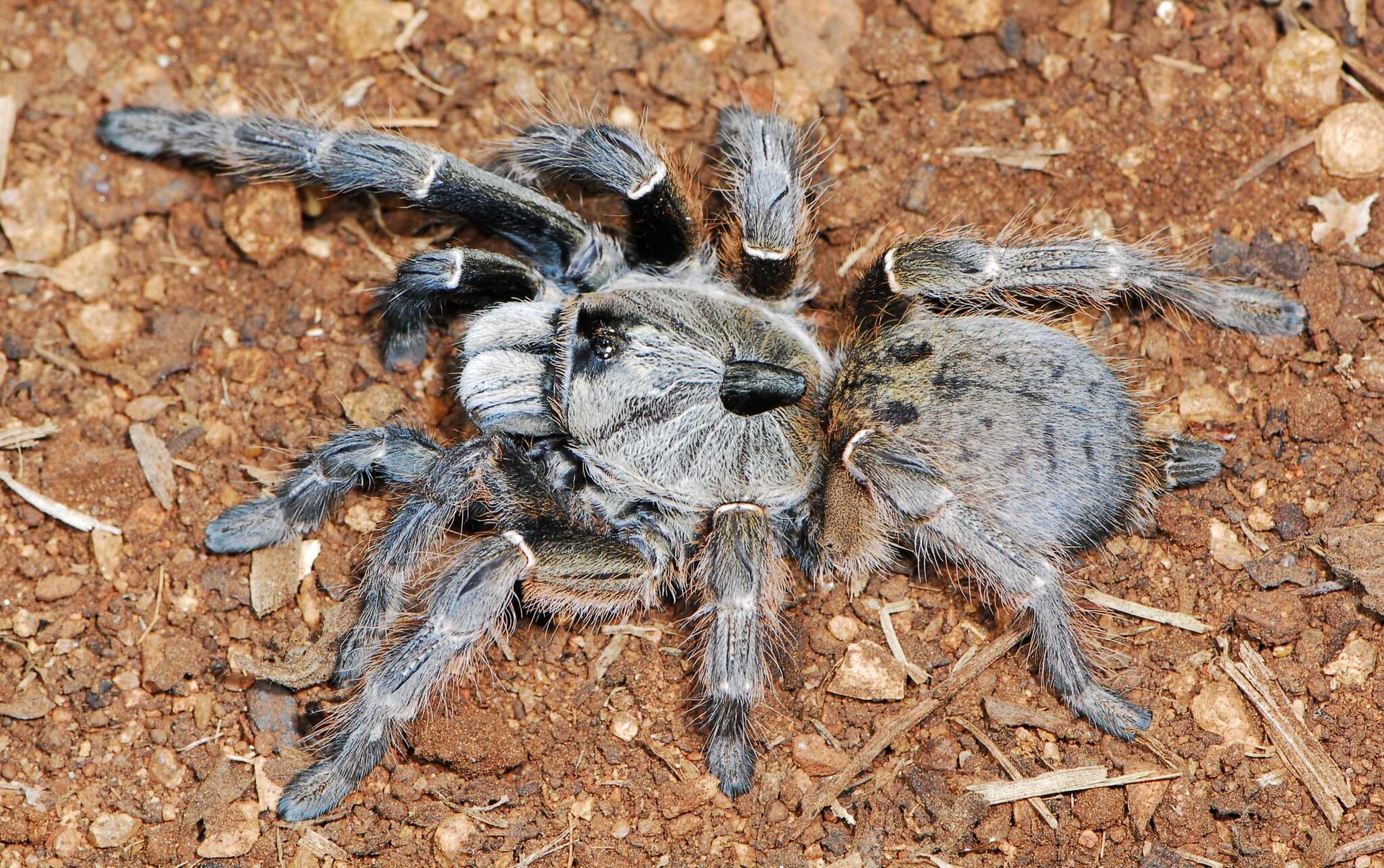
A fossorial tarantula from southern Africa with a straight black horn rising from the centre of its carapace. It has no urticating hairs and is fast, so it is kept hands-off on deep, diggable substrate.
Difficulty
Intermediate
Temperature
22〜26℃
Lifespan
Females 13-15 years, males 3-4 years
Size
Body about 6cm, leg span 13-16cm
Humidity
50〜60%
Diet
Live insects such as crickets and roaches
About
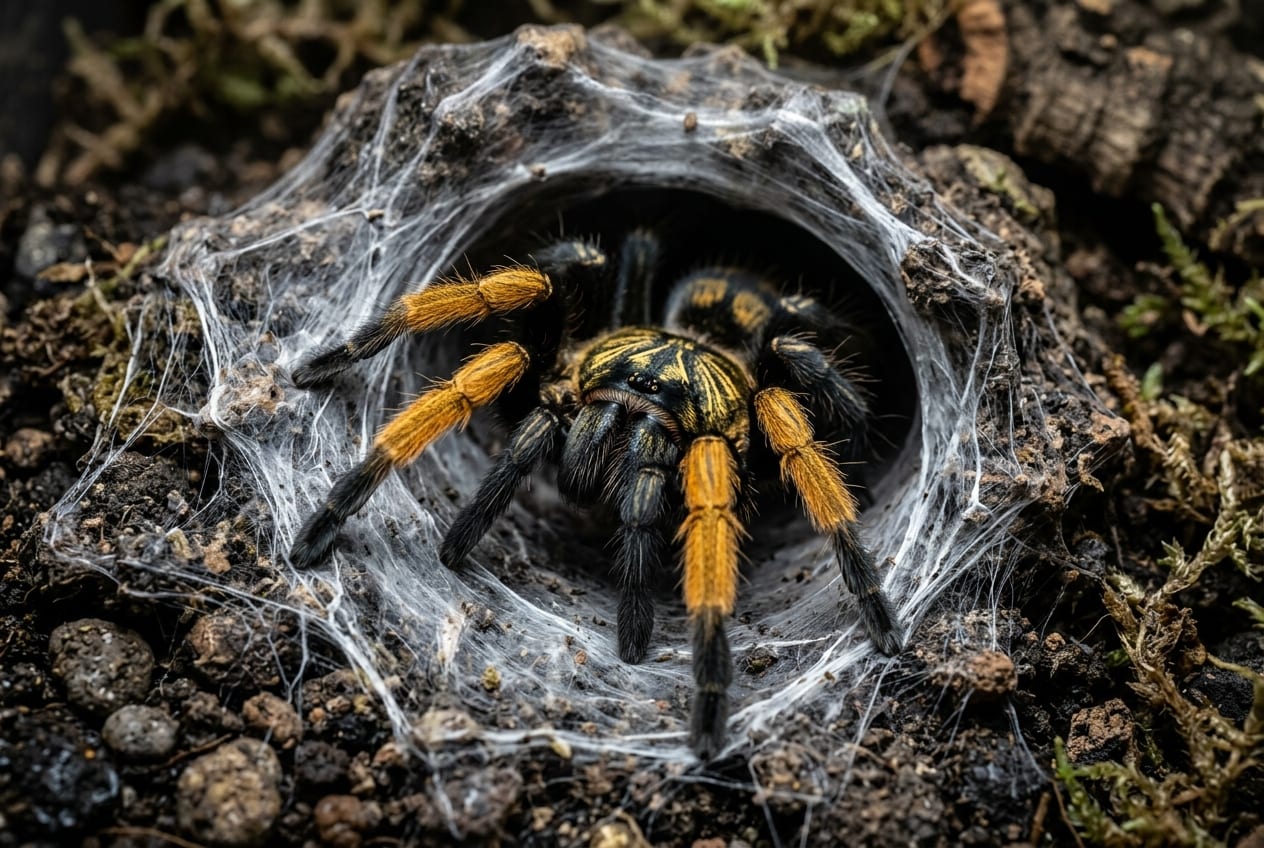
Ceratogyrus marshalli was described by Pocock in 1897 and belongs to the subfamily Harpactirinae, ranging across Zimbabwe and Mozambique. Its type locality is Harare (formerly Salisbury) in Zimbabwe, a subtropical highland area at around 1,500m elevation. Its defining feature is the foveal horn that rises vertically from the carapace, which separates it from the closely related rear-horned baboon whose horn curves backwards. The carapace is black with pale brown striping and the abdomen is light brown with black spotting or a fishbone pattern. It is an obligate burrower that digs vertical tunnels, staying underground by day and ambushing prey at the burrow entrance at night. Being an Old World species it has no urticating hairs and defends itself by fleeing, stridulating and finally biting. It breeds readily in captivity and most specimens in the trade are captive bred.
Source: Wikipedia (CC BY-SA 4.0)
Lifespan of the Straight Horned Baboon
The Straight Horned Baboon lives Females 13-15 years, males 3-4 years.
Size of the Straight Horned Baboon
The Straight Horned Baboon grows to Body about 6cm, leg span 13-16cm.
Females reach about 6cm in body length and 13-16cm in leg span, living 13-15 years, while males live only 3-4 years.
Temperature & humidity for the Straight Horned Baboon
The ideal temperature for the Straight Horned Baboon is 22〜26℃. Ideal humidity is 50〜60%.
Basic Info
Origin
Southern Africa (Zimbabwe, Mozambique)
Care Specifications
AggressiveSolitaryBreeding: Easy
Sources: The Spider Shop: Ceratogyrus marshalli / The Tarantula Collective: Ceratogyrus marshalli / Tarantupedia: Ceratogyrus marshalli / Wikipedia: Ceratogyrus marshalli / GBIF
References & Sources
Edited & verified by: BreederDirect editorial team
The taxonomic, regulatory, and husbandry data on this page are compiled and verified against the authoritative primary sources below.
Taxonomy & Authority
Accepted name: Ceratogyrus marshalli Pocock, 1897
Authority databases: GBIF
Nomenclature follows global taxonomic authority databases.
Regulations & Conservation Status
Not CITES-listed
Sources: CITES Appendices (species not listed)
Regulations may change. Always verify the latest information with the relevant authorities.
Straight Horned Baboon Listings
Loading latest listingsFind listings for this species