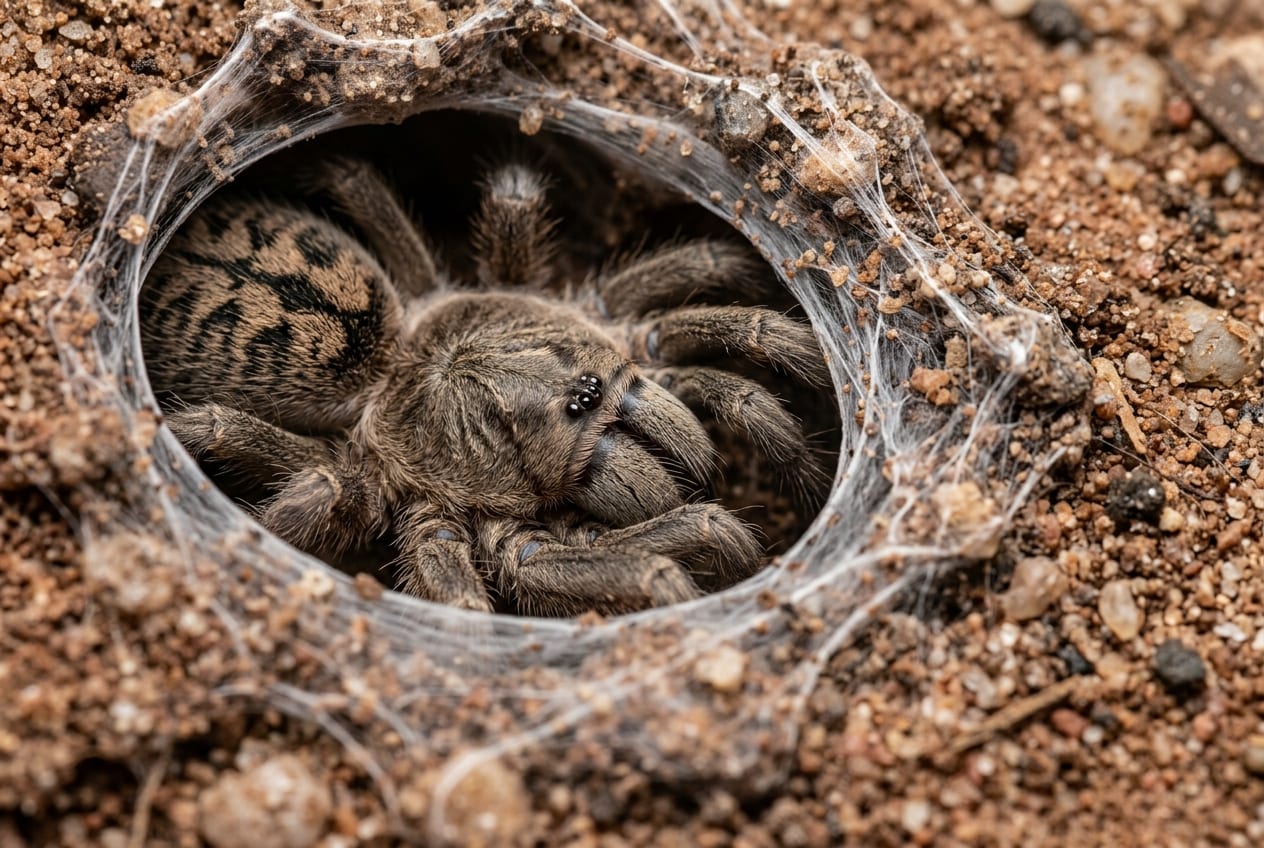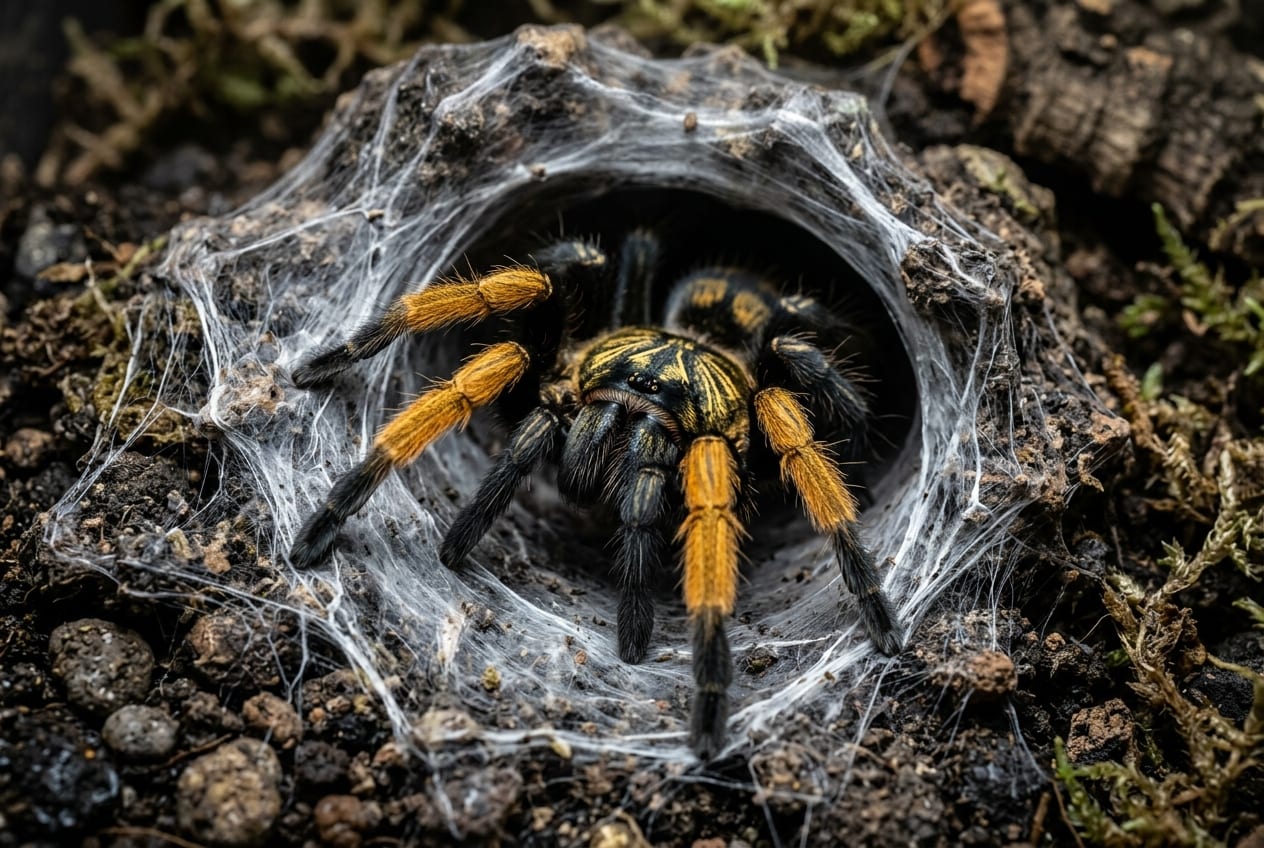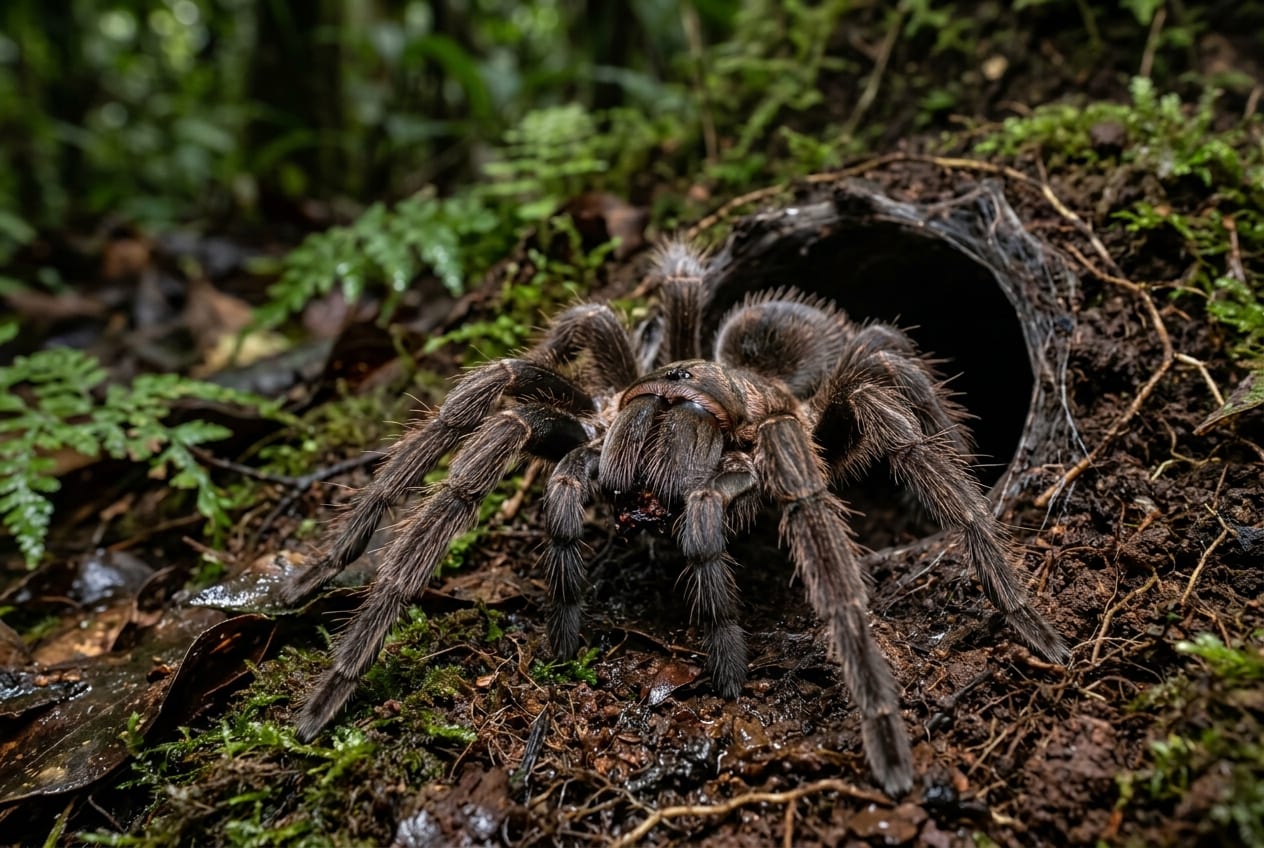
AI-generated image
Cameroon Red Baboon
AdvancedHysterocrates gigas
A large fossorial tarantula from Cameroon reaching a leg span of 20cm, with an abdomen up to 10cm across. It digs intricate burrows and is one of the few spiders known to dive and catch fish.
Difficulty
Advanced
Temperature
21〜27℃
Lifespan
Females 12-15 years / males 3-4 years
Size
Leg span up to about 20cm (female), males about 13cm
Humidity
70〜75%
Diet
Crickets and roaches, and also small vertebrates
About
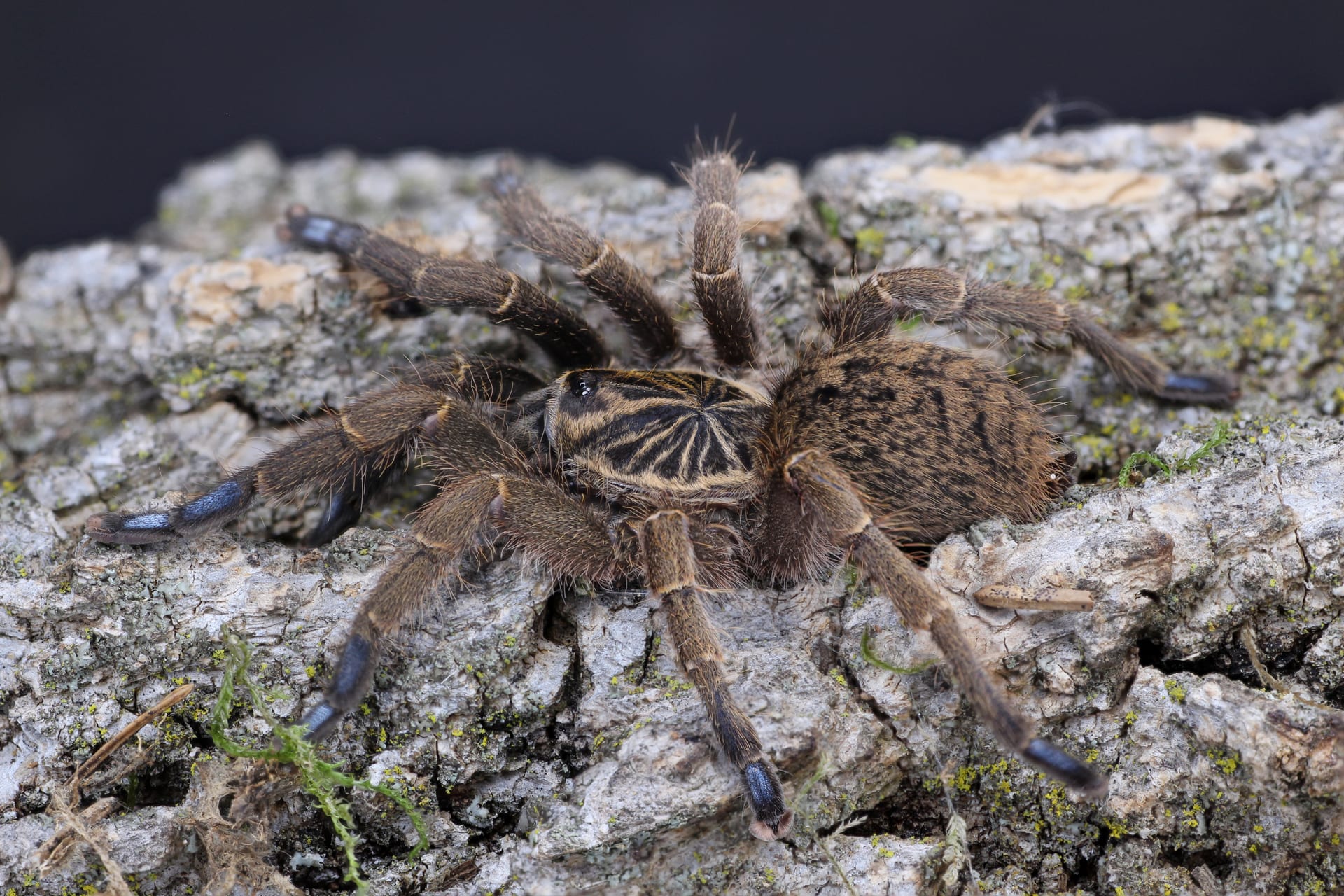
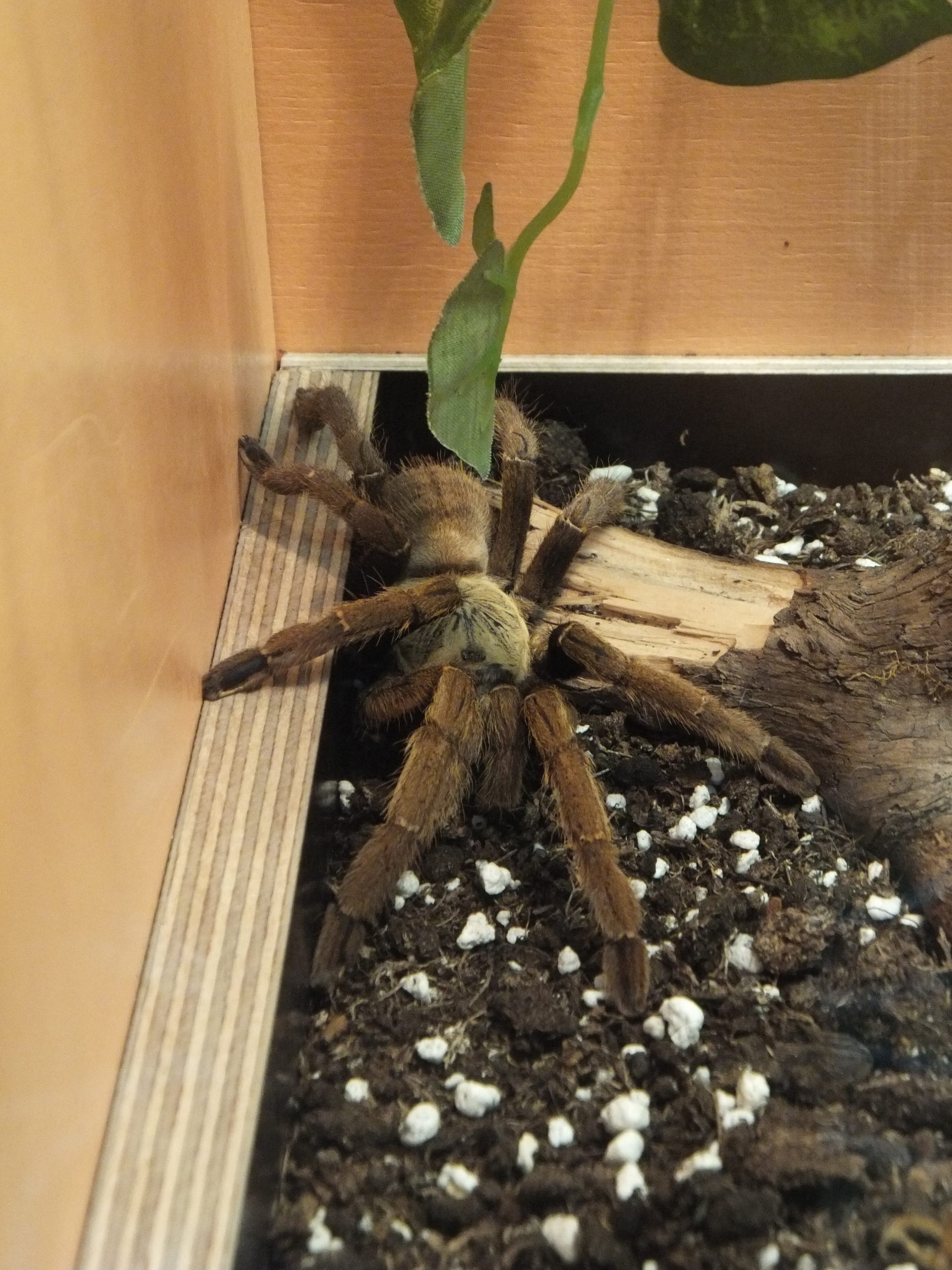
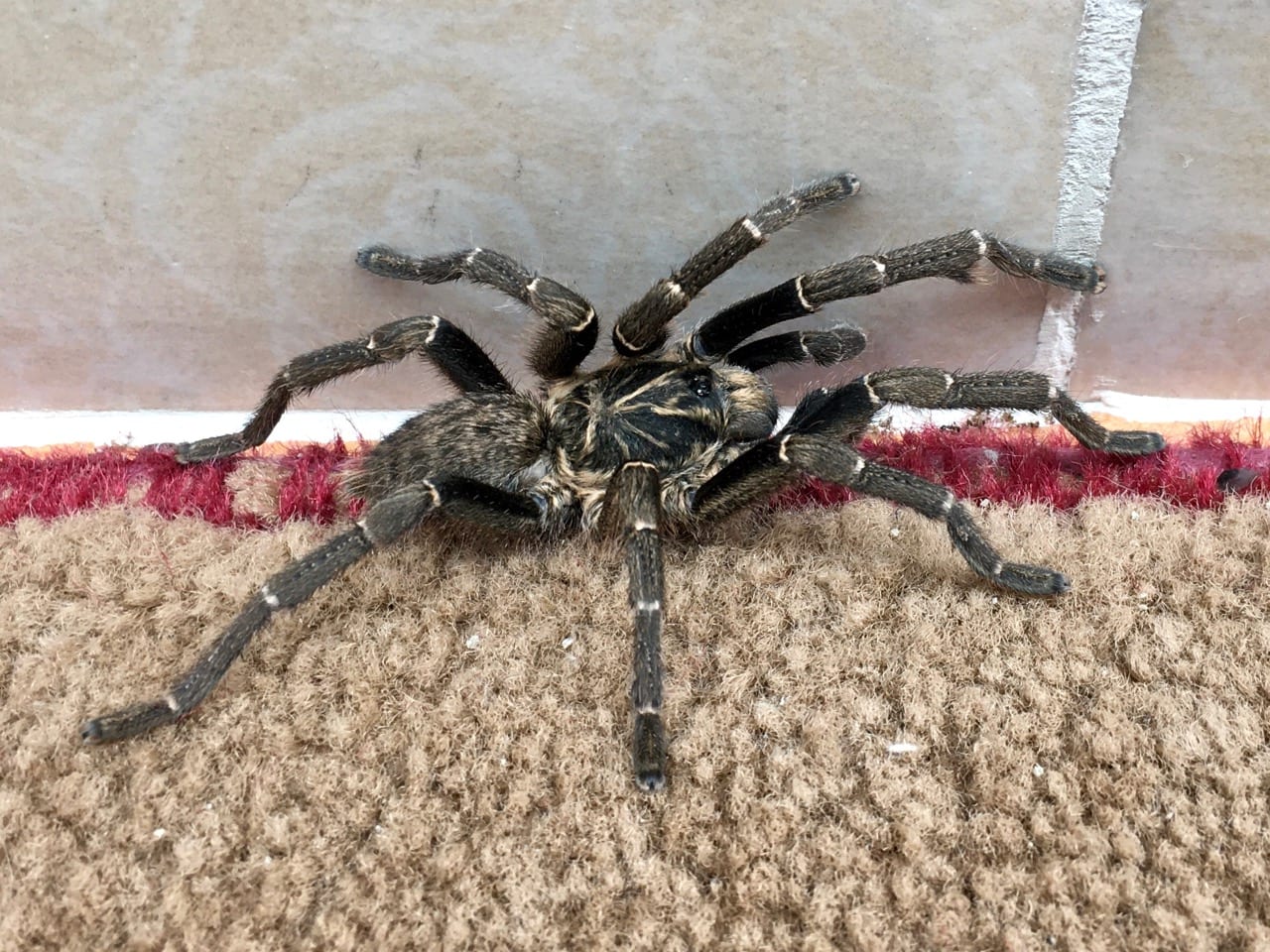
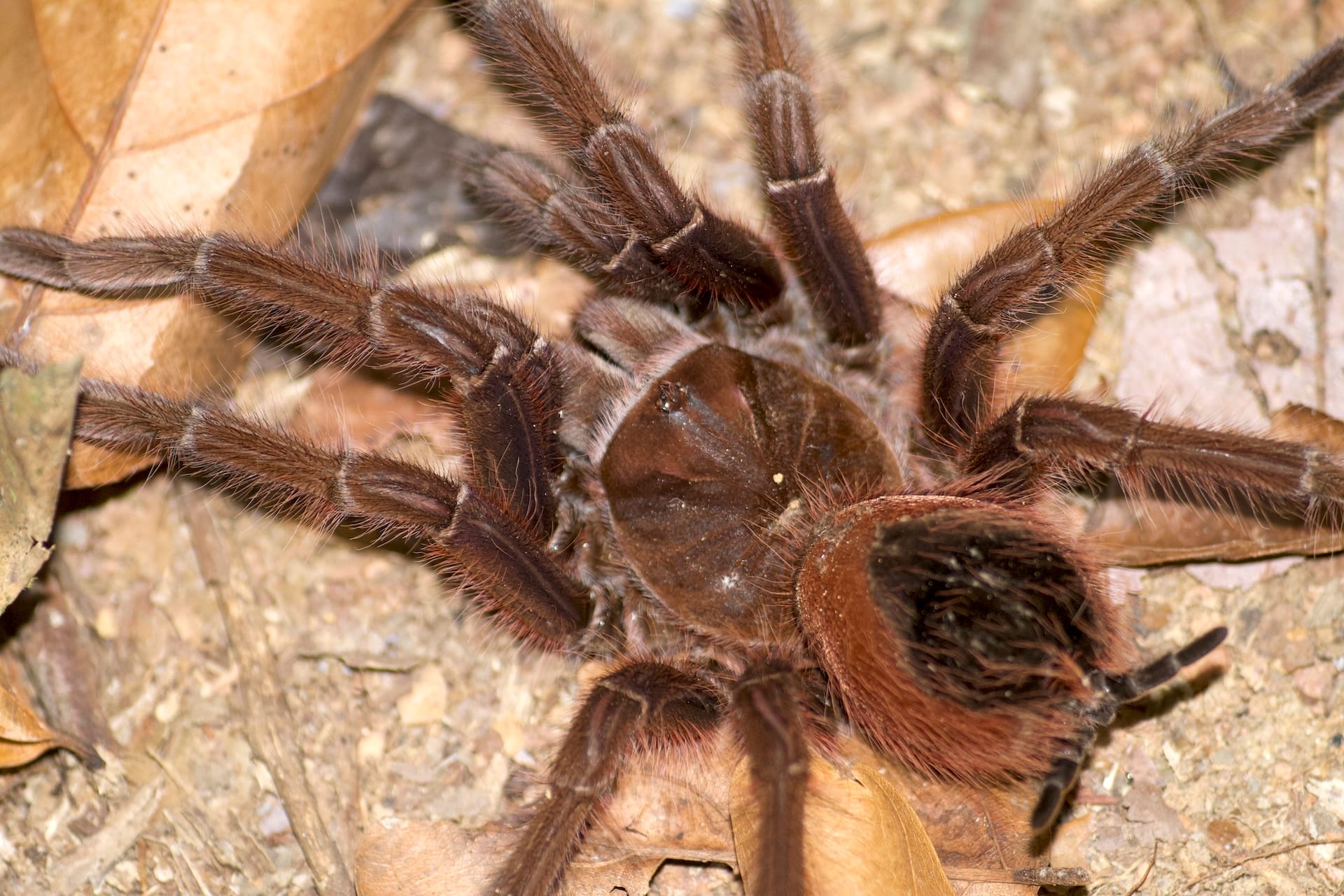
Hysterocrates gigas was described by Pocock in 1897 and belongs to the Eumenophorinae, inhabiting tropical and subtropical forest in Cameroon. Colour ranges from dull black-grey to rusty orange-brown; it is black just after moulting and turns brown as the next moult approaches. The oval abdomen reaches 10cm in diameter, the leg span up to about 20cm, and males are smaller at around 13cm. Its eyes are small and able to judge little more than light levels. As an Old World species it has no urticating hairs on the abdomen. It is a ground-dwelling obligate burrower known for digging remarkably intricate tunnels, using silk only for egg sacs and to line the burrow rather than building webs. Prey includes invertebrates as well as lizards, frogs and small rodents, and it is one of the few spiders known to dive and catch fish. Spiderlings stay in the same burrow for up to six months and have been recorded sharing food rather than cannibalising each other.
Source: Wikipedia (CC BY-SA 4.0)
Lifespan of the Cameroon Red Baboon
The Cameroon Red Baboon lives Females 12-15 years / males 3-4 years.
Size of the Cameroon Red Baboon
The Cameroon Red Baboon grows to Leg span up to about 20cm (female), males about 13cm.
Temperature & humidity for the Cameroon Red Baboon
The ideal temperature for the Cameroon Red Baboon is 21〜27℃. Ideal humidity is 70〜75%.
Basic Info
Origin
Cameroon
Care Specifications
AggressiveSolitary
Sources: The Spider Shop: Hysterocrates gigas / Tarantupedia: Hysterocrates gigas / Wikipedia: Hysterocrates gigas / GBIF
References & Sources
Edited & verified by: BreederDirect editorial team
The taxonomic, regulatory, and husbandry data on this page are compiled and verified against the authoritative primary sources below.
Taxonomy & Authority
Accepted name: Hysterocrates gigas Pocock, 1897
Authority databases: GBIF
Nomenclature follows global taxonomic authority databases.
Regulations & Conservation Status
Not CITES-listed
Sources: CITES Appendices (species not listed)
Regulations may change. Always verify the latest information with the relevant authorities.
Cameroon Red Baboon Listings
Loading latest listingsFind listings for this species