Source: Wikimedia Commons
Pinkfoot Goliath
AdvancedTheraphosa apophysis
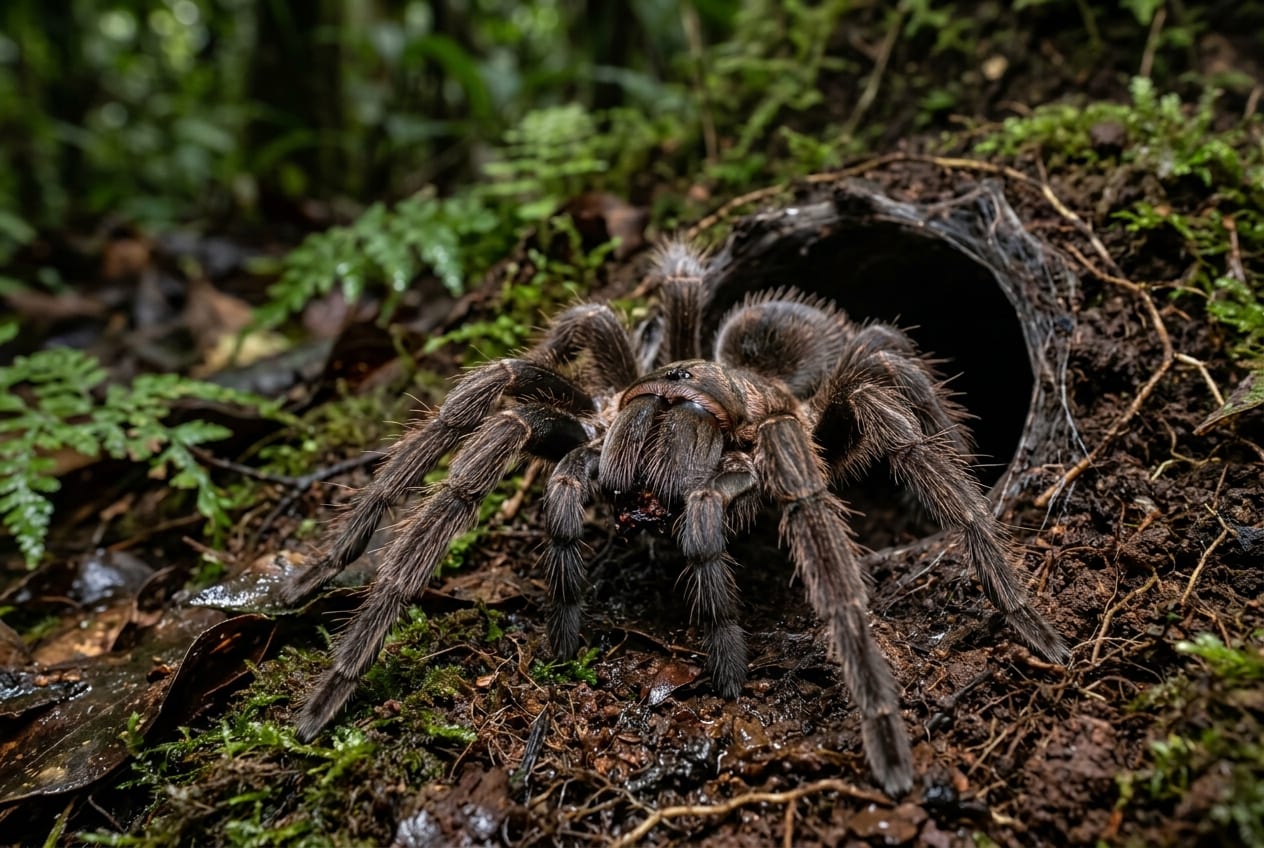
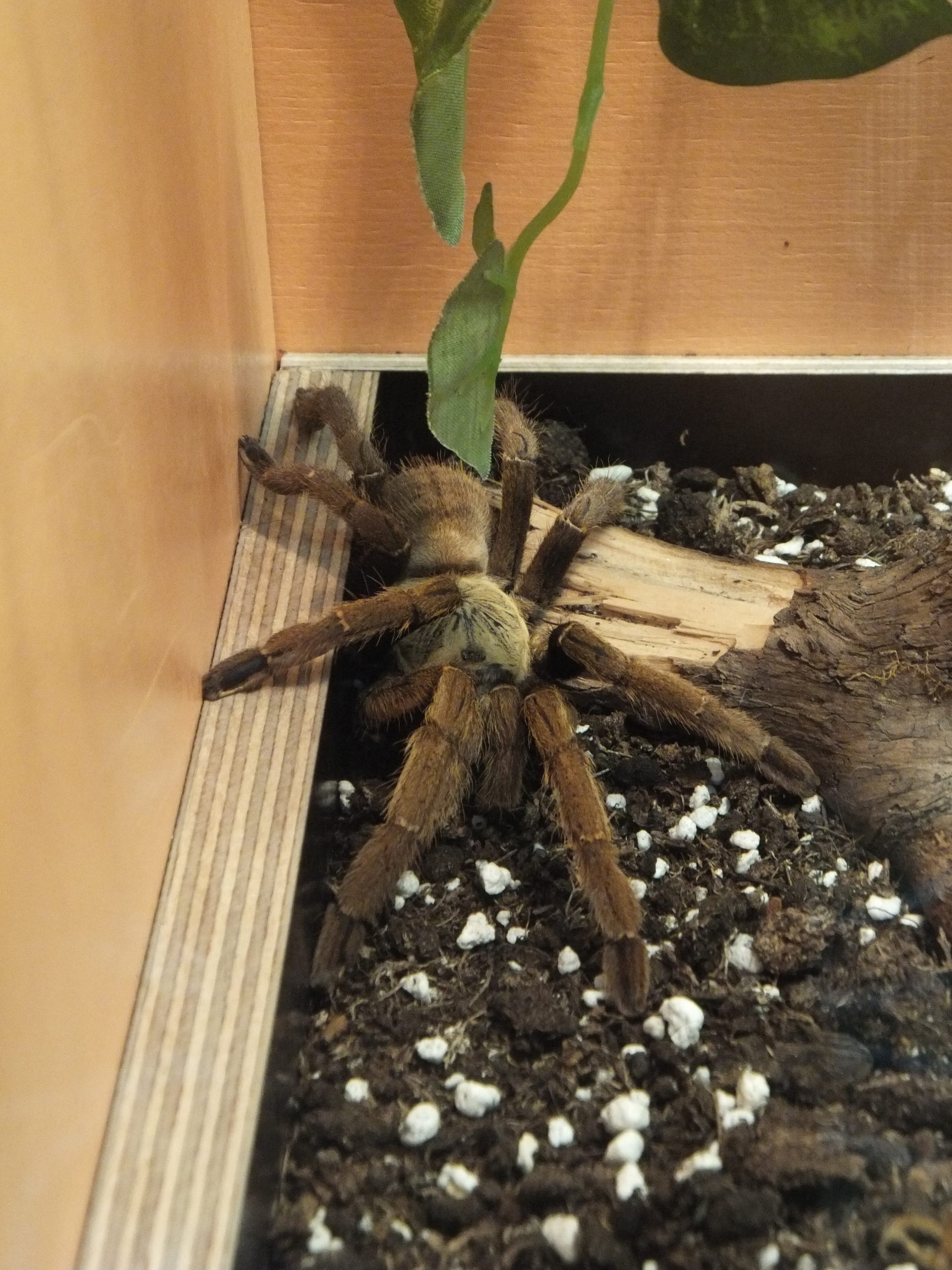
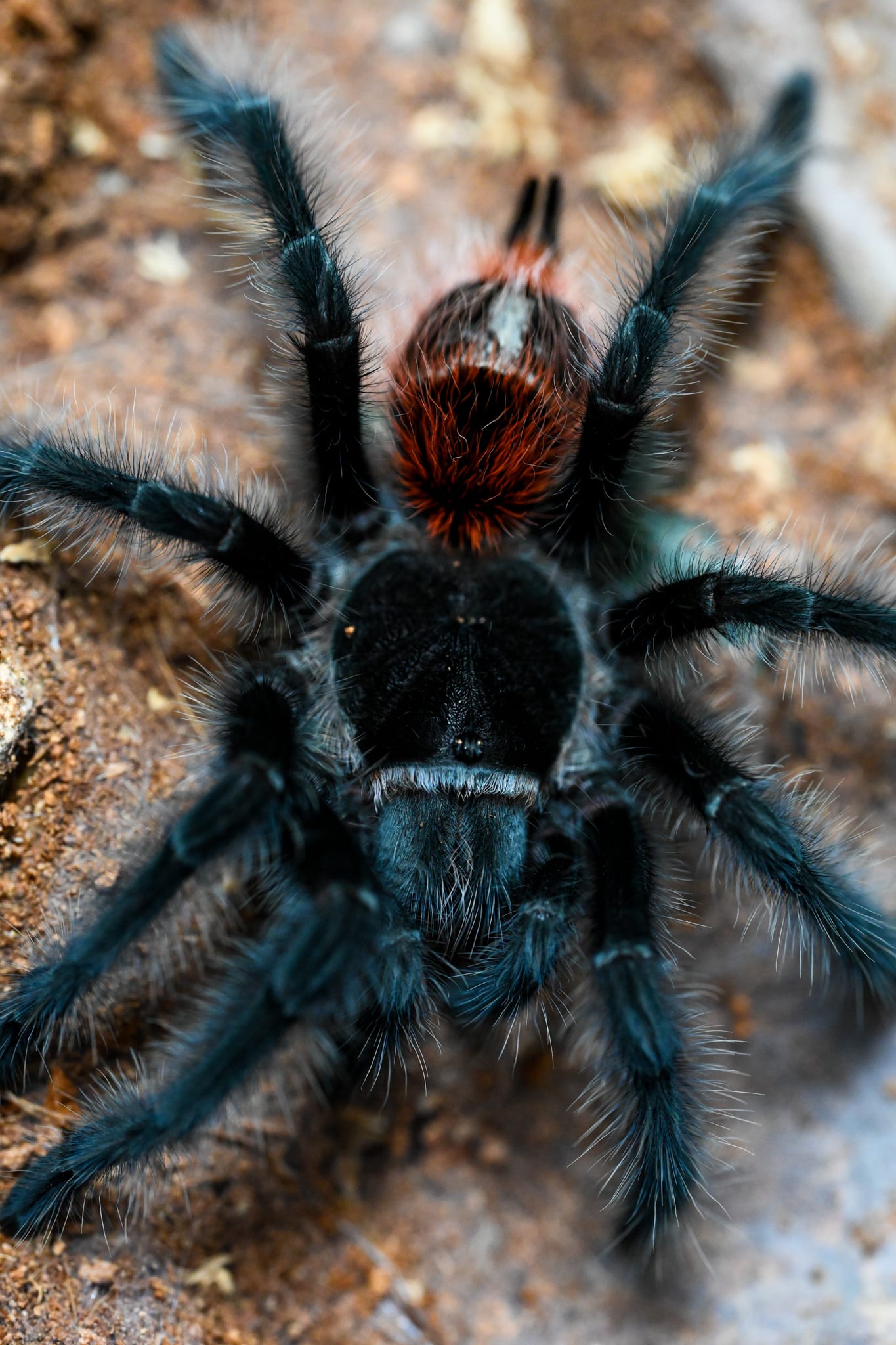
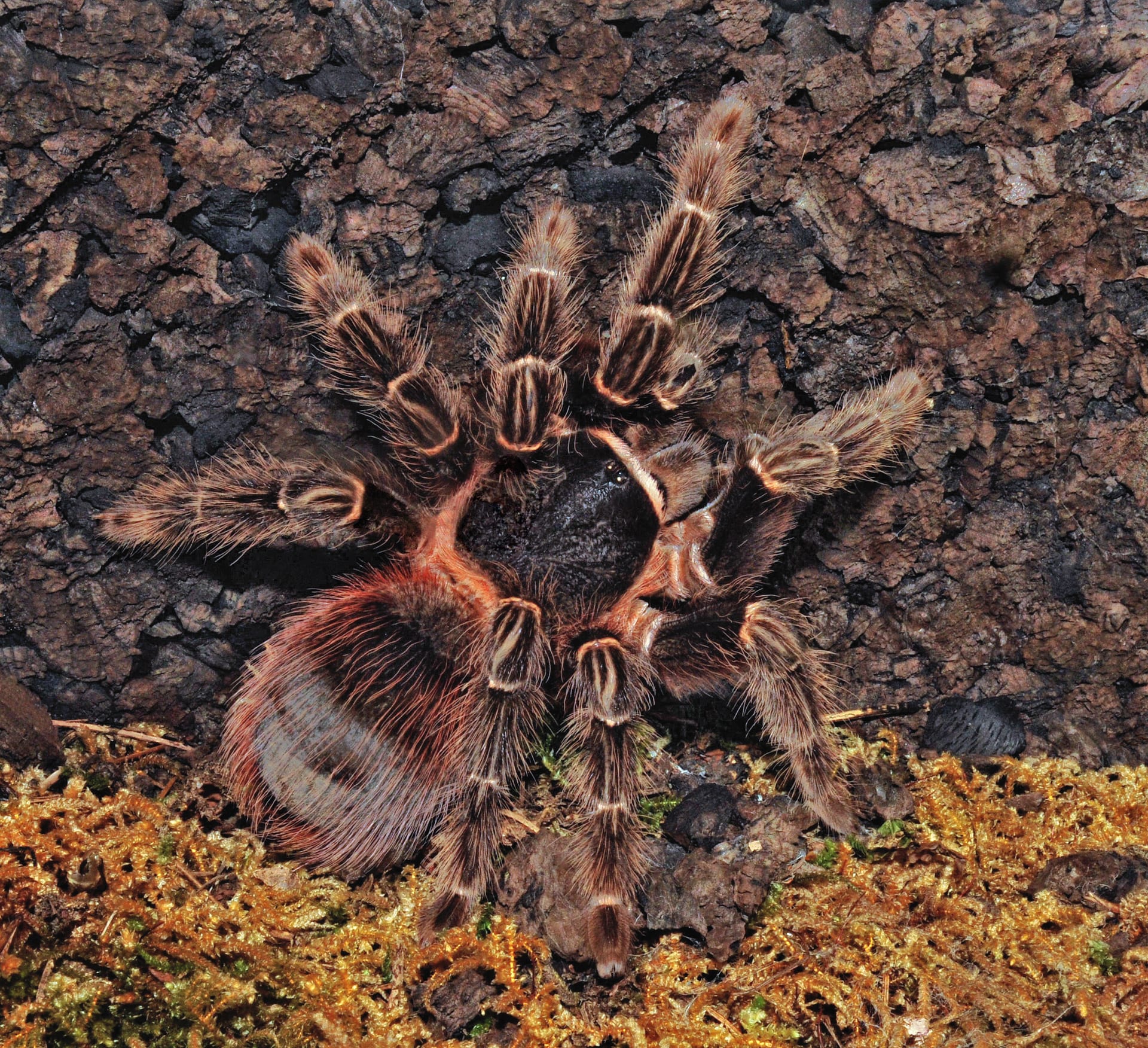
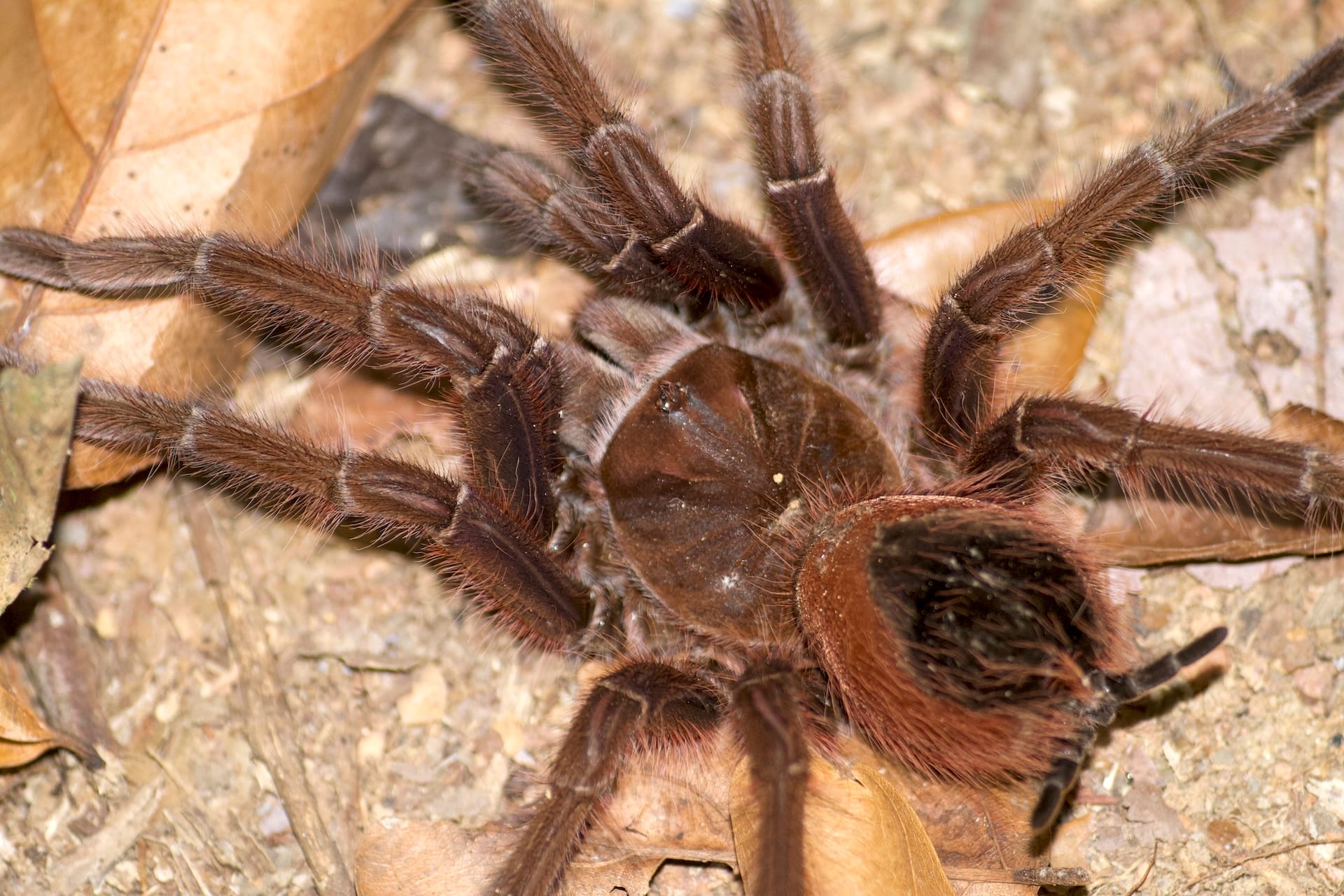
A giant tarantula regarded as among the largest in the world by leg span. The base colour is coffee brown, and juveniles have pink shading at the tip of each leg that fades with successive moults. It is nervous and needs high humidity.
Difficulty
Advanced
Temperature
23〜28℃
Lifespan
Females 15-20 years / males 3-4 years
Size
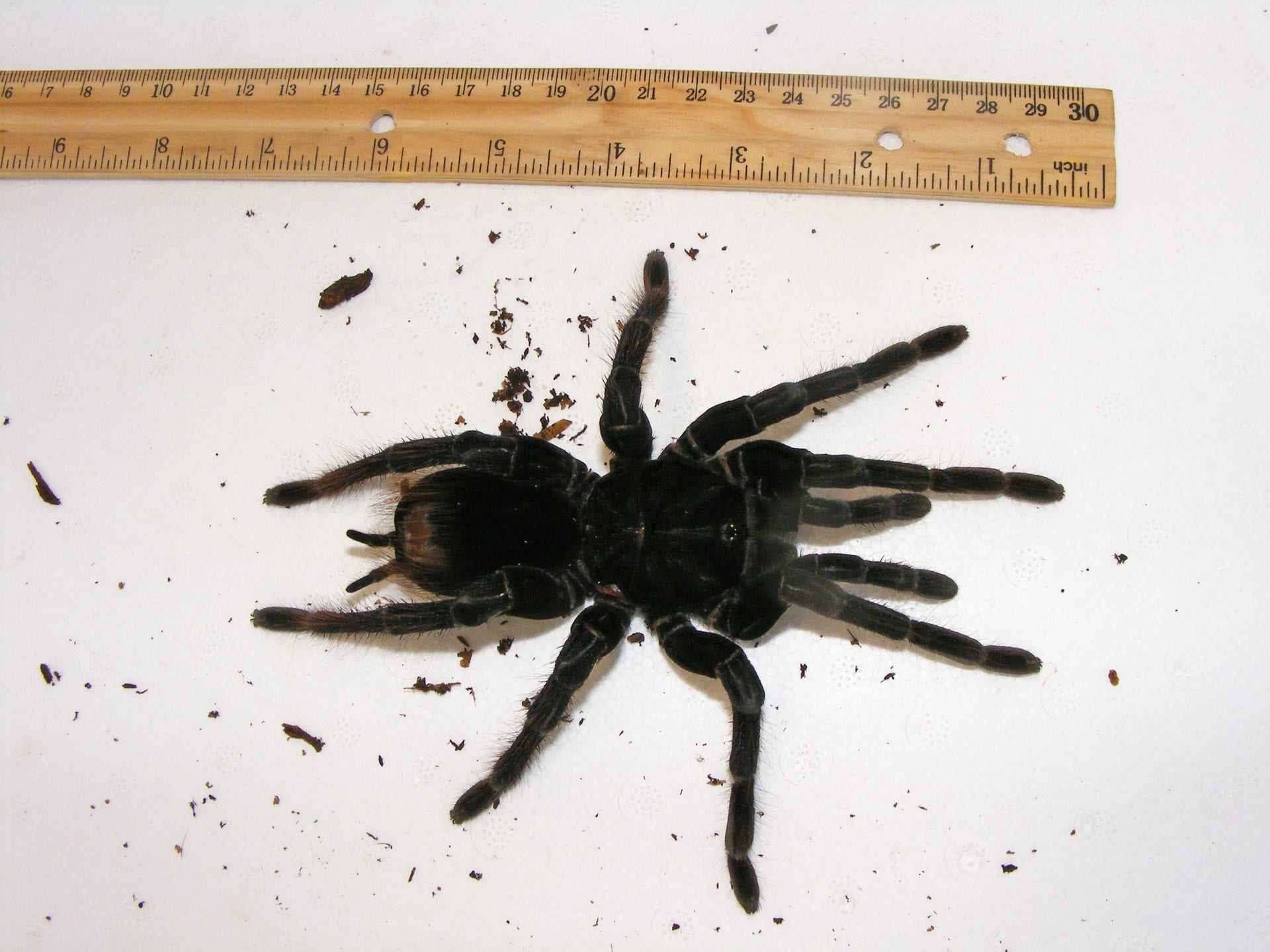
Holotype female 87mm in body length with a 96mm fourth leg; the male 80mm with a fourth leg just under 100mm
Humidity
70〜75%
Diet
Live insects such as crickets, roaches and locusts
About
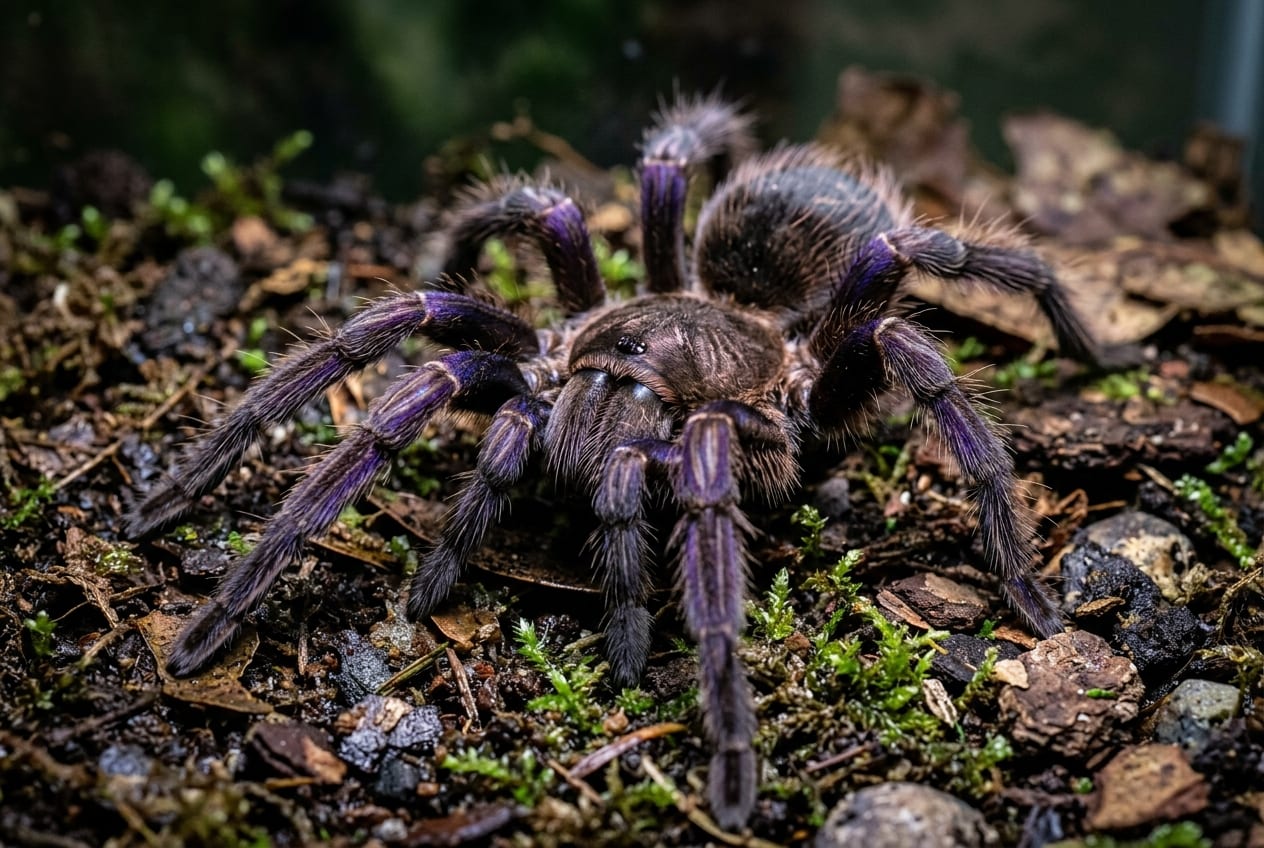
Theraphosa apophysis is a giant tarantula found in Venezuela, Colombia and Brazil. It generally resembles the Goliath birdeater of the same genus and reaches a similar size, but is distinguished by an additional stridulating organ on the coxa of the second leg and by thinner femora. Males bear tibial apophyses, which is the source of the specific name. The base colour is coffee brown, with long scattered orange-brown setae on the legs and abdomen, and mature males show a metallic sheen described as wine red on the cephalothorax and pedipalps. Juveniles have pink shading at the end of each leg that fades with each moult. Compared with its congeners it occupies drier, more open deciduous forest, where it digs deep burrows or occupies existing ones. It is nervous, defensive and demanding in its humidity requirements, so it is not a beginner species, but its size and fast growth make it sought after by experienced keepers.
Source: Wikipedia (CC BY-SA 4.0)
Lifespan of the Pinkfoot Goliath
The Pinkfoot Goliath lives Females 15-20 years / males 3-4 years.
Size of the Pinkfoot Goliath
The Pinkfoot Goliath grows to Holotype female 87mm in body length with a 96mm fourth leg; the male 80mm with a fourth leg just under 100mm.
The holotype female measures 87mm in body length with a 96mm fourth leg, while the male is 80mm with a fourth leg just under 100mm.
Temperature & humidity for the Pinkfoot Goliath
The ideal temperature for the Pinkfoot Goliath is 23〜28℃. Ideal humidity is 70〜75%.
Basic Info
Care Specifications
Semi-aggressiveSolitaryBreeding: Hard
Sources: Wikipedia: Theraphosa apophysis / Polish Wikipedia: Theraphosa apophysis / Terrarium.com.pl: Theraphosa apophysis / GBIF
References & Sources
Edited & verified by: BreederDirect editorial team
The taxonomic, regulatory, and husbandry data on this page are compiled and verified against the authoritative primary sources below.
Taxonomy & Authority
Accepted name: Theraphosa apophysis (Tinter, 1991)
Synonyms: Pseudotheraphosa apophysis (Tinter, 1991)
Authority databases: GBIF
Nomenclature follows global taxonomic authority databases.
Regulations & Conservation Status
Not CITES-listed
Sources: CITES Appendices (species not listed)
Regulations may change. Always verify the latest information with the relevant authorities.
Pinkfoot Goliath Listings
Loading latest listingsFind listings for this species