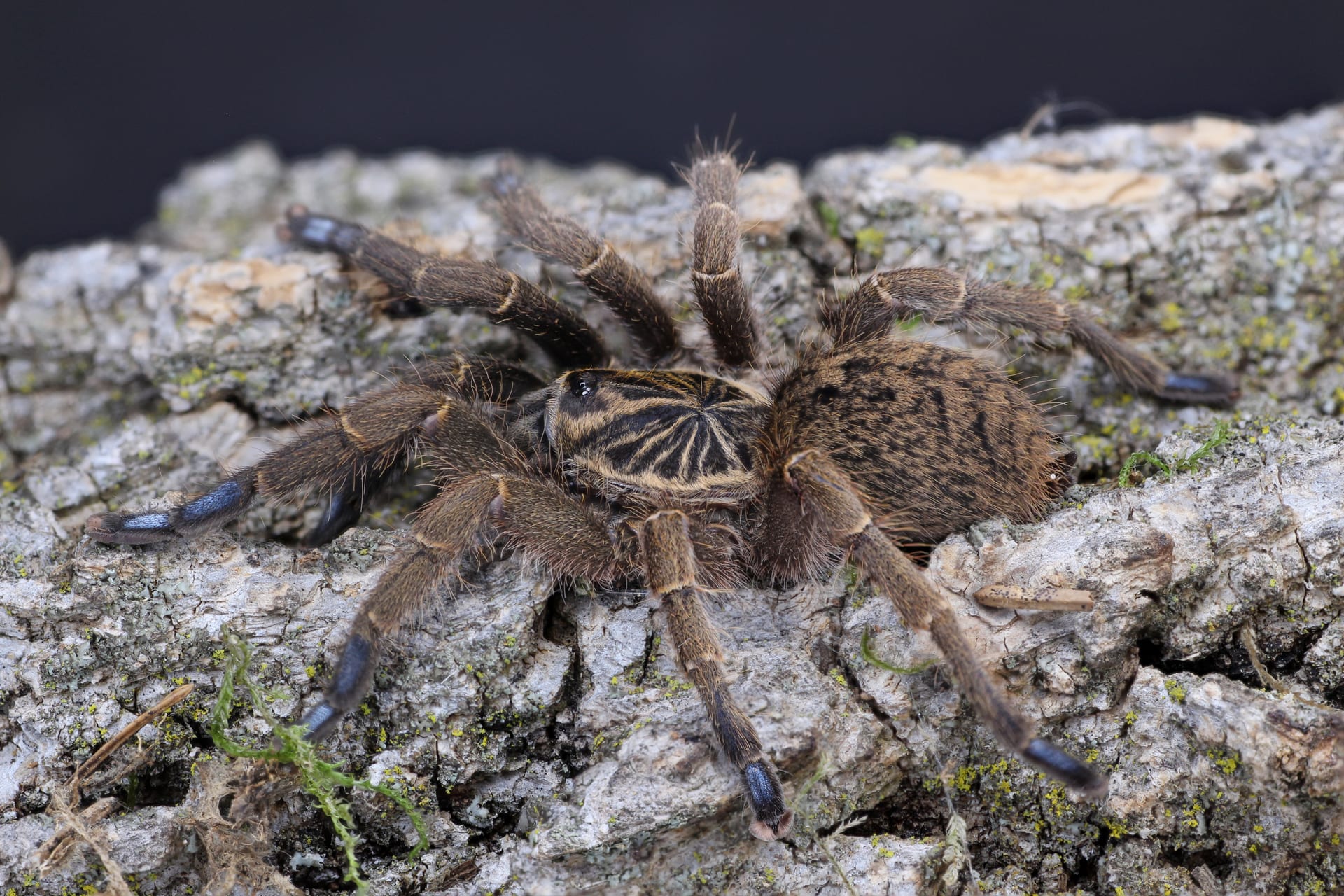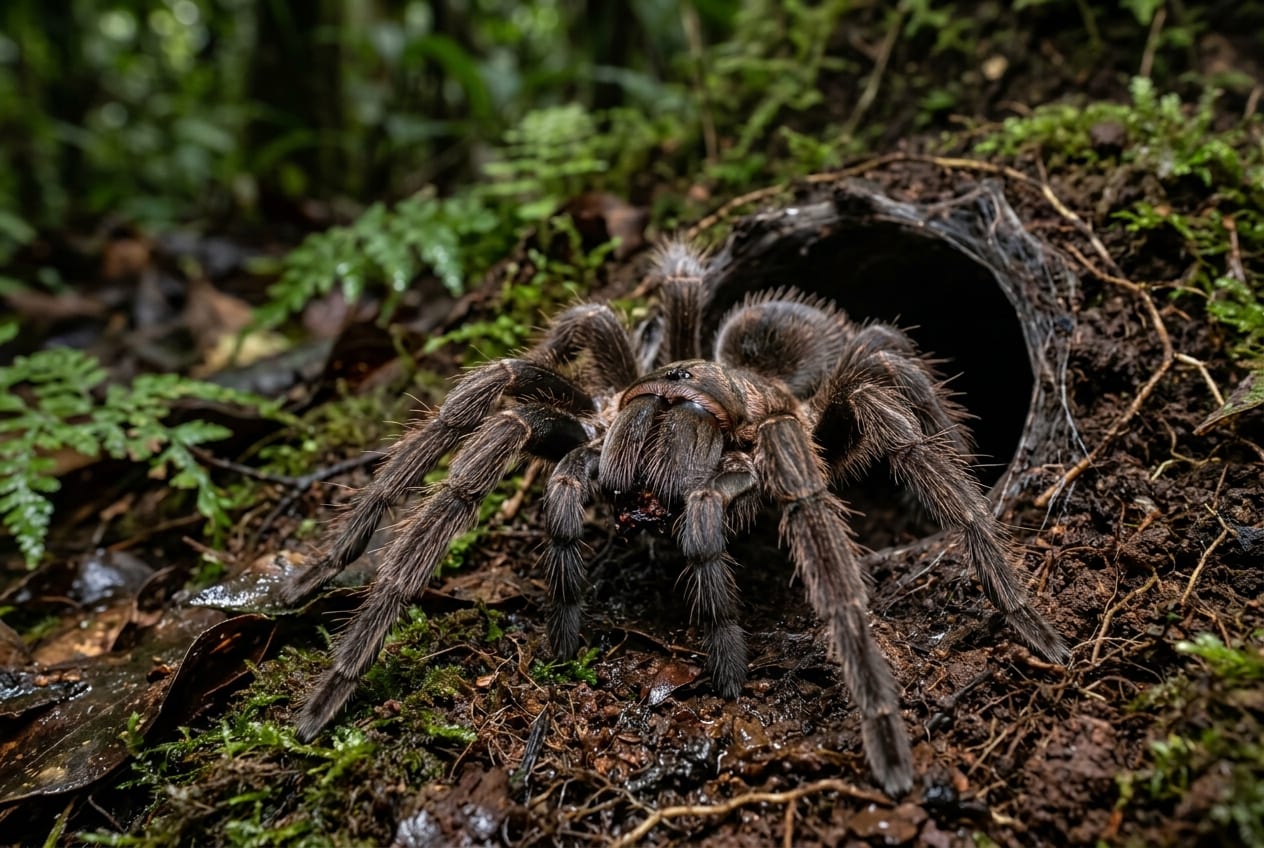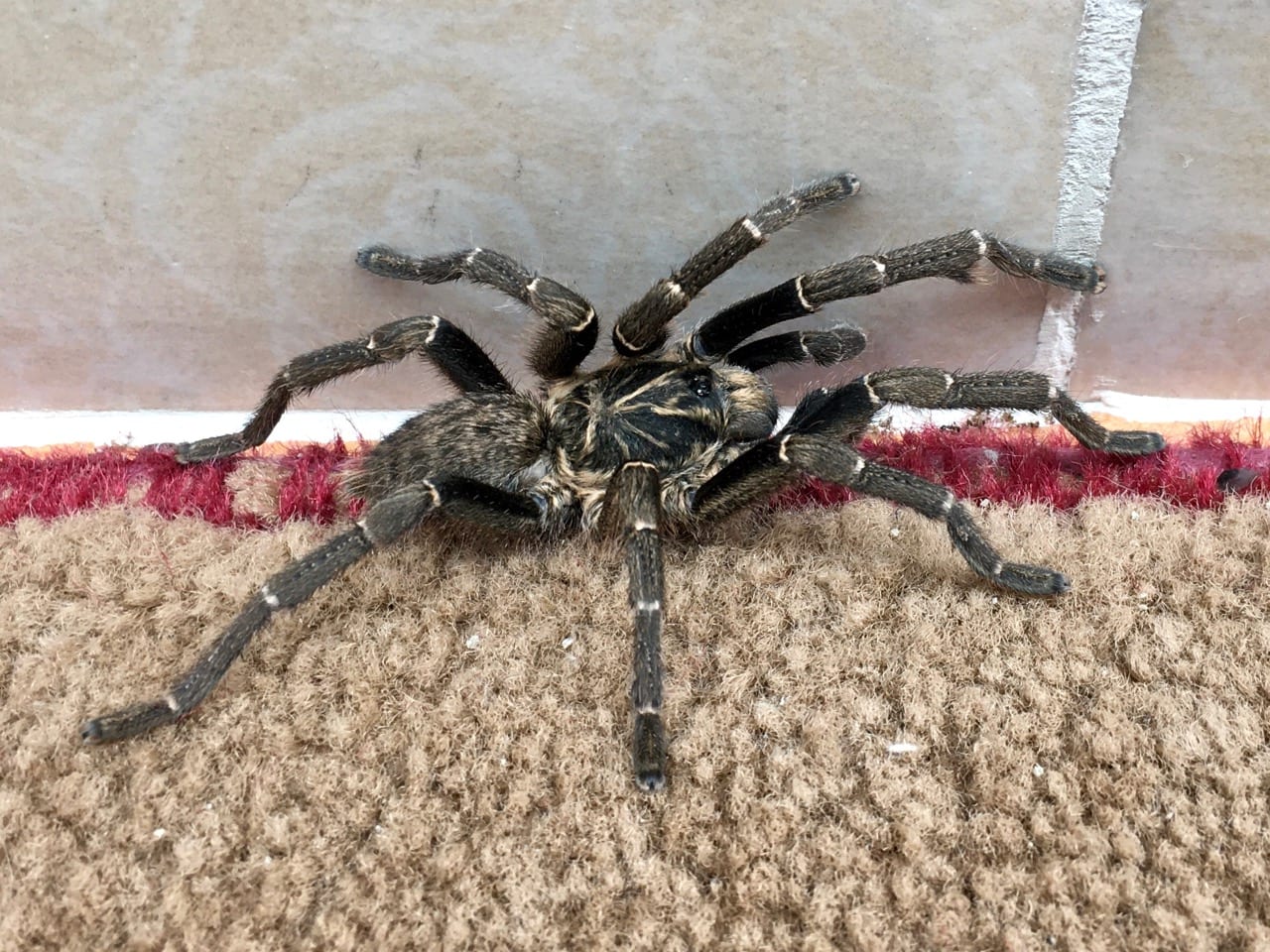
Source: Wikimedia Commons
Kilimanjaro Mustard Baboon
IntermediatePterinochilus chordatus
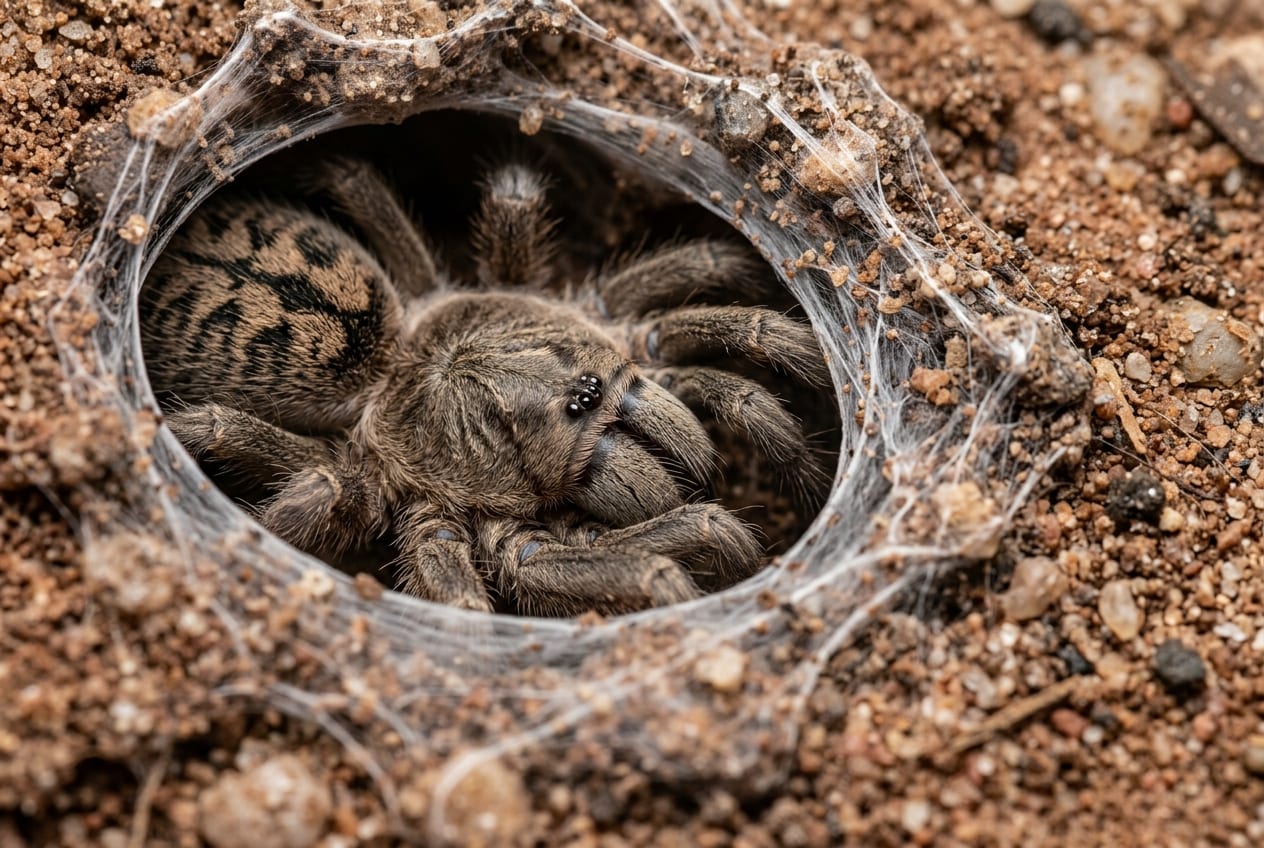
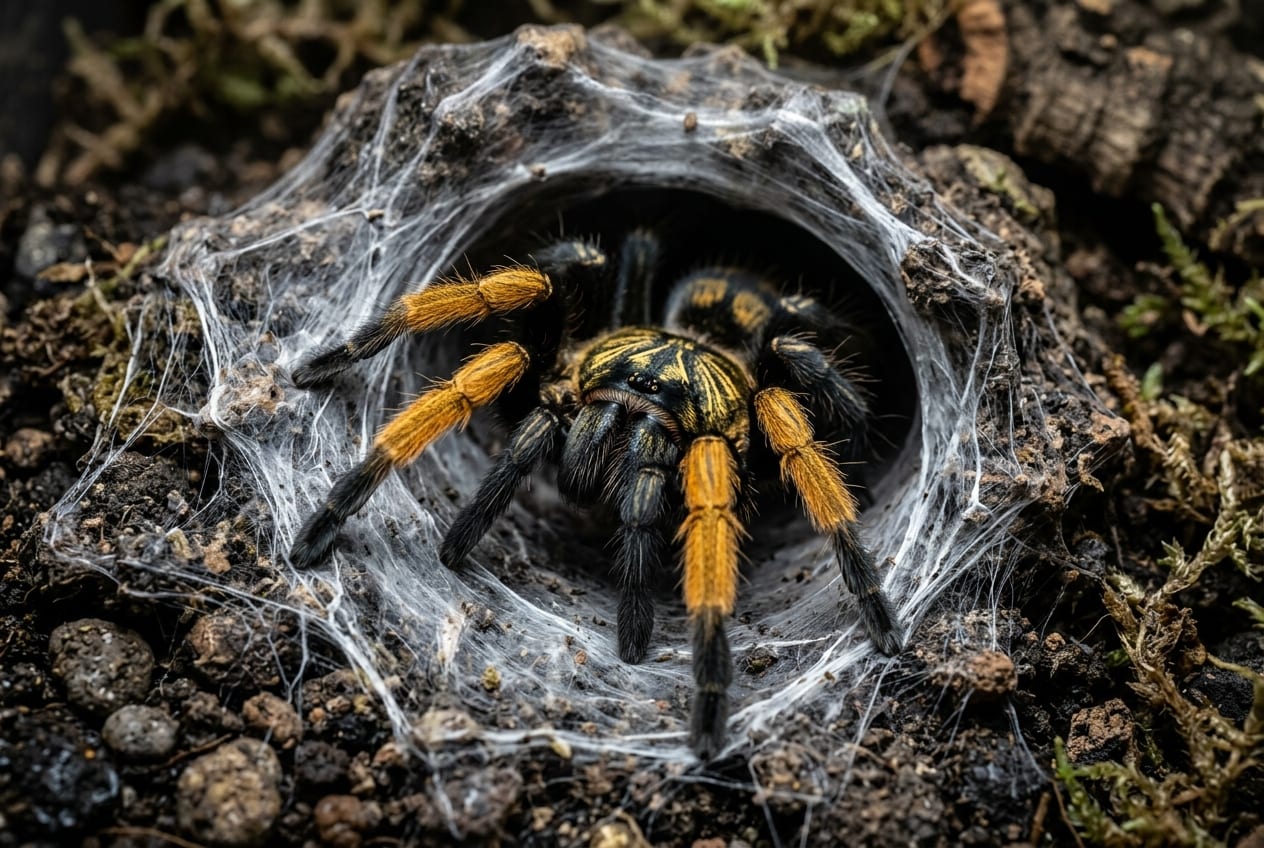
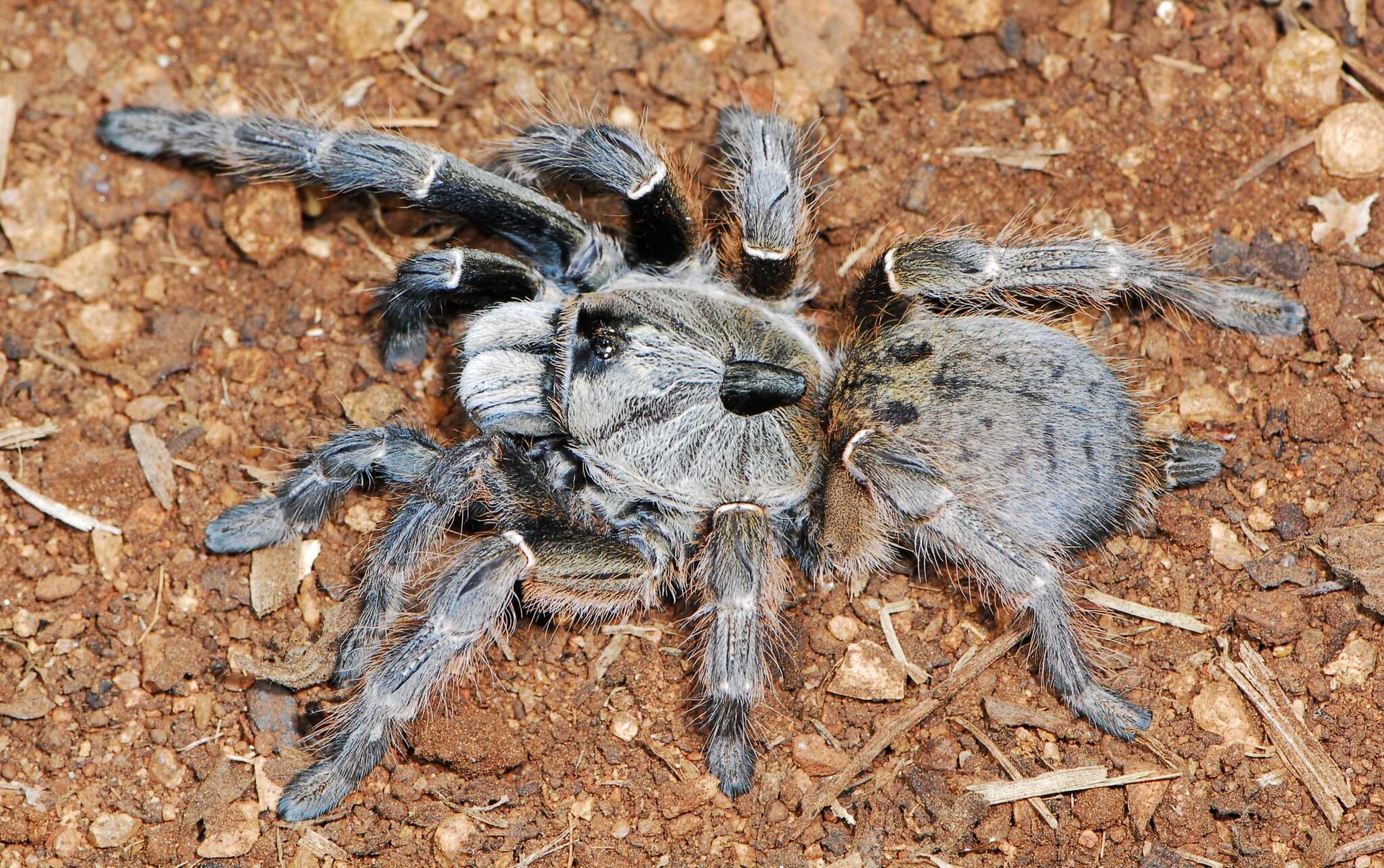
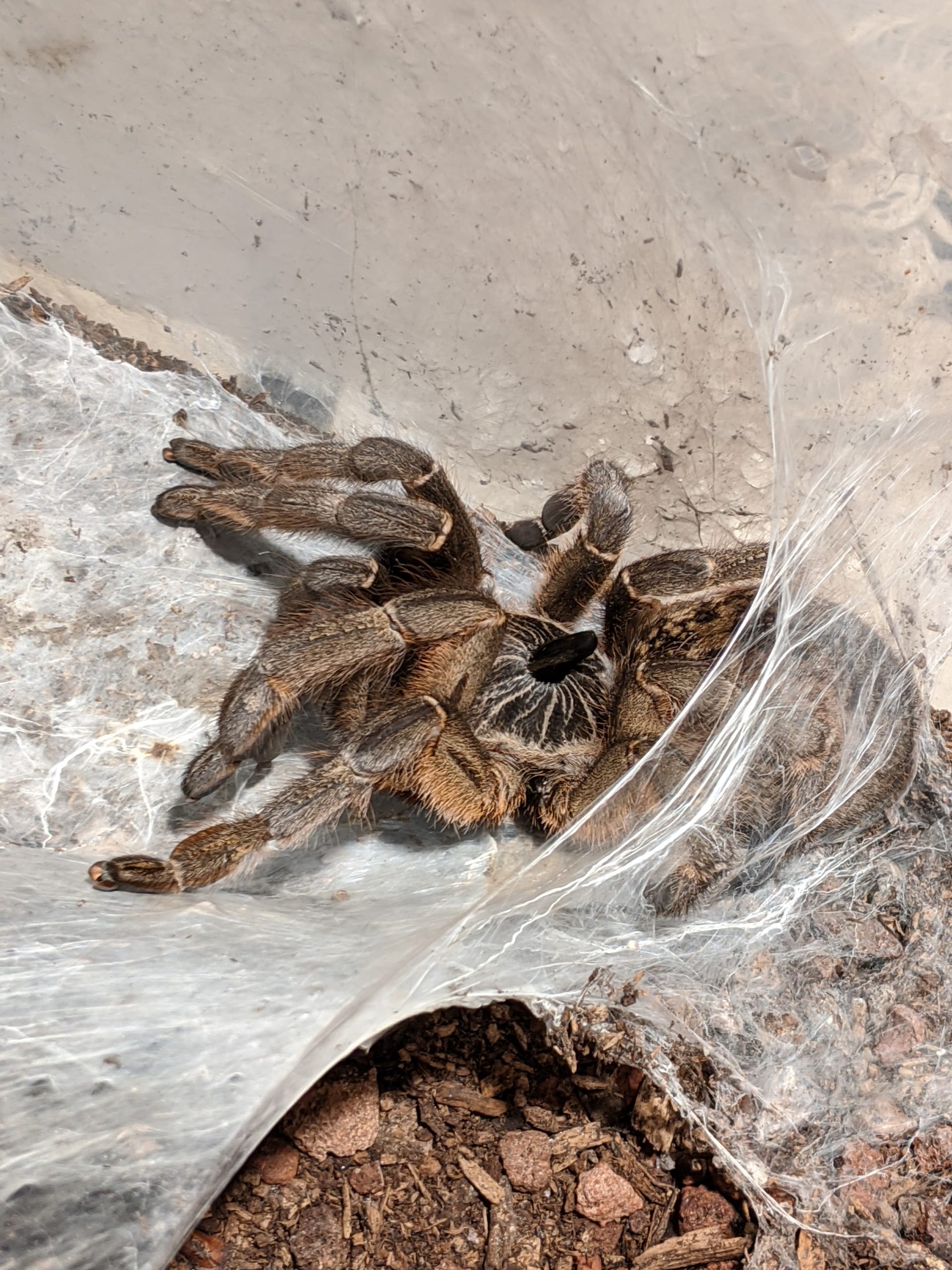
A fossorial tarantula from East Africa that turns grey as an adult, while juveniles are golden brown and change colour with each moult. It is nervous and quick to flee, and is not regarded as a beginner species.
Difficulty
Intermediate
Temperature
24〜28℃
Lifespan
Females 12-15 years / males 3-4 years
Size
Body 3.9-5.4cm (female), leg span 14-15cm
Humidity
50〜60%
Diet
Live insects such as crickets and roaches
About
Pterinochilus chordatus was described in 1873 by Gerstaecker as Harpactira chordata and belongs to the Harpactirinae, ranging along the eastern side of Africa from South Kordofan in Sudan down to Tanzania. Its type locality is Dafeta in Kenya. It was long treated as a synonym of Pterinochilus constrictus until Gallon restored it as a valid species in 2002. Adults are grey with darker grey mottling on the abdomen, while juveniles are golden brown and change colour with each moult. It is fossorial and nocturnal, digging tunnels. It is considered among the less aggressive species in the genus but is highly nervous and strongly prefers flight over confrontation. A bite is not dangerous to humans but is extremely painful. Being an Old World species, it has no urticating hairs.
Source: Wikipedia (CC BY-SA 4.0)
Lifespan of the Kilimanjaro Mustard Baboon
The Kilimanjaro Mustard Baboon lives Females 12-15 years / males 3-4 years.
Size of the Kilimanjaro Mustard Baboon
The Kilimanjaro Mustard Baboon grows to Body 3.9-5.4cm (female), leg span 14-15cm.
Adult females measure 3.9-5.4cm in body length and males 2.2-3.6cm, with a leg span of 14-15cm.
Temperature & humidity for the Kilimanjaro Mustard Baboon
The ideal temperature for the Kilimanjaro Mustard Baboon is 24〜28℃. Ideal humidity is 50〜60%.
Basic Info
Origin
East Africa (South Kordofan in Sudan to Tanzania, and Kenya)
Care Specifications
References & Sources
Edited & verified by: BreederDirect editorial team
The taxonomic, regulatory, and husbandry data on this page are compiled and verified against the authoritative primary sources below.
Taxonomy & Authority
Accepted name: Pterinochilus chordatus (Gerstaecker, 1873)
Synonyms: Harpactira chordata Gerstäcker, 1873, Pterinochilus constrictus
Authority databases: GBIF
Nomenclature follows global taxonomic authority databases.
Regulations & Conservation Status
Not CITES-listed
Sources: CITES Appendices (species not listed)
Regulations may change. Always verify the latest information with the relevant authorities.
Kilimanjaro Mustard Baboon Listings
Loading latest listingsFind listings for this species