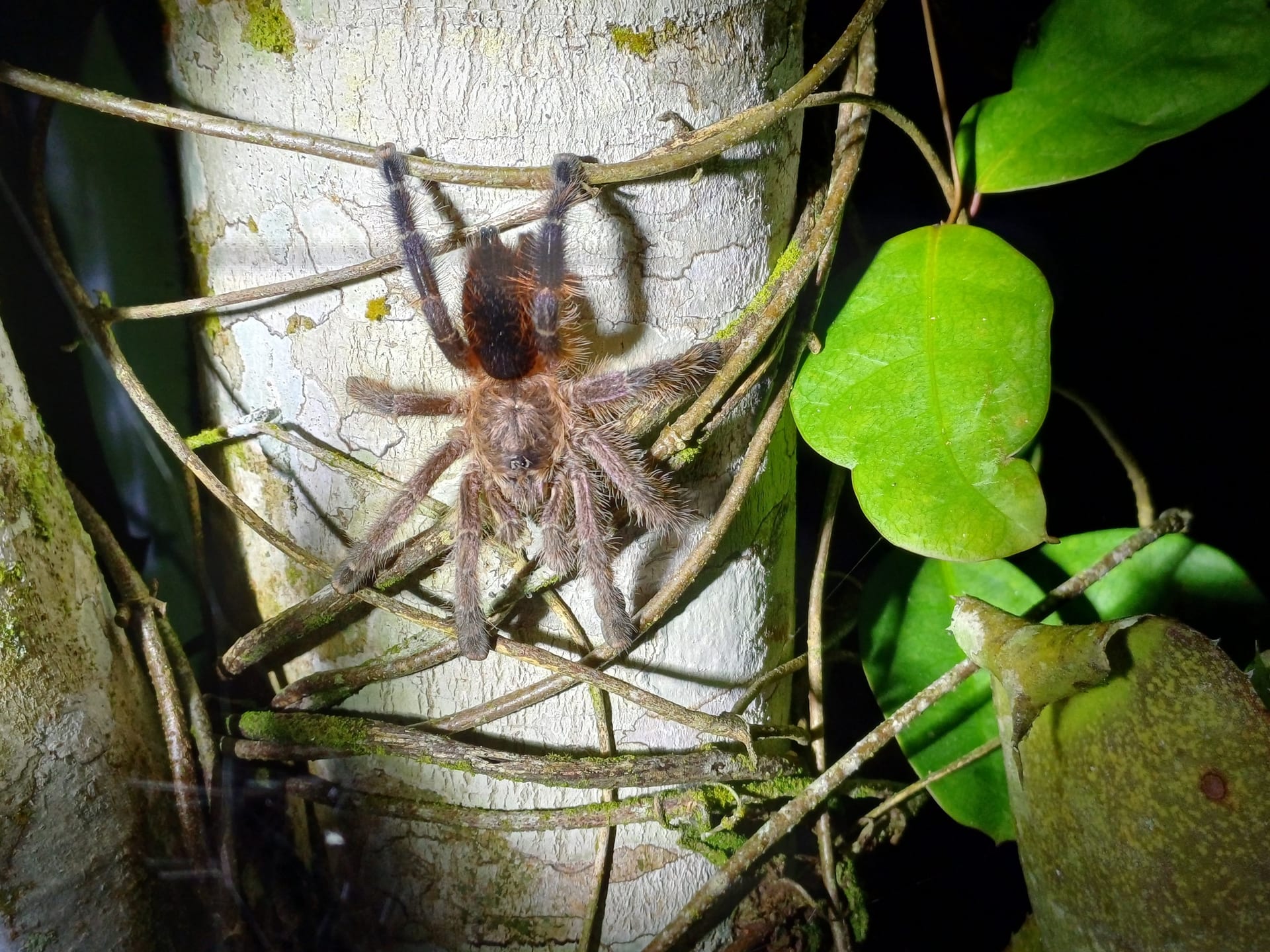
 © David F. Belmonte / CC BY 4.0
Shadow flame pinktoe
The Tarapoto pinktoe (Shadow flame pinktoe) is an arboreal Avicularia from the San Martín Region of Peru. It was described in the 2017 revision of the genus, so it is a relatively recent species, and its trade name comes from Tarapoto, the town where it is mainly recorded. It spends its time up in the branches rather than on the ground, so it is best kept in a tall setup with plenty to climb. It moves quickly and is better enjoyed by watching than by handling. Its care level is rated intermediate, and information on lifespan and adult size is still scarce. Before bringing one home, ask the breeder about the individual's condition and how it has been kept.
View Shadow flame pinktoe encyclopedia →0% commission on your first sales!Register by September 30, 2026 and your first 2 sales are commission-free!
Breeder Wanted!
List on BreederDirect and sell directly to customers nationwide!
5 Transparency Standards You Can Trust
When listing Exotic Invertebrates, Breeders disclose the following. We guarantee transparency on growth stage and breeding unit.
- Real Photos
- Breeding Unit
- Generation Info
- Body Length (mm)
- Country of Origin
Browse all 286 breeds
Verified breeders wanted for Exotic Invertebrates
Breeders are signing up now ahead of launch. Subscribe to be notified when new listings go live.
Getting alerts is free with a member account. When new listings match your saved search, we'll notify you by email and in-app.
Browse other categories
Verified breeders (preview)
Are you raising exotic invertebrates?
Register as a breeder and connect with buyers directly.
Apply as a breederShadow flame pinktoe key facts
- Care level
- Intermediate
- Lifespan
- Little data
- Size
- Little data
- Diet
- Carnivorous (live insects such as crickets and roaches)
- Enclosure
- Arboreal. Use a tall enclosure with upright cork bark for the web, vents in both top and sides, shallow substrate and a permanent water dish.
- Temperature & Humidity
- Species data are scarce. Care information for A. avicularia gives 21-27 C and 60-70% humidity, stressing thorough cross-ventilation to prevent stagnant air.
- Diet & Feeding
- Live prey such as crickets and roaches sized to the spider. Remove uneaten prey and wait a few days after a moult before feeding.
- Temperament & Venom
- Avicularia are docile but fast and may jump when startled. Their type II setae are rubbed rather than kicked, and the venom is considered weak.
- Notes
- Trade and scientific names are unstable in this genus; confirm the scientific name and origin. Use a lockable enclosure and never release captive animals.
About Shadow flame pinktoe
Tarapoto pinktoe (Shadow flame pinktoe): an arboreal tarantula from San Martín, Peru. Intermediate care level. Key points to know before bringing one home, plus answers to common questions.
7 things to know before welcoming a Shadow flame pinktoe
1Tall, vertical enclosure
Because it lives in trees, it suits an enclosure that is tall rather than wide. Lean cork bark or branches inside so it has something to climb and anchor its web to. It is a quick species, so check the lid for gaps and make sure the vents are fine enough to prevent escapes.
2Airflow and humidity
Avicularia species are generally said to dislike stuffy, stagnant air. Provide good ventilation, keep the substrate from drying out completely, add a water dish, and place the enclosure where it avoids extreme heat or cold. Care information specific to this species is limited, so use keeping records for the genus as a guide and adjust according to how the individual behaves.
3Quick and jumpy
When alarmed, it may dash or leap away. Open the enclosure slowly and prepare your work area in case it tries to escape. A fall can injure the abdomen, so it is best enjoyed by watching rather than by putting it on your hand.
4Urticating hairs and flicking
New World tarantulas have urticating hairs, and pinktoes may also flick droppings when they feel threatened. When cleaning or tending the enclosure, keep your face and eyes back and wash your hands afterward. If you notice any unusual symptoms, consult a medical professional.
5Care around molting
Before a molt, it may stop eating and become sluggish. Do not force-feed during this time, and remove any uneaten live prey promptly. Right after molting the body is still soft, so leave it undisturbed.
6Feeding basics
The basic diet is live prey such as crickets or roaches, sized to suit the spider's body. Uneaten prey can lead to mold and mites, so remove it regularly. Feeding frequency changes with growth stage and build, so it helps to ask the breeder for a guideline.
7Ask before you buy
This is a relatively recently described species with limited information, and a trade name alone can make it hard to pin down which species you are getting. Ask the breeder for the scientific name, locality, whether the animal was captive bred, its last molt, and its feeding record. Data on adult size and lifespan is also scarce, so ask about the individual's growth stage too.
Frequently asked questions about Shadow flame pinktoe
- Q.Can a beginner keep one?
- A.It is rated as suitable for intermediate keepers. You need to manage airflow and humidity and cope with its quick movements, so some tarantula experience helps. If this would be your first, talk to the breeder about your setup before deciding.
- Q.How long does it live and how big does it get?
- A.Lifespan and adult size are not well documented, as information on this species is scarce. We cannot give reliable figures here, so ask the breeder about the growth stage of the individual you are considering.
- Q.Can I handle it?
- A.We do not recommend it. It moves fast and may jump, and a fall can injure its abdomen. Treat it as a display animal to be enjoyed by watching.
- Q.Can I keep several in one enclosure?
- A.Keep each one in its own enclosure. Tarantulas may prey on one another when housed together.
- Q.Where does the name Tarapoto come from?
- A.It is the name of a town in the San Martín Region of Peru, where the species is mainly recorded, and it is used as the trade name. The species itself is relatively new, having been described in the 2017 revision of the genus.
Learn more about Shadow flame pinktoe in the encyclopedia
View Shadow flame pinktoe encyclopedia entry →
Care difficulty, lifespan, size and diet — all basics covered.
More in this category
Can't find the one you're looking for?
Post your wishes for free and breeders with matching animals will contact you with introductions.