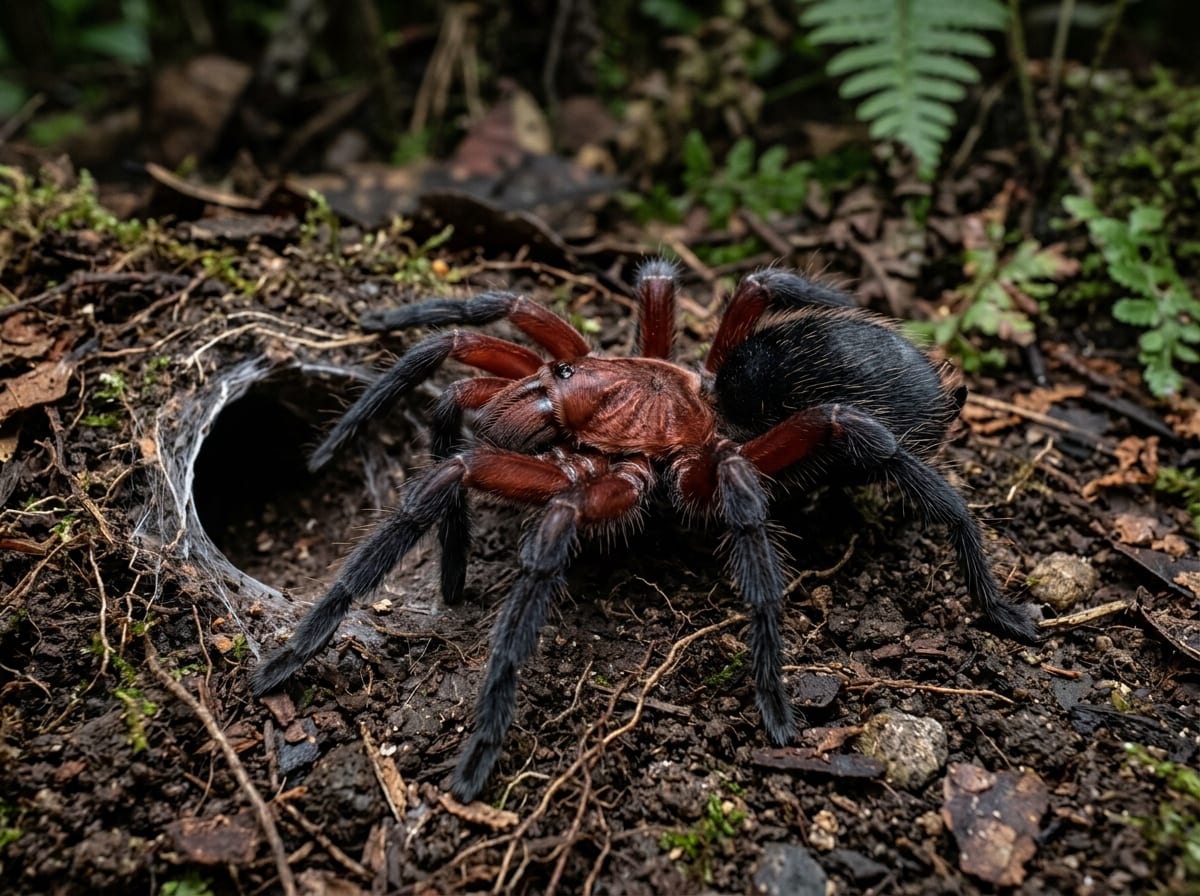
New Guinea black fury tarantula
The New Guinea black fury is a ground-dwelling Old World tarantula from the island of New Guinea (Indonesian territory). Its carapace and leg bases are reddish brown, while the abdomen and leg tips run from brown to black. It has no urticating hairs, but like other Old World tarantulas it can be defensive, and its care difficulty is rated advanced. Reliable information on lifespan and adult size is scarce. As a burrower, it suits keepers who enjoy quietly watching it dig and settle in, keeping a safe distance rather than handling it.
View New Guinea black fury tarantula encyclopedia →Breeder Wanted!
List on BreederDirect and sell directly to customers nationwide!
BreederDirect's 5 Transparency Commitments
When listing Exotic Invertebrates, Breeders disclose the following. We guarantee transparency on growth stage and breeding unit.
- Real Photos
- Breeding Unit
- Generation Info
- Body Length (mm)
- Country of Origin
Browse all 286 breeds
Verified breeders wanted for Exotic Invertebrates
Breeders are signing up now ahead of launch. Subscribe to be notified when new listings go live.
Getting alerts is free with a member account. When new listings match your saved search, we'll notify you by email and in-app.
Browse other categories
Verified breeders (preview)
Are you raising exotic invertebrates?
Register as a breeder and connect with buyers directly.
Apply as a breederNew Guinea black fury tarantula key facts
- Care level
- Advanced
- Diet
- Carnivorous (live insects such as crickets and roaches)
- Enclosure
- A burrowing Old World species. Provide deep substrate for digging, a hide and a water dish. Keep singly.
- Temperature & Humidity
- The temperature and humidity suited to keeping this species are unclear. As a tropical island species, keep the lower substrate moist while ventilating to prevent mould.
- Diet & Feeding
- Live prey such as crickets and roaches sized to the spider. Remove uneaten prey and wait a few days after a moult before feeding.
- Temperament & Venom
- Old World tarantulas lack urticating setae and readily bite when disturbed; their venom is often stronger and can be medically significant, so never handle it.
- Notes
- The name has changed several times, so it may be sold under older names. Fast and nervous: locate it before maintenance, use a lockable enclosure and never release captive animals.
About New Guinea black fury tarantula
Profile of the New Guinea black fury tarantula, a ground-dwelling Old World species without urticating hairs. Covers its traits, advanced-level care, what to know before bringing one home, and FAQs.
7 things to know before welcoming a New Guinea black fury tarantula
1Advanced-level care
The care difficulty is rated advanced. Given the defensive tendencies of Old World tarantulas and the limited information available, it is safer to consider this species after gaining experience with other tarantulas. As a first invertebrate pet, starting with an easier species is also a sensible option.
2Old World temperament
Old World tarantulas are generally fast and tend to act defensively when they feel threatened. This species has no urticating hairs, so hair-related irritation is less of a concern, but you still need to guard against bites. The effects of a bite can vary from person to person, so keep it in a way that avoids being bitten in the first place.
3Burrowing substrate and hides
As a ground-dwelling species, it needs deep substrate to dig into, plus a hide such as cork bark or a ceramic shelter. A container with more floor space than height suits its habits. A setup that lets it burrow helps it settle in.
4Lid lock and routine
Because this species moves quickly, the moment you open the lid is when escapes are most likely. Choose an enclosure with a lid that locks and ventilation holes too small to slip through. Decide your care routine, such as water changes and cleaning, before you start.
5Temperature and humidity
This species comes from the tropical island of New Guinea, so avoid extreme heat or cold as well as dryness and stuffiness. Keep part of the substrate damp while providing ventilation, and check conditions with a thermometer and hygrometer.
6Feeding and molting
Live feeders such as crickets or roaches are commonly used, and uneaten prey should be removed promptly to avoid mold and mites. Appetite may drop before a molt. During and right after molting, leave the tarantula undisturbed and watch quietly.
7Questions for the seller
Reliable information on lifespan and adult size is limited, so ask the seller about the individual's growth stage, sex if known, usual diet and rearing conditions. After bringing it home, keeping notes on molts and appetite helps you notice changes.
Frequently asked questions about New Guinea black fury tarantula
- Q.Can beginners keep it?
- A.Its care difficulty is rated advanced, so it is not an easy first invertebrate. Consider it only after understanding its defensive tendencies and the limited information available.
- Q.Does it have urticating hairs?
- A.No, this species does not have urticating hairs. Old World tarantulas still tend to be defensive, so basic safety such as not touching it with bare hands is essential.
- Q.How long does it live and how big does it get?
- A.Information on both lifespan and adult size is limited, so no reliable estimate can be given. When you get one, ask the seller about the individual's growth stage.
- Q.Can I handle it?
- A.Handling is not recommended. Because it can be fast and defensive, use a cup or long tongs for care and moving instead of bare hands.
- Q.What enclosure suits it?
- A.Choose a container that holds deep substrate for burrowing, add a hide, and use a lid that locks. Keep part of the substrate damp and make sure there is ventilation.
Learn more about New Guinea black fury tarantula in the encyclopedia
View New Guinea black fury tarantula encyclopedia entry →
Care difficulty, lifespan, size and diet — all basics covered.
More in this category
Can't find the one you're looking for?
Post your wishes for free and breeders with matching animals will contact you with introductions.