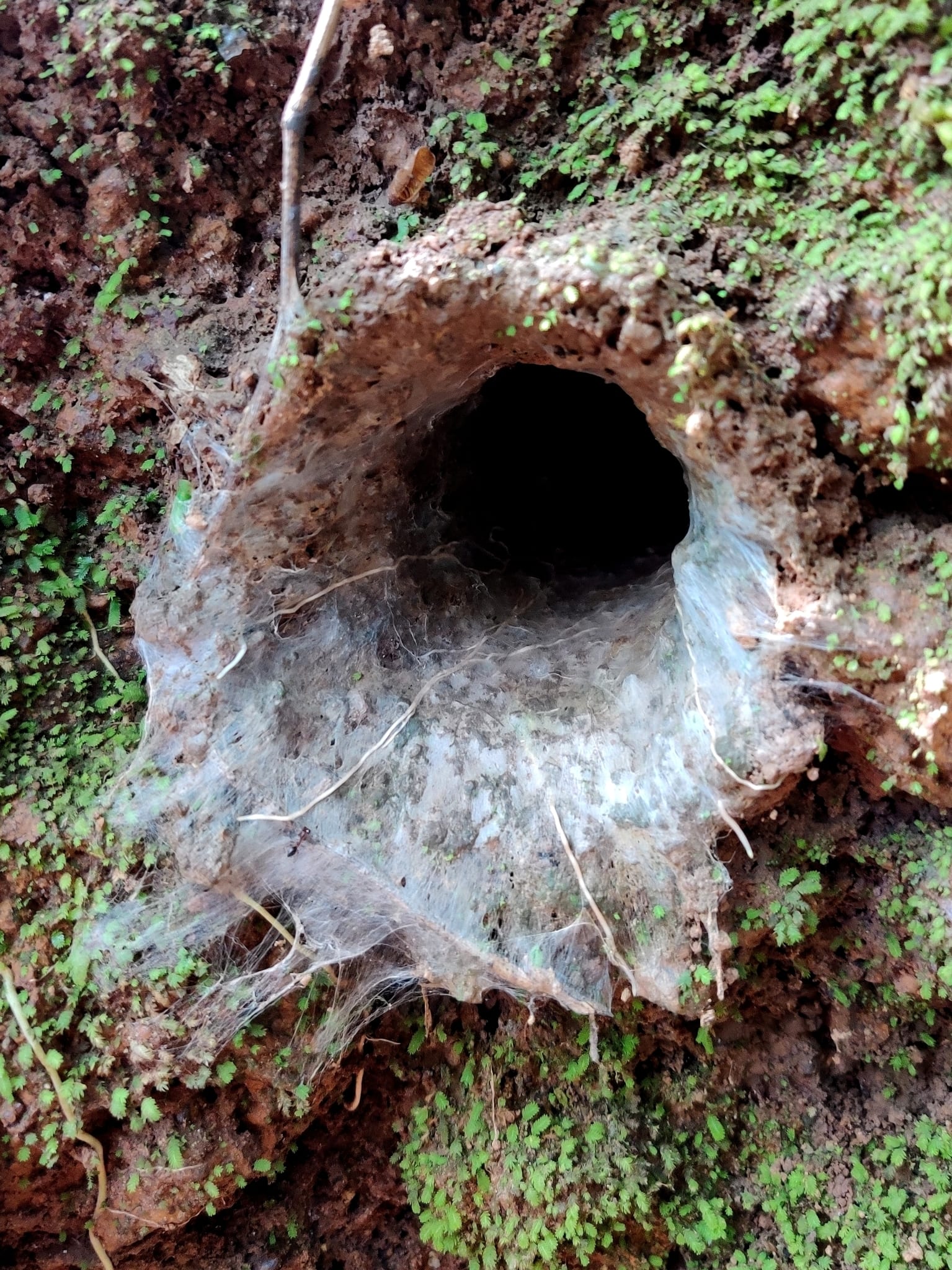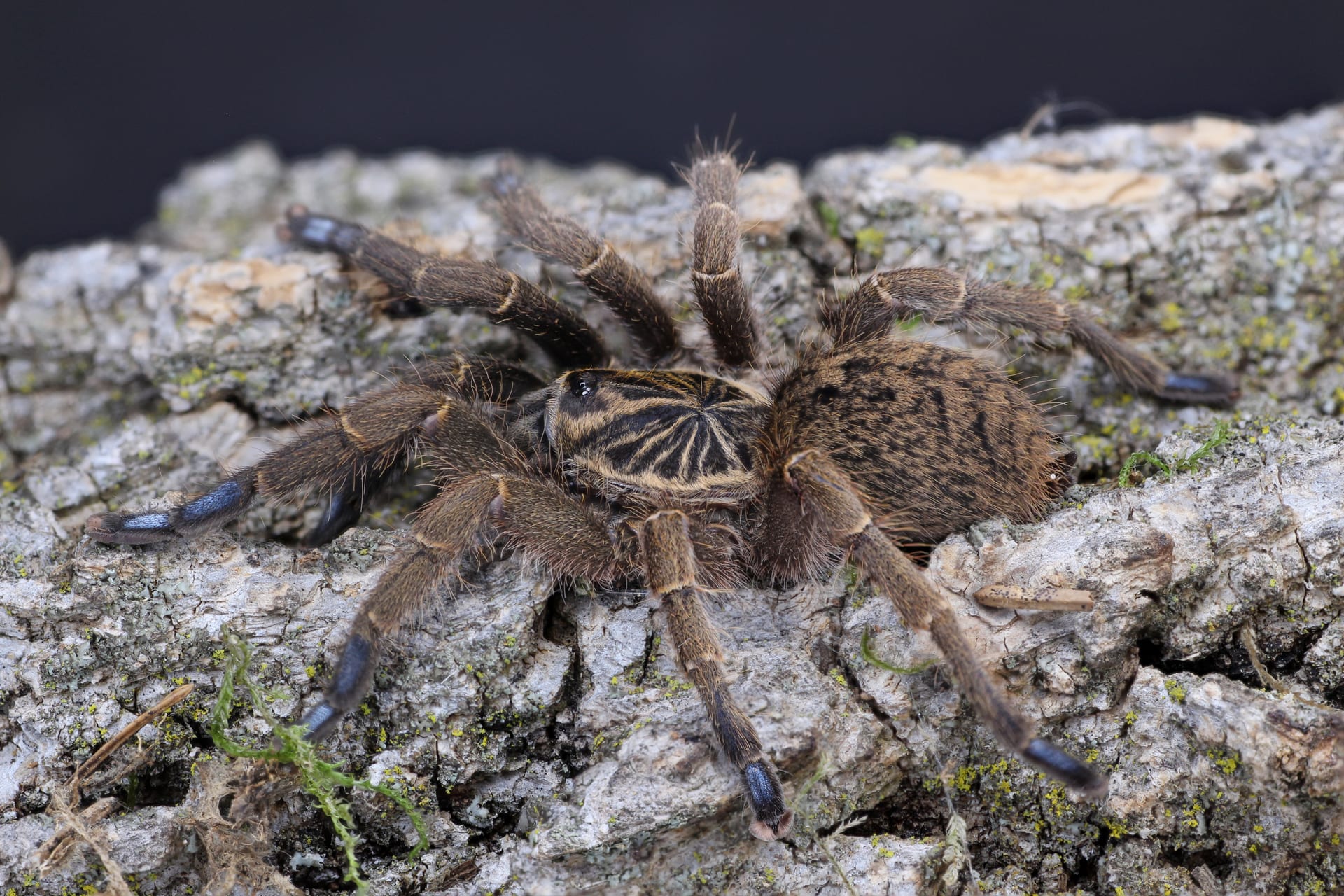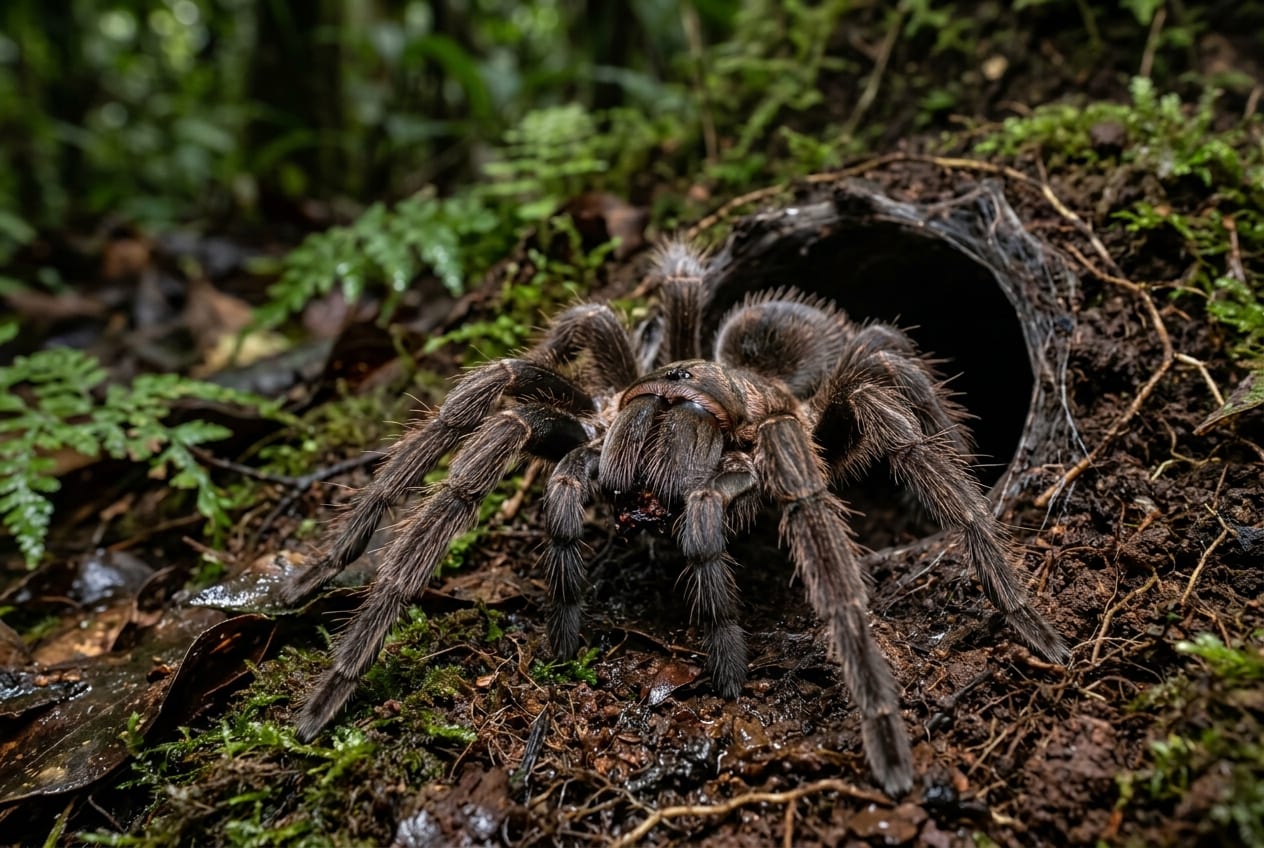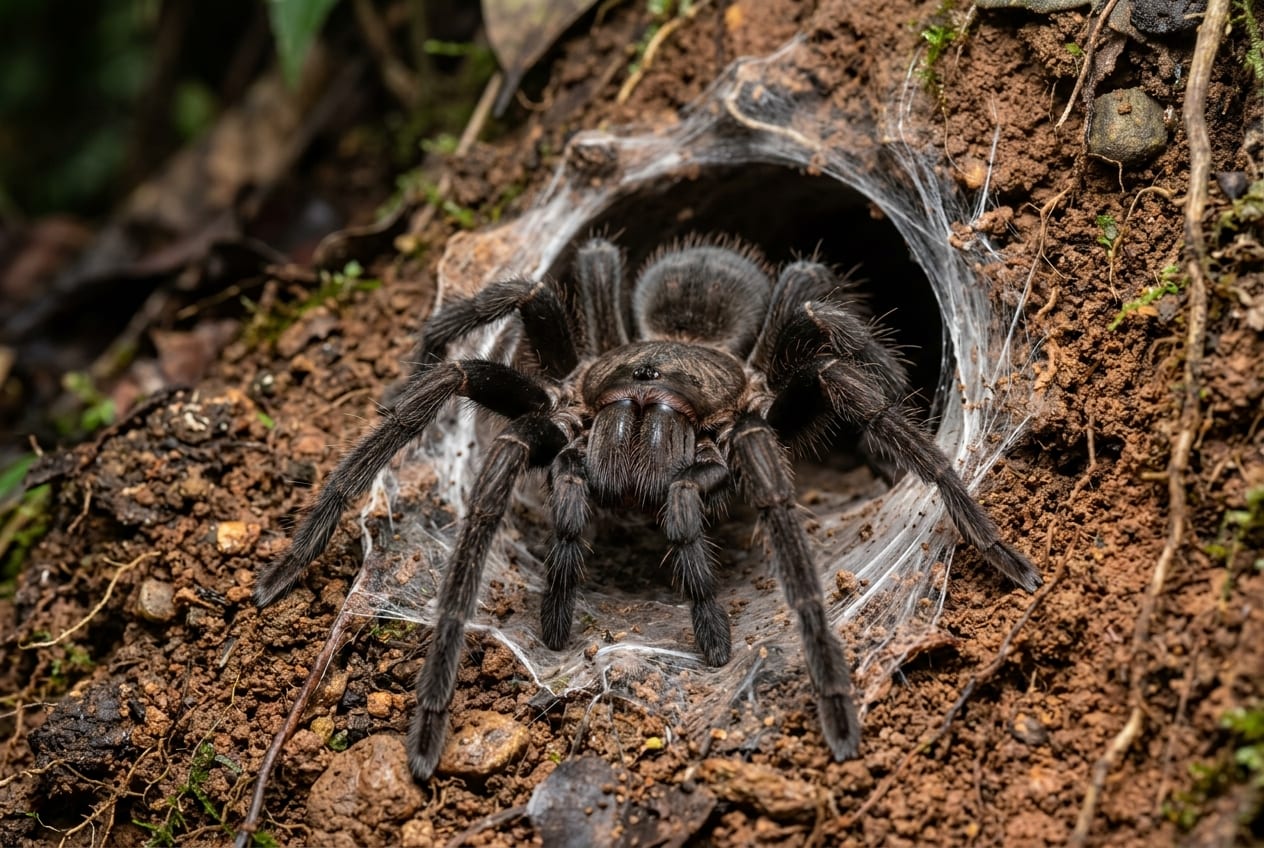
AI-generated image
New Guinea black fury tarantula
AdvancedChilocosmia dichromata
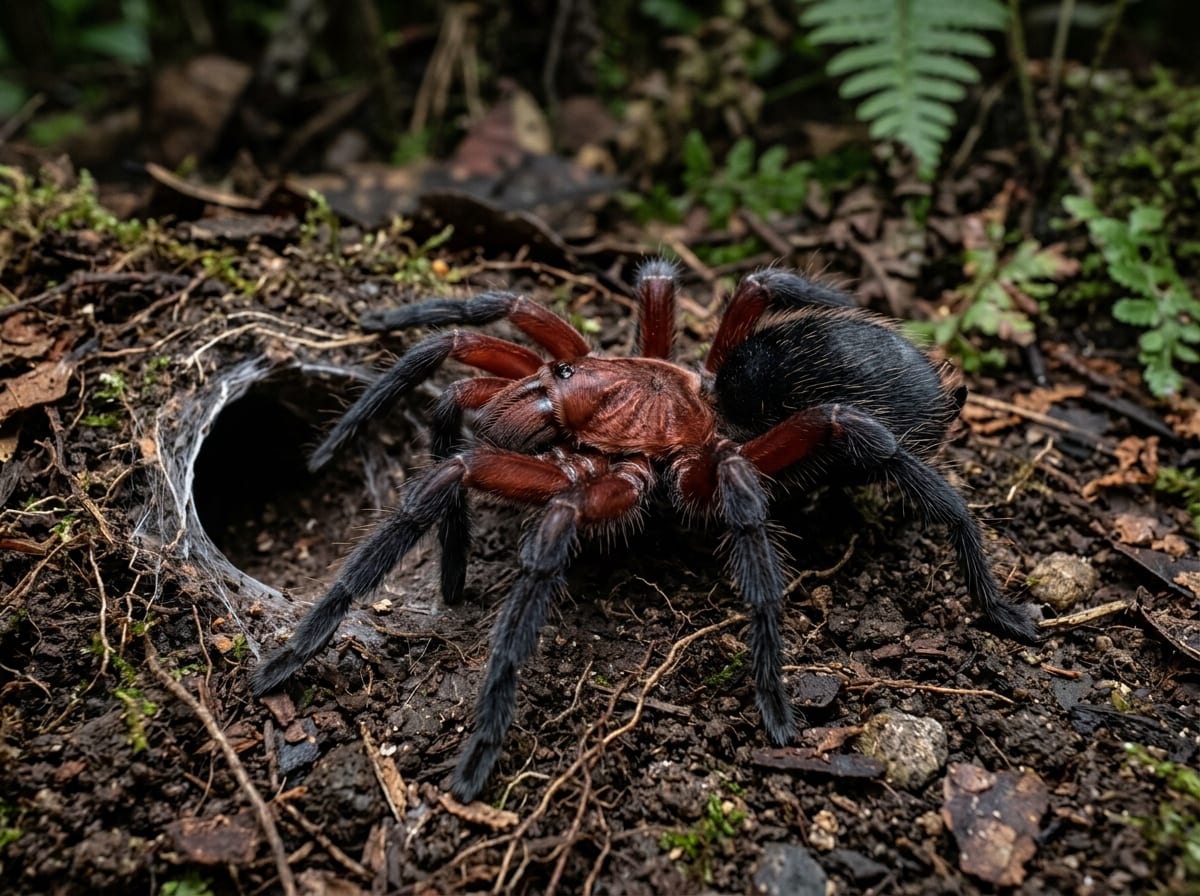
A burrowing Old World tarantula from Indonesian New Guinea with a reddish-brown carapace and leg bases and a brown-to-black abdomen and legs. The sole species of Chilocosmia; it has no urticating setae.
Difficulty
Advanced
Diet
Carnivorous (live insects such as crickets and roaches)
About
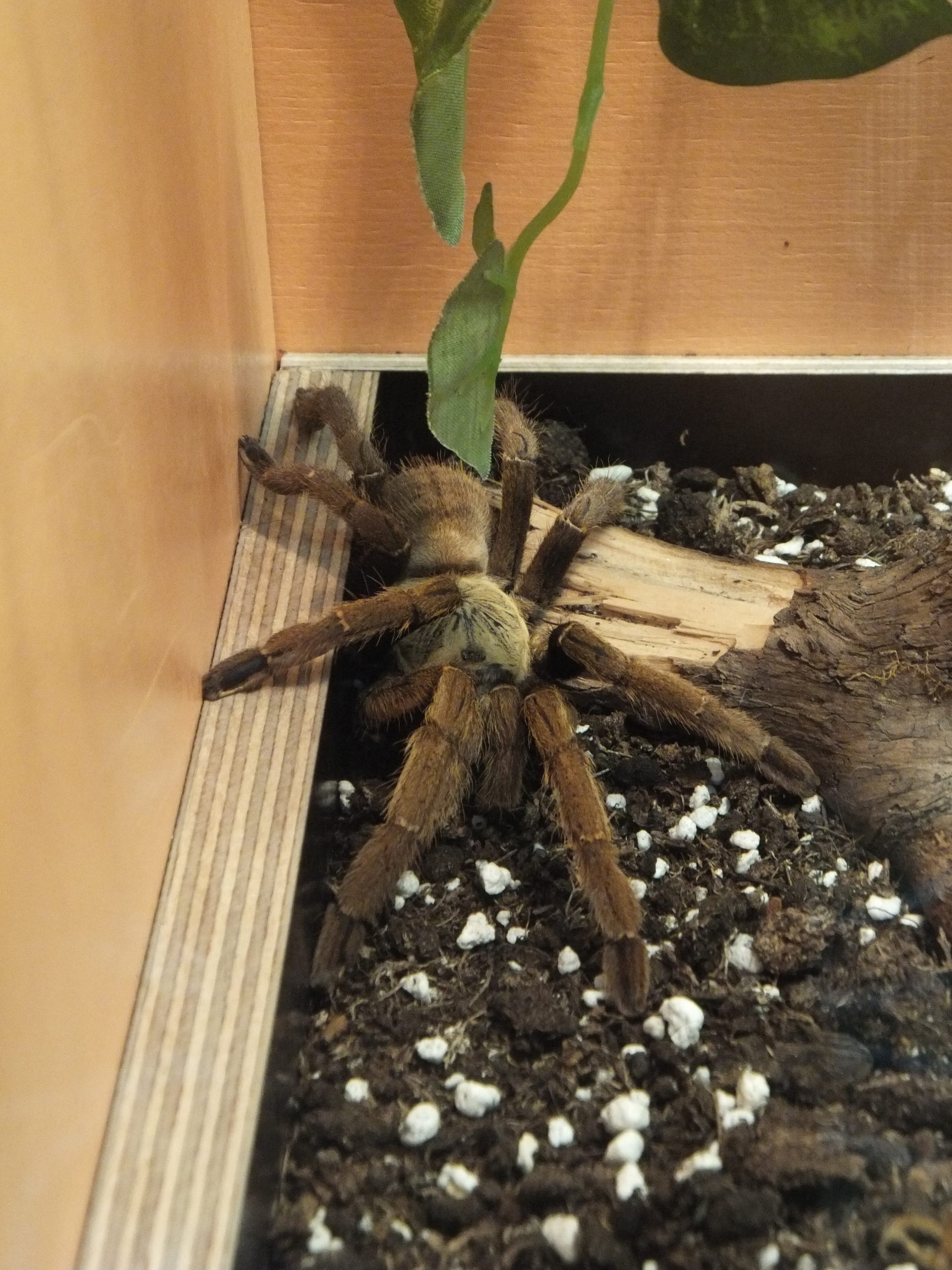
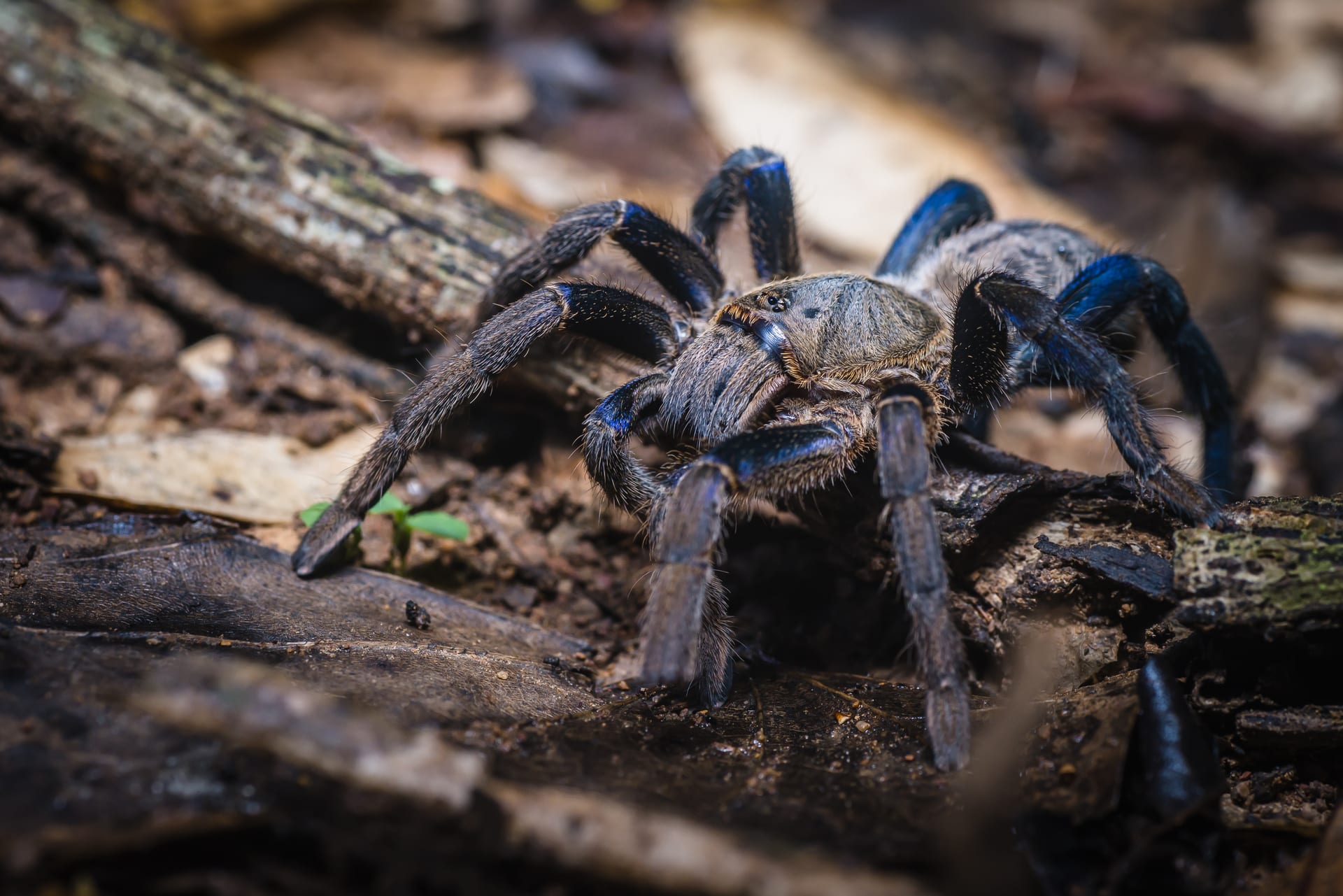
Chilocosmia dichromata Schmidt & von Wirth, 1992 is the only species of Chilocosmia. After description it was moved to Selenocosmia (2005) and Orphnaecus (2012), but a 2025 study found the genera sufficiently different and restored Chilocosmia; older names such as Selenocosmia dichromata or Orphnaecus dichromatus still appear in the trade. The Catalogue of Life gives its range as Indonesia (New Guinea). The carapace, coxae and trochanters are reddish-brown and the abdomen and remaining leg segments brown to black. The chelicerae carry about ten large teeth and rows of stridulating setae. Old World tarantulas lack urticating setae, are more likely to attack when disturbed, often have more potent, medically significant venom, and are faster and more nervous than New World species. Young spiders occasionally appear in Japanese specialist shops.
Source: Wikipedia (CC BY-SA 4.0)
Basic Info
Origin
Indonesia (New Guinea)
Diet
Carnivorous (live insects such as crickets and roaches)
Care Guide
Enclosure
A burrowing Old World species. Provide deep substrate for digging, a hide and a water dish. Keep singly.
Temperature & Humidity
The temperature and humidity suited to keeping this species are unclear. As a tropical island species, keep the lower substrate moist while ventilating to prevent mould.
Diet & Feeding
Live prey such as crickets and roaches sized to the spider. Remove uneaten prey and wait a few days after a moult before feeding.
References & Sources
Edited & verified by: BreederDirect editorial team
The taxonomic, regulatory, and husbandry data on this page are compiled and verified against the authoritative primary sources below.
Primary sources
- Wikipedia
- Species+ CITES query (not listed)
- Ministry of the Environment: list of regulated alien species, including taxa needing an identification certificate
- Catalogue of Life: Chilocosmia dichromata
- Wikipedia: Tarantula (urticating setae and Old World venom)
- GBIF: Chilocosmia dichromata Schmidt & von Wirth, 1992
Taxonomy & Authority
Regulations & Conservation Status
Not CITES-listed
Not listed in the CITES Appendices (checked on Species+). Theraphosidae are neither designated invasive alien species nor taxa requiring an identification certificate on import in Japan (September 2026). Use a lockable enclosure to prevent escapes, and never release captive animals.
Sources: Species+ CITES query (not listed) / Ministry of the Environment: list of regulated alien species, including taxa needing an identification certificate
Regulations may change. Always verify the latest information with the relevant authorities.
New Guinea black fury tarantula Listings
Loading latest listingsFind listings for this species